Master the art of invisible connections: Optimize 3D printed seams position for perfect results
That telling bump or strange marker runs vertically on your otherwise perfect 3D print? That’s the seam – the inevitable starting point and stop point of each layer profile. While the FDM/FFF printing process is inherent, well-managed seams can undermine aesthetics, weaken structural and compromise functionality. The key to excellence is not to eliminate them (which is impossible), but strategically optimization Their location. This guide delves into the science and strategy of seam management to transform potential flaws into nuances you know.
Understanding 3D Printing Seams: Necessary Imperfections
Whenever your printer completes a closed loop of one layer, it must lift the nozzle slightly to move to the beginning of the next layer. This tiny movement creates visual and often tactile discontinuity-seaters. The core of the seam is composed of:
- Material behavior: A miniature temporary or retraction/recalculation event occurs at layer startup, resulting in slightly larger (spotted) or slightly smaller (void) of material deposits.
- Path planning: Slicer software confirmation Where Each layer is relative to the previous start and end.
Why optimize? High bets for seam position
Ignoring seam placement means leaving key aspects of the print to chance:
- aesthetics: Random or bad seams can produce ugly zits, scars or irregular lines, especially on smooth curves or visible faces. This is crucial for consumer products, the prototype or artistic model displayed to customers.
- Functional integrity: The seams can act as stress concentrators. In functional areas under load or pressure (bracket, housing, gear housing), the joint areas aligned with the high pressure area become potential fault points.
- Dimensional accuracy: Too many spots at the seams can interfere with assembly fitting or require a lot of post-processing. Voids can create leakage paths in fluid handling parts.
- Post-processing burden: Visible seams require more grinding, filling or painting to cover up, adding time and cost.
Strategy and Technique: Taming Z-Scar
Conquering the seams requires a multifaceted approach, using a slicer to set up and design vision:
-
Slicer settings: Seam position selection: Your main lever.
- Random: Spread the starting point, swap the single protrusion line into the overall spot "Orange peel" texture. It is usually the worst option for a smooth surface, but masks the pattern.
- Alignment (recent/user specified): Place the seams directly to each other to form a continuous line. The visual vibration is more shocking than random, but creates a prominent ridge/valley. The challenge is strategic placement (see below).
- The sharpest corner: (The most effective default value). The slicer places the seams at the sharpest interior or exterior corners. The corners naturally mask the seams as shadows or edges reduce visual effects. Usually the recommended starting point.
-
Strategy Manual Placement (User Specified): To obtain final control, expert users manually assign seam positions on each part, layer-wide or global scale. This requires foresight and understanding the end use of the part:
- Hide faces: Place the seams on the inner face, non-colored surfaces or sides away from the main viewing angle.
- Grooves/corners: Take advantage of existing geometry – Push the seams into corners, grooves or grooves.
- Avoid Functions: Keep the seams away from known high pressure areas, bearing surfaces or sealing surfaces.
- symmetry: For symmetrical parts, always place the seams on the corresponding faces for visual balance.
-
Adjust extrusion behavior (supported position):
- coastal: Stop extrusion slightly before the circumference ends, allowing the nozzle pressure to discharge the remaining filaments. Reduce spots in seam points.
- Wipe nozzle: Once you have completed a layer, move the nozzle slightly to the side (also retracted) along the periphery of the interior, wiping away any seepage before traveling.
- Retract settings: Critical! Accurate retraction distance and speed minimize stringing and ensures cleaning stops and starts. Excessive retraction can lead to gaps.
- Additional restart distance: Adjust the amount of extruded after the layer starts to retract to compensate for water seepage loss and minimize inadequate arrangement at gaps or joints. Need fine-tuning.
- Linear advance/pressure advance: More advanced firmware features that dynamically manage stress during acceleration/deceleration, resulting in sharp corners and possibly minimizing seam differences. Highly recommended if supported.
-
Wiping distance for exterior wall: After completing the periphery of the outer wall, move the nozzle slightly (for example, 0.2mm). This helps hide the seams below the inner wall.
- Layer starts to prefer ("By function"): Now, some advanced slicers allow for optimized starting points specifically for exterior and inner walls and fillers, thus providing a finer particle size.
Master complexity: Seam locations for specific schemes
- Smooth curved surface (enemies): The sharpest corners may not exist. Strategies include:
- Placed in a position with high/low curvature: Some slicers provide "Align with object x/y" Place the seam on the origin axis of the model.
- Manual placement: Select the least visible part of the curve.
- Design in A "gagdet seams": During the design process, add subtle, intentional grooves or lines along the desired seam path (e.g., 0.2-0.3mm deep). The printed seams fill this to make it look intentional and neat.
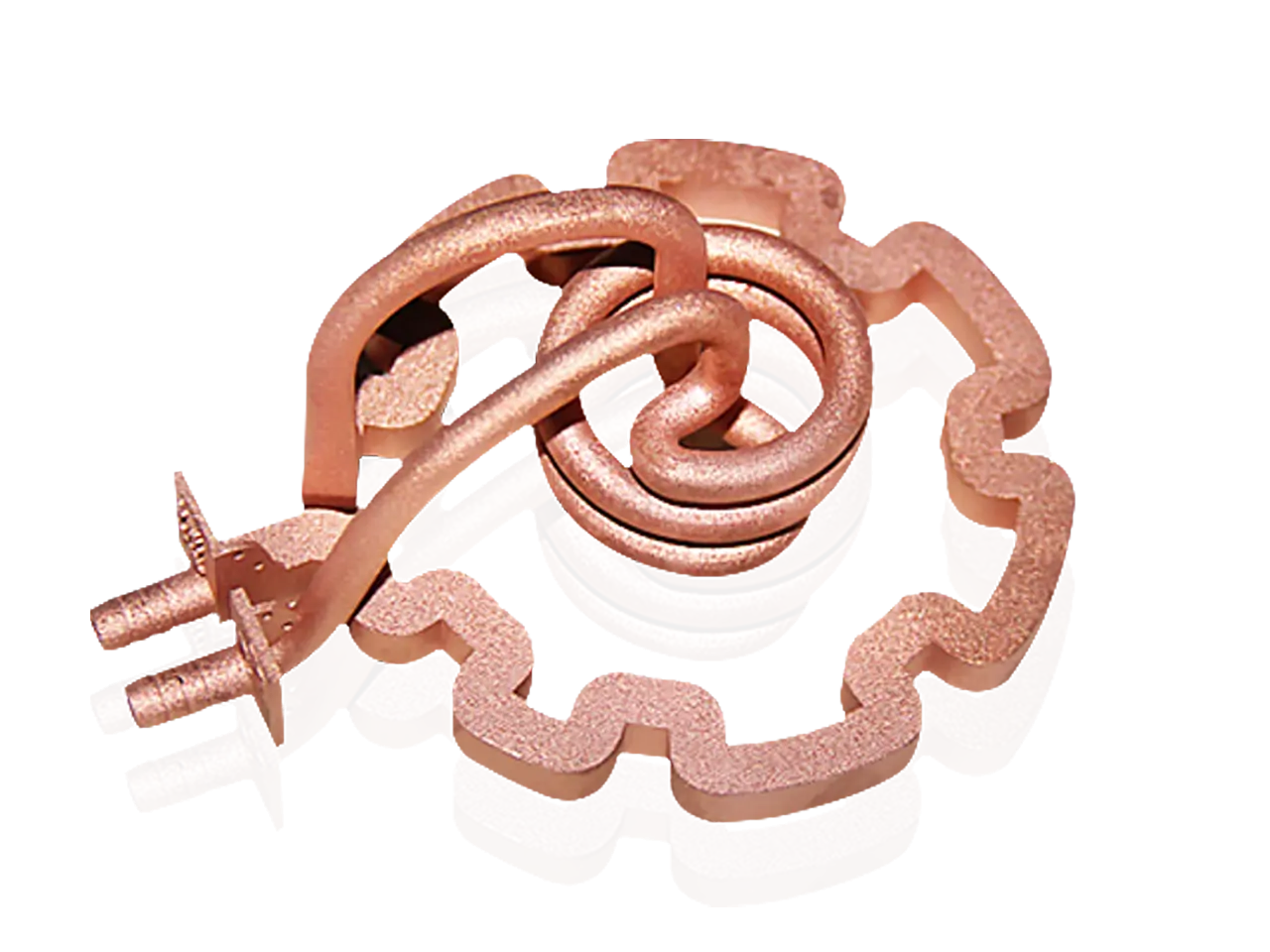
- Functional metal parts (via SLM/SLS): Although metal powder bed fusion has different mechanics, it is possible that layer start/stop workpieces may occur, which may affect fatigue life. We prioritize:
- Placement policy in build preparation software: For non-critical internal areas or corners.
- Optimized laser parameters: Minimize the instability of the melt pool when layer starts up.
- Post-processing: Process critical surfaces to remove all remaining artifacts. (This is the light of Greatlight’s one-stop finishing point).
Elegant How to leverage seam expertise for your prototype
At Greatlight, optimizing seam placement is not just a setting; it is the core capability integrated into our rapid prototype DNA. Our process ensures that your parts look and perform the best:
- Expert slice and build preparation: Our technicians not only run default configuration files. They carefully analyzed each CAD model, strategically allocating the seam position based on form, function and aesthetics. We utilize advanced slicing strategies such as selective seam positioning using tree support or hand-edited custom G code for final control.
- Advanced SLM features: For metal prototypes, our state-of-the-art SLM printers optimize the startup artifacts at the source with proprietary build parameters. Our familiarity with a wide range of alloys allows for tailor-made methods.
- Integration post-processing: Our comprehensive service (precision machining, CNC surface mixing, grinding, polishing, bead blasting) seamlessly remove or hide remaining seam evidence to achieve the final quality required for functional testing or production applications. We understand how it works and Prints, not only clean up afterwards.
- Materials Science Insights: Understanding how different polymers and metals act at the droplet level during deposition or during melting informs the seam adjustment strategy for each unique project.
Conclusion: Seamless through strategies
3D printed seams are still inherently characterized, but their visibility and impact are completely controllable. By going beyond default and embracing strategic placement – whether to use a slicer "The sharpest corner" Logical, manual allocation, and even intentional design – coupled with precise squeezing adjustments, you transform this necessary evil into an invisible footnote. For excellence is non-negotiable prototypes, working with experienced rapid prototype providers, with advanced SLM technology and a meticulous approach to each build parameter ensures your seams disappear, leaving only perfect quality and functional integrity. Control your layer lines and improve print quality from good to special.
FAQ: Optimize 3D printed seam position
- Q: Can I completely eliminate the seams?
one: Unfortunately, no. This seam is the basis of the FDM/FFF process (layer start/stop) and is inherent in most layer-based 3D printing. The goal is intelligent management and minimization. - Q: What is the best seam setting in my slicer?
one: "The sharpest corner" Always the most effective default Strategy naturally hides seams in model geometry. However, manual placement based on a specific section usually produces higher results. - Q: Why does my printer still leave spots on the seams, even coastal/wipe?
one: Calibration is key! The retraction settings require precise adjustments (distance, speed, and sometimes additional restart distance). The printing temperature may be too high, increasing water seepage. The retracted nozzle may be too much. Also calibrate electronic steps. - Q: When should I use it "Random" Seam placement?
one: use "Random" rare. It is useful on organic textured surfaces (such as figurines), where light, uniform spots are less noticeable than defined lines. Avoid on smooth, flat or curved surfaces. - Q: I am using a resin printer (SLA/DLP). Are there seams?
one: Yes, but they behave differently. The layer lines are still present and can be seen according to the direction and after treatment. "seam" The problem is often due to surface finish changes during layer transitions or support for contact scars, managed through orientation management, light delay settings and support strategies. - Q: How important is the seam placement of functional metal SLM parts?
one: Crucial. Although the structure is more uniform than FDM, the layer start point can introduce smaller microstructure heterogeneity or corrugation on the surface, affecting the fatigue life to approach the yield limit. Strategic placement away from critical pressures and professional post-processing (such as CNC machining on interfaces) is critical for high-performance parts. Greatlight’s expertise in SLM includes this level of optimization. - Q: Can post-processing effectively hide seams?
one: Absolutely. Grinding, filling primer, steam smoothing (for some resins), painting or processing can significantly reduce or eliminate visible seams. However, starting with the best printing results, labor can be minimized and the highest fidelity can be achieved. Greatlight provides the finishing service required.
Optimize the next prototype by mastering the seams. Understand it, control it, hide it.