

Redesigned hitch cover: personalized protection for your vehicle
Every detail of your vehicle tells a story, and your trailer hitch shouldn’t be just a forgettable socket collecting road grime. Enter 3D printed hook covera fusion of practicality and self-expression that transforms mundane components into iconic accessories. With additive manufacturing, creating durable, custom cases that fit your style is now a reality. This guide explores how 3D printing, specifically metal solutions, can be used Selective Laser Melting (SLM) Technology – takes hook covers beyond mass-produced plastic ornaments.
Why 3D printing is revolutionizing hitch accessories
A traditional hook cover serves two purposes: to protect the receiver tube from debris and to add minimal visual impact. But with 3D printingthe possibilities explode:
- Completely customized: Embroidering the school emblem of your alma mater on metal? Embedded LED? Create abstract patterns? Yes, yes, yes.
- Durability upgrades: Replace brittle, UV-faded plastic with aircraft-grade aluminum or stainless steel.
- Small batch economics: Skip expensive injection molds – build one or twenty at a feasible price.
- Iterate on demand: Continuous design improvements with no reassembly costs.
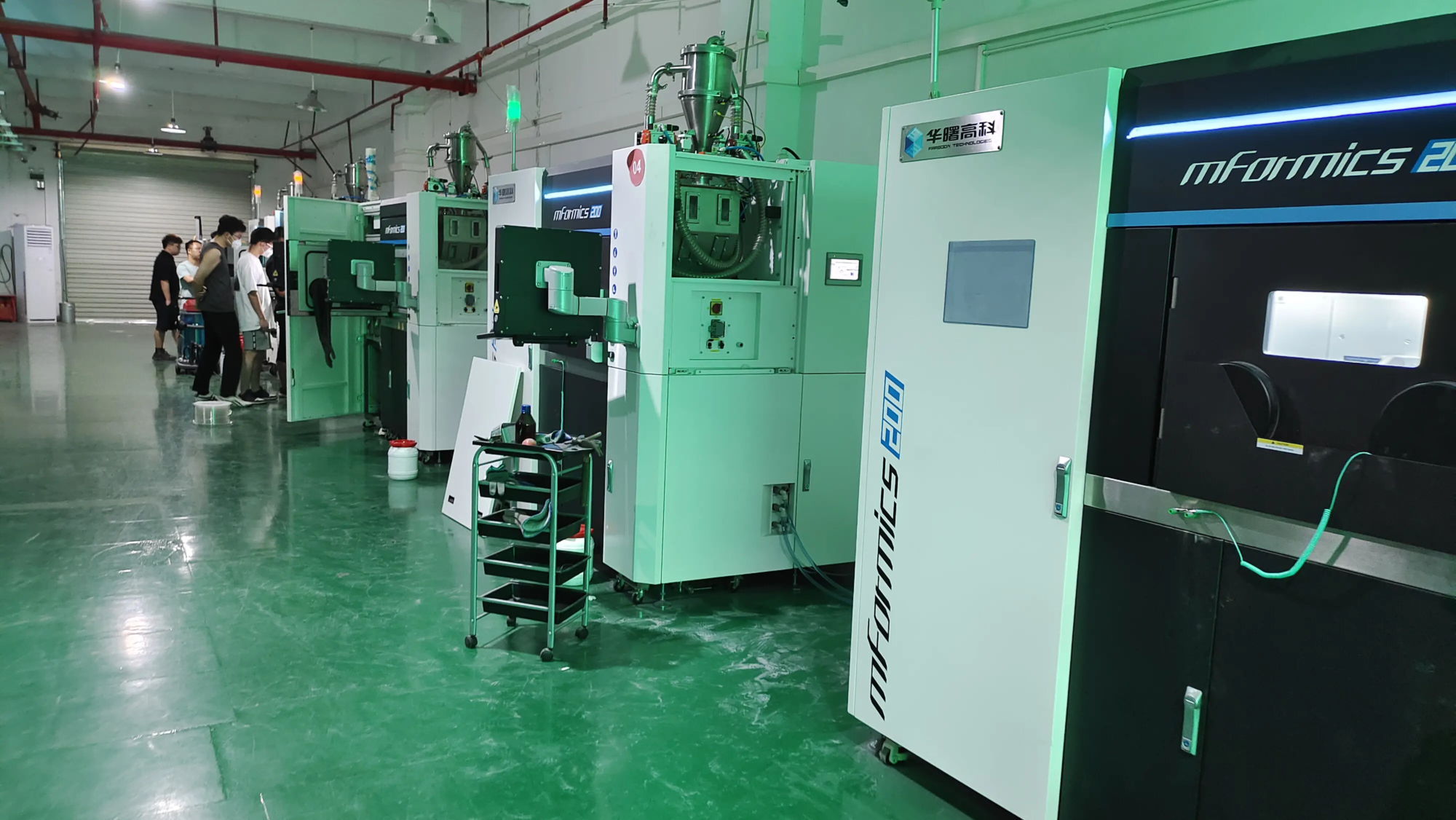
For commercial-scale innovation, professional SLM printers such as huge light) to solve structural requirements that cannot be achieved by desktop plastic printers.
Materials Science: From Garage Prototypes to Industrial Solutions
Not all hook covers are created equal. Environmental stresses (road salt, crashes, UV radiation) require resilient materials. Here’s a comparison of the options:
| Material | most suitable | limitation |
|---|---|---|
| Polylactic acid/PETG | Prototyping, temporary use | Degraded by heat/UV; fragile |
| Nylon (CF-reinforced) | Medium pressure applications | Moderate UV resistance |
| AlSi10Mg (aluminum) | optimal balance | Anti-corrosion coating required |
| 316L stainless steel | Maximum corrosion/impact resistance | Higher cost and heavier |
critical insight: Metal alloys dominate in permanent installations. aluminum(Aluminum silicon 10 magnesium) offers an unparalleled strength-to-weight ratio, while stainless steel (316L) thrives in salty/wet climates. Both promise decades of service – lasting longer than plastic alternatives.
Engineering Principles: Debunking DIY Traps
Functionally designed hook covers are not just for looks. Precision engineering ensures seamless performance:
- Fitting accuracy: The hook range is 1.25" to 2.5"; Measure twice. Printing tolerance of ±0.1mm prevents wobbling.
- attachment system: Common designs use friction pins or threaded inserts. Avoid weak snap fits that easily pop out.
- Load and shock modeling: Use FEA tools such as ANSYS to simulate stress vectors to strengthen vulnerable areas.
- weight optimization: SLM enables an internal lattice structure – cutting quality without sacrificing strength.
Pro tip: Metal prints with wall thicknesses less than 1.5 mm may become deformed. Integrate support geometry around screw holes/keyways.
Metal printing workflow: from CAD to pavement-ready
Here’s how GreatLight guided the project – combining industrial-grade SLM printing with expert finishing:
- CAD file optimization: Our engineers review designs with CAD/FEA tools to improve manufacturability.
- SLM printing: Layers of metal powder that are laser-melted under inert argon ensure a full-density core.
- Details: Removal of parts via wire EDM, maintaining dimensional integrity.
- Post-processing: Media Tumble > Heat Treated (Stress Relief) > Anodized/Powder Coated.
- assembly:Mounting hardware added (threaded sleeve, rubber seal).
The result: a corrosion-resistant, high-quality surface finish indistinguishable from CNC-machined parts.
Solve real-life cases
Case Study: Terrain Tackle Co.
The outdoor brand launches a line of premium custom hooks:
- Design: Bear silhouette casts shadow pattern.
- Material: Anodized AlSi10Mg (weather resistant).
- yield: Accessories revenue doubled.
Mitigating failures? Road vibration testing before delivery detected resonant frequencies, which were fixed by adjusting the rib thickness.
Conclusion: Turning practicality into art
The 3D printed hook cover symbolizes how additive manufacturing can rewrite passive components into functional canvases. Durability no longer has to sacrifice personality. By utilizing industrial metal printing, combined with meticulous engineering, your hitch can evolve into an extension of your identity, whether it’s a rugged work truck or a family SUV. At GreatLight, we’ve pioneered this synergy: combining creative design with SLM printing rigor to deliver uncompromising on-road performance. Your imagination sets the limit; we have the technology to chase it.
FAQ
Q: Is DIY plastic lid feasible?
As a prototype only. Desktop PLA/PETG printing reduces roadside performance – metal printing ensures road-safe longevity.
Q: How much does a custom metal hook cover cost?
Depending on the complexity, budget $90-$200+. Aluminum prices open lower; stainless steel suitable for extreme load applications.
Q: What CAD formats do you accept?
STL, STEP, IGES. Our team cleans files, fixes grid issues, and simulates printability.
Q: Can prints survive collisions?
Absolutely. Metal SLM parts perform better than their cast counterparts. The tensile strength of AlSi10Mg is approximately 450 MPa, which is 100 times tougher than ABS plastic.
Q: Is the paint resistant to UV rays?
The performance of anodized aluminum is outstanding. Stainless steel has the inherent fade/chalk resistance properties of plastic.
Q: How do I submit a design?
Start with GreatLight’s portal — include sketch/CAD files and specify metrics (hook size, materials, finishing fantasy).
Develop your personality without compromising on toughness. Create your signature hooking solution today with expert SLM manufacturing. ✨⚙️
(Explore design freedom further – request a concept consultation at GreatLightRP.com)


