Unfolding the Hypercube: The Art and Science of 3D Printing Hypercubes
The realm of geometry extends far beyond the three dimensions we navigate daily. One of the most fascinating numbers from high-dimensional space is tesseractor hypercube – a 4D simulation of a cube. While we can’t physically inhabit the fourth dimension, 3D printing allows us to hold tangible projections of such complex shapes, bridging abstract mathematics with tactile experience. But how do you capture plastic or metal 4D objects? Let’s demystify geometry and discover how cutting-edge manufacturing creates "impossible" possible.
What exactly is a hypercube?
Imagine extending a square into three-dimensional space to create a cube. Now, extend a cube to fourth spatial dimensions. That elongated structure is a hypercube. In 4D space, it has eight cubes as its "face" (similar to the six square faces of a cube). Each face is connected to other faces along shared edges and vertices, forming an independent, symmetrical shape whose true shape is invisible to the human eye.
To visualize it in the 3D world, we rely on projecting or unfolding the model (e.g. flattening a cube network). The most common representation is Schlegel diagram: A complex wireframe structure in which nested cubes shrink toward the center point. Consider casting the shadow of a 4D object onto 3D space – this "shadow" Revealed that interconnected cubic components are arranged in ways that are impossible under standard Euclidean rules. It’s this paradoxical folding that fascinates mathematicians and designers.
Why printing hypercubes poses a challenge to traditional manufacturing
Translating 4D concepts into solid 3D objects is no easy task. Major obstacles include:
- Geometric complexity: Folding the intersecting planes and sharp angles of the Schlegel diagram creates an overhang of more than 45 degrees. Most printers require supports to prevent collapse, and removing these supports in tight geometric spaces is complicated.
- Spatial fidelity: Ensuring that every vertex, edge and plane is correctly aligned requires micron-level precision – especially important when producing functional models such as precision gears inspired by hypercube symmetry.
- Structural integrity: If material selection is not optimized for thin-walled parts, the aesthetics of the printed tesseract model may suffer. Resin prints are at risk of embrittlement; some metals may deform under thermal stress.
Bridging dimensions with precision technology
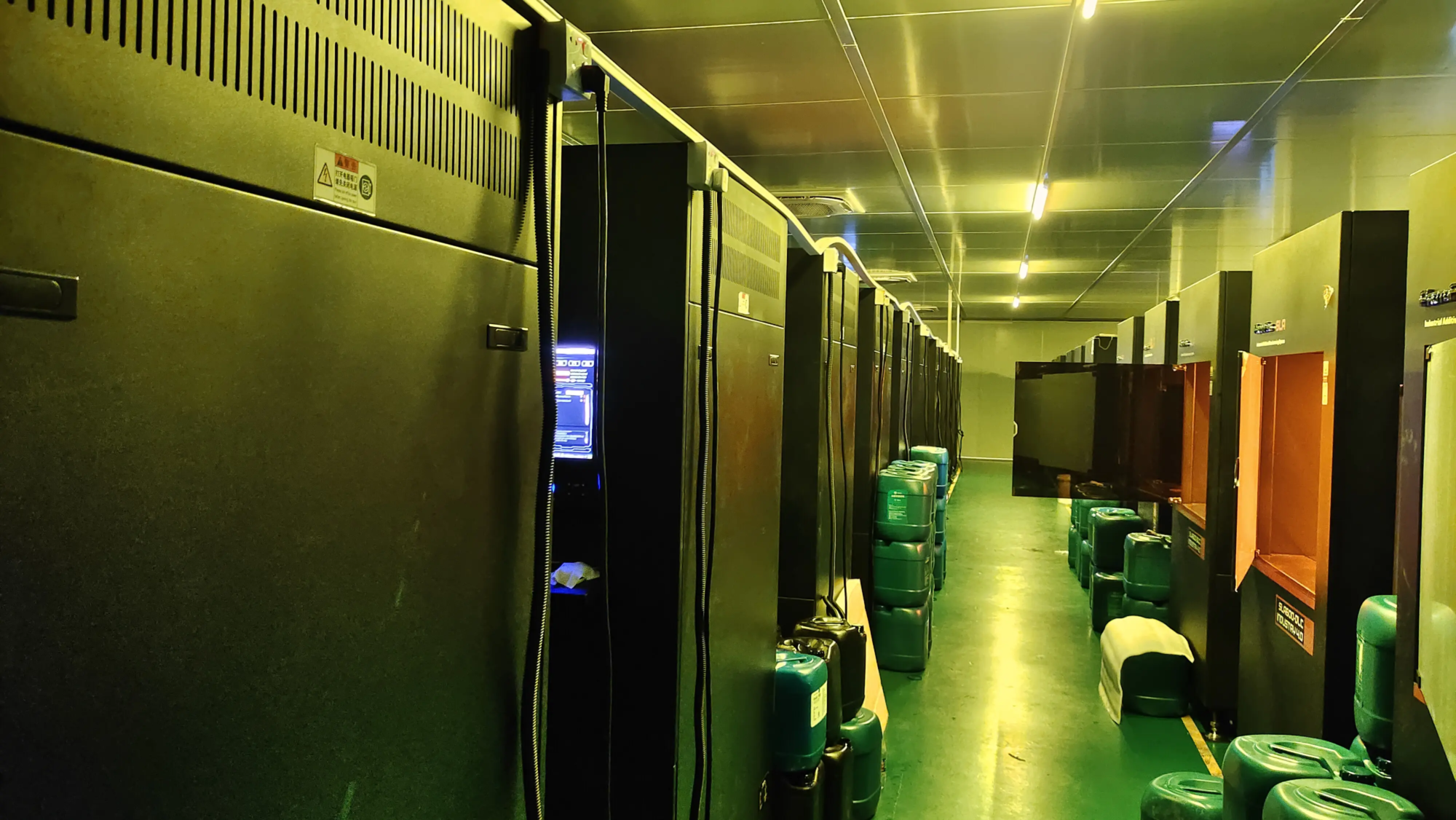
exist huge lightour advanced Selective Laser Melting (SLM) 3D printers allow us to meet these challenges head-on. how? Consider a client project in which a physicist needs an aluminum hypercube prototype for an educational exhibit:
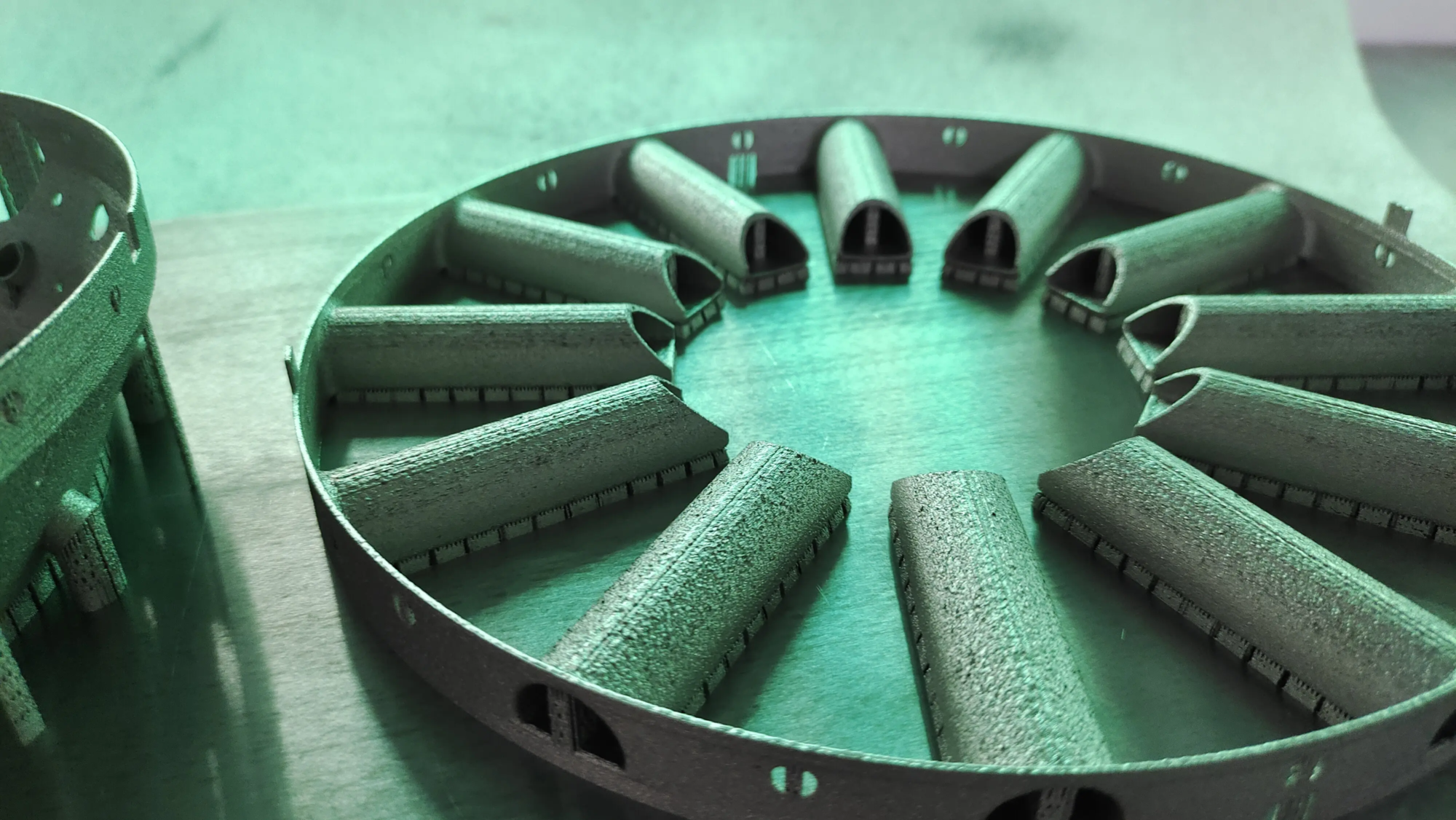
- Sustainability management process: Our printers use high-power lasers to fuse metal powders layer by layer, enabling the creation of geometries not possible with CNC milling or casting. A complicated angle? Internal grid? SLM can handle them intuitively.
- Algorithm-driven support: Custom algorithm generation creates minimal separation supports that are aligned with stress vectors, which is critical to preserving complex intersecting structures without scarring.
- Material flexibility: A variety of metals, from titanium to medical-grade stainless steel and heat-resistant Inconel, allow models to blend artistic refinement (like polished frames) with aerospace-grade durability.
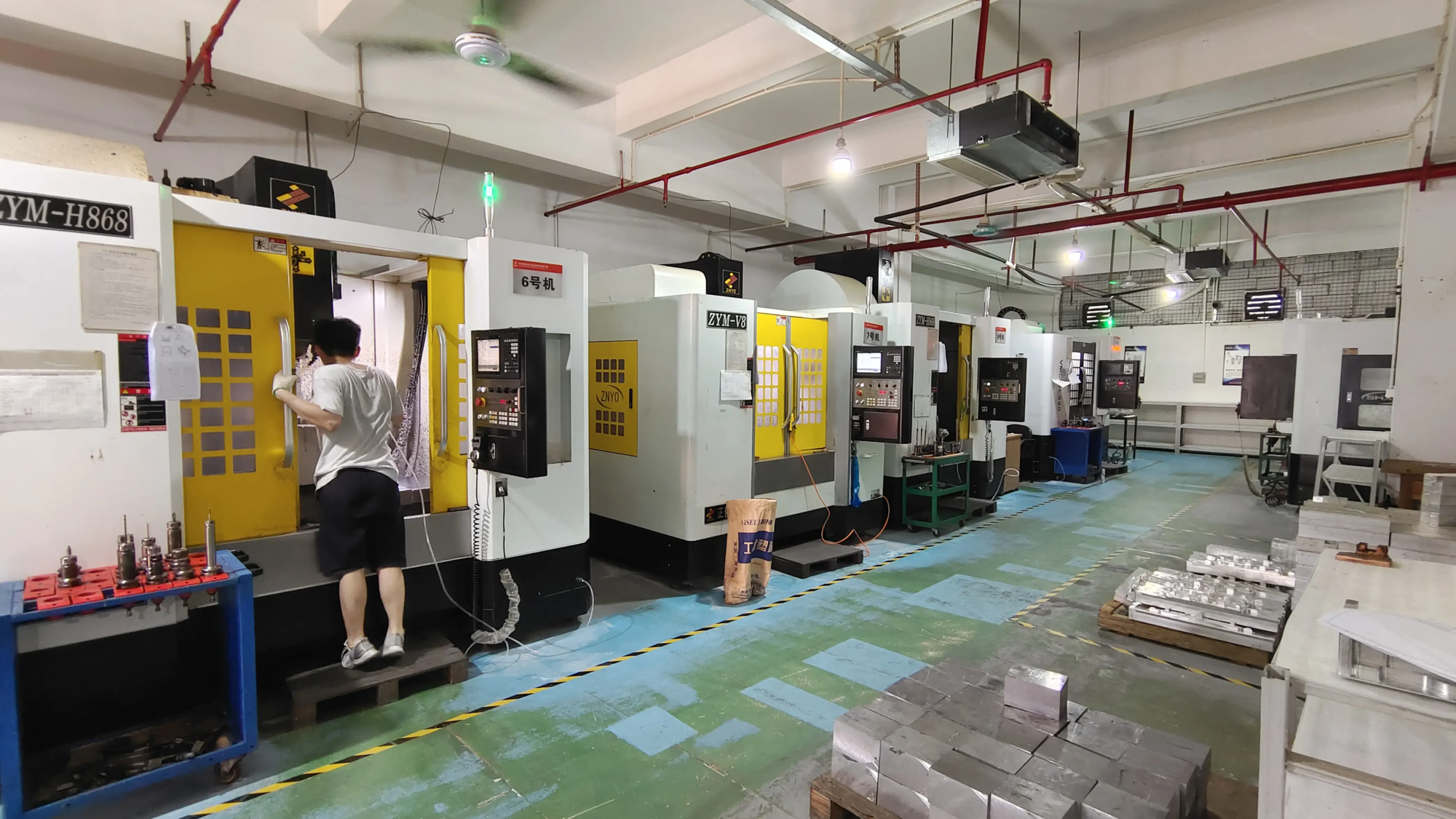
- Post-processing mastery: Secondary processing is the highlight of GreatLight. We combine CNC machining, micro-sandblasting and laser engraving to achieve a perfect surface finish. For translucent resin models that exhibit light refraction through vertices, we use annealing and optical-grade smoothing.
Unexpected applications: From classroom to R&D lab
While the visuals are stunning, the 3D printed hypercube has uses beyond intrigue:
- educate: Universities use tactile models to visualize Klein bottles, Calabi-Yau manifolds and quantum lattice structures. Stainless steel hypercubes can be used in classrooms for decades.
- Algorithm design: Robotics engineers replicate hypercube connections in lightweight bionic joints or deployable mechanisms. Symmetry inspires optimal load distribution.
- Architectural prototyping: Futuristic look or space saving "foldable" The structure draws on hypercube topology. Rapid functional prototypes test wind resistance or material stress.
- Mathematical Arts: Artists exploit impossible geometries generated by CAD tools, such as STL files generated by MATLAB, to explore emerging forms. A chromed bronze hypercube forms the centerpiece of the gallery.
Whether it’s industrial innovation or creative experimentation, rapid prototyping can expose people to concepts that were once limited to blackboards.
Key takeaway: A combination of imagination and engineering
The hypercube remains a symbol of multidimensional thinking—both in mathematics and in manufacturing. Printing it requires an interplay between computational mathematics, physics-aware CAD modeling and multi-process manufacturing techniques. Techniques like SLM push the boundaries, turning theoretical structures into objects we can touch and test. However, not all printers (or operators) are equipped to perform such micro-detailed work.
For prototypes that require challenging traditional machining geometries—whether it’s a titanium hypercube sensor housing or a zirconia ceramic math demonstration—working with experts versed in high-precision 3D printing ensures feasibility. This is where expertise bridges the gap between design ambition and functional reality.
in conclusion
The contradictory shape of the hypercube reminds us that dimension is an illusion that can be manipulated. By leveraging digital tools and additive manufacturing, we capture fragments of the fourth dimension in tangible form. While true hypercubes remain elusive, their 3D shadows have inspired engineers, educators, and artists to rethink their approach to problem solving—one layer at a time. Regardless of complexity, today’s prototyping capabilities can even "impossible" Geometry can be achieved if you have the right technology partner to open the door.
FAQ: 3D Printing Hypercubes
Q: Can I print one? "real" 4D Hypercube?
Answer: Strictly speaking, no. We print 3D projected or unfolded renderings ("net") represents 4D geometry. Think of it like taking a photo of an architecture – the photo is 2D but reflects the 3D structure. However, techniques such as stereolithography can create four-dimensional optical illusion models through refraction or dynamic illumination.
Q: What metal is best for a robust hypercube model?
A: Tool steel alloy provides stiffness for fine details, while aluminum (AlSi10Mg) balances weight and strength. For extreme durability under tension (e.g., articulated joints), titanium Ti6Al4V excels. GreatLight customizes selections based on heat/load curves and finishing requirements.
Q: How accurate are the printed hypercubes?
Answer: Using a high-resolution SLM printer (dimensional accuracy ±0.05mm), the vertices and edges reach micron-level accuracy. Post-processing refines the surface to sub-micron roughness. Larger models benefit more from precise toolpaths.
Q: Is resin suitable for complex hypercubes?
A: UV-curable resins such as Somos PerFORM allow for extremely thin walls and smooth edges, but are suitable for static displays. The semi-flexible hybrid resin mimics the stretch properties of polymers – perfect for foldable meshes. For thermally stable or load-bearing applications, metals dominate.
Q: Can I customize a hypercube print for a specific physics simulation?
Answer: Of course. Variables such as infill lattice structure, anisotropic material layering, and vents can be adjusted. For fluid dynamics studies, we printed hollow hypercube channels that allowed pressure-flow testing.
Q: How long does printing/SLM finishing take?
A: A complex 150mm metal hypercube takes 3-5 days, including heat treatment and CNC polishing. The accelerated program leverages parallel batch printing for 1-3 day delivery.
Working with Gretel:
Are you still worried about unimaginable geometric shapes? We transform visions into prototypes. As an ISO 9001 certified innovator, huge light Integrate SLM 3D printingprecision CNC machining and custom finishing steps to create perfect metal/composite parts. Explore aerospace resin tolerances? Need an iterative prototype protected by an NDA? Submit your project to achieve groundbreaking speed, quality and technical depth – pushing the dimensional frontier since 2012.