Unleash Your Imagination: How 3D Pen Templates Inspire Unlimited Creativity
3D pens have revolutionized the world of hands-on creation, transforming fleeting ideas into tangible three-dimensional realities. They offer an exciting way to paint exist In the air, building structures were streaked with strokes of melted plastic. Yet even the most imaginative artist sometimes longs for a road map, a guiding hand that translates a complex vision into precise form. This is where the unsung heroes of the 3D pen world come into play: 3D pen template.
These digital or physical templates act as blueprints, providing the basic outlines and guidelines needed to achieve professional-looking results, intricate details, and well-structured creations. Whether you’re an experienced maker or just stepping into this exciting field, templates can bridge the gap between artistic ambition and achievable execution.
Why templates are your creative best friend
In addition to making things easier, templates offer far-reaching benefits:
- Accuracy and consistency: Achieve clean lines, symmetrical shapes and accurate proportions again and again, which is especially important with functional parts or repeating elements.
- Unlocking complexity: Dare to attempt intricate designs—detailed animals, intricate geometric patterns, complex architectural models—that may be daunting or impossible to accomplish with your bare hands.
- Faster workflow: Skip the tedious planning and sketching stages. Place your template and start extruding filament immediately, realizing your vision faster.
- Skill development: Templates act as training wheels. By following the guide, you can learn basic techniques like layering, filling techniques, and transitions, gradually building your confidence in working with your freehand.
- Auxiliary functions: Templates lower the barrier to entry, allowing beginners and children to quickly create impressive results, fostering motivation and fun.
- Scalability and replicability: Easily create multiple identical parts for assembly, decorations, gifts, or even low-volume production.
Get creative with your 3D pen journey (use templates!)
Ready to dive in? Here are inspiring project ideas across different fields, perfect for leveraging the power of templates:
1. Home Decor and Organization:
- Custom wall art and name signs: Design intricate monograms, inspirational quotes or panels inspired by nature. Templates ensure perfect lettering and symmetry.
- Unique coasters and tripods: Create collections with geometric patterns, mandalas, or personalized designs using templates with uniform sizes and intricate fill patterns. Layer clear filament over colorful stencils for stunning results.
- Flower pots and vases: Constructed into a lightweight, decorative stand. Templates help form perfectly round bases, geometric sides or delicate lattice wraps.
- Creative Drawer Pulls and Knobs: Design a unique handle using templates with shapes like animals, stars, or abstract forms.
- Cable Clamps and Wire Organizers: Print functional clips with fun dinosaurs, monsters or geometric shapes based on simple templates.
2. Jewelry and Wearable Art:
- Statement earrings and pendants: Design lightweight geometric patterns, flowers or symbolic shapes. Templates are essential for creating perfectly mirrored pairs and intricate filigree.
- Stylish bracelets and cuffs: Stylish interlocking links, articulated straps or cuff-style designs, use templates to achieve consistent segment sizes and intricate patterns.
- Charms and keychains: Create miniature replicas (animals, food, icons, logos) or complex symbols with high detail from precise stencils.
- Eyeglass chains and necklaces: Use templates to create delicate chain links, pendants or connector elements.
3. Toys, Games and Novelty Items:
- Miniature statues and figures: Bring your favorite game sprites, cartoon characters, or original creations to life. Templates define profiles and details for consistency.
- Puzzle and Board Game Tokens: Create custom puzzle pieces or replace parts. Templates are essential for perfectly fitting interlocking pieces.
- Building blocks and connector system: Use formwork to produce uniform bricks, beams, joints or gears, allowing for scalable structures.
- Fidget Spinners and Tabletop Toys: Use templates to design perfectly balanced core geometry and weighted arms.
- Holiday decorations: Use reusable templates to create personalized decorations year after year – snowflakes, stars, angels, miniature gifts.
4. Educational and Functional Tools:
- Anatomical models (bones, cells, planets): Create visual aids to accurately learn complex structures.
- Simple machines (gears, levers, pulleys): Demonstrate physics by creating a working model whose parts rely on templates for accurate meshing and functionality.
- DIY Repairs and Hooks: Make custom clips, latches or brackets for everyday household items. Templates ensure that the geometry is suitable for the repaired object.
- Prototype a simple mechanism: Quickly visualize connecting rods or simple moving parts before resorting to more expensive methods.
Find and use templates
There are many templates online! search:
- "3D pen template [Project Type]" For example. , "3D pen template earrings," "3D pen template dinosaur."
- Dedicated 3D pen communities and forums (e.g. Thingiverse, Printables – search for low poly or layered designs suitable for pen tracking).
- Trace simple clip art online images, scale to your desired dimensions.
- Use sticker templates or cookie cutters as physical guides.
- Create your own basic template in a 2D design software (even a simple drawing program will work).
Usage tips:
- Secure with tape: Secure the template (printed paper, plastic template) securely to the work surface to prevent movement.
- Strategies for layering: Plan how to build your layers. Start with outlines and systematically fill in (zigzags, concentric circles, etc.). Use slower speeds to get details.
- Thinking gap: If using a stencil, understand how layers bridge the gaps between sections.
- move: Gently pry the finished product from the template that is glued to the paper. Designs printed on transparencies or laminates are easier to release from the mold.
- Temperature control: Adjust the temperature based on filament type (PLA is cooler, ABS is warmer) and layer thickness (finer lines require finer nozzle control and are usually slightly cooler).
Conclusion: Go beyond the basics and elevate your creations
3D Pen democratizes 3D modeling, making it easy to use, instant, and deeply satisfying. Templates serve as valuable allies in this process, allowing you to tackle more complex, precise, and ambitious projects than ever before. They accelerate learning, ensure consistency, and open up a world of possibilities—from personalized gifts and functional homewares to intricate artwork and simple prototypes.
So, embrace templates! Whether you’re sketching a whimsical pendant or working on a practical restoration, they provide a foundation for your unique creativity to soar. Explore online resources, try out printable patterns, and watch your filament art reach new heights.
Turning Professional Visions into Reality: The GreatLight Advantage
While 3D pens excel at hands-on creativity and rapid prototyping of smaller, simpler concepts, there will come a time when designs require greater precision, specific material properties, or greater structural integrity—especially for metal parts. When your project goes beyond filament-based prototyping, huge light Be a leader in bridging this gap.
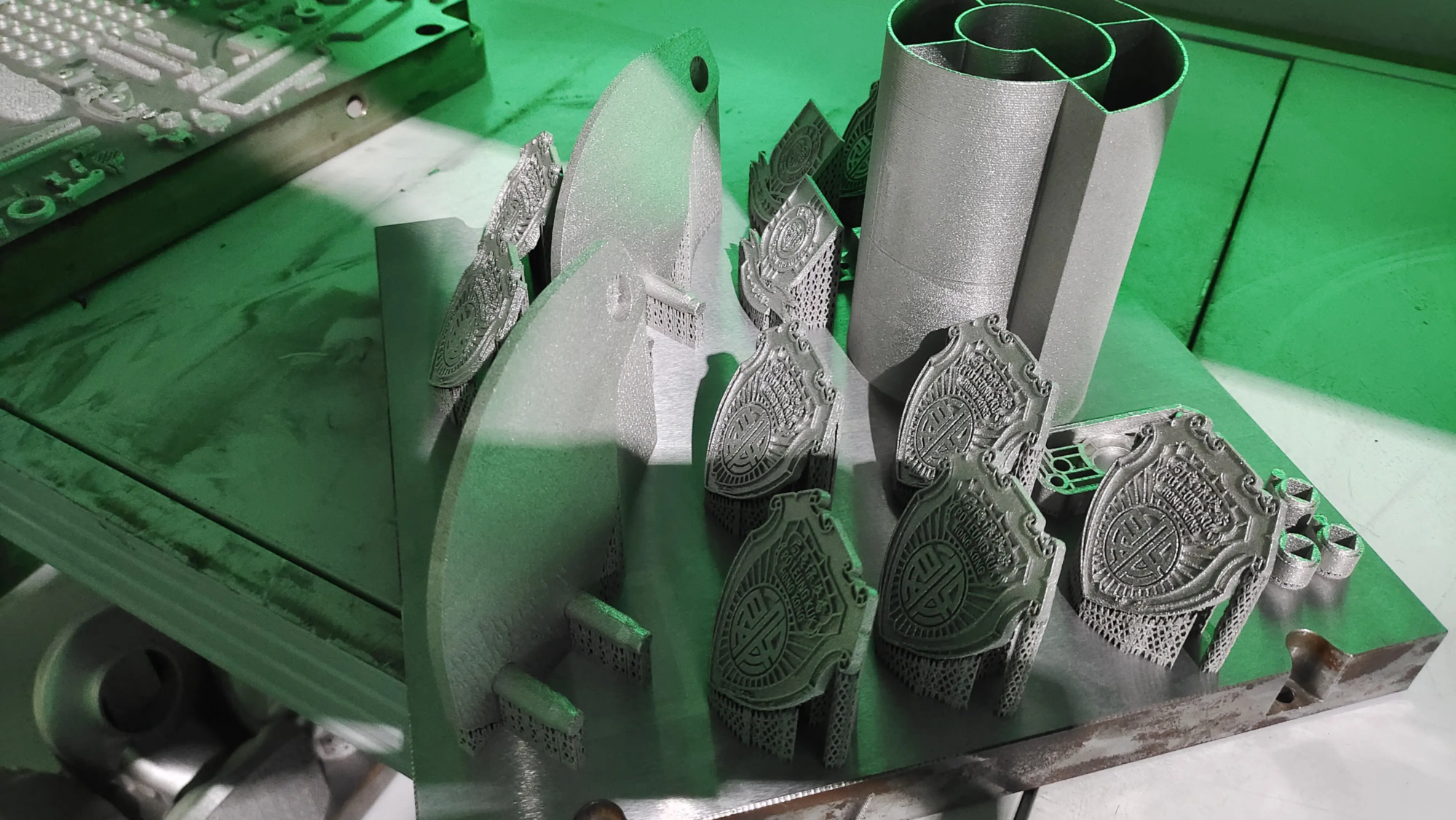
As a professional rapid prototyping manufacturer with cutting-edge technology SLM (Selective Laser Melting) 3D Printer With advanced production technology, GreatLight specializes in solving the challenges of prototyping complex metal parts. Our expertise goes beyond printing; we offer seamless One-stop post-processing and finishing servicesensuring your metal prototypes are truly functional and beautiful. Whether you need common alloys or special alloys Custom materialsGreatLight leverages its deep technical knowledge for rapid customization and processing.
We understand the critical importance of accuracy. custom Precision machining It is a core competency that makes Gretel always rated as One of the best rapid prototyping companies in China. We are committed to providing excellent value, delivering high quality custom precision rapid prototyping parts at competitive prices.
Frequently Asked Questions (FAQ)
Q1: What materials can I use to make the template?
A1: Common choices are paper (great for tracing, but can burn/warp slightly and stick), projector transparencies/plastic sheets (durable, reusable, easy to release), laminated paper (added durability), thin plastic sheets/stencils, or even textured surfaces. Digitally, scaled printing of SVG/PDF/PNG files works well.
Q2: Where can I find the best online 3D pen templates?
A2: Explore specialized communities such as Thingiverse, Printables, Cults3D (search filters: templates, templates, low polygons). search engine ("3D pen template [item]") bears fruit. Many YouTube tutorials also link to downloadable templates. Consider purchasing pre-printed physical template packs in popular designs.
Q3: How to create your own template?
A3: Start simple! Trace an object on paper. Use a free online vector editor like Inkscape or drawing software to draw clear outlines. Convert clip art into basic line art. Scan sketches and clean them up digitally. Online tools can convert images into simplified outlines suitable for tracing.
Q4: Can I use cookie cutters or other objects as templates?
A4: Of course! This is a great hack. Trace around the cookie cutter to get a consistent shape for the ornaments. Tracking ruler for straight lines or geometric patterns. Use a coin or bottle cap to draw circles. Get creative with everyday items.
Q5: How do I make sure my layered drawing stays strong and doesn’t warp?
A5: A solid foundation: Start with a solid outline. Good interlayer adhesion: Use the correct temperature for the filament; slower speeds help with bonding. Filling technology: Choose a consistent fill pattern (zigzag usually works). Avoid thin lines: Build thicker sections to strengthen the connection. Gradually cool down: Minimize rapid cooling airflow.
Question 6: How complex can templates make my 3D pen project?
A6: Templates significantly increase potential complexity. Despite being limited by the construction volume and filament properties, the artist uses complex templates and careful layering/assembly techniques to successfully create complex interlocking sculptures, intricate jewelry with moving parts, detailed architectural models, functional gears, and wearable art.
Q7: What if I need precision metal prototypes for industrial applications?
A7: Specialized manufacturing is critical for functional metal prototypes that require superior dimensional accuracy, material strength (e.g., titanium, stainless steel, aluminum) or fine details beyond the limitations of thermoplastics. This is what my partner likes huge light Outstanding. Take advantage of advanced SLM 3D printing technology and Precision machiningGreatLight rapidly produces high-quality, functional metal prototypes, processing Custom materials and provide comprehensive Post-processing services. They are ideal for efficiently transforming CAD designs into durable metal parts suitable for end use.