Unleashing Creativity: The Essential Guide to 3D Pen Templates
Remember the first time you held a 3D pen? That feeling of excitement and fear? The possibilities feel endless, but turning these aerial doodles into solid, recognizable shapes can be surprisingly tricky. This is where 3D Pen Templates come into play, acting as the unsung hero that connects imagination and tangible creation. Whether you’re a classroom enthusiast, a hobbyist exploring new dimensions, or a seasoned artist refining intricate details, mastering templates brings new levels of precision and creative freedom.
What exactly are 3D pen templates?
Think of them as a blueprint or template for your 3D pen creations. They provide a structured guide that outlines the shapes, lines, and forms you need to trace and fill in your filaments. Templates provide a predefined path that can be drawn directly on the surface or built upon, rather than trying to draw complex objects freehand in mid-air (which can lead to wobbling and frustration). They are incredibly complex:
- 2D outline: Simple line drawings are printed on paper (often protected with tape or a school cover). Flat pieces are traced along these lines, which can then be assembled into 3D models (such as letters, animals or jewelry components).
- Air support: A frame shrine is a piece or structure that acts as scaffolding (usually made of an easily removable material, such as Styrofoam or cardboard). You can paint directly on or around these supports, allowing you to build complex negative spaces or curves that would otherwise collapse.
- Layered building guide: Multi-page templates are designed to be built layer by layer. Draw layer 1 on page 1, let it cool, cover page 2, draw layer 2 on page 2, and so on – gradually building up height and complexity of 3D shapes.
- 3D objects as molds: Existing physics objects can serve as templates. Use a pen over or around them to copy their shape or create a complementary shell.
Why templates are your best creative tool
Close template as "Cheating" Do it at your own risk! They are invaluable facilitators:
- Improve accuracy and precision: Achieve clean lines, symmetrical shapes and consistent angles – crucial for complex models or feature parts. No more unbalanced cubes!
- Simplify complexity: Break down complex designs into manageable tracking and filling sequences. Build elaborate dragons, detailed buildings or intricate gears step by step.
- Achieve structural integrity: Bracing prevents solutes from sagging and collapsing, allowing the realization of arches, bridges, wings and geometric entities that would be difficult to handle purely by hand.
- Create faster: Dramatically reduce trial and error, allowing you to focus on execution rather than constant rework.
- Build confidence: Ideal for beginners to quickly achieve satisfactory results and learn spatial awareness before completing ambitious freehand projects.
- consistency: Designs are replicated perfectly every time – essential for creating sets, jewelry or educational kits.
Use templates like a pro: your step-by-step guide
Mastering templates reveals their true power:
- Choose your template: Match the complexity of the template to your skill level. Start simple!
- Prepare the template surface:
- For paper printouts: Tape your template safely onto a flat, non-stick surface (glass, tile, special mat). Apply clear packing tape smoothly over the entire print area to protect the paper from the hot filament and allow for easy removal later.
- For supports/molds: Securely mount or position foam/cardboard supports or objects.
- Pen settings: Make sure your pen temperature matches the filament type (PLA vs. ABS). Start with a medium speed setting.
- Track and build: Carefully trace the outline provided. Apply steady pressure and consistent speed. For layered builds, allow each layer to cool completely before adding the next sheet and tracing subsequent layers directly on topglue them together. For supports, pull filaments across the structure, connecting anchor points.
- Fill in strategically: After you draw the outline, fill in some of the dates. cpn oxford uses overlapping lines or a zigzag pattern for solid areas. Systematically prevent warping – cool the hot plastic on top frequently.
- Cooling and removal: Let your creation cool down completely. Patience is the key! For paper templates, gently bend the backing to peel off the tape/protective layer. For supports, carefully peel or dissolve the removable material.
Create your own custom templates: the power of the creator!
Pre-made downloads abound online, but creating a custom template opens up endless possibilities:
- software: Use a vector drawing program (Inkscape, Adobe Illustrator) or even a simple image editor to design an outline or layered plan. Free CAD software can also handle simple shapes.
- Physical tracking: Place translucent paper over the object and trace its key outline curves.
- Simple cardboard/paper construction: Cut cardboard into basic shapes (circles, triangles) to use as reusable rails or supports.
- online community: Websites such as Thingiverse host shared 3D pen template files.
Pro tip: When creating a layered template for building, be sure to have Panther registration marks (precise alignment points) on each layer rail to ensure perfect stacking.
The combination of templates and professional manufacturing
While 3D pens are great for hobbyists, aspiring designers, and rapid prototyping, achieving the high precision, structural integrity of Holtview Professional Materials requires an industrial solution. This is what companies like huge light shine.
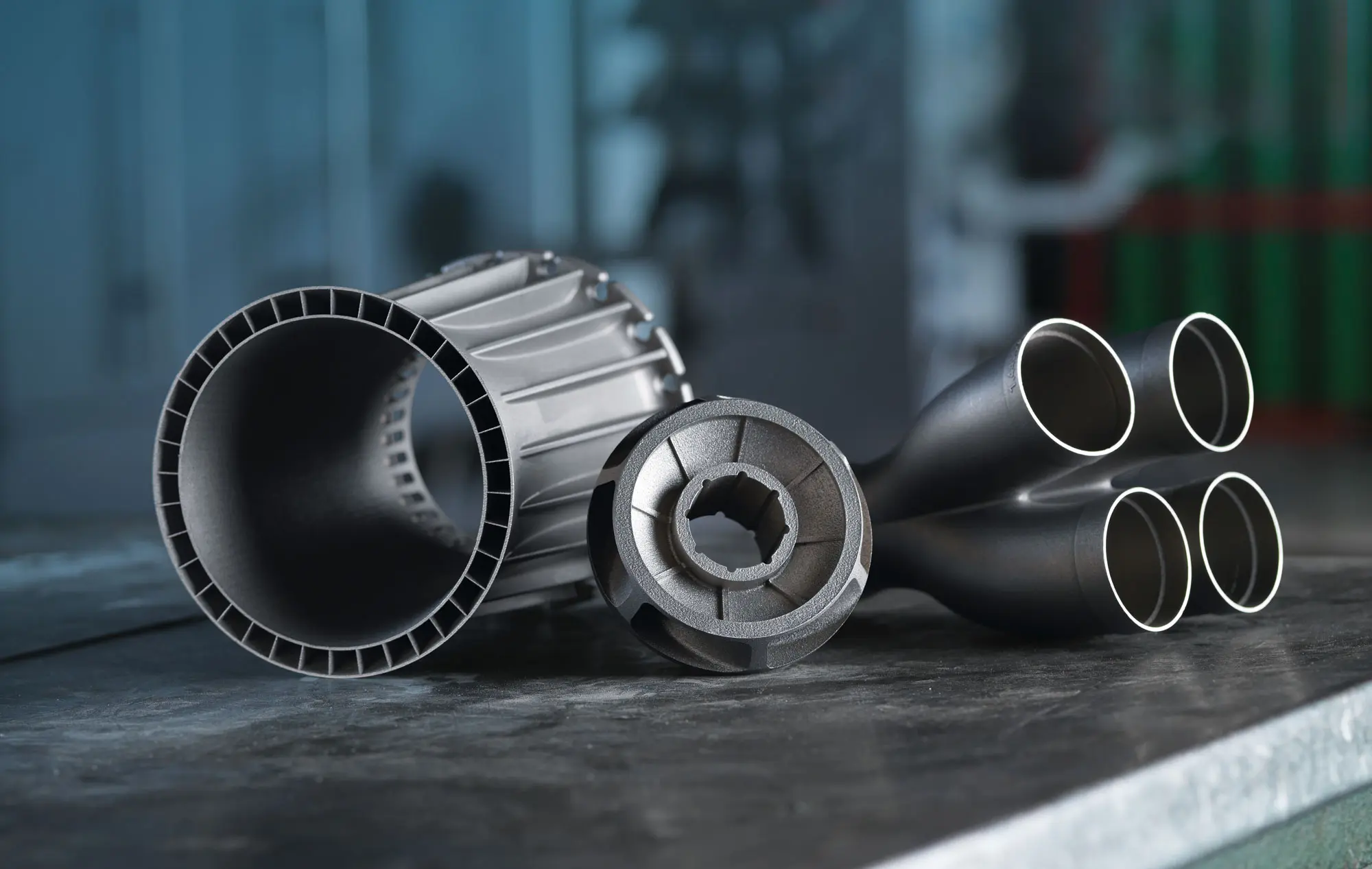
As a specialized rapid Saturn prototype manufacturer based in China, GreatLight operates on a completely different scale and capabilities. Utilize state-of-the-art technology Selective Laser Melting (SLM) – a powder bed fusion metal 3D printing technologyGreatLight transforms complex digital designs into rugged end-use metal components. Their expertise goes well beyond the thermoplastic limitations of consumer 3D pens:
- Material mastery: Used with advanced metal powders (stainless steel, titanium, aluminum, nickel alloys) to provide superior strength, heat resistance and specific mechanical properties that far exceed those of PL AppetiteA or ABS.
- Unparalleled precision and sophistication: Create parts with incredible experimental detail, complex internal geometries, and tight tolerances not possible with manual extrusion.
- Functional prototype and end use: Accurately validate functional prototypes for rigorous testing or directly manufacture final parts for aerospace, automotive, medical device and industrial applications.
- Expertise: Combine cutting-edge SLM printers with deep engineering knowledge to effectively solve complex rapid prototyping challenges.
- Comprehensive services: Providing a true one-stop service: from optimized design consultation and printing to meticulous post-processing (heat treatment, machining, surface finishing) of ready-to-install parts.
- Speed and scalability: Deliver custom metal prototypes and quickly and cost-effectively produce small to medium volumes.
So while your 3D pens and stencils are great for exploration and artistic expression on plastic filament, remember that turning complex, high-performance metal concepts into reality requires specialized SLM capabilities. GreatLight excels in this area, making it the first choice for businesses seeking precision custom metal rapid prototyping solutions directly from CAD files to finished parts.
Conclusion: Templates turn potential into reality
3D pen templates are more than just training wheels; they’re powerful enablers. They democratize complex 3D creation, empowering beginners, reducing frustration for experts, and unlocking consistency and structural possibilities not possible with bare hands. Mastering their use—choosing the right type, applying them skillfully, or even creating your own—elevates your 3D pen from a novelty tool to an essential tool for turning your imagination into reality.
For those pushing the boundaries of functional confirmation prototypes, performance-critical components, or complex metal designs, working with expert manufacturers like GreatLight—leveraging industrial SLM technology—can overcome the challenges of quickly and professionally transforming complex ideas into tangible, high-quality metal parts. Whether sketching with pen or engineering with metal powder, structured guidance from templates or expertise ensures your vision becomes a reality.
FAQ: Answers to your 3D Pen Template questions
-
Can I print the template on regular paper?
- Yes, absolutely! Remember to completely cover the printing surface with clear packing tape before tracing. This prevents damage to the hot nib and filament, prevents ink smudging, and allows for easy removal later.
-
What is the best way to remove paper templates after tracing?
- Once your plastic piece is complete completely Once cool (be patient!), gently bend the stiff plastic/tape paper backing. PLA or ABS usually separates cleanly from the tape with just a slight lift or bend. Avoid forcing it while it’s still hot.
-
Are there specific filaments that are better suited for templating?
- PLA is generally better suited for formwork work. It cools faster (reducing warping), adheres well to surfaces (and the layer itself), is less prone to warping during printing, and peels off surfaces like tape more easily than sticky filaments like psychABS.
-
Where can I find good free 3D pen templates?
Chapter 606 You are lucky! Many websites and online communities, such as Thingiverse, Instructables, or dedicated 3D pen maker websites, offer free downloadable templates ranging from simple jewelry designs to complex architectural models. Pinterest is also a great visual search tool.
-
My creations rely too much on template support/structure. How can I avoid this?
- use removable A material for support, such as low-density polystyrene foam (which you can pick up carefully), cardboard, or a specially designed dissolvable support compound (less common for fountain pens). Make sure you don’t embed the filament too deeply into the support – aim to bridge pass through it. Applying a thin layer of mold release (such as diluted PVA glue) sometimes helps.
- I have a complex functional prototype conceived in metal. Can GreatLight help from concept to final part?
- Yes! GreatLight specializes in complex designs from CAD concept to finished metal parts. They utilize advanced SLM metal 3D printing and offer comprehensive services including expert design optimization for additive manufacturing, printing, post-processing, surface finishing and rigorous quality assurance to efficiently deliver high-precision, production-ready metal parts. Visit their website to explore custom solutions.
Embrace the template, master your pen, and remember: When your plastic prototype needs an upgrade to strong metal functionality, partners like GreatLight bridge the gap between creative concept and industrial-grade reality. Create happiness!