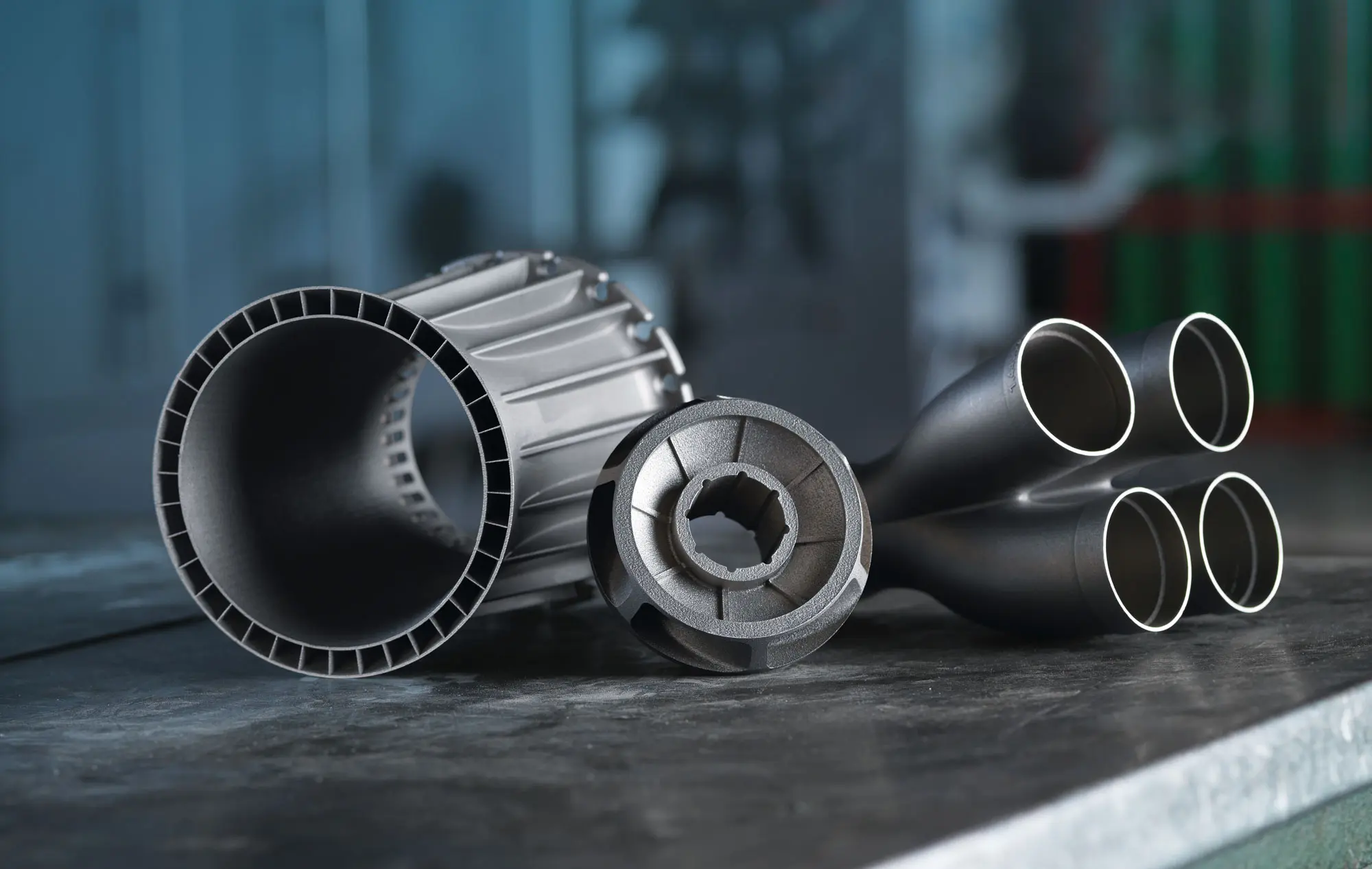
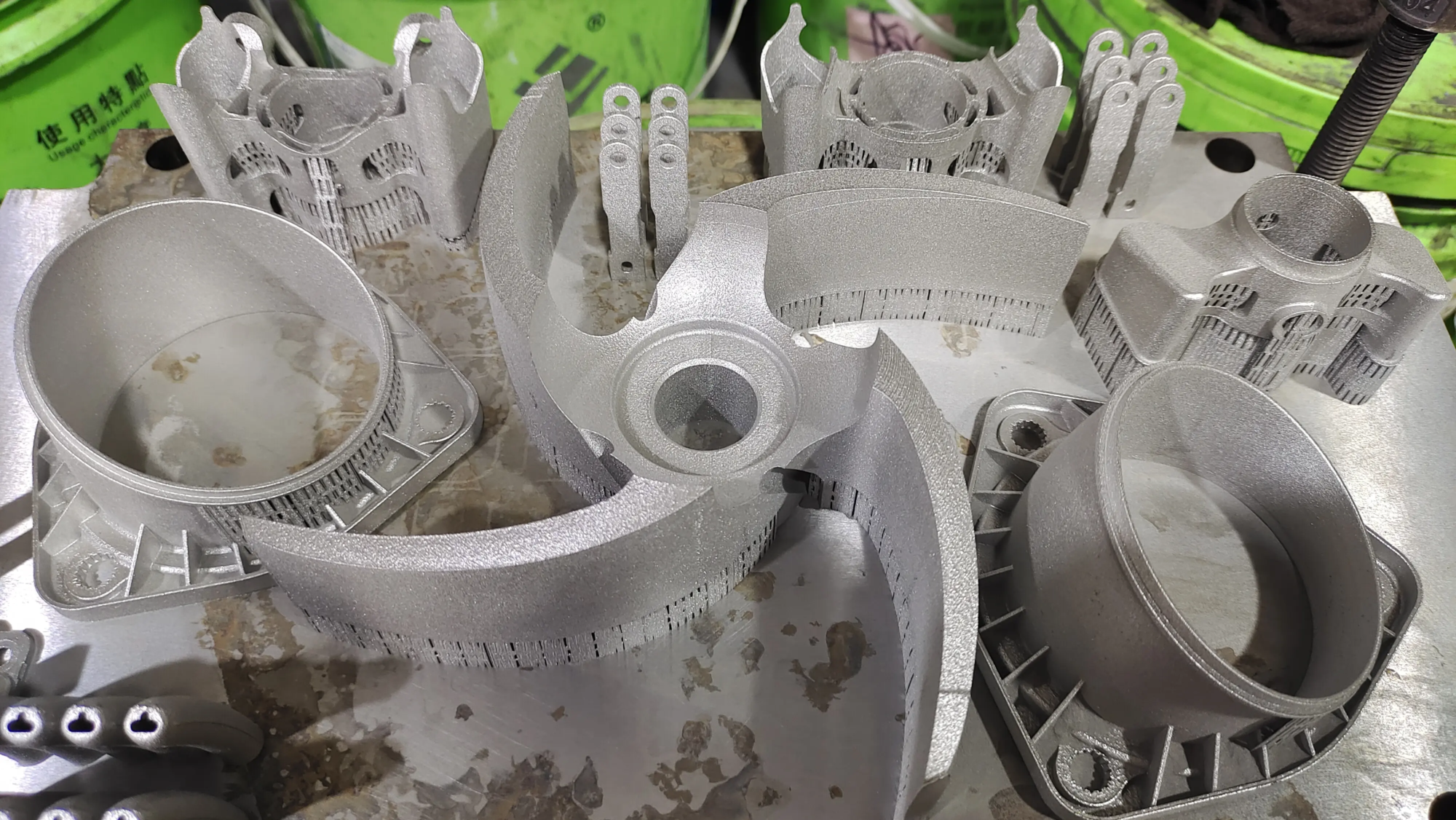
Forget sci-fi dreams: 3D print your features "escape hatch" is today’s engineering reality
We’ve all seen it: the dramatic cinematic moment when the heroes climb into a sleek, self-contained pod, break free from a doomed spacecraft and rush to safety. this "escape hatch" Fired our imagination – a compact, strong, instantly deployable lifeboat made from advanced materials. If we tell you the core essence – Quickly create mission-critical, geometrically complex, ultra-robust metal parts – No longer science fiction? This is the daily reality of metal additive manufacturing (AM), especially Selective Laser Melting (SLM). For engineers facing their own problems "engineering emergencies," This ability is literally a lifeline.
You can’t escape a crashed starship (probably). But maybe you’re fighting against:
- Critical component failures shut down production lines.
- Satellite prototypes are in desperate need of a complex, lightweight mount.
- Doctors need a breakthrough medical implant that requires patient-specific geometry yesterday.
- Traditional machining of traditional machine parts has become obsolete and incomparable.
this is yours "escape hatch" moment. your boat? Experts like GreatLight offer advanced 3D printing services.
why your "pod" Need for metal additive manufacturing (not just any printer)
Escape from certain doom requires perfect engineering. The same goes for producing parts that can withstand extreme temperatures, pressure, structural loads, or corrosive environments. Think about what you need for an escape hatch:
- Extreme environmental resistance: ✔️ Must withstand extreme heat/cold, vibration, potential impact. SLM metal such as Titanium (Ti6Al4V), Nickel superalloy (Inconel 718/625), Stainless steel (316L, 17-4PH)and high intensity Aluminum alloy (AlSi10Mg, Scalmalloy) Provides excellent mechanical properties, high temperature performance and corrosion resistance. Just what complex propulsion components, structural supports or fluid systems require.
- Complex, optimized geometries: ✔️ Internal lattice for shock absorption, conformal cooling channels for thermal management, organic shapes to minimize mass – these are impossible to achieve through traditional processing, but are the core advantages of SLM. Design freedom allows real Function optimization.
- Prototyping speed: ⏱ When disaster is imminent, lead times for castings or CNC machining are unacceptable. SLM quickly converts digital designs (CAD) into functional metal parts in days instead of weeks, allowing for incredibly fast iteration and deployment.
- Made on demand: ⚡ No massive minimum order. need one Custom component? ten? SLM eliminates the need for expensive tooling, making low-volume, rush production very economical.
Entering the ICE Zone: GreatLight’s approach to critical missions (incident command experience metaphor)
At GreatLight, we approach rapid prototyping requests with the urgency and precision of engineering emergency response – Incident Command Experience (ICE) for manufacturing. Our focus is clear: Deploy your function "escape hatch" – Your critical part – faster and more reliably than anyone else.
We achieve this by:
- Advanced SLM platform group: Our factory has industry-leading high-precision SLM machines equipped with multi-laser systems and precision monitoring. This means excellent detail resolution (enabling +/- 0.05 mm tolerances), excellent surface finish potential (Ra < 10 µm post-processing) and uncompromising material integrity for demanding applications.
- Deep materials science expertise: We don’t just print metal; We designed its microstructure. Our team has extensive knowledge of the metallurgy and processing parameters of various alloys – ensuring optimal strength, ductility, fatigue life and specific properties (such as biocompatibility or thermal conductivity) within each printed layer.
- Integrated command and control: One-stop Pod Bay: Escape pods cannot be printed directly from the printer. Need to sort it out. GreatLight offers a complete set of In-house post-processing services: Stress relief, hot isostatic pressing (HIP) for material densification, precision CNC machining of tolerance-critical features, EDM, meticulous surface finishing (sandblasting, polishing) and non-destructive testing. This seamless integration significantly reduces total delivery time and ensures consistent quality.
- Task project: Our engineers are not order takers; They are your partner in solving your key challenges. We deeply analyze your needs – whether maximizing strength-to-weight ratio for aerospace or ensuring corrosion resistance of marine components – and provide recommendations on optimal material selection, additive manufacturing improvement designs and the most efficient manufacturing paths.
Build your pod: the journey (from CAD file to liftoff)
- Task introduction (inquiry): You share CAD models, material preferences, quantities, tolerances, and critical performance requirements (temperature, stress points, etc.).
- Mission Planning (Engineering Review): Our additive manufacturing experts review the design for printability, make optimization recommendations (supports, orientation, topology optimization), confirm material suitability, provide DFAM feedback, and provide an accurate quote with timelines.
- Pod construction (SLM printing): Using securely transmitted CAD data, carefully calibrated machines fuse micron-thin layers of metal powder via high-power lasers, carefully building the components layer by layer in an inert atmosphere.
- Pod modification and certification (post-processing): Components undergo necessary finishing – removal from build plate, removal of supports, heat treatment/HIP, precision machining (if required), surface enhancement and rigorous quality control inspection (dimensional inspection, dye penetrant, X-ray CT scan (if applicable)).
- Deployment (rapid delivery): Your fully finished, task-ready components are packaged with care and shipped expeditiously. Tracking data enables you to monitor their rapid journey against you.
Material Selection: Choose Pod’s Armor
The right alloy is critical to success. GreatLight Professional Processing:
- Titanium alloy (Ti6Al4V): The undisputed king in aerospace/medical – strength, lightness, biocompatibility.
- Nickel superalloy (Inconel 718/625): Unparalleled resistance to creep and extreme heat (jet engines, turbines).
- Stainless steel (316L, 17-4PH): Excellent corrosion resistance, strength and biocompatibility (medical devices, food processing).
- Aluminum alloy (AlSi10Mg, Scalmalloy): High specific strength and thermal conductivity (lightweight brackets, heat sinks).
- Tool steel: Mold wear resistance.
- Cobalt Chromium Alloy: Biocompatible alloys for high-wear implants. Most materials can be customized.
Conclusion: Your rapid response team is ready
The days of waiting for weeks to machine a prototype or custom replacement part are over. Advanced SLM metal 3D printing offers "escape hatch" Provides capabilities for engineers facing critical deadlines, complex geometries, or demanding performance requirements. It’s a powerful tool that transforms passive chaos into proactive problem solving.
GreatLight is ready to serve as your rapid response team. With deep expertise in SLM technology, a rich material portfolio, seamless one-stop post-processing capabilities, and an ICE mindset focused on speed and reliability, we can transform your digital designs into high-performance functional realities faster than you think.
Stop hoping for a life raft. Customize and deploy your engineered escape solution today. Get a quick quote and experience the GreatLight difference in rapid metal prototyping and manufacturing. Your project deserves a lot of attention. Let us get you safely where you need to go.
FAQ: 3D Printing Metal "escape hatch"
Q1: How much does it actually cost "Print my escape pod"? Isn’t metal AM very expensive?
Answer: Although SLM usually has a higher Materials for each part The economics of rapid prototyping, complex designs and low-volume production have changed dramatically. Eliminating tooling costs, reducing assembly steps through part consolidation, minimizing material waste (purchasing only the powder you use), enabling lead times in days instead of weeks/months, and optimizing performance typically bring Reduce total project costs. Getting a quote—customized and fast—often leads to positive surprises.
Q2: How quickly can I get my parts? what does it mean "rapid prototyping" In practice?
A: This defines GreatLight. Once the design/materials are finalized (usually <1-2 days), the print itself depends on part volume/complexity - usually A few hours to 1-3 days. Crucially, our integrated post-processing workflow ensures finishing operations (machining, heat treatment, surface treatment) are carried out immediately in-house without external delays. From CAD files to parts for on-site inspection, Functional prototypes typically arrive within 5-10 business days. Urgent? We expedite.
Q3: What about power? Can SLM parts handle real-world engineering loads?
Answer: Of course. High-quality SLM produces parts with a density >99.9% and good mechanical properties. meet or exceed Specifications of conventional cast or forged materials after appropriate post-processing (especially HIP and heat treatment). Tight process controls ensure consistent material integrity for applications in aerospace, medical implants, racing components and high-voltage industrial systems. We offer material certifications that demonstrate performance.
Q4: That pod looks very complicated! What are the design constraints? Can I print anything?
Answer: Compared with CNC, the degree of design freedom is huge! Think intricate interior features, lattices, organic shapes, undercuts. However, actual SLM requires Design for Additive Manufacturing (DFAM): support structures are required