Unleashing creativity on the fairway: The reality of 3D printing your own disc golf ball disc
Disc Golf’s explosive growth has inspired a passion for player customization and innovation. Imagine making perfectly tailored discs: adjust edge depth, adjust glides and even embed personal badges. With the rise of accessible 3D printing, the idea lures amateurs and engineers. But 3D prints a viable path to your next ACE machine? Let’s dig into possibilities, challenges, and expert insights.
Why consider 3D printed optical disc golf disc?
- High quantification: Design unique edge profiles, weight or stability characteristics, and mass production of molds is impossible.
- Rapid prototyping: Rapid aerodynamic concepts that are fast and affordable. Ideal for disc designers to iterate on new models.
- Personalized aesthetics: Create discs with complex patterns, personalized text or embedded logos – perfect for unique gifts or team swags.
- Repair and modification: It is possible to copy damaged discs (copyright allows) or modify existing designs.
Hard truth: Materials science is crucial
Traditional discs use professional thermoplastic discs such as DX (basic), Star (durable) or Championship/Z (stiff) mixtures. These materials have undergone rigorous formulations:
- Best flexibility: Absorbs impact without breaking.
- Consistent density: Ensure weight distribution.
- Surface feel and grip: Essential for controlled versions.
- Flight stability: Predictable aerodynamic performance.
3D printing materials face major obstacles:
- Common plastics (PLA, ABS, PETG):
- advantage: Accessible, easy to print, suitable for prototypes/artwork.
- shortcoming: Usually, it is too brittle (the risk of shattering on the tree/basket), inconsistent density (causing swaying), poor grip when printing, and the layer lines create unpredictable resistance. Flight characteristics are usually unstable and unreliable.
- Flexible filament (TPU):
- advantage: Impacts are more durable and have better grip.
- shortcoming: It is difficult to accurately print edge geometry without distortion. Weight and stiffness control are challenging. Aerodynamics suffer from surface texture and potential inconsistencies.
- Advanced Options (Nylon-SLS/Powder Bed):
- advantage: Stronger, more durable, better isotropic properties than FDM plastic.
- shortcoming: The surface finish is granular and requires a lot of post-treatment to make the aerodynamic smoother. The cost is significantly higher than that of hobby printing.
- Metal printing (SLM-titanium, aluminum, steel):
- advantage: The possibility of using stainless steel or lightweight titanium gives extreme durability is fascinating. Applicable only for novel displays or safety – Art throwers.
- shortcoming: Main disadvantages: The density makes the disc too heavy for legal effects (usually 170-180 grams maximum). Rigidity significantly increases the risk of injury to the player or bystander during impact. Surface smoothness requires advanced machining. Crucially, they are unsafe and illegal for practical disc golf.
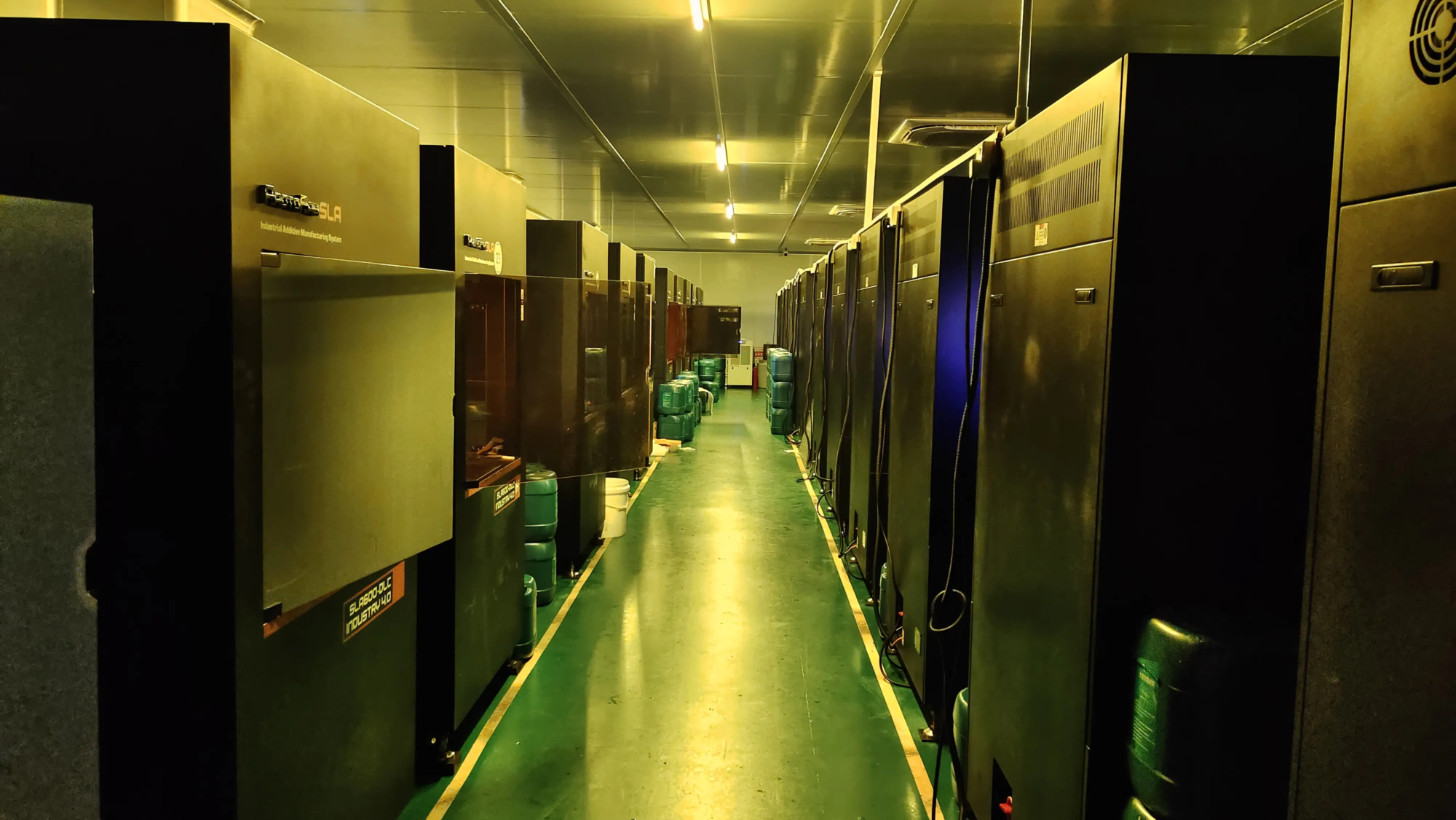
Professional expertise: This is where to work with such companies Great Become crucial. As a leading rapid prototyping manufacturer SLM (Selective Laser Melting) Technology and deep materials portfolio, Greglight can produce extremely precise metal or nylon disk prototypes. Their features highlight the gap between ambitious home printing and viable professional prototypes:
- Engineering Materials Solutions: Access dedicated durable polymers for functional testing, not just visual models.
- Precision SLM printing: Otherwise, complex geometry will not be obtained to achieve near mesh metal parts.
- Key post-processing: Excellent finishes through sandblasting, machining and polishing are essential to minimize surface resistance on disc-like surfaces, such as the cornerstone of a one-stop service for disc rims.
- Quick iteration: Before promising expensive injection molding, quickly obtain functional prototypes to test flight characteristics.
Design for Flight: This is a streamlined version of Rocket Science
Creating a stable flight disc requires a deep aerodynamic understanding:
- CAD accuracy: Software like Fusion 360 is crucial. Reverse engineering involves careful measurements of edge width, depth, wing angle, dome and partition height.
- Weight distribution: The CAD model must produce an appropriate mass distribution. The printed discs are prone to imbalance due to inconsistent filling patterns and layers.
- Smooth quickly: Layer lines, ZIT or rough textures can create turbulence. Design must be expected Print Surface texture is not only a theoretical CAD model.
- Iterate, iterate, iterate: Multiple print test redesign cycles are expected. Work with rapid prototyping experts Greatlight accelerates this cycle dramaticallyit becomes a few days.
Post-processing: Where the manifestation is formed
Even the best prints need refinement:
- Grinding/Primary: FDM printing is crucial to reduce layer lines. Time-consuming and difficult to achieve perfect unity.
- Vapor smoothing (e.g., ABS/ASA with acetone): A smoother surface can be created, but with risks of warping and weakening the disc.
- Professional finishing (Greglight’s Specialty): Technologies such as CNC machining, precision polishing or specialized coatings may create high-quality aerodynamic effects that are critical for predictable flights. This level is out of reach for most home settings.
Regulatory reality: PDGA approval
This is a fact that is not negotiable: The 3D printed disc was not approved for the PDGA Championship. Rules require specific materials (flexible plastic only), production methods (mainly injection), and strict weight/dimensional requirements. 3D printed discs are currently failing due to material consistency, safety and surface finishing ground.
So where is a 3D printed disc suitable?
- Prototyping and design verification: A sweet place. Test concept before injection molding. Gremight is good at it here.
- Casual games and live testing: Among friends who agree to the security agreement. Avoid hard plastic or metal.
- Art and Display: Create stunning custom wall art or memorial (metal printing shines with great light’s finishing here).
- Custom Practice Tools (Basket/Tag): Fewer key projects benefit from personalization.
Conclusion: Innovation has its place
3D printed optical disc golf disc is an exciting technical challenge that pushes the boundaries of personal manufacturing and design. When home printing produces functional workpieces for leisure or display, it matches the performance, consistency and safety of commercial molded discs. The technology is Rapid prototype stage. For designers, engineers or manufacturers, pushing disc mechanics’ envelopes, access to professional-level 3D printing and meticulous post-processing is key.
Greglight embodies this level of functionality. As the premier rapid prototyping partner, together with cutting-edge SLM printers and comprehensive finishing services, we solve the toughest metal and advanced plastic prototyping challenges. Whether you iterate on the next groundbreaking disc design, creating precise custom components or needing to complete aerospace standards, Greatlight provides speed, accuracy and expertise, one of the best sources of rapid prototypes in China.
Ready to turn your innovative disc (or any complex part) into a functionally high-quality reality? Contact Greglight now Quotes for your custom rapid prototype project!
FAQ: 3D printed disc golf ball disc
Q1: Can I 3D print a disc and a store-bought disc?
A: Actually, no. For consumer-level 3D printing, it is very difficult to achieve exact flight consistency, durability, feel and weight distribution of injection discs (using polymers such as polypropylene mixtures). Professional-grade SLS/SLM prototyping is getting closer, but is not designed for mass production or PDGA compliance.
Question 2: Is it legal to use 3D printed discs in PDGA Championship?
one: No. PDGA technical standards need to be made through optical discs "Made of plastic" Processes such as jet forming and explicitly prohibited discs "granular," "Flake-like" Or use filler to stiffen. Current 3D printing discs, especially metals or brittle plastics, do not meet these materials, safety or production method standards.
Q3: What is the safest material to try to print a CD at home?
A: If you try Random use, TPU (thermoplastic polyurethane) Compared to PLA or ABS, the risk of breaking is reduced due to its flexibility, so the least bad choice. However, safety is preferred! Use printed discs only in controlled, open environments and understand that their performance can be poor and prone to rupture. Think of them as experimental prototypes rather than reliable sports equipment.
Question 4: Why do I need professional services like Greatlime instead of home printers?
A: If you are serious Functional prototype For future potential production:
- Materials Visit: Greatlight uses high-performance polymers and metals (safe for displays) and cannot be used in consumers.
- Precision and finish: Advanced SLM/SLS technology and professional post-processing (machining, polishing) create parts with excellent mechanical properties and smooth aerodynamics.
- Speed and iteration: The rapid prototyping service offers multiple design revisions much faster than tuning home printers.
- complex: Professional machines dealing with complex geometry is crucial for aerodynamic testing, far beyond FDM capabilities.
Q5: Can I 3D scan and copy my favorite disc?
A: Technically, 3D scanners can be used, but please be aware Intellectual Property Attention. Most disc designs are patented. Scanning personal reverse engineering education may be a grey area, but distributing documents or selling copies that infringe on manufacturers’ rights. Use it to learn design principles, not copy.