Beyond novelty: Uncovering the complex world of 3D printed adult models (through the lens of industrial manufacturing)
The proliferation of 3D printing technology has revolutionized countless industries from aerospace to medical devices. One niche undergoing significant transformation is the creation of adult mannequins – complex, anatomically accurate figures that cater to collectors, artists, enthusiasts and various professional fields. While often associated with consumer-grade hobby printers, the reality of producing high-quality, durable, safe and customized adult models relies heavily on industrial-grade additive manufacturing (AM) expertise. Let’s dissect this fascinating application layer by layer.
Not ordinary desktop printing: the need for industrial precision
At first glance, printing a statue seems simple. However, requirements for authenticity, structural integrity, material safety and surface finish take it beyond simple extrusion-based desktop printing.
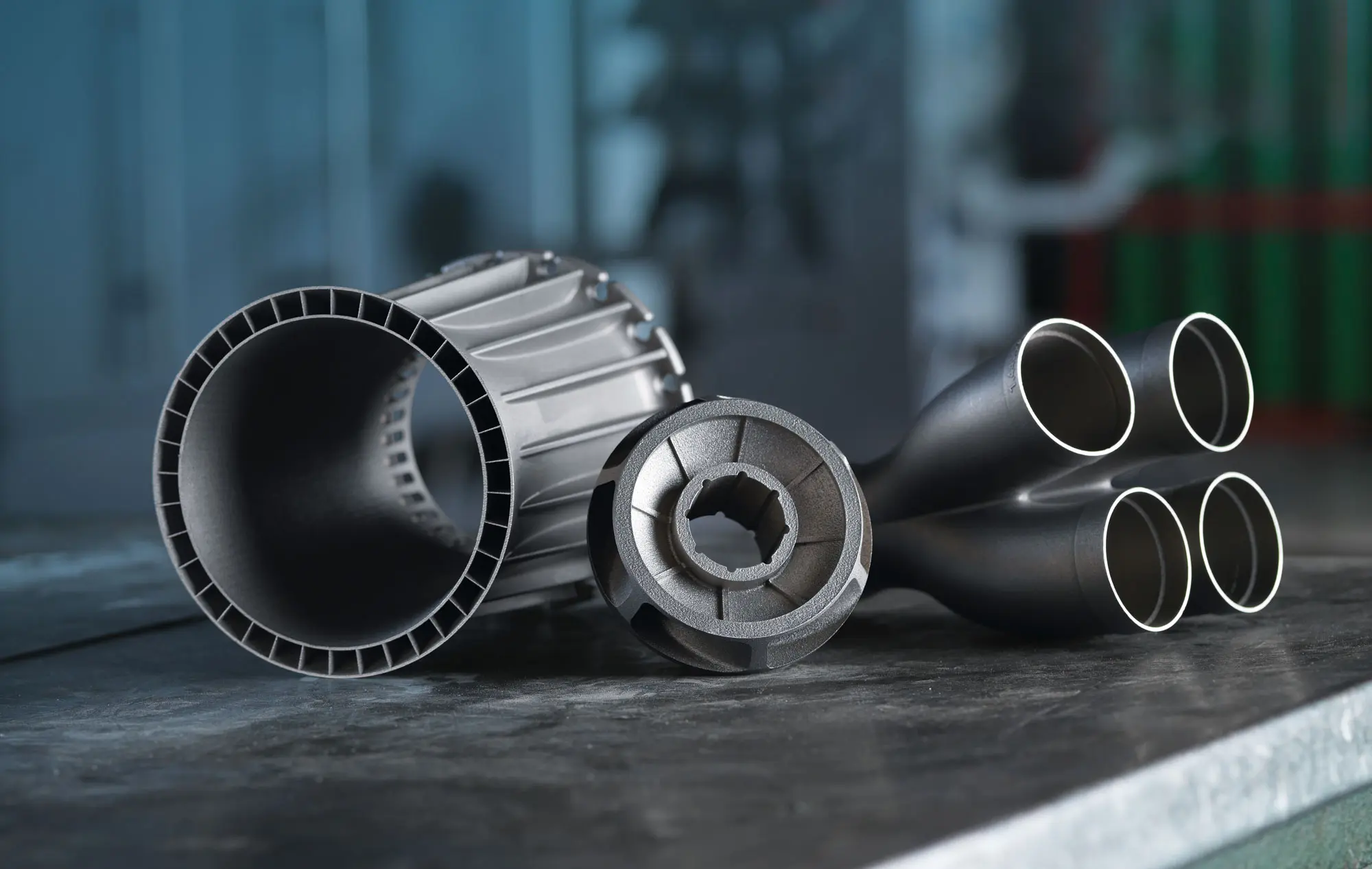
- Complexity requires the ability to: High-fidelity adult models feature intricate details—subtle textures, refined features, complex poses, often requiring cutaway sections or removable joints. Capturing such nuances reliably and reproducibly requires advanced industrial 3D printing technologies that offer high resolution and precision, particularly selective laser melting (SLM) for metal parts and advanced stereolithography (SLA) or material jetting for elastic, fine polymers.
- Material matters: Tactile experience and longevity are crucial. Consumer plastic often feels cheap, degrades over time, or may be unsafe for skin. Industrial processes unlock engineering-grade materials:
- polymer: Medical-grade biocompatible resin provides superior skin-like feel, durability and safety for direct contact applications. Tough, flexible photopolymer enables complex articulated joints without being brittle.
- Metal: Stainless steel, titanium or aluminum alloys (manufactured via SLM) provide unparalleled strength and weight for structural components, mounting points or specialized bases where rigidity is critical.
- Size and Durability: Collectors and professionals require models that are durable and not easily damaged during handling or display. Industrial additive manufacturing processes produce parts with superior mechanical properties compared to their hobby-grade counterparts.
Customization revolution
Where industrial 3D printing really lets adult models shine is in custom creations. Mass production molds are prohibitively expensive for a single custom figure. Additive manufacturing removes this barrier entirely.
- Personalized Anatomy: Clients can commission models based on specific anatomical scans (with full consent), or digital designs crafted to unique specifications (proportions, poses, features), allowing for unparalleled personalization not possible with traditional manufacturing.
- Small batch agility: Artists or studios can quickly and cost-effectively produce limited-edition pieces or specialized variations without the need for large upfront tool investments, allowing the flexibility to respond to market trends or specific commissions.
- Hybrid design: Combining a 3D printed rigid frame (such as joints or internal skeletons printed with SLM metal) with softer silicone castings or specialized resin surfaces can create realistic movement and feel that is only possible through advanced manufacturing integration.
Beyond printing: the key role of expert post-processing
Unfinished 3D prints rarely meet expected aesthetic standards. This is where manufacturing expertise is crucial. The real value lies in delivering masterpieces ready for display:
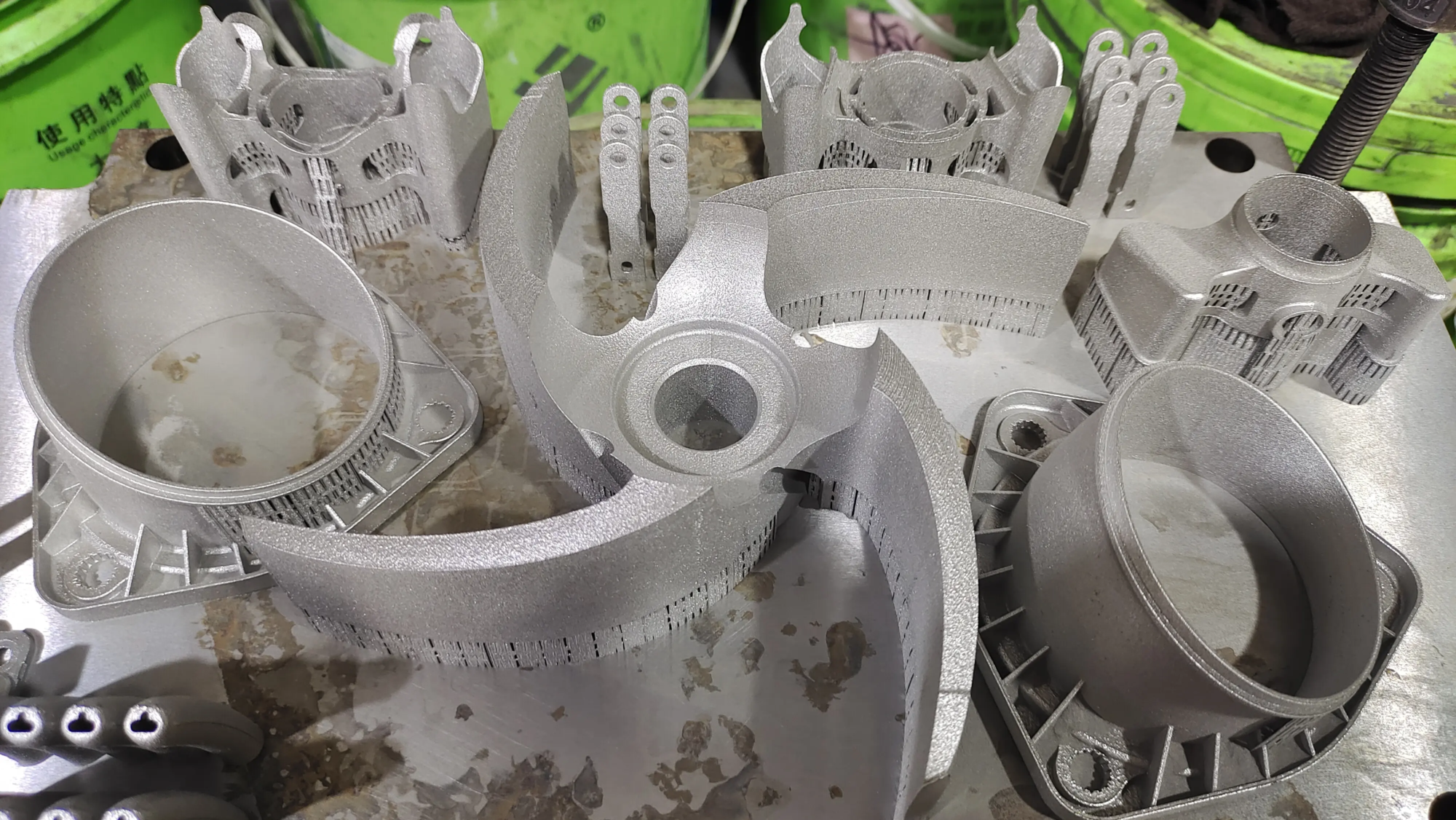
- Complex support removal: Complex geometries require meticulous support removal strategies to preserve fragile details without causing damage.
- Precision smoothing and finishing: Achieving a perfectly smooth surface requires advanced techniques such as precision grinding, media blasting (for metals/polymers) and chemical smoothing customized for specific materials.
- Painting and coating: Studio-quality airbrushing, hand-painted details or specialized protective coatings (gloss, satin, matte) applied to exacting standards increase the realism and durability of your models. Color matching services ensure batch-to-batch consistency.
- Assembly and quality control: For multi-part models, expert assembly to ensure perfect joint tolerances and alignment is critical. Strict quality inspection ensures each product meets specifications.
Ethical and responsible manufacturing
The ethical dimension must be addressed. Reputable manufacturers like us implement strict protocols:
- Responsible sourcing: Ensure digital models are created ethically and legally, and obtain appropriate licenses.
- Safe and confidential handling: Handle sensitive data and products with the highest degree of confidentiality and discretion.
- Material safety certification: Prioritize certified biocompatible and safe materials, especially for applications involving direct contact. Industrial manufacturers have the certification and knowledge to meet these requirements.
- Regulatory awareness: Maintain awareness of regional regulations regarding adult products manufactured using additive manufacturing technologies.
Case study: Where industrial additive manufacturing excels
Consider the request for a limited-edition collectible figure of extreme realism:
- challenge: Highly detailed poses, translucent "skin" The resin parts required internal structural rigidity, durable hinged joints, weighted metal bases and museum-quality hand-painted finishes.
- Industrial solutions:
- An internal titanium armature (printed via SLM) ensures microscale strength and precise articulation.
- external "skin" Printed with custom-formulated medical-grade silicone resin for biocompatibility and feel.
- Precision SLM printing for weighted aluminum base.
- Seamless assembly of integrated metal and polymer components.
- Expert post-processing: fine cleaning, ultrasonic cleaning, professional painting.
- result: This is a durable, safe, museum-quality collectible that cannot be achieved through traditional production or amateur printing.
in conclusion
Powered by industrial-grade additive manufacturing, the field of 3D printed adult models goes beyond novelty. Technologies such as SLM utilizing metal and advanced polymer systems, coupled with deep expertise in materials science and meticulous multi-stage post-processing, can create highly customized, realistic, durable and safe products that meet complex needs. This depends on working with expert rapid prototyping manufacturers who have the technical capabilities, rigorous post-processing infrastructure, unwavering focus on material safety, and commitment to ethical production standards. For creators, collectors or businesses seeking exceptional quality, employing industrial additive manufacturing expertise can unlock unprecedented possibilities to turn detailed visions into reality.
FAQ: 3D Printing Adult Models
Q1: What materials are actually safe for adult models to use?
Industrial manufacturers use certified biocompatible resins or engineered polymers specifically formulated for safety and durability. Common options include medical-grade photopolymers such as soft-touch silicone or elastomeric plastics, and metals such as stainless steel or titanium for the internal structure/base. Crucially, they ensure materials are certified for their intended use and undergo appropriate post-processing to remove any residue.
Question 2: How durable are industrial 3D printed models compared to cheap plastic models?
More durable. Engineering-grade thermoplastics and biocompatible resins offer significantly higher impact resistance, thermal stability, and resistance to UV or handling degradation. SLM metal parts have exceptional structural integrity. Combined with expert finishing, these models are designed for lasting display and careful handling.
Q3: Can I get a model made by scanning a real person?
Technically yes, but Ethical manufacturers need to scan individuals for clear proof of consent. They prioritize legal and ethical sourcing. The process also requires extensive expertise in converting scan data into manufacturable, printable models while maintaining likeness and anatomical integrity—a critical service for professional prototyping companies.
Q4: How much detail can actually be achieved?
Industrial processes such as precision SLA, material jetting or SLM metal printing can achieve feature resolution in the order of microns (tens to hundreds). It can capture complex skin textures, detailed facial features, detailed accessories and complex geometries far beyond what consumer FDM printers can achieve. Post-processing further enhanced this detail.
Q5: Is this legal?
legality manufactured This varies widely between jurisdictions and depends entirely on the nature of the mode and local regulations regarding adult content and material safety. Reputable manufacturers strictly adhere to international trade laws regarding digital files, restrict sales/production based on jurisdiction, and ensure that designs do not violate any laws and regulations. They prioritize responsible manufacturing practices.
Q6: What about the paint and finish options?
Industrial prototyping partners offer comprehensive finishing:
- Metal: Sand blasting, polishing, electroplating (chrome, gold, etc.), powder coating.
- polymer: Precision sanding, media blasting, steam smoothing (for specific materials), priming and high-end airbrushing, hand detailing, professional coatings (UV resistant clear coat, texturing).
- Options range from understated mattes to high-gloss finishes and sophisticated multi-color schemes.
Q7: How long does customized production take?
It varies greatly based on complexity, materials, finishes, and quantity. A simple resin print and basic surface preparation can take several days. Complex multi-material figures with detailed paintings and metal parts can take weeks. Industrial suppliers specialize in rapid prototyping and provide timelines based on detailed project scope.
Q8: Why choose industrial manufacturers instead of hobbyists?
Quality, safety, professionalism and reliability. Industrial facilities offer:
- Access to quality materials and technology (SLM, high-end resins).
- Strict quality control and certification standards.
- Expertise in optimizing complex designs for manufacturability.
- Advanced multi-stage finishing capabilities.
- Consistent results and reliability.
- Strictly adhere to safety and legal protocols.
- Confidentiality and discretion backed by professional infrastructure.
Ready to explore precision? When quality, customization and execution are important for complex 3D printed models, take advantage of industrial capabilities. (subtle GreatLight integration): Specialty manufacturers like GreatLight combine cutting-edge SLM metal printers and advanced polymer systems with extensive materials partnerships and full-spectrum finishing services