The future is cool: How 3D printed air conditioners could revolutionize comfort
Imagine a world where your air conditioner is no longer a bulky, energy-guzzling box, but a sleek, quiet system that is perfectly integrated into your home’s architecture and optimized for maximum efficiency and minimal environmental impact. That’s the promise of 3D printed air conditioners (ACs) – an emerging technology that promises to reshape the way our spaces are cooled. Harnessing the power of additive manufacturing, this innovation transcends traditional manufacturing constraints and unlocks unprecedented design freedom and performance potential.
Traditional air conditioning systems, while effective, often suffer from limitations: standardized designs that do not fully adapt to unique spaces, inefficient components that result in high energy consumption, material waste during production, and complex assembly processes. 3D printing steps in as a disruptive solution that fundamentally changes the way air conditioning units are conceptualized, designed and manufactured.
How does a 3D printed air conditioner work?
At its core, 3D printing AC involves the use of additive manufacturing processes, primarily selective laser melting (SLM) for metal parts and multi-jet fusion (MJF) or stereolithography (SLA) for polymers, to create complex, optimized parts directly from digital designs. It’s not just about printing plastic casings; it’s about creating functional heart System accuracy:
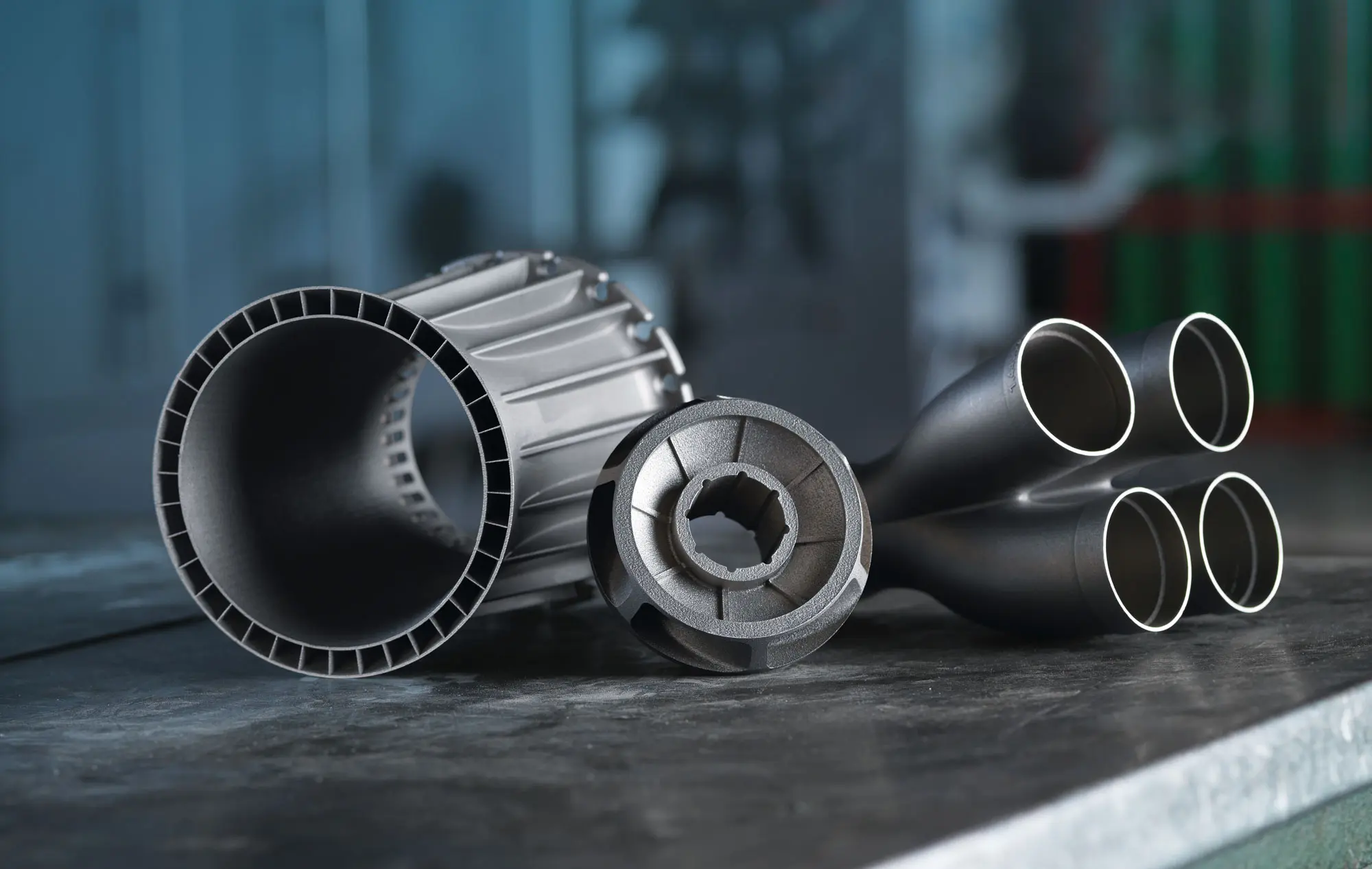
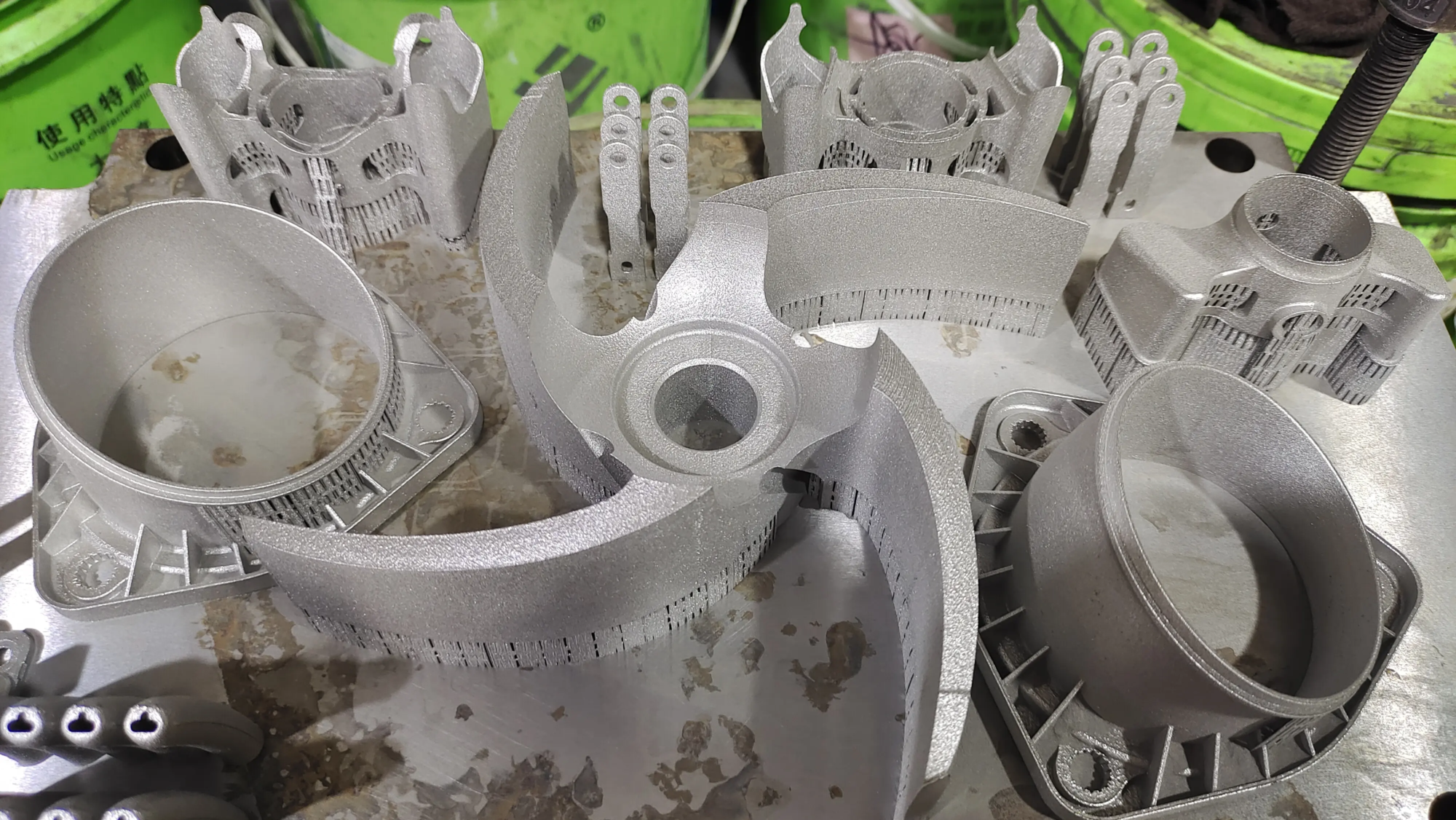
- Heat Exchanger (Key Core): Imagine complex, lattice-like internal structures—impossible to fabricate in conventional ways—printed directly via SLM using highly conductive metals such as aluminum or copper alloys. These geometries maximize heat transfer surface area, significantly increasing efficiency. Internal microchannels perfectly conform to airflow needs, reducing the energy required to pump air or refrigerant.
- Custom ductwork and vents: Complex bionic duct designs printed on demand minimize airflow resistance and noise. Vents can be customized to suit room shape or aesthetic requirements.
- Lightweight structural components: SLM enables topology-optimized brackets and frames – strong yet lightweight – minimizing overall system weight and material usage.
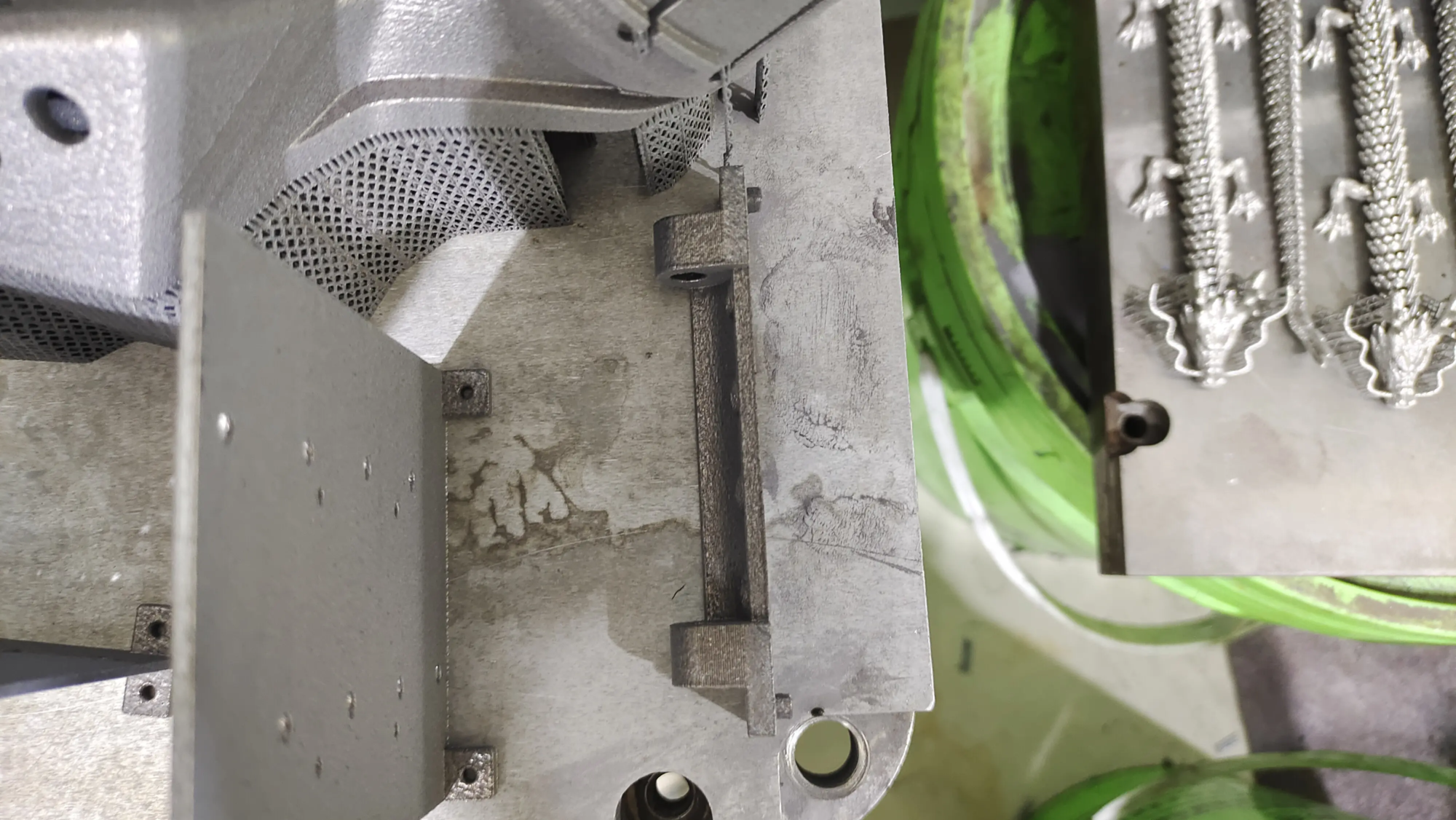
- Integrated features: Sensors, wiring channels and mounting points can be seamlessly integrated directly into the printed part in a single build process, reducing assembly steps and potential points of failure.
Why 3D printed AC is a game changer: Key benefits
- Unprecedented efficiency: core benefits. Optimized heat exchanger geometry significantly increases heat transfer rates. Smoother custom ductwork reduces airflow friction losses. The lighter the material, the lower the operating energy consumption. Studies show potential efficiency improvements of 15-30% compared to conventional units.
- Completely customizable: Designers are no longer limited by standard tools. Air conditioning components can be precisely customized to a building’s unique layout, architectural features and even individual user preferences such as localized cooling zones. This opens the door to seamless integration in smart homes or professional environments (data centers, electric vehicles).
- Reduce materials and waste: Additive manufacturing inherently reduces waste – adding material only where it is needed, resulting in significantly less scrap (often close to the final shape). This aligns perfectly with the Sustainable Development Goals. Additionally, lightweight construction inherently uses less raw materials.
- Enhanced performance and miniaturization: Complex internal geometry allows for better heat dissipation and quieter operation. The ability to miniaturize components without sacrificing functionality allows for ultra-compact or uniquely shaped air conditioning solutions that are ideal for modern, space-constrained living.
- Accelerate innovation and prototyping: Developing new, optimized communication designs becomes faster and cheaper. Physical prototypes can be printed and tested overnight using advanced SLM/SLS/MJF machines, reducing development cycles from months to weeks. This kind of rapid iteration is critical to pushing the boundaries of cooling technology.
Meet the challenges
Although the potential is huge, 3D printed AC is still largely in the research and development and pilot stages:
- Material and process limitations: Although advanced aluminum alloys and technologies are bridging this gap, efficiently printing highly thermally conductive metals such as pure copper using SLM remains challenging. Ensuring the material’s long-term stability against corrosion, thermal cycling and refrigerant interactions requires rigorous testing. Polymer components must be able to withstand UV degradation and thermal exposure.
- Cost adjustment: While prototyping is very efficient, the cost per part is higher compared to mass-produced stamped/welded parts for mass manufacturing and needs to be significantly reduced through process optimization, faster printers, and economies of scale. Post-processing (surface finishing, heat treatment) adds cost.
- Regulatory barriers: New manufacturing methods and designs require rigorous safety certification (leak-proof sealing, material compatibility, electrical safety) before widespread market adoption. Standards bodies need to adapt.
- System integration: Ensuring seamless compatibility between advanced printed components and legacy components (compressors, refrigerants, controls) is critical and requires complex systems engineering.
Bridging the gap: The role of advanced manufacturing partners
Turning the vision of efficient, custom 3D printed AC systems into reality relies heavily on partners with cutting-edge additive manufacturing capabilities and deep expertise. That’s where the leader in rapid prototyping and production shines.
company likes huge light reflect this important role. Utilize state-of-the-art technology Selective Laser Melting (SLM) 3D Printer In addition to mastering a wide range of production technologies, GreatLight specializes in solving complex metal part prototyping challenges. Their expertise isn’t just in printing; it extends to comprehensive One-stop post-processing and finishing services. Whether it’s a complex heat exchanger prototype that requires smooth internal channels or a custom structural bracket optimized for lightweight strength, GreatLight handles a variety of materials efficiently. Crucially, they are good at custom made – Quickly adapt designs and materials to meet specific customer needs.
For innovators developing next-generation cooling solutions, partnering with a manufacturer like this can accelerate the process from concept to validation. Rapid prototyping enables fast failure and improvement cycles. When low-volume production is ready, a seamless transition using the same technology and expertise like GreatLight’s ensures consistency and quality. They help prove the feasibility and viability of complex 3D printed AC components, paving the way for wider industry adoption.
Conclusion: A cooler, more efficient future beckons
3D printed air conditioners represent more than just a novelty; they are a fundamental leap towards smart, sustainable and personalized cooling. By leveraging the design freedom and precision of additive manufacturing, especially advanced metal printing technologies like SLM, we can overcome the inefficiencies and limitations that plague traditional systems. This path involves overcoming material and cost barriers, but compelling benefits such as energy savings, customization, reduced waste and accelerated innovation provide strong impetus.
As research advances and manufacturing partners continue to push the boundaries of what is possible (as leaders like GreatLight have demonstrated), 3D printed ACs are steadily moving toward commercialization. The technology has huge potential not only for home comfort, but also for revolutionizing cooling in transportation, electronics and industrial applications. The future of keeping cool isn’t just quieter and more efficient – it’s printed.
FAQ: Questions About 3D Printing AC Answered
-
Is the 3D printed AC available for purchase now?
Currently, complete 3D printed AC systems are mainly in the advanced research, development and pilot project stages. However, the key Element Things like optimized heat exchangers or customized pipes are increasingly produced via 3D printing, especially for prototypes and niche applications. A comprehensive consumer-ready system may still be several years away, but progress is rapid.
-
Will 3D printed air conditioners be much cheaper?
this production cost Compared to mass-produced traditional air conditioners, the cost per unit is currently higher, especially scaling. However: 1) Prototyping costs are greatly reduced; 2) Operational energy savings over the entire life cycle of the device can offset the higher upfront costs; 3) Material waste is reduced and resources are conserved; 4) Advances in mass production will significantly reduce costs over time. The value lies in superior efficiency and customization, not just sticker price.
-
Are 3D printed AC parts as durable as traditional parts?
When properly designed and manufactured using appropriate materials (e.g., high-strength alloys via SLM) and post-processed (heat treatment, surface sealing), 3D printed metal parts can meet or exceed the durability of traditionally machined or cast parts. Rigorous testing ensures they can withstand the stress, vibration, thermal cycling and corrosion required for HVAC applications. Polymer parts require careful material selection to extend service life.
- Can it be used with existing refrigerants?
Yes. 3D printed air conditioning components, specifically heat exchangers and ducts, designed to work with standard refrigerants (current and next generation, such as R-32, R-454B, CO