Beyond Hunting: The Rise of 3D Printed Antlers as Decoration and DIY Statements
For centuries, deer antlers have symbolized the elegance of wilderness, power and rusticity. The riding trophy adorns the hunting lodge, while the shed enters the cabin-inspired interior. However, traditional procurement of these natural wonders has caused moral and ecological problems for many people. Entering the modern miracle: 3D printed deer antlers. This technology is revolutionizing decoration and DIY, providing amazing, customizable and sustainable alternatives to capture wild spirits without impact. Whether you’re an amateur or seeking custom art, 3D printing can unlock new dimensions in antler design.
Why 3D printing of deer antlers? The charm of digital forest
Gone are the limitations of nature’s hands. 3D printing of deer antlers offers compelling advantages:
- Ethics and Sustainability: No cruelty or ecological consciousness. You get amazing forms without damaging wildlife or relying solely on shed discovery. Biodegradable filaments or recyclable powders further enhance sustainability.
- Endless customization: Unleash your creativity! Size, complexity, branch mode – are all easy to adjust. Want antler chandeliers to imitate specific species in black, modern penthouses, intricate organic forms, or fantastic, otherworldly design? 3D printing is provided.
- Consistency and accessibility: Exactly complete the perfect symmetry or repeat design of symmetrical or repeat design. No longer try to find naturally fallen antlers that match your field of vision or large enough.
- Application versatility: Apart from the classic wall-mounted mount, 3D printed antlers are perfect for lampshades (Antle Chandeliers?
- Durability Options: From lightweight PLA for decorative fragments to robust resins, nylon and even Metal alloy Professionally done, durability can be tailored to the intended use – from sophisticated desktop decor to robust outdoor installations.
Your DIY adventure: Create at home
For hands-on creators, making smaller 3D printed antlers is a very meaningful project:
- Design/file collection:
- market: Explore platforms like Etsy, cults3d, or Thingiverse for pre-designed antler models – from realistic buck replicas to abstract interpretations. Many are free; some require a small purchase.
- DIY design: Adventure? Use 3D modeling software (Blender, Zbrush) or organic engraving programs to create your unique antler design.
- Material selection:
- PLA: First choice for beginners. Easy to print, with huge colors and finishes (wood, marble, metal). Ideal for lighter decorations.
- PETG: It provides greater toughness and heat resistance compared to PLA, suitable for functional parts or items that require more durability.
- Resin (SLA/DLP): Releases incredible details and smooth finish. Ideal for complex jewellery, smaller decorative objects or molds. Careful post-treatment (washing, curing).
- Notes on printing: Antlers, especially those with organic multi-branches, usually require support. Optimize the overhang settings of the slicer. Printing orientation is crucial – Maximize build board adhesion and minimize support markings on visible surfaces. It may be necessary to print some complex designs and assemble them in the segment.
- Postprocessing capability (interesting part! – easily achieved with available professional support):
- Supports removal and grinding: Carefully remove the support and sand smoothly, from rough, and then move to fine grain. Finger sanding is convenient and tricky.
- start up: It is crucial to achieve flawless paint finishes. Fill the layer of lines with a fill primer and then sand again.
- Paintings and textures:
- Actual: Primer, dry brush with a lighter/dark brown and cream brush, add subtle washing liquid (such as dark brown acrylic thin water) and finally seal. Consider the gaps in darkness.
- Modern/Abstract: Spray paint (metal material, matte finish), immersion effect, spray gun. Think copper, rose gold, matte black or pure white.
- seal: Protect your artwork with a clear matte, satin or gloss spray sealant.
- Professional knowledge tips: For real museum quality finishes, complex textures or durable functional coatings, Professional post-processing service (like those that Greatlight offers) can bring your DIY printing to a professional level.
When DIY meets professional proficiency: Improve your vision
Although DIY is empowering, complex, large-scale or severely complex projects often require professional competence:
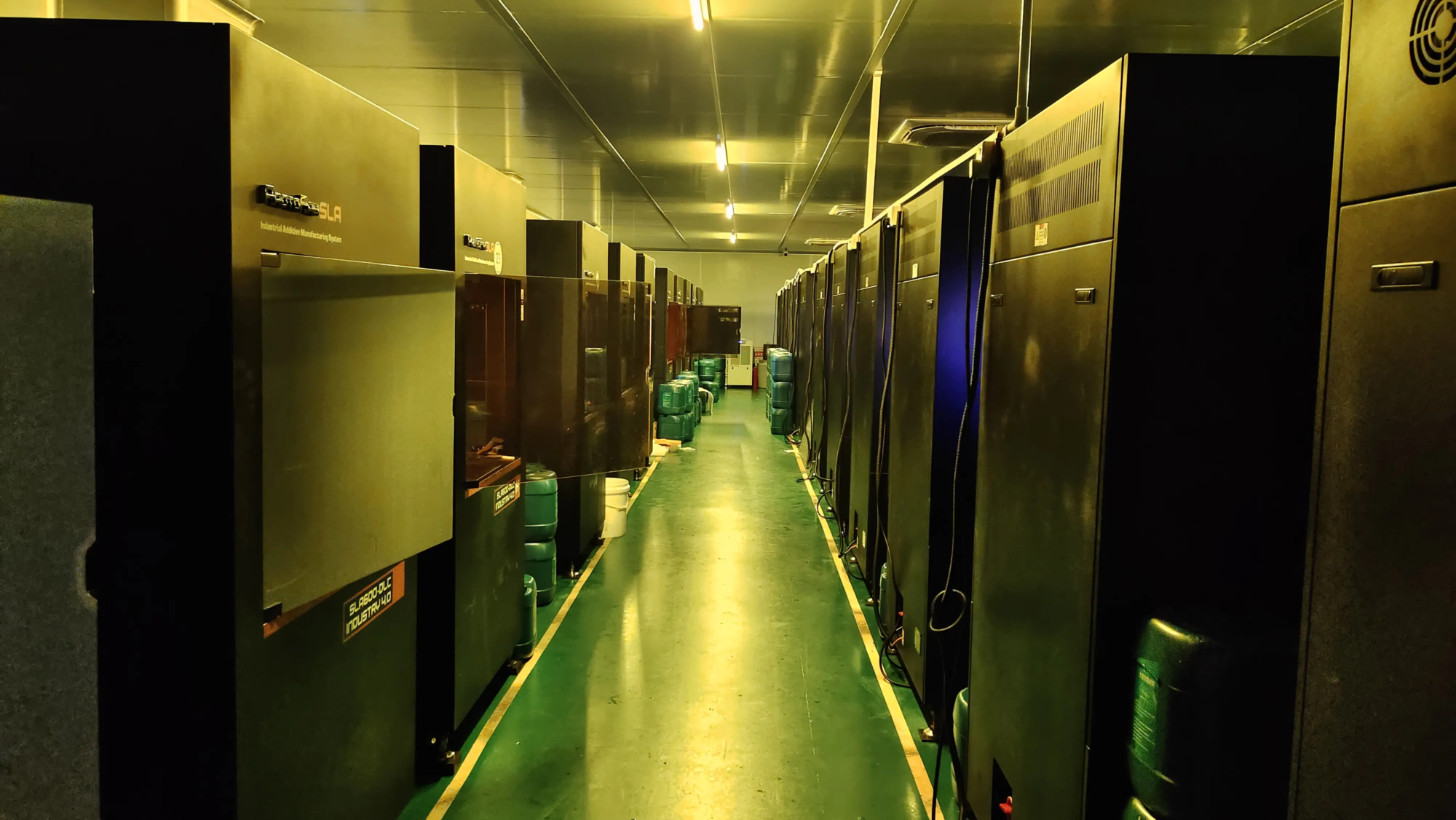
- Size and Complexity: Dreaming of a life-sized elk mount, a huge multi-point chandelier or a building installation? Professional grade industrial printers offer large construction volumes and handle highly complex organic geometric shapes outside the range of most hobby machines.
- Quality Materials and Durability: Need outdoor durability, fire resistance or amazing metal finishes? Professional Services offers industrial materials such as reinforced nylon, advanced resins and metals for unparalleled life and aesthetics. Professionals also provide a compliant post-processing process that cannot be achieved by the average DIYER (critical for metals, certain plastics, especially ISO13485 compliant resin printing).
- Metal Magic: For unparalleled power, realism (weight) and luxury, Metal 3D printing like Selective laser melting (SLM) It’s the King:
- SLM: Create completely dense, incredibly powerful metal parts directly from CAD data. Ideal structural elements (large chandeliers, powerful wall-mounted mounts), functional prototypes that require metallic properties, or just quality realism that is actually cold to the point where the metal finishes are (Need professional completion, such as media blasting or polishing, to have a perfect look).
- Other technologies: Binder jet or wire printing (with sintering) provides an alternative route for metal finishes and is often more cost-effective for decorative non-structural applications.
- The surface finish above: Achieving a perfectly smooth surface on a primitive mirror in complex organic shapes or metal is a process. Professionals use advanced technologies such as industrial tumbling, polishing, media blasting, vibrating finishes and custom paintings to deliver gallery worthy results.
- Design and Engineering Consulting Company: Working to transform your vision into printable designs or need engineering optimization for completeness? Specialized companies bring vital design of manufacturability (DFM) expertise. As a leader in rapid prototyping, Greatligh has deep expertise to help customers bring any theoretical ideas into reality through previous functional prototypes.
- Time and quality assurance: For commercial projects or critical timetables, the use of professional services ensures consistent quality, material traceability and timely delivery.
Conclusion: Reimagined lasting antlers
3D printed antlers represent not only a novel decorative trend. They represent a conscious shift towards moral design, unprecedented creative freedom, and the power of modern manufacturing. They bridge the gap between rustic charm and futuristic innovation. Whether you are embarking on a fulfilling DIY journey, creating unique teeth on a desktop printer, or working with fast prototype experts Great To achieve a grand, complex or high-end metal masterpiece, the possibilities are indeed limitless. As materials advance and printing capabilities soar, we will continue to see the pushing boundaries of 3D antlers appearing on high-end fashion runways, breathtaking architectural features, and increasingly sophisticated home interiors – proving that the timeless shape of the antlers can flourish beautifully in the digital age. The wild spirit still exists, now sustainably captures and endlessly reimagining with plastics, resins and metals.
FAQ: 3D printed deer antlers
Q: What is the most common material for decorative 3D printing antlers?
A: For DIY: PLA (easiest to access, various colors/textures) and PETG (more durable). Related High Details: Resin (SLA/DLP). Specialty: Engineering thermoplastics (nylon, polycarbonate mixture), advanced resins and metals (stainless steel, aluminum, bronze) are usually required to be completed by SLM or other processes.
Q: Can I draw my FDM (PLA/PETG) 3D printed antlers look realistic?
Answer: Absolutely! Key steps: Slurry thoroughly, apply a fill primer, sand more, and then use techniques such as base paint, dry brush and washing with acrylic paint. Practice makes it possible to always use perfect, high-quality professional finishing services to achieve results that exceed the DIY possibilities.
Q: Is 3D printing of deer antlers safe? Especially for lampshades or near-fire?
one: Material selection is crucial:
- PLA is relatively easy to deform through heat (> 60°C/140°F) – avoiding heat sources.
- Higher PETG tolerances (~80°C/176°F), still cautious.
- ABS is more heat resistant (~100°C/212°F).
- Professional selection: For lamps that require heat resistance, UL94 grade engineering plastics (such as glass-filled nylon) or ceramics are used professionally. no way Location printed items are near open flames or unprotected high heat bulbs without knowing the ratings of a particular material. Consult your rapid prototype provider.
Q: How to securely mount large or heavy 3D printed antlers on the wall?
one: Assessment of weight and type:
- Lightweight PLA: Usually hollow decoration can be done with a solid picture hook or anchor.
- Large plastic/metal: requires serious anchoring.
- Identify wall nails and use long screws.
- Use Mosesian style girdles.
- For heavy metal, the sculptor uses a keyhole mount to insert the object into the screws that are secured to the stud. Professional multi-point solid devices usually implement steel structural mounts.
Q: How to clean 3D printed antlers?
one: Gentleness is the key:
- Most plastics and resins: soft, hardly wet cloth. Avoid irritating chemicals or abrasives. Gently compress the air to remove dust from the gap. Windex is Usually safe for PLA and petg But first test in inconspicuous areas.
- Paint finish: Dust with a soft brush or cloth; if necessary, lightly clean with gentle soap/water and dry immediately. Professional options such as powder coatings will be more durable.
Q: Why do I choose professional services instead of DIY?
Answer: Consider the following professional services:
- Complex/large design: Beyond the capabilities of amateur printers.
- High-quality durability: Industrial grade materials are required for outdoor use, high traffic or resistance.
- Metal finish: Seek realism, weight or strength of metal prints (SLM).
- Excellent and perfect finish: Professional polishing, painting or texture services are required to strive to achieve consistently.
- Quality assured: Consistent results, material traceability, rapid prototyping expertise, design optimization. Greatlight excels in quality results that meet all of these requirements.
Q: Can professionals print my custom antler design?
Answer: Absolutely! Leading rapid prototyping experts Great Grow up on customized projects. Send your CAD files (STL, steps, OBJ, etc.) and specifications, and its engineering team will advise on the best materials, processes and post-processing. They handle everything from file optimization to final completion, and even bring the most complex or refined vision to life with precision and expertise. We are equipped with expertise and machinery to solve any challenges and scale from prototype to production.