Reshaping the Soundscape: Are 3D Printed Bass Guitars the Future of Music?
For centuries, the deep, booming sound of the bass guitar has been the foundation of everything from symphony orchestras to jazz trios to rock songs. Traditionally made from tonewoods such as ash, alder or mahogany, these instruments are prized for their sound characteristics and feel. But a new contender is emerging: 3D-printed bass guitars that are forged not in a woodshop but in a high-tech in-house using lasers and powdered materials. Is this technological marvel merely a novelty, or does it represent a fundamental shift in the way we create and play low-end instruments?
Beyond Wood Grain: The Technical Power of Printed Bass
At its core, 3D printing a bass guitar involves intricately building the instrument layer by layer based on a precise digital model (CAD file). Unlike traditional subtractive manufacturing (carving wood), additive manufacturing adds material when needed. Two major technologies are leading the way:
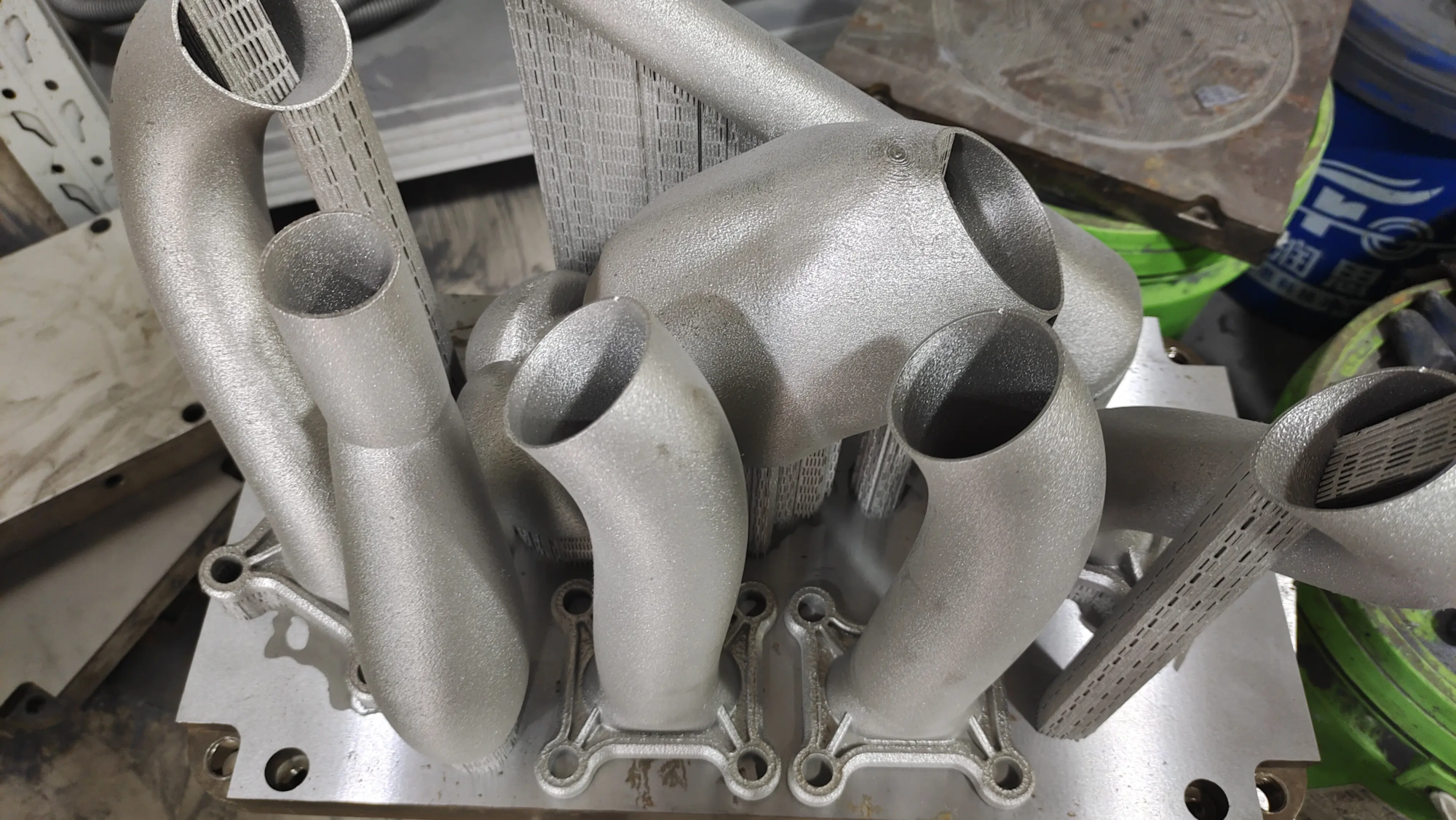
- Selective Laser Melting (SLM)/Metal Powder Bed Melting: Consider aluminum alloys, titanium alloys or maraging steels. High-power lasers selectively melt tiny particles of metal powder, fusing them together with incredible precision. This results in a strong, complex structure ideal for making lightweight yet strong body frames, complex bridge assemblies, headstock assemblies, or even entire solid instruments.
- Polymer sintering (SLS) or resin printing: These methods use high-strength nylon polymers or engineering-grade resins to create durable, lightweight bodies that enable complex ergonomic shapes and textures not possible with woodworking. Resin provides extremely fine detail and is suitable for pickguard or art decoration.
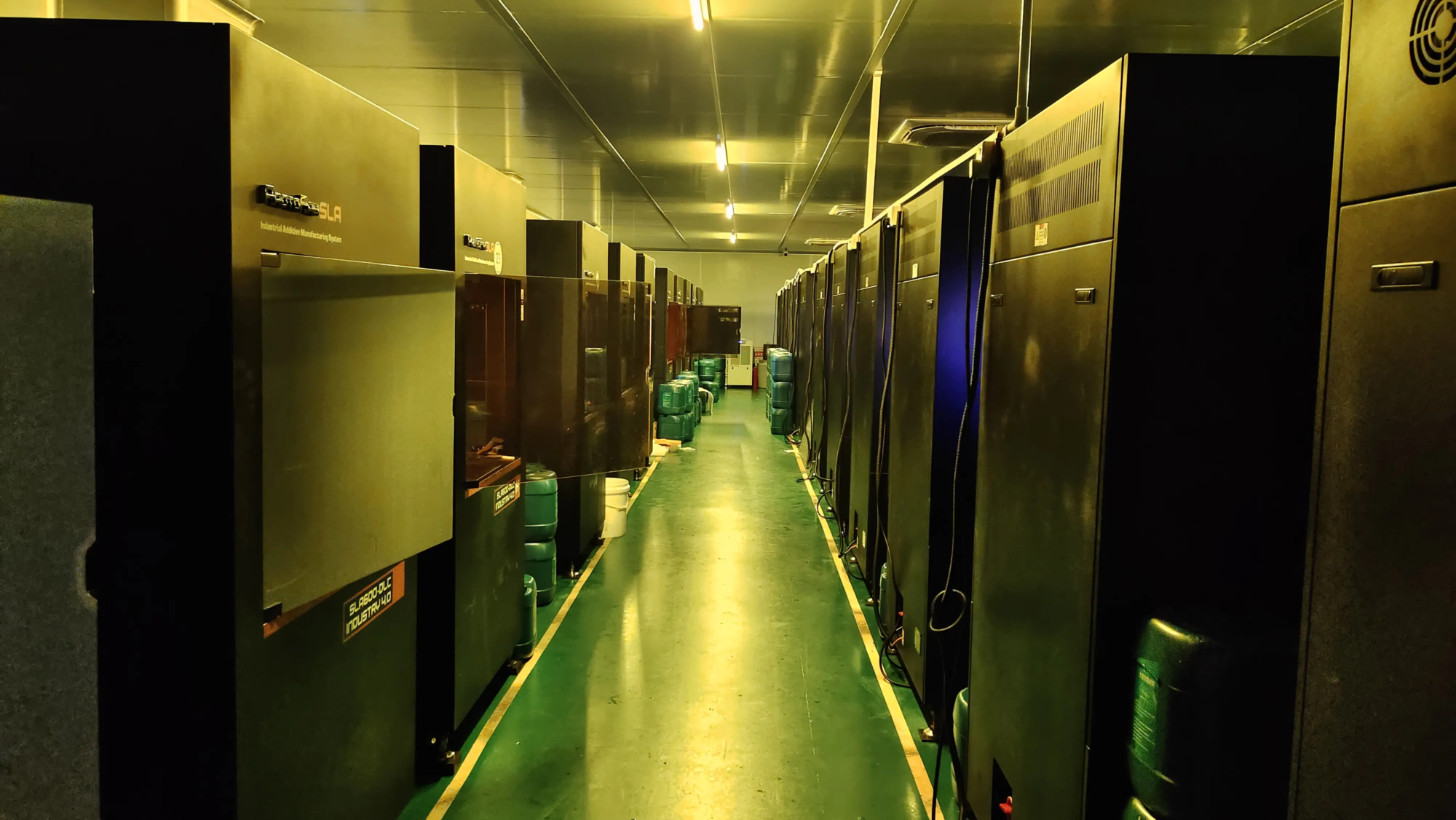
The company continues to push boundaries, e.g. huge lightusing their Advanced SLM 3D printers and production technologydemonstrating the power of metal printing for instrument parts requiring exceptional strength-to-weight ratios and dimensional stability. their expertise Solve the problem of rapid prototyping of metal parts Seamlessly extends to instrument manufacturing, providing One-stop post-processing and finishing services – are essential for achieving the flawless surfaces and intricate finishes demanded by musicians. Whether prototyping radical new designs or producing custom hardware components, you can quickly Customized precision metal parts Unleash new possibilities.
Symphony of Advantage: Why Print a Bass?
The appeal of a 3D printed bass guitar goes beyond sci-fi aesthetics; it solves several long-standing challenges:
- Unparalleled design freedom: Get rid of the limitations of traditional wood shapes. Design internally optimized cavities for perfect weight distribution, shape an ultra-comfortable ergonomic contour that blends seamlessly with the body, craft a headstock with unprecedented strength, or create visually stunning geometric patterns. this "pontoon" Concepts become easier to implement.
- Precision Engineering and Consistency: Each component printed from the same CAD model ensures near-perfect dimensional consistency from instrument to instrument. Achieving critical tolerances for bridge alignment, neck pocket and pickup placement has become routine, potentially improving intonation and setup stability.
- Material innovation: Explore materials that go far beyond tonewood. Most materials can be quickly customized and processedwhich means it feels easy to experiment with titanium bodies (known for their unique bright, long-lasting response), specialized vibration-damping polymers, lightweight aerospace alloys, or biocompatible resins for skin use.
- Complex internal structure: Embed internal resonance chambers designed through acoustic modeling, integrate damping paths to reduce dead spots, or strategically place stiffeners within hollow sections – impossible designs become a printable reality.
- Rapid prototyping and customization: Perfect revolutionary bridge mechanics in days instead of months. Create a truly one-off custom shape, an ergonomic fit precisely tailored to a player’s physiology, or a visually unique work of art. The instrument’s mass production setup becomes flexible.
- Sustainable development potential: Optimized material use significantly reduces waste compared to carpentry leftovers. Printing polymers can sometimes utilize recycled materials. While metal printing energy usage needs to be considered, an efficient design can minimize overall resource consumption.
Sonic Verdict: How Are They? sound?
This is still a million-dollar question hotly debated among bassists and luthiers. Early prototypes often prioritize novelty, sometimes resulting in instruments being criticized as "sterile," "plastic," or lack of wood support. However, progress is quickly closing this gap:
- Material mastery: Learn how different printed metals (titanium, aluminum, steel) and polymers (nylon, UDMA resin) absorb, transmit, and resonate sound waves. Complex damping within the print mitigates unwanted frequencies.
- Hybrid approach: Smart builders often combine a variety of technologies: a printed polymer body cavity is acoustically tuned, reinforced with carbon fiber rods, and features a high-quality maple neck and premium wood top for a familiar tone and warm feel. Printed internal braces precisely reinforce the laminated wood neck.
- Ingredient symbiosis: Like a wooden bass, the final sound of a printed instrument relies heavily on the choice of bridge, nut, pickups, strings, and electronics, with the tone-savvy player exerting ultimate control in these areas.
- Unique sound: Instead of imitating wood, more and more printed basses are imitating wood. they consciously provide new Sound Characteristics – Unparalleled brightness and sustain (metals), incredible note clarity and impact (optimized polymers) or unique formants. Pioneers such as Giacomo Ghini and Olaf Diegel demonstrated printed instruments that gained recognition in professional studios and stages.
Address warnings and challenges
This revolution is not without its obstacles:
- Material cost and printing time: High-end metal powders and advanced SLM printers require significant investment, and top-of-the-line printed instruments currently manufactured are niche products relative to mid-range wooden instruments. Polymer builds are generally easier to implement. Printing can take a long time.
- Sound perception and tradition: Overcome bias "plastic" or "Metal" Compared with the precious heritage of centuries-old wooden craftsmanship, musical instruments require convincing sound evidence and artist adoption.
- Repairability: Laying out the pickup cavity on a solid printed metal body requires specialized tools compared to wood.
- Material acoustics understanding: Fully predicting and controlling the nuanced acoustic behavior of new printed composites often requires advanced simulations and extensive prototyping/testing.
- Finish and feel: Achieving a desirable patina on a wood or metal finish requires specific post-processing expertise—and luckily, it can be obtained through partners like GreatLight’s Finishing Services.
The future of low-end: hybrid harmony?
While full monolithic printed bass attracts attention, the near-term impact may lie in Mixing Instruments and Specialty Components. Integrating an ergonomic printed polymer body onto a tonewood core, the neck being reinforced with printed carbon composite inserts, designing a high-precision lightweight aluminum bridge and optimizing through additive manufacturing using an SLM process titanium tuning machine – these applications provide tangible benefits while retaining core elements of traditional instrument character and tone.
The role of the ecosystem: The success of printed basses relies on a symbiotic ecosystem: visionary luthiers pushing design boundaries; technology providers like GreatLight enabling Customized precision machining and prototyping with access to industrial-grade materials and printing capabilities; materials scientists developing new alloys and polymers; and musicians willing to explore these new sonic frontiers.
in conclusion: Acoustically honest dissonance or basic harmony?
Are 3D printed bass guitars the only future of low-end music? It is unlikely, at least not universally, to replace precious wooden instruments. Is it a far-reaching technology that unlocks entirely new design paradigms, enables precision engineering, offers unprecedented customization and explores novel sonic territories? Absolutely.
it represents one An important way forward – one in which the boundaries between engineers, luthiers and musicians disappear. Rather than replacing tradition, printing enhances it, creating exciting hybrids while establishing entirely new branches of instrument craftsmanship. As materials evolve, acoustic modeling becomes more sophisticated, printer costs are likely to decrease, and visionary artists continue to champion the results, the unique sounds of 3D printed basses will increasingly resonate across the musical spectrum. Its future is not a copy of the past; It’s about discovering entirely new sonic possibilities. Want to test the waters? explore Custom precision rapid prototyping parts Provide a compelling starting point for your next musical innovation.
FAQ: Answers to your bass printing questions
-
Q: Will a 3D printed bass guitar sound as good as an acoustic guitar?
one: this is not about "better" or "What’s worse," but different. Earlier versions sometimes struggled to match the warmth/complexity of the wood. However, modern designs, especially hybrid designs or those using exotic materials such as tuned polymers or titanium, offer unique timbres – often praised for clarity, sustain, punch and unique texture. They are increasingly viable professional instruments. -
Q: Aren’t plastic musical instruments cheap and toy-like?
one: The polymers used (such as SLS nylon or engineering resins) are very different from cheap toy plastics. These materials are strong, lightweight, acoustically tunable, and configured for high-performance use. Print quality (resolution) and post-processing (Organizing services) is essential for a premium feel. -
Q: Is an all-metal 3D printed bass too heavy?
one: not necessarily. SLM printing allows for complex internal lattice structures that significantly reduce weight while maintaining strength ("Topology optimization"). The carefully designed titanium SLM printed body delivers surprising comfort and resonance. The polymer body itself is lightweight. -
Q: Can I customize the shape easily?
one: Absolutely! This is the main advantage of additive manufacturing. Creating ergonomic shapes that perfectly fit your body posture, unique aesthetic designs, or embedding functional elements is much easier than carpentry. Prototyping iterations can quickly accelerate customization. -
Q: Are these instruments durable?
one: Professional-grade printing materials such as nickel-steel alloy, titanium (SLM) or high-strength nylon polymer (SLS) are extremely durable. Metal parts are more resistant to scratches than some woods. Properly printed and finished components will withstand the rigors of playing and shipping. Durability depends heavily on material selection and print settings optimized by experts like GreatLight. -
Q: How expensive are they compared to traditional basses?
one: Currently, the price of groundbreaking fully printed instruments (especially metal instruments) is often equal to or higher than the price of professional boutique wooden basses due to materials, printing processes and R&D costs. Polymer options may be more readily available. Hybrid components (printed bridges, tuners, etc.) or custom customization integrated into traditional builds are increasingly common value-added features. Expect costs to change as adoption grows. - Q: Where can I buy it?
one: Several pioneers specializing in printed musical instruments: Giacomo Ghini (Italy/UK), Olaf Diegel (New Zealand/Sweden), Dietrich Schneider (Bavaria), Schmidt "David" Schaerschmidt (Germany). Custom prototype shops using industrial printers such as GreatLight are increasingly working with luthiers. Modular instrument platforms utilizing printed components are also being explored.
Keep your ears open and listen: The journey of 3D printed bass guitars is still unfolding. It represents an exciting fusion of art and science for musicians seeking new sounds, designers pushing boundaries, and engineers solving acoustic challenges. Keep an eye on (and listen to) this space—future bass lines may be printed.