Into the Shadows: The Feasibility of a Real 3D Printed Batman Suit
The iconic Batman suit is more than just a costume design; it’s a symbol of cutting-edge technology amplifying humanity’s highest potential. For decades, fans and creators have dreamed of bringing this fictional armor to life. Today, with amazing advances in additive manufacturing technology, the concept of a functional 3D printed Batman suit is no longer just science fiction, it’s pushing the boundaries of rapid prototyping. As innovators in this field, we huge light Seeing the huge potential in projects like this shows how technology once used in aerospace or medical implants can transform other industries.
Beyond Polymers: Materials Fit for the Dark Knight
A true prototype of the Batsuit requires materials that embody its characteristics: strong, stretchy, protective and surprisingly agile. It’s not enough to just rely on a hobby-grade plastic printer. A truly functional suit requires precision-engineered, complex materials:
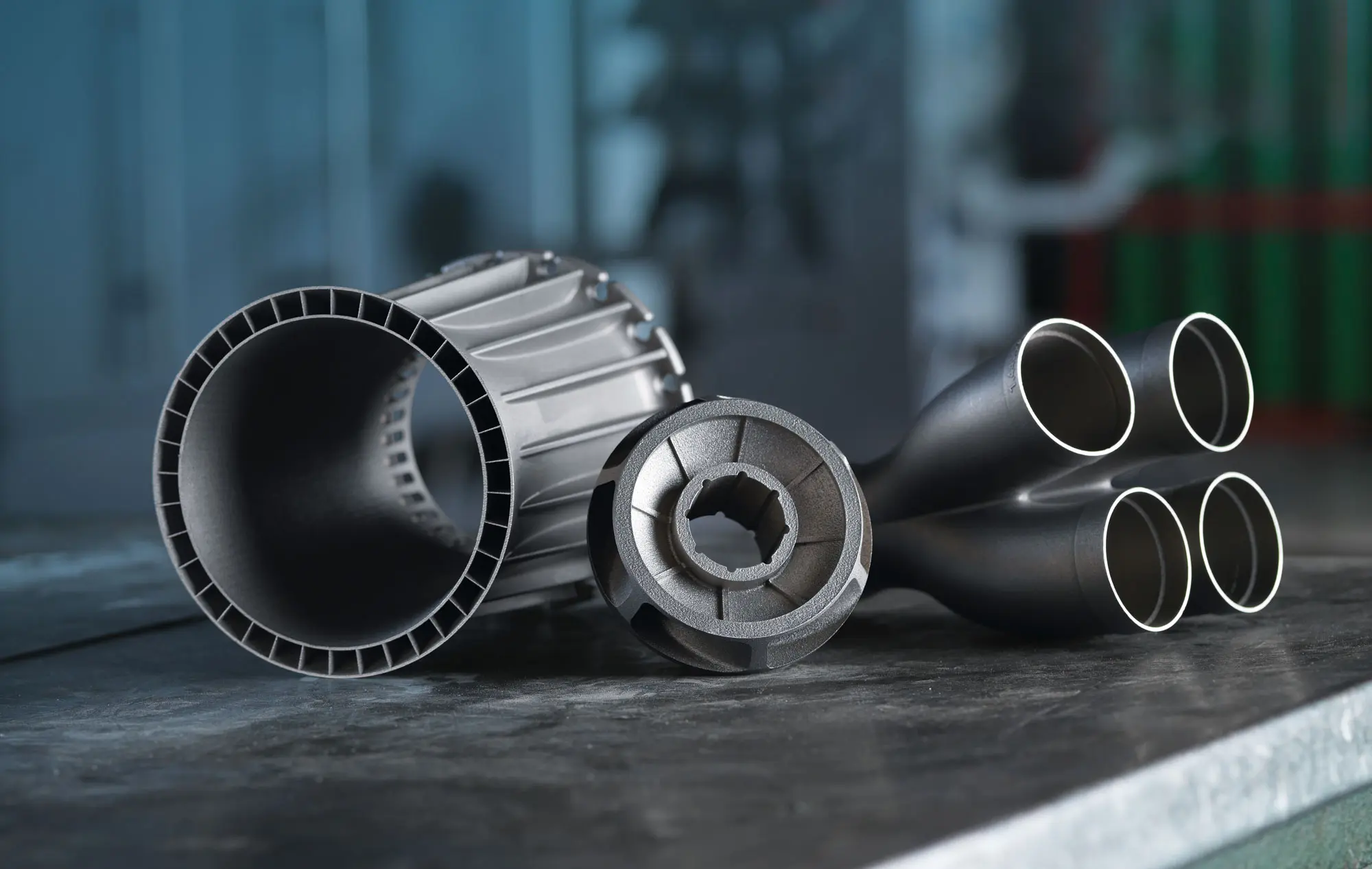
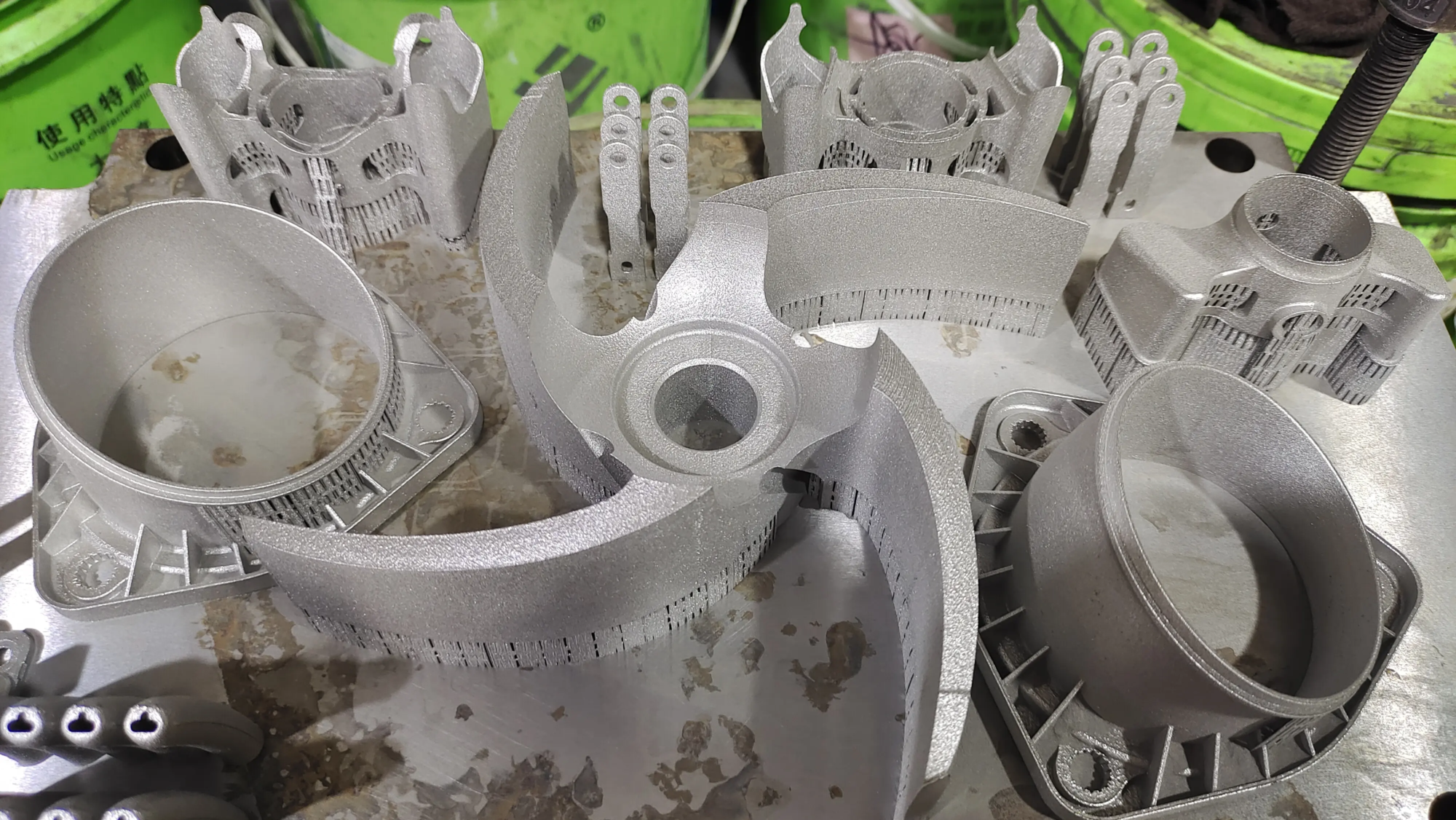
- Lightweight, high-strength metal: Armor plates on the chest, hood, gloves and lower legs require lightweight alloys, e.g. Titanium (Ti-6Al-4V) or high intensity aluminum score. The metals are ballistic-resistant while keeping the weight manageable – crucial for mobility. At GreatLight, our expertise focuses on Selective Laser Melting (SLM)an advanced metal 3D printing technology ideal for creating complex, high-density metal structures with superior mechanical properties precisely on demand.
- Flexible and durable polymer: The base coat that connects the armored portions must allow for Batman’s signature acrobatic moves. High performance polymers such as TPU (thermoplastic polyurethane) or advanced Nylon composite is ideal. These materials can be printed in different densities and geometries and offer flexibility, impact absorption and tear resistance, which are critical for joint movement and user comfort. While SLM specializes in metal printing, multi-material printing capabilities can be combined with these polymers.
- Composite integration: Realistic protective suits may involve seamless integration of 3D printed rigid metal armor elements with flexible printed polymer sections, perhaps even using woven carbon fiber composite laminates for additional reinforcement. This hybrid approach maximizes protection without sacrificing movement.
Conquering Mount Justice: Overcoming Design and Manufacturing Barriers
Creating a fully functional prototype of the Batman suit faces significant engineering hurdles that modern rapid prototyping techniques address head-on:
- Liquidity Paradox: Protecting vital organs with rigid plate armor while giving Batman ninja-like agility was the core challenge. The solution lies in bionic design: Segmented plates mimic reptile scales or layered joints that slide against each other during movement. SLM printing allows for the formation of complex lattice structures within the metal armor—a lightweight internal cage that provides core strength while reducing overall mass.
- Fit is non-negotiable: Bruce Wayne’s suit is perfectly tailored. A true prototype requires Fully customized. 3D scans of the wearer form the basis, ensuring the armor plates perfectly conform to the body’s unique topography. GreatLight leverages digital workflows to ensure rapid iterations of multi-part designs fit together perfectly.
- Weight management: Being large equals a disadvantage against Gotham’s villains. Every gram counts. Advanced topology optimization software identifies stress points, allowing material to be removed from non-critical areas, leaving only sufficient strength. This maximizes the strength-to-weight ratio – a core benefit of metal additive manufacturing.
- Safety first: real "Combat test" Rigorous analysis is required. Finite Element Analysis (FEA) numerically simulates collisions, crumple zones and stress distribution forward print. Motorcycle armor protection standards provide the baseline.
Why 3D printing dominates suit prototyping
Traditional manufacturing methods struggle in the face of these challenges:
- Unparalleled complexity: SLM printing can create complex internal channels, lattice structures and organic geometries that are not possible with CNC machining or injection molding.
- Advanced customization: Each suit is unique and fitted to the user perfectly by scanning and customizing the digital model. Mass production tools are irrelevant here.
- Speed and iteration: Rapid prototyping shines. New armor plate designs can be digitally modified, printed overnight, and tested the next day, exponentially speeding up development cycles. GreatLight specializes in rapid turnaround of metal prototypes.
- Cost Effectiveness (Prototyping): While the unit cost of a full kit will be high considering materials and printing time, the ability to quickly prototype separate components Compared with traditional custom processing, the overall development cost is greatly reduced. Elimination of expensive tooling is a key advantage.
GreatLight: Design your prototype ambitions (seamless integration)
Projects like the functional Batman suit prototype embody complex, boundary-pushing challenges, glow rapid prototyping Good at problem solving. Our core mission is to transform ambitious concepts into tangible, practical realities, leveraging:
- Advanced SLM technology: Utilizing state-of-the-art selective laser melting equipment, we are able to process titanium, aluminum, stainless steel, Inconel and more. This technology provides unparalleled precision and material integrity.
- End-to-end expertise: In addition to printing, we offer a comprehensive Post-processing services. Metal parts require heat treatment for maximum strength, CNC machining of precision-fitting surfaces, finishing (sandblasting, polishing, tumbling) and coatings (anodizing, plating) to meet aesthetic and functional requirements. this "One-stop service" Eliminate coordination headaches.
- Material flexibility and customization: Need to change a specific alloy mix to increase flexibility or impact resistance? Our technical team can advise, source and process specialized materials based on your project’s unique needs.
- Speed and accuracy: We understand time-to-market pressures and deliver complex metal prototypes faster than traditional suppliers without sacrificing accuracy.
Whether it’s a proof-of-concept armor plate for a movie project, a critical component of an armored exoskeleton, or a complex aerospace device, GreatLight provides the technology foundation.
in conclusion
The vision of a fully functional 3D printed Batman suit is getting closer to reality. Printing critical armor plates utilizing lightweight, high-strength metals via SLM, combined with flexible polymers for mobility, offers a viable avenue. While weight distribution and mobility remain complex challenges, the iterative capabilities and structural freedom of advanced rapid prototyping technologies such as SLM make tangible prototyping feasible. Companies employing these technologies, such as GreatLight Rapid Prototyping, are key enablers of such ambitious efforts, proving that with the right tools and expertise, myth can meet metal. The future of custom, high-performance wearable technology is actually being printed layer by layer of complexity.
FAQ: Questions About 3D Printed Batman Suits Answered
-
Q: Can a Batsuit with printed metal parts stop bullets?
one: Strategically placed portions of plating printed via SLM using high-strength titanium alloy can provide ballistic protection against certain calibers, equivalent to Level III military armor plates. Fully bulletproofing the entire suit, especially for rifles, would require materials (such as thick ceramics) that exceed current metal additive manufacturing capabilities for wearable suits. It is more reasonable for protection against shrapnel, impact and small-caliber bullets in specific areas. -
Q: Will the metal suit be heavy?
one: Yes, solid steel plating is prohibitive. This is why advanced design strategies such as topology optimization, lattice-filled structures, hierarchical material printing, and selective plating only in high-impact areas are critical. Using lightweight titanium reduces weight significantly while maintaining strength. Aiming for motorcycle racing armor weight targets is realistic. -
Q: Can ponchos and cloaks be made with 3D printing?
one: Flexible polymers like TPU or advanced nylon composites are ideal for printing complex overhanging shapes like cowls or parts that require articulation. However, the flowing cape is probably best achieved with traditional textiles. Hybrid designs that combine rigid printed armor elements (e.g. cowl structures) with integrated flexible textile sections are optimal. -
Q: How much does a functional 3D printed Batsuit prototype cost?
one: Costs vary widely depending on complexity, materials, level of functionality (e.g. integrated electronics/drone) and finishing. The widespread use of titanium alloys results in significantly higher costs than plastics. The cost of custom engineering and printing can easily range from tens to hundreds of thousands of dollars for a realistic prototype suit that uses metal strategically as well as polymers and textiles. GreatLight specializes in providing the best value solutions for critical metal parts in such complex assemblies. - Q: As a design firm, why choose Honlite for complex prototype projects?
one: Gretel specializes in Quickly turn complex designs into functional metal prototypes using advanced SLM. Our advantages are:- Expertise in high-strength, lightweight metals (titanium, aluminum).
- Precision manufacturing is critical for complex interlocking components.
- Comprehensive post-processing (heat treatment, machining, finishing) ensures durability and aesthetics.
- Deep engineering knowledge provides recommendations for design for manufacturability.
- Fast turnaround time is critical to iterative prototyping cycles.
We cost-effectively solve the tough challenges of metal prototyping