Bonsai Art Meets Advanced Manufacturing: 3D Printing Pots in a New Era
For centuries, bonsai cultivation has embodied harmony between nature and meticulous human art. Traditionally, flower pots of these miniature masterpieces have been given priority to specific functional needs – drainage, root management, aesthetic balance – made of clay, ceramic or stone. However, as technology develops, an attractive shift is emerging: 3D printed bonsai flower pot. This fusion of ancient gardening practices and cutting-edge manufacturing is not only a novelty. It represents a paradigm shift that unlocks unprecedented creative freedom, precision engineering and plant health benefits. Welcome to the new era of bonsai.
Beyond Clay: Unprecedented Advantages of 3D Printing
3D printing (called Additive Manufacturing (AM)) builds objects layer by layer from digital design. For bonsai flower pots, this can unlock impossible features through traditional molding or casting of headlights:
-
Unlimited customization and design freedom:
- Tailored sizes: Create the pot perfectly scaled to the tree’s unique root ball size, Nebari (surface root) and torso angles – no tradeoff in fit. Design precise depth, width and internal geometry to guide root growth.
- Revolutionary Aesthetics: The process is complex, flowing organic forms mimicking tree bark or landscape, complex geometric lattices that allow unparalleled air, or structures combined with artistic themes (waves, clouds, clouds, abstract patterns) were previously too complex or expensive to manufacture.
- Personalized identity: During printing, the name, date or symbol engraving is integrated into the structure of the pot, making each piece a unique heirloom.
-
Designed for the best plant health:
- Precise drainage and inflation: Design and place drain holes with absolute accuracy in 3D CAD forward print. Create complex internal channels and lattice structures within the pot walls to significantly enhance gas exchange (oxygen flows to the roots) and prevent fatal root rot. Air design stimulates thinner and healthier root networks.
- Materials Science: Choice goes beyond ceramics. Biocompatible polymers, gas resistant nylon and vital Advanced Metals Become accessible. Metal prints (discussed below) offer unique structural and thermal properties.
- The future of sustainable production:
- Reduce waste: Compared to subtraction methods (engraving, milling) or pottery waste, additive manufacturing can only make materials when needed, minimizing waste.
- Locally made: Digital designs can be printed anywhere with a suitable 3D printer, such as the Greatlight facility, reducing global transportation distances.
Role of Advanced Manufacturing and Greatlight Expertise
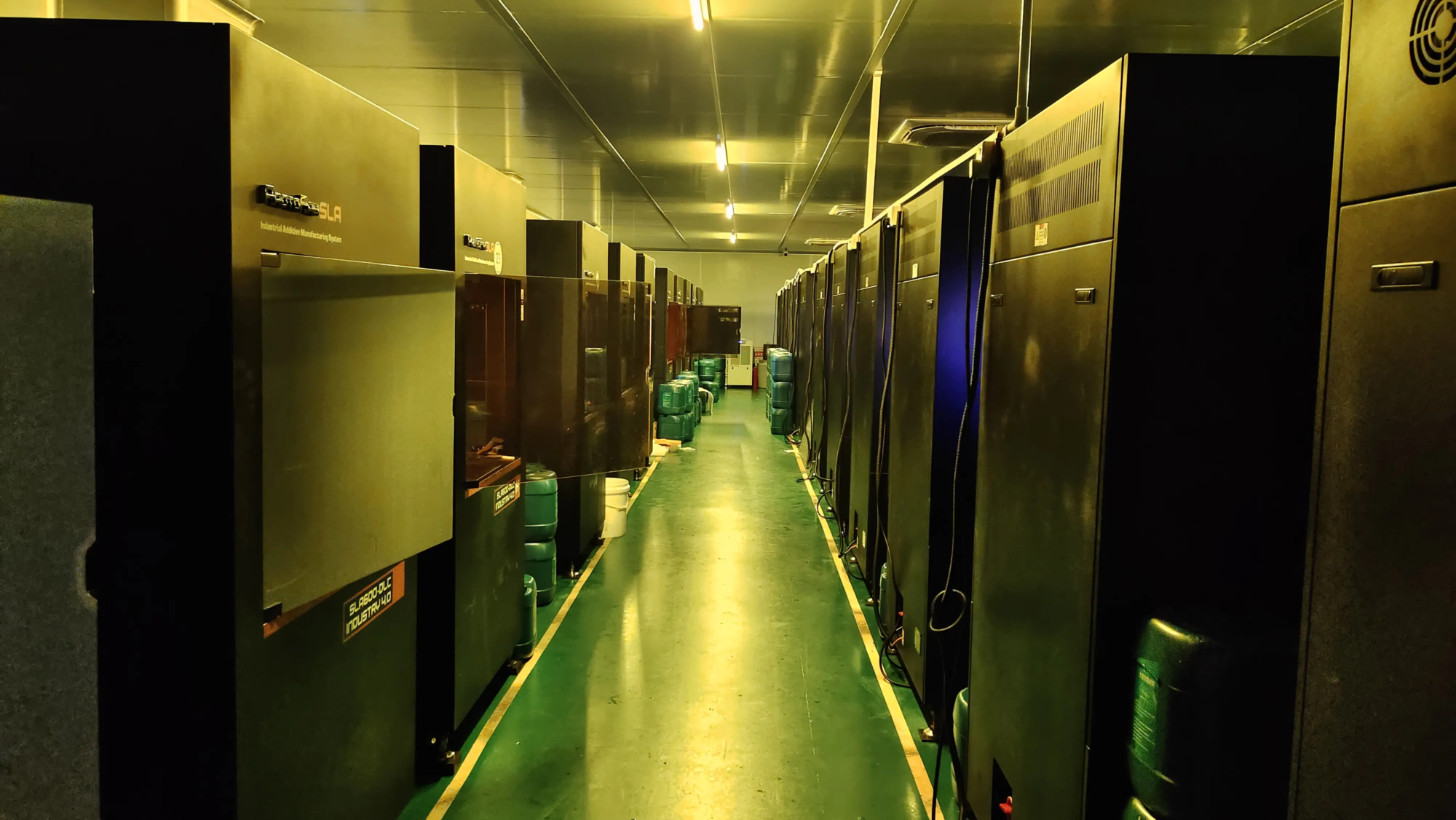
While desktop FDM printers use plastic filaments for simple flower pots, achieving complex geometry, high durability or unique material properties (especially for metal pots) requires industrial-grade technology and deep manufacturing expertise. This is what the company likes Great Light up the path.
Gremight specializes in serving as prime minister Rapid prototyping and additive manufacturing Partner, owns:
- Cutting-edge SLM technology: Selective laser melting (SLM) is a high-precision metal 3D printing process. A powerful laser selectively fuses a layer of fine metal powder particles. This makes it possible to create incredibly strong, complex and intensive Metal bonsai flower pot In such as:
- Stainless steel (316L, 17-4 pH): Corrosion resistant, durable, suitable for outdoor use, elegant matte or polishing effect.
- Titanium (Ti64): Biocompatible, exceptionally strong but lightweight, providing a unique natural tone.
- Aluminum alloy: Lightweight and has good thermal conductivity.
- Engineering Strength: Greatlight’s team not only needs to print; they engineer. They solve complex problems related to structural integrity, complex design, thermal distortion management and ensuring productivity. They advise on the best design features, material selection and feasibility.
- End-to-end service: In addition to printing, Greglight provides Comprehensive post-processing Quality is crucial:
- Precision CNC machining of critical interfaces (e.g. edges).
- Electropolishing to enhance surface smoothness and corrosion resistance.
- Passivation of stainless steel.
- Heat treatment to reduce pressure and characteristics.
- Various finishing options (brush, polish, bead explosion, paint).
- Quick customization and prototype: The rapid nature of this process allows for iterative design to be refined. Quickly create functional prototypes to test fit and aesthetics before submitting the final metal version. Most materials can be quickly customized and handled.
Pushing the Boundaries: Materials, Design and Intelligence Potential
The intersection of 3D printing and bonsai cultivation is a fertile foundation for innovation:
- Mixed materials: Printed composites embed natural elements for unique textures or combine polymers with ceramic-like properties.
- "No tools" Complex geometric shapes: Design pots with integrated humidity trays, precise angled planting platforms or specialized root training structures, as a single, unified component, traditionally impossible to shape or cast.
- dawn "Smart" flowerpot: Embedded channels designed during printing can accommodate sensors to allow soil moisture, nutrient levels or temperature to wirelessly transmit data. 3D printing is an ideal way to seamlessly integrate complex internal functions.
Example: Realizing the Vision
Imagine a bonsai professional whose unique specimens have dramatic twisted roots. Custom 3D printing pots can be designed through CAD software to:
- There is an opening dedicated to displaying Nebari.
- Includes integrated microchannels for precise root guidance and air fixation.
- Leverage biocompatible titanium SLM prints for ultimate durability, corrosion resistance and a sophisticated modern look.
- Fast-made by Greatlight, combining all necessary structural support for analysis, precision printing and a perfect satin finish.
This level of custom functionality and aesthetic integration perfectly captures the potential of this new era.
Conclusion: Cultivate the future
3D printed bonsai pots are not a replacement for cherishing traditions; they are a powerful extension of the art form toolkit. This symbiosis of millennial-history horticultural wisdom has the precision, flexibility and creative liberation of additive manufacturing, allowing artists and enthusiasts to push boundaries. From optimizing plant health through an engineered microenvironment to creating breathtaking unique sculptural containers, especially with high-end metal, the possibilities are endless.
Leading manufacturers like GreatWith its mastery of industrial-grade additive manufacturing (especially metal SLM printing), comprehensive engineering support and expert finishing services, it is an important partner in transforming innovative design into tangible, high-performance bonsai art. They provide a technical bedrock for this exciting evolution. The charm lies in the ability to make unique and well-formed containers, just like their cradle, which is a true new era in the bonsai journey from roots to canopy.
FAQ: 3D printed bonsai flower pots
Q: Are 3D printed bonsai pots as durable as traditional clay or ceramic pots?
one: This depends to a lot on the materials and printing technology. Plastics printed on amateur machines may not be as durable as ceramics. But, the pots printed in industrial SLM (Metal Printing – Like Stainless Steel or Titanium) or high-performance polymers or ceramics, produced by professionals like Greatlight, can be More Durable and elastic than traditional choices, especially in terms of impact resistance and thermal stability. Post-treatment treatment further improves durability.
Q: Are plastic 3D printed bonsai pots safe?
one: When using Food safety, biocompatibility and UV-resistant plastics (e.g., specific grades of PETG, ASA or polypropylene) and ensure thorough post-treatment to remove any manufacturing residues, they are usually safe. Avoid cheap, unrepaired filaments. For ultimate safety assurance, especially for display pieces or precious specimens, certified biocompatible metals such as Greatlight’s titanium or specific stainless steel are an excellent choice.
Q: How does drainage work with complex 3D printing designs?
one: One of the biggest advantages of 3D printing is Precisely control drainage. Before printing, drain holes can be strategically placed in the CAD model, ensuring perfect functionality regardless of the complex shape of the pot. The internal structure can even be designed to best spread water. Avoid designing where the barrier hole is supported; professional services like Greatlight support design and disassembly.
Q: Can I buy a metal 3D printed bonsai pot? Isn’t that expensive?
one: Yes, absolutely! Metal printing, especially metal printing using SLM, achieves an amazing, unique and incredibly durable metal pan. Materials like stainless steel and titanium are ideal. and Higher initial cost It represents an excellent value than large-scale production of ceramic or plastic printing (due to machine costs, material costs and post-processing) Customized, engineered products. Complex designs that are impossible to achieve by other methods. It is believed that this is an investment in functional art works. Companies like Greatlight specialize in high-quality metal prototypes and have competitive value.
Q: How do I design a 3D pot?
one: Design needs 3D CAD software skills (Complex design of industrial tools such as Tinkercad for beginners, Fusion 360 or Blender for intermediates, Siemens NX for intermediates). Key factors include:
- Precise size (cavity, drainage holes, overall footprint).
- The wall thickness of structural integrity (critical for metal printing).
- Design manufacturability (consider printing orientation, overhang, support requirements).
- Integration of functional features (drainage, inflatable, foot). If you lack design skills, work with a designer or work directly with a manufacturer (e.g. Greatlight) Design Guide or Co-design Service As part of its prototype solution.
Q: How long does it take to make a customized 3D printed bonsai pot?
one: Time varies greatly:
- Simple plastic (amateur): sky.
- Complex plastics/ceramics (industrial): A few days to weeks.
- Metal (SLM): Usually, usually 1-4 weeks Depends on complexity, part size, batch quantity and required post-processing. This includes CAD time (if needed), printing, support removal, heat treatment (if needed), and completion. this "Rapidly" In rapid prototypes, it means it is much faster than traditional custom metal casting or complex machining. Greatlight utilizes its professional settings for effective timetables.
Q: Are 3D printed bonsai pots weatherproof?
one: Material selection is crucial. Metal printing (titanium, stainless steel) Born to be storm-proof. Proper choice Industrial polymers (e.g., PA12 nylon with selective laser sintered) Provides excellent UV and water resistance. Basic PLA plastic is no Suitable for outdoor use. Always use providers to clarify the UV stability and environmental tolerance of the material. Greatlight provides the best materials for your specific indoor/outdoor applications.Are you ready to cultivate customized bonsai masterpieces? Explore the creative and functional possibilities of 3D printing pots – Contact Greatlight now to discuss your custom projects.