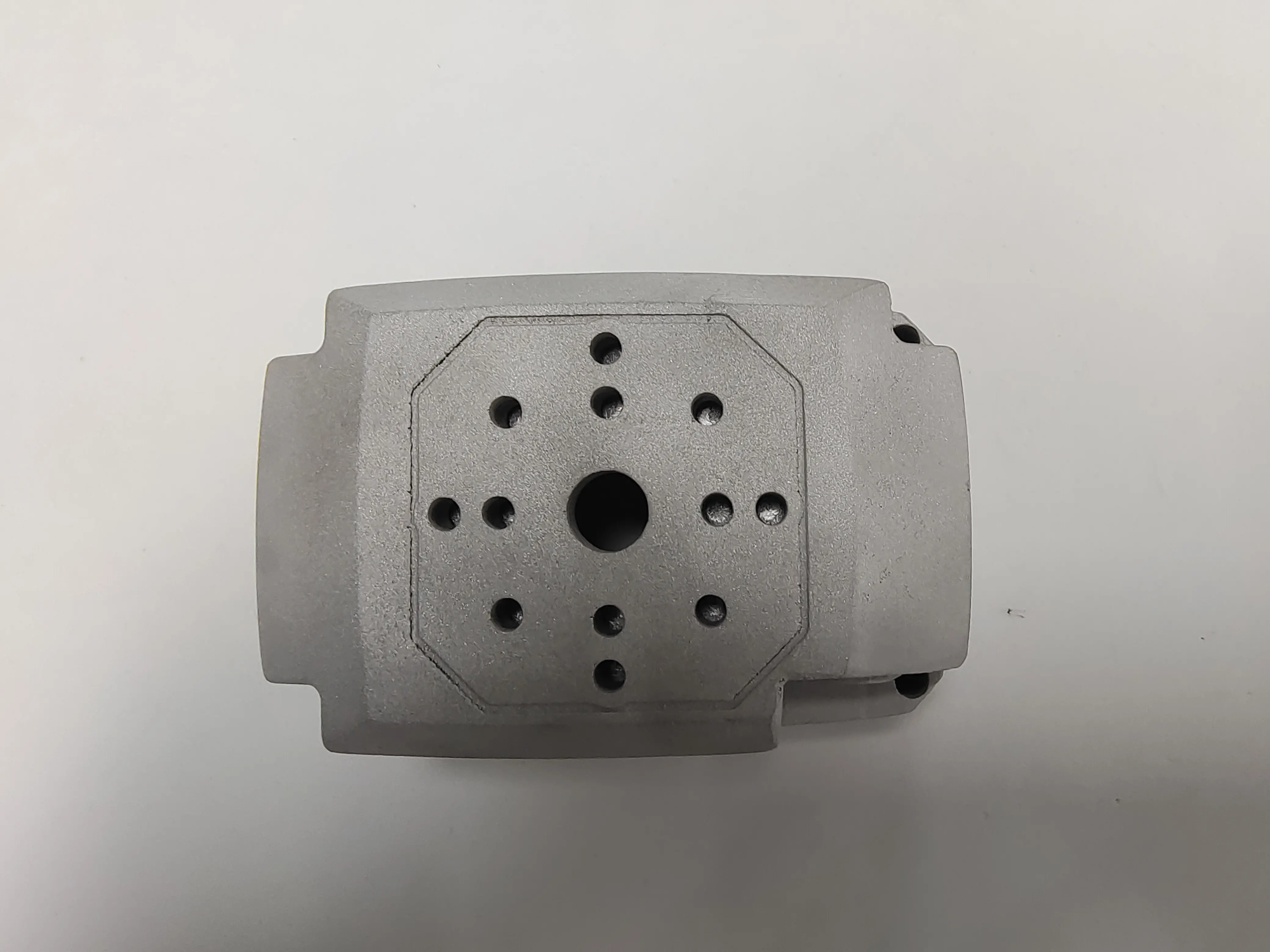
Exploring the Frontier: How 3D Printing Is Revolutionizing Aerators
Aerators—those often-overlooked components that are critical to precise gas diffusion and mixing in countless applications—are enjoying a quiet renaissance. Traditionally manufactured using CNC machining, casting or welding, creating complex bubbler designs often means expensive tooling, long lead times and geometry compromises. Enter additive manufacturing (AM) or 3D printing. This technology is dramatically reshaping the landscape, enabling previously unachievable geometries and performance characteristics while streamlining the production of prototypes and end-use parts. At GreatLight, we utilize state-of-the-art Selective Laser Melting (SLM) technology to push the boundaries of what is possible with metal bubbler components.
Unlocking innovation: the power of complex geometries
When traditional manufacturing encounters limitations, 3D printing excels. This freedom helps:
- Optimized internal approach: Imagine complex internal lattices, conformal channels or multiplex diffusers that are precisely tuned to control bubble size, distribution and residence time. These are not just fantasies; They are printable realities that can significantly increase the efficiency of gas-liquid interactions. Computational fluid dynamics (CFD) simulations guide designs optimized specifically for additive manufacturing that outperform off-the-shelf counterparts.
- Integrated features: Consolidate components into one solid part. Print nozzles directly onto the diffuser body, seamlessly integrate mounting points, or incorporate internal filters. This reduces potential leak points, simplifies installation, and increases overall system reliability.
- Completely customizable: Need a bubbler that fits into awkward spaces, handles exotic gas mixtures, or operates under extreme thermal cycling? 3D printing thrives on custom solutions. Designs can be precisely customized based on flow, pressure drop, chemical compatibility requirements and physical constraints without the cost of reassembly.
Why choose 3D printing for your bubbler?
- Unparalleled precision and sophistication: The resolution achieved by SLM technology enables printing of fine features with tight tolerances (±0.05mm), which is critical for controlling microscopic air bubbles. Complex, organically shaped internal structures that would have been impossible to achieve through milling become feasible.
- Rapid prototyping speed: Prove aerator design concepts in days, not weeks or months. Rapidly iterate on multiple geometries based on physical testing feedback, accelerating development cycles and dramatically reducing time to market. This agility is invaluable for R&D departments to address new challenges. GreatLight specializes in accelerating innovation through rapid prototyping of metal parts.
- Cost-effective small batch production: For specialized instruments, research installations or custom industrial equipment requiring batch sizes of 1-1,000 pieces, 3D printing can eliminate prohibitive mold or fixture costs. Production scale is more linear and efficient compared to traditional methods.
- Material Versatility: Choose the perfect material for your environment:
- Meet the features: High-strength, heat-resistant metals, e.g. 316L stainless steel (Excellent corrosion resistance), TitaniumTi6Al4V (High strength to weight ratio, biocompatibility), Inconel 625/718 (extremely heat/corrosion resistant), and Aluminum alloy (Light weight and good thermal conductivity). These metals are ideal for demanding environments and sterile environments.
- polymer: High performance polymers such as peep or Polytetrafluoroethylene (Teflon) Provides excellent chemical inertness where metals may corrode. Print via technologies such as SLS or multi-jet fusion.
- Enhanced performance: The optimized geometry can significantly improve bubble uniformity, reduce pressure drop, enhance mixing uniformity and increase the overall efficiency of the gas delivery process. This means higher manufacturing yields or more accurate lab results.
Material selection: customized to the task
Choosing the right material is crucial to the functionality and longevity of your aerator:
- Corrosion resistance: Essential for harsh chemicals and gases. SS 316L, Titanium, Nickel Alloy (Inconel), PEEK, PTFE.
- High temperature stability: Suitable for furnace environments or exothermic reactions. Inconel, titanium, PEEK, specialty ceramics.
- Biocompatibility: Critical for medical/pharmaceutical applications. Titanium Ti6Al4V (ELI grade), medical grade PEEK, SS 316L compliant with FDA standards.
- Thermal conductivity: Requirements vary based on cooling requirements. Aluminum alloys are highly conductive; polymers are generally insulators.
- Strength and durability: Materials such as titanium and Inconel have excellent fatigue strength under cyclic pressure loading.
Excellence in manufacturing and post-processing
GreatLight exemplifies the advantages of partnering with a specialist additive manufacturing supplier. We utilize cutting-edge industrial SLM printers that are capable of processing complex metal bubbler geometries with the highest precision. Our expertise goes far beyond printing:
- Advanced finishing: Post-processing is critical to aerator performance. We provide comprehensive services:
- Precision machining: Critical sealing surfaces and interfaces are CNC machined to ultra-tight tolerances.
- Surface enhancement: Electropolishing (especially for SS 316L to improve corrosion resistance and cleanability), sandblasting, various coatings.
- Relieve stress and hip joints: Heat treatment processes (stress relief, solution annealing) and hot isostatic pressing (HIP) significantly increase the density and mechanical properties of printed metal parts, eliminating internal porosity and ensuring structural integrity under pressure.
- Leak test: Full functional testing of critical paths under specified stresses.
- One-stop solution: From optimal design consulting (DFAM – Design for Additive Manufacturing) and material selection, to printing and meticulous finishing, GreatLight handles every stage. Most materials can be quickly customized and processed. This streamlined approach ensures consistent quality and saves valuable time.
Diverse applications across industries
3D printed bubblers find application wherever precise gas diffusion is critical:
- Semiconductor manufacturing: For high-purity gas delivery in wafer manufacturing (etching, deposition), contamination control and bubble uniformity are critical. Ultra-clean printed titanium or electropolished SS 316L dominate here.
- Aerospace and Defense: Use titanium or aluminum alloys to create lightweight, high-strength bubblers for fuel mixing systems, environmentally friendly CO2 scrubbers or inerting systems.
- Double expansion and pharmaceuticals: Sterile (autoclavable) and biocompatible (printed titanium or PEEK) glassware accessories or reactor bubblers are required. Essential for fermentation control or synthesis.
- Chemical and petrochemical processing: Robust bubblers for reactors, scrubbers and analytical instruments, resistant to corrosive chemicals and high temperatures (Inconel, PTFE).
- Research and Laboratories: Prototype novel reactor designs, create custom distributors for specific bioassays, or rapidly develop specialized analytical instruments.
- Water and wastewater treatment: Aeration diffusers are designed for maximum oxygen transfer efficiency and scale prevention.
in conclusion
3D printing fundamentally changes the design and manufacturing of aerators. It frees engineers from traditional constraints and enables unparalleled complexity, customization and optimization driven directly by functional requirements. Speed and cost-effectiveness for prototyping and low-volume runs are compelling advantages. Materials Science offers solutions from ultra-corrosion-resistant metals to biocompatible polymers to perfectly meet application needs.
For innovators looking to push the boundaries of gas-liquid interactions, partner with specialist AM manufacturers such as huge light Crucial. as One of the best rapid prototyping companies in ChinaGreatLight combines cutting-edge SLM technology, deep materials expertise, comprehensive post-processing capabilities and a commitment to solving complex prototyping challenges. If you need high-precision, high-performance metal bubblers – whether for rapid prototyping or production – leveraging our end-to-end service ensures you get the best solution quickly and reliably. Customize your precision rapid prototyping parts today at the best prices!
FAQ: 3D Printed Aerator
-
What is the biggest advantage of 3D printed bubblers compared to traditional machining? Key benefits are the ability to create complex internal geometries not possible with machining, consolidate components into a single part, reduce leakage, enable rapid prototyping turnaround, and achieve cost-effectiveness in low to medium volumes without the need for tools.
-
Can 3D printed bubblers handle the pressure and corrosive environments required by industry? Of course, if designed correctly and printed/processed/finished by experts using suitable materials. Metals such as stainless steel 316L, titanium and Inconel are printed via SLM and stress relieved/HIP plus electropolished and other surface treatments for superior strength, sealing and corrosion resistance. Rigorous stress testing is standard practice.
-
I need very small, precise bubbles. Can 3D printing do this? Yes, this is a key advantage. SLM technology can print microscopic porous structures or complex nozzle designs that produce highly uniform fine bubbles. Initial CFD simulations combined with prototyping and testing allow the diffuser geometry to be quickly optimized to obtain the desired bubble size distribution.
-
How long does it take to get a functional 3D printed bubbler prototype? Lead times vary based on complexity and size, but generally, metal prototypes (including necessary machining and finishing) can be 1-2 weeks Through an expert provider like GreatLight that specializes in rapid prototyping. Polymer parts may be faster. The iteration speed is significantly faster than traditional methods.
- I have an idea for a complex bubbler but no CAD file. can you help? Yes. Working with a professional additive manufacturing supplier can bring tremendous value. They have DFAM (Design for Additive Manufacturing) expertise. Starting from functional requirements (flow, pressure, bubble size, materials), GreatLight’s engineering team can collaborate to optimize designs for 3D printing performance and manufacturability, effectively turning ideas into printable models.