Unleashing creativity: The ultimate guide to 3D printing amazing cat masks
Ever dreamed of making stylish cat characters or honoring your mysterious pet with custom, wearable artwork? 3D printing is your Purr-Fect partner. Whether it’s used for role-playing, masquerades, art installations, or even unique functional prototypes, 3D printed cats combine creativity with cutting-edge manufacturing. This guide will take you to every stage, from concept to finished masterpieces, while highlighting how expertise can enhance your project, especially when seeking durability or metal accuracy.
Why 3D printed cat masks?
Charm is multifaceted:
- Final Customization: Design expressions range from overly realistic anatomical precision to fantasy anime style or minimalist abstract forms – unaffected by traditional manufacturing restrictions.
- Complexity makes it feasible: Complex details such as fur textures, delicate whisker holes or intricate lattice structures are effortlessly implemented.
- Perfect for: The mask can be engraved on numbers to accurately use scanned or precisely measured facial contours.
- Quick iteration: Prototyping becomes fast and cost-effective and can be improved before final production.
- Multifunctional material palette: Choose from color, lightweight plastics for role-playing or robust plastics, long-lasting metals for permanent display or demanding applications.
Phase 1: Design – Blueprint for Feline Vision
The journey begins in the digital realm:
- Concept and style: Define your cat! Smooth black panther? Fluffy Persian? There is a stylized robot cat? Collect reference images.
- Software selection:
- Beginner friendly: Tinkercad (simple shape), mesh mixture (engraving/editing).
- In the middle: Blender (free, powerful engraving), Fusion 360 (parameter design).
- Professional: Zbrush (high detailed engraving), Maya/Cinema 4D (advanced modeling).
- Key design considerations:
- Comfort and wear resistance: Make sure you have enough eyes and breathing holes. Design ventilation channels. Includes filling contact points. Model strap or internal frame for safe, comfortable accessories. Trim the weight of the model as much as possible.
- Printability: Follow the design additive manufacturing (DFAM) principles. Avoiding extreme overhangs requires excessive support. Ensure the wall thickness is suitable for the selected material and printer type. Design large planar areas with curved curves to prevent warping.
- Level of details: Match the resolution to the printer’s functionality. Sharp corners with smooth curves – each affects the slicer setup and support requirements.
- Test Print: If you create a complex or precise fit mask, consider first printing a small or low resolution version to verify the fit and aesthetics.
Phase 2: Material Selection – Plastic Charm or Metal Je?
Select methods that significantly affect aesthetics, functionality, and printing:
- Plastics (FDM/Resin Printing – ideal for role-playing and decorating):
- PLA: The easiest printing, bright colors, affordable. The most suitable mask for decorative use. Will become brittle. Limited heat resistance.
- PETG: Stronger than PLA, impact resistance, slight flexibility, moderate heat resistance. Excellent all-around for durable role-playing masks.
- Resin (SLA/DLP): Provides incredible surface details and smoothness. Rigid resins are common; flexible or hard resins provide better influence on wearable parts. Needs after washing and treatment.
- Metal (SLM Printing – Ideal for durability, artwork, prototype): Metal 3D printing shines when your mask needs unrivalled strength, thermal stability, or advanced metal finishes. This is a place like professional service Great Excel:
- Material: Stainless steel (316L), aluminum alloy (ALSI10MG), titanium (Ti6al4v), nickel alloy. Each offers unique strength-to-weight ratios, corrosion resistance and aesthetics.
- Why metal?
- Extreme durability: Resistant to effects, wear and deformation.
- Heat resistance: Suitable for environmental plastics that cannot bear it.
- Premium finish: Achieve amazing polishing, brush, anodizing or powder-coated surfaces.
- Structural integrity: Required for functional parts or heavy-duty applications.
- Professional longevity: Best for art installations or engineering prototypes that require high performance.
- Great Advantages: Utilize advanced Selective laser melting (SLM) Technology, Greatlight achieves extraordinary detail resolution and material properties in metals, surpassing typical desktop functionality. Their expertise ensures successful printing of complex mask geometry.
Phase 3: Printing – bringing numbers to life
- Plastic (DIY):
- Slicer settings: Programs such as Ultimaker Cura or Prusaslicer convert your 3D model into printer instructions. Key settings:
- Layer height: Lower (e.g. 0.1-0.15mm) for surface details; higher speeds.
- Fill density: 15-30% of the strength and weight of the mask.
- support: It is crucial for overhanging. Use the tree’s support or custom structure in the slicer for easy removal.
- Bed adhesion: Edges or rafts help prevent warping.
- Machine calibration: Print the bed! Make sure to dial the extruder temperature and flow rate into your material.
- Slicer settings: Programs such as Ultimaker Cura or Prusaslicer convert your 3D model into printer instructions. Key settings:
- Metal (professional services like Greatlime):
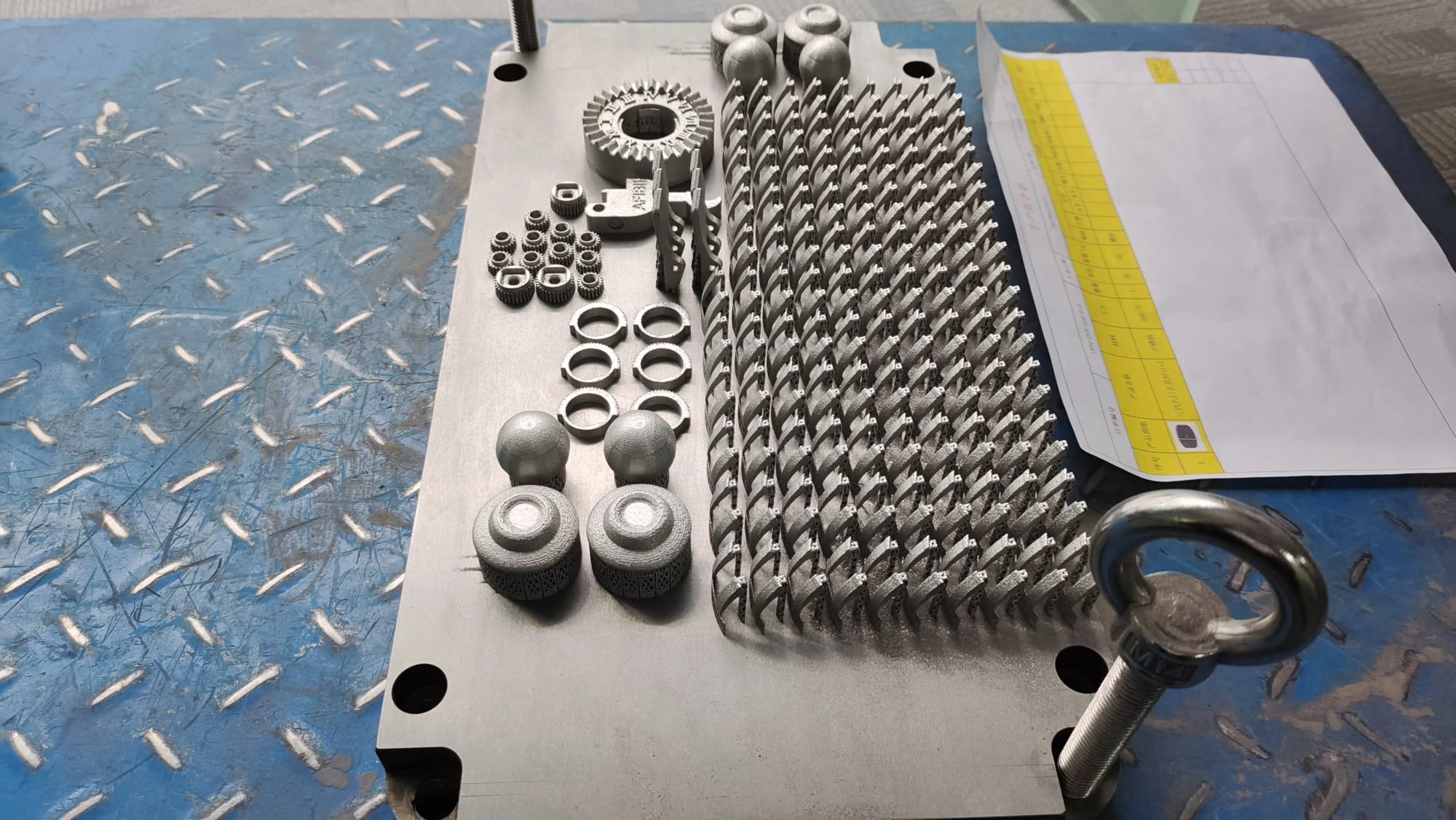
- SLM process: High power laser selectively melts the fine metal powder layer by layer. Strict process control is required.
- Expertise: Experienced engineers optimize construction directions, laser parameters, support generation (critical for heat dissipation and prevent warping in metal) and indoor atmosphere. Greatlight’s advanced equipment ensures consistency and quality of complex mask structures.
- Safety: Metal powders and high-energy lasers require industrial-grade safety protocols – best handled by professionals.
Phase 4: Post-processing – Final thriving
Convert original prints to polished sheets:
- plastic:
- Support removal: Cut/trim the support carefully. It is crucial to flush the cutting machine and needle files.
- Grinding: Smoothing is performed by gravel (120, 220, 400+). Wet sand can reduce dust. Plan a lot of time to invest!
- Fill and start: Use a filler primer or spotted peel to erase the layers of lines and imperfections. Grind again.
- finishing: Paint (acrylic, spray paint), clear coat. Consider spray guns for gradients/details. Add fabric lining for comfort.
- Metal (Ideal for professional finish):
- Support removal: Special cutting (wire EDM) or processing is required.
- Heat treatment: Relieving pressure is often critical for SLM parts to ensure dimensional stability.
- Surface reinforcement: Here is where professional services really unlock potential:
- Rolling/vibration finish: For general smoothing and burrs.
- polishing: Achieve mirror finish.
- Bead Explosion: Create an even matte texture.
- Anodized (aluminum): Adds durable, durable color finish.
- Powder coating: Provides thick, vibrant and protective coatings.
- Greglight’s one-stop solution: Avoid the complexity of metal post-processing. Greatlight offers a comprehensive finishing service – from expert support removal and heat treatment to a wide variety of amazing finishes – offering ready-to-wear made from metal or display masterpieces. Their expertise ensures safety and optimal results.
Conclusion: From concept to charming cat
3D printing ignited the unlimited potential of creating unique cat masks that transform digital fantasy into tangible art. Whether you’re embracing a meaningful DIY path with plastic filaments or craving the lasting elegance and power of a professionally crafted metal mask, the process is undoubtedly accessible. For those seeking a pinnacle of detail, customizability, material properties and perfect finishes, especially when working with sophisticated metals – working with experienced rapid prototyping experts is key. The company likes it GreatEquipped with state-of-the-art SLM technology and comprehensive post-processing capabilities, prepare to turn your feline vision into reality, handling everything from initial file optimization to final flash surfaces. Unleash your creativity and bring your unique cat mask to life.
FAQ: The mystery of 3D printed cat masks
-
Q: Can I find free CAT mask STL files online?
one: Absolutely! Websites like Thingiverse, Cults3D, Myminifactory and Printables have numerous free and paid models. Remember to be credited to original creators! You can also modify existing files or delegate custom designs. -
Q: Is it safe to wear a 3D printed mask?
one: Take precautions:- ventilation: Ensure sufficient breathing holes. Avoid completely enclosed designs.
- Supporting materials: Delete completely all Supports material residues, especially close to the eyes and airways.
- Material Safety: If you expect prolonged facial contact, wear food safety paint. For resin, make sure to cure completely (follow the data sheet).
- Comfortable: Smooth all surfaces to prevent skin irritation. Use soft fill if needed. Ensure clear vision and a safe but comfortable fit. Avoid wearing it for a long time.
-
Q: How long does it take to 3D print a cat mask?
one: Variable variation.- Size/Complexity: Simple/small=a few hours. Full face, detailed = possible on FDM printer for more than 12-30 hours. Resin prints faster, but requires curing time. Metal prints (SLM) often involve construction of several hours to a day due to laser processing, as well as a large amount of post-processing time for professional processing.
-
Q: Is metal 3D printing expensive for masks?
one: Due to the cost of machinery, materials and complex handling, metal printing is definitely more expensive than plastic printing. But, because:- Permanent art installations require longevity.
- Functional prototypes requiring metallic properties.
- Customized high fashion or luxury clothing.
- Collectors seeking heirloom quality works.
Investments in professional metal 3D printing become reasonable and provide excellent value through durability and finishes. Get a quote for details.
-
Q: What technical specifications make Greatlight suitable for custom metal masks?
one: Greglight has key advantages of metal masks:- Advanced SLM Tech: Ability to produce powerful parts from materials such as stainless steel, aluminum and titanium.
- Strange focus: Expertise aims to solve complex prototype development challenges to optimize complex geometric shapes such as masks.
- Completed: Important aftertreatment (smoothing, polishing, heat treatment, amazing surface coating) essential for wearable metal items.
- Custom: Work across a variety of metal alloys and tailoring characteristics.
- Speed and support: A quick prototyping spirit can quickly implement design. Their team provides expert guidance through their metal printing journey.
- Q: Where is the lightweight metal design?
one: Metal masks don’t have to be heavy! Professional SLM allows software (generating designs) to optimize complex lattice or hollow structures to minimize mass while maintaining structural integrity. Combined with lightweight alloys like aluminum or titanium, surprisingly elegant and wearable face masks are feasible. Greatlight’s expertise is critical to the successful implementation of these complex lightweight strategies in metals.