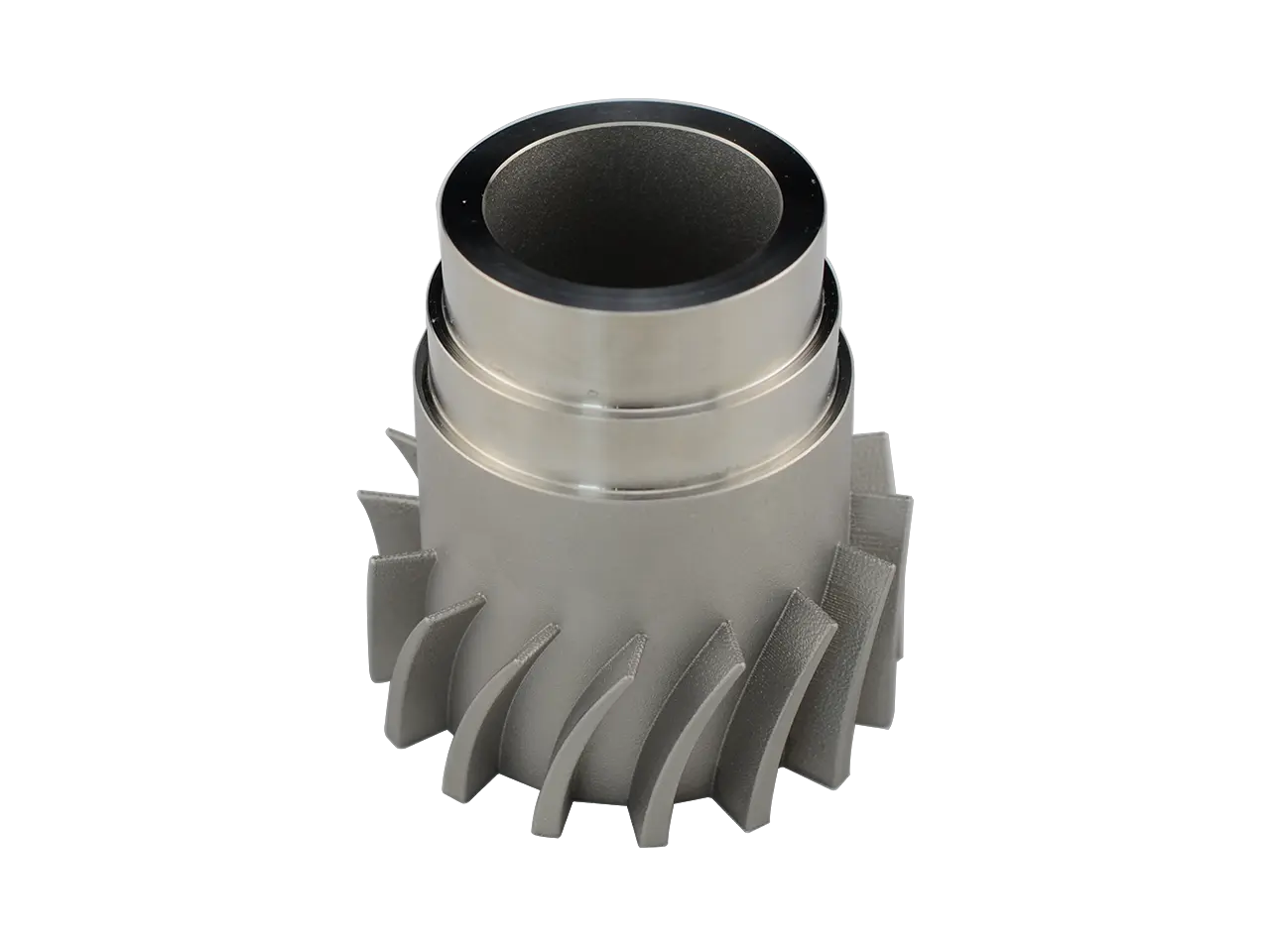
Beyond Blueprint: Engineering the perfect 3D printed container and lid with precision metal AM
Container and lid. It seems simple, it is crucial. From protecting exquisite aerospace components to storing reactive chemicals or preserving gourmet foods, their performance depends on precision, durability and perfect sealing. Traditional manufacturing often stumbles upon complex geometries or cost-effective low-volume production. This is where metal additive manufacturing (AM), especially selective laser melting (SLM), is not only a substitute, but also an enabler of designs previously deemed impossible. Let’s dig into the complex world of 3D printed metal containers and lids, exploring design, material and manufacturing considerations that distinguish prototypes from production-grade solutions.
Why does metal fit containers and lids?
Although polymers have their place, many demanding applications require the inherent advantages of metals:
- Unrivaled strength and durability: For industrial components, vacuum cavity or high impact environments, metals such as stainless steel, titanium (Ti-6al-4V), Inconel or aluminum alloys provide excellent mechanical properties.
- Special temperature and chemical resistance: Metals withstand extreme heat, low temperature conditions and corrosive substances much better than most polymers.
- Sealing potential: Through precise design and manufacturing, metal AM can achieve a truly hidden seal that is crucial to sensitive electronics or hazardous materials.
- Complex internal functions: AM allows for integrated baffles, channels (for cooling/heating), lattice structure (lightweight) or processing or casting impossible custom mounting points.
- Rapid prototype production: Ideal for iterating complex sealing mechanisms or producing custom containers without the need for expensive tools.
Design for success: Main considerations
Designing a powerful 3D printed container and lid system requires rigorous engineering. This is important:
-
Sealing Mechanics: This is the most important thing.
- Spacing integration: Design grooves (O-rings, custom profiles) have precise dimensions, considering the gasket compression ratio. Consider AM Surface Fine Fineness – Micro channels can allow leakage, requiring higher quality printing or sealed surfaces for post-treatment.
- Metal to Metal Sealing: Used for ultra-high vacuum (UHV) or extreme conditions. Special tolerances and ultra-smooth mating surfaces are required for post-processing printing. Design with minimal deformation under load.
- Lip and groove design: Ensure proper interference and alliances. The liquid may need to be self-drained.
-
Tolerance and fitness:
- Shrinkage allowance: Factors of material specific shrinkage during SLM curing and cooling. Experience is the key here. Functional fitting usually requires tight tolerances (±0.05mm-±0.1mm common).
- Interference/Friction Fitting: Carefully design, taking into account material modulus and surface roughness. Simulation can help predict deformation.
- Clear Compliance: If different, make sure the thermal expansion difference between the container and lid material.
-
Lid accessories (hinges, buttons, thread):
- Site hinges (metal?): Due to fatigue, it is rare in metals. The pins are standard; design strong lugs and use enough material around the pins.
- Delay/delay: Ensure distribution of pressure; avoid sharp notches.
- Thread: Both external and internal threads can be printed directly.
- size: Thin lines are challenging; prioritize larger pitches (e.g., M6 or thicker) for easier printing and cleaning. Avoid using very high lines.
- design: Consider thread types (metric, union, custom). Add minor diameters slightly or use trapezoid/custom profiles for a firmer print line.
- Post-processing: Aspoid/rotary cutting tools or thread milling significantly improves thread quality, strength and finish, exceeding ASPRING threads.
-
Wall thickness:
- Uniformity: Designed to keep the wall consistent to minimize bending and residual pressure.
- Minimum thickness: Material and size dependencies (please consult your AM partner!). Electron beam-based systems are often thinner walls than SLMs, but SLMs provide more detailed details. For metals such as stainless steel or aluminum on powerful SLM systems, thicker metals are usually thicker, but thicker is usually more structurally strong. Keep balanced with weight and material costs.
- stiff: Use ribs or corrugated wisely to prevent bending without adding too much mass. The lattice structure provides excellent stiffness/weight ratio for larger containers.
- Directions and support:
- Key surfaces: Identify sealing surfaces and critical dimensions. Orient these to minimize support or ensure contact only non-critical areas.
- Downward surface: The effect is expected to be slightly rough. If necessary, plan after surgery.
- Thermal stress management: Direction affects thermal gradient and warping. Strategic support for placement is crucial to stability. Thermal balanced part nesting contributes to accuracy on the profile.
Material Problems: Alloys for container performance
Material Selection Couple Design has functions:
- Stainless Steel 316L: First choice. Excellent corrosion resistance (available in food safety grade), good strength, affordability. Ideal for chemical containers, food processing parts, marine components.
- Stainless steel 17-4 pH: Heat treatment. The intensity is significantly higher than 316L. Ideal for structural containers that require high strength ratios.
- Aluminum alloy (ALSI10MG, ALF357): Lightweight, good thermal conductivity, corrosion resistance. Ideal for lighter functional prototypes, coverings, enclosures, heat exchanger containers. The force is less than stainless steel/titanium.
- Titanium TI-6AL-4V (5/23 level): Advanced options. Excellent strength to weight ratio, excellent biocompatibility, excellent corrosion resistance (even against chlorides), good temperature range. Ideal for aerospace, medical implants, and high-performance applications. Biocompatibility and sterility grade place great emphasis on medical treatment.
- Nickel alloy (Inconel 625, 718): Extreme performer. Unrivaled oxidative resistance and excellent corrosiveness of irritating chemicals at very high temperatures. For combustion chambers, furnace parts, strong chemical processing is required.
GREMLIGHT EDGE: From Design to Delivery
Achieving perfection on precision metal containers and lids requires more than an SLM printer. it takes In-depth process expertise, strict quality control and integrated post-processing. This is where Greatlight is good at:
- Advanced SLM Arsenal: We utilize state-of-the-art industrial metal 3D printers to optimize the reliability and accuracy of a wide range of materials including titanium alloys, NI marine grades and medical stainless steel. Our machines provide the fine feature resolution and dimensional accuracy required for complex sealed geometries.
- Engineering Partnership: From DFAM support to help optimize your CAD model (reduced support, directional quality, design seals) to material selection recommendations, our engineers work closely with you. Thermal simulation analysts advise on structure and material selection based on previous thermal stress spectrums.
- Uncompromising precise post-processing: "Prepare the printer" Rarely the end point. We provide comprehensive One-stop suite:
- Precision CNC Profile Milling: Used to achieve critical sealing surfaces, smooth exterior finishes and perfect threads on covers and objects to keep tolerances tight.
- Surface finishing: Vibration polishing, CNC micro-growth polishing agent to achieve near molar or specific RA values (achable medical-grade smoothness).
- Heat treatment: Reduce stability, aging (17-4ph), hip (hot isothermal pressing) pressure to eliminate internal porosity to reduce pressure/vacuum application – reduce leakage detection path. HIP automatically increases density automatically to 99.98% of the baseline above the baseline, thereby significantly improving sealing capabilities.
- Electroplating/coating: Electronic nickel plating, anodized (aluminum), electropolished for each customer specification to enhance corrosion or aesthetics. It also includes passivation of stainless steel to restore corrosion resistance after thermal cycles.
- Leak Test: Key! We use state-of-the-art helium mass spectrometry to perform ultra-sensitive leak detection, pressure attenuation test or bubble test according to standard MIL specifications.
- Speed and customization: Transform expertise into efficiency. We accelerate the path from design to proof of concept (POC) and short-term production. A radical schedule such as 48-hour fast turnaround is possible for critical parts. Most materials and finishes can be customized quickly.
Conclusion: Deal with innovative precision
3D printed metal containers and lids represent a powerful blend of design freedom, excellence and manufacturing agility. AM goes beyond the limitations of traditional methods to open doors for lighter, stronger, chemical-resistant containers, and no comprehensive functionality was previously possible. But the journey from digital models to perfectly sealed physical containers requires expertise, cutting-edge equipment, and meticulous attention from design orientation to final functional verification.
At Greatlight, we are not only another fast prototype store. We are your specialized manufacturing partner in Metal AM. Utilizing our advanced industrial SLM capabilities and deep post-processing expertise, we transform complex container and lid concepts into accurate, reliable and durable reality and are ready to be performed in the most demanding environments. From rapid prototypes to limited series production runs, we offer functional, manufactured parts built by EAT – Expertise, authority and credibility.
Is it impossible to design? Let Greatlight bring the most challenging metal container and lid designs to life with unrivalled precision and speed.
FAQ: Your 3D printed container and lid question has been answered
-
Can 3D printed metal containers achieve pressure sealing or sealing sealing?
- Absolutely. Sealing seals can be achieved after careful design (optimal sealing interfaces such as machining grooves + high-performance gaskets), high-density printing, and precise surgery on sealing surfaces. The hip joint can further enhance densification. Helium leakage tests verify performance.
-
What is the minimum wall thickness that I can achieve for metal containers?
- This will vary by material, machine capability, wall height and required accuracy. Modern industrial SLM printers like ours can produce walls Approximately 0.3mm -0.5mm In materials such as 316L or ALSI10MG, design and engineering considerations usually determine thicker walls (0.8mm-1.5mm+) for structural integrity and manufacturability. Consult our engineers as soon as possible.
-
Is the 3D printed wire enough for the cover?
- Yes, with the right design. Thick lines (such as M6+) are usually more robust. Focusing on thread profiles and increasing secondary diameters can slightly increase strength. However, for the highest reliability and smoothest operation of reuse, CNC thread milling as part of post-processing is Strongly recommendedespecially for pressure vessels or critical components. Ideal for receiver wires with metal to plastic pairs.
-
Can I expect to be on the sealing surface on the surface of course?
- The of course (descending) surfaces on SLM parts usually have roughness (RA) in range 15-30 microns or higher. Usually not enough For reliable metal or gasket seals. Precision postoperative postoperatively (CNC milling/turning) is essential to achieve the desired smooth surface (usually RA <1.6 microns, which can be achieved by micro abrasion), ensuring an effective seal. The completion may be a functional powder coating or ceramic treatment.
- How does Greatlight ensure the accuracy of parts for tight covers and containers?
- We combine Various strategies: Precisely calibrate our SLM machine, discrete material shrinkage compensation embedded in process-specific slicing software, thermal/structural simulations, where the structure is beneficial, strategically supported, meticulous process parameter selection and critical, critical machining features after printing.
Work with Greatlime. Experience precision metal prototyping and production – advanced, fast and reliable.