Building a 3D printed crane for work: Your step-by-step guide
The charm of heavy machinery (especially cranes) drives engineers and amateurs. With 3D printing, you can now bring this obsession to your desk, seminar, or classroom. Creating a functional 3D printed crane is not only a technical project. This is a journey to browse the principles of physics, mechanical design and additive manufacturing. This guide will introduce you to the entire process from digital design to operation and explore the engineering insights you will gain in the process.
Why 3D printing function crane?
- Educational insight: Simulate real-world engineering challenges such as torque, leverage and structural integrity.
- Customized free: Custom pulleys, gears or booms that are not available in design commercial kits.
- Cost-efficiency: Avoid expensive machining with complex geometries – overnight printing of complex parts.
- Rapid prototyping: Quick test iteration. Today’s design tweaks will be a new part of tomorrow.
Stage 1: Design Points
A reliable crane requires thoughtful engineering. Focus on:
- Structural Mechanics: Prosperity must resist bending. Use truss design (triangular support) in CAD software such as Fusion 360 or SolidWorks (Solidworks).
- Gears and pulleys: Stepper motors require precise gear reduction. Calculate the ratio (e.g. 10:1) to manage the weight lifting torque.
- Material selection:
- PLA/ABS: Enough to satisfy the hobby cranes that are ≤1kg. Use PETG to improve durability.
- Nylon/resin: For high stress joints (e.g., rotating base).
- Metal fasteners: Bolts, bearings or steel cables reinforced load points.
- Interference and tolerances: Design the pin holes in 0.2 mm super size to make them loosely assembled.
hint: Apply finite element analysis (FEA) simulation on your digital model to discover high pressure areas before printing.
Phase 2: Printing Best Practices
Software and settings
- Cut into thin slices with Prusal or Kura.
- Disable support where possible; use the support of the tree for complex overhangs.
Key settings
- Thick wall: ≥3 walls to achieve rigidity
- filling: Ability pattern for 20–30% grid or energy intensity
- Layer height: Precision gears of 0.15–0.2mm
- direction: Print gears vertically to maximize layer adhesion perpendicular to force.
Avoid warping: Bed adhesion is not negotiable. Use edge + glue stick for ABS, or use PEI plate as PLA.
Troubleshooting list
- string: Reduce the nozzle temperature and enable retraction
- Layer movement: Tighten the belt to reduce the printing speed
- Weak joints: Increase the percentage of fill overlap
Phase 3: Assembly and calibration
- Sort components: Individual gears, pins, structural elements.
- Post-process:
- Sand mating surface with 400 grains of paper.
- Use lubricants (such as PTFE spray) on the bearings.
- Assembly order:
- Basics → Turntable → Boom → Pullwheel → Winch
- Electronic (electric version):
- Integrate a miniature stable motor with an Arduino Controller (NEMA 17).
- Program incremental lift/lower sequence.
Calibration test
- Load test increment: 100g → 500g → 1kg.
- Use a caliper to measure the boom deflection. If > 2mm, reinforce with a carbon fiber rod.
| Element | Risk of failure | Solution |
|---|---|---|
| Boom joint | Shear stress | Insert the M3 threaded rod |
| Gear teeth | Stripping | Increase module size by 0.5mm |
| Cable anchor | Sliding | Redesigned as a clamping mechanism |
Educational applications and other
Assemble the crane to teach physics personally:
- Center of gravity: Add counterweight to prevent tipping.
- Pullax Mechanics: Demonstrate mechanical advantages with a 2:1 vs. 4:1 system.
- Relevance in the real world: Imitation tower crane engineering – Size and size.
For educators, this program is suitable for STEM courses:
- Static and dynamics
- Materials Science (PLA and Metal Fatigue)
- Automated encoding (if electric)
From prototype to production: bridging with professional manufacturing
Hobbyist printers have plastic but struggle with industrial demand. This is where professional rapid prototyping is made. Used for carrying hooks, structural booms or gears for continuous high cycles –Metal It is essential. Greatlight’s expertise bridges this gap:
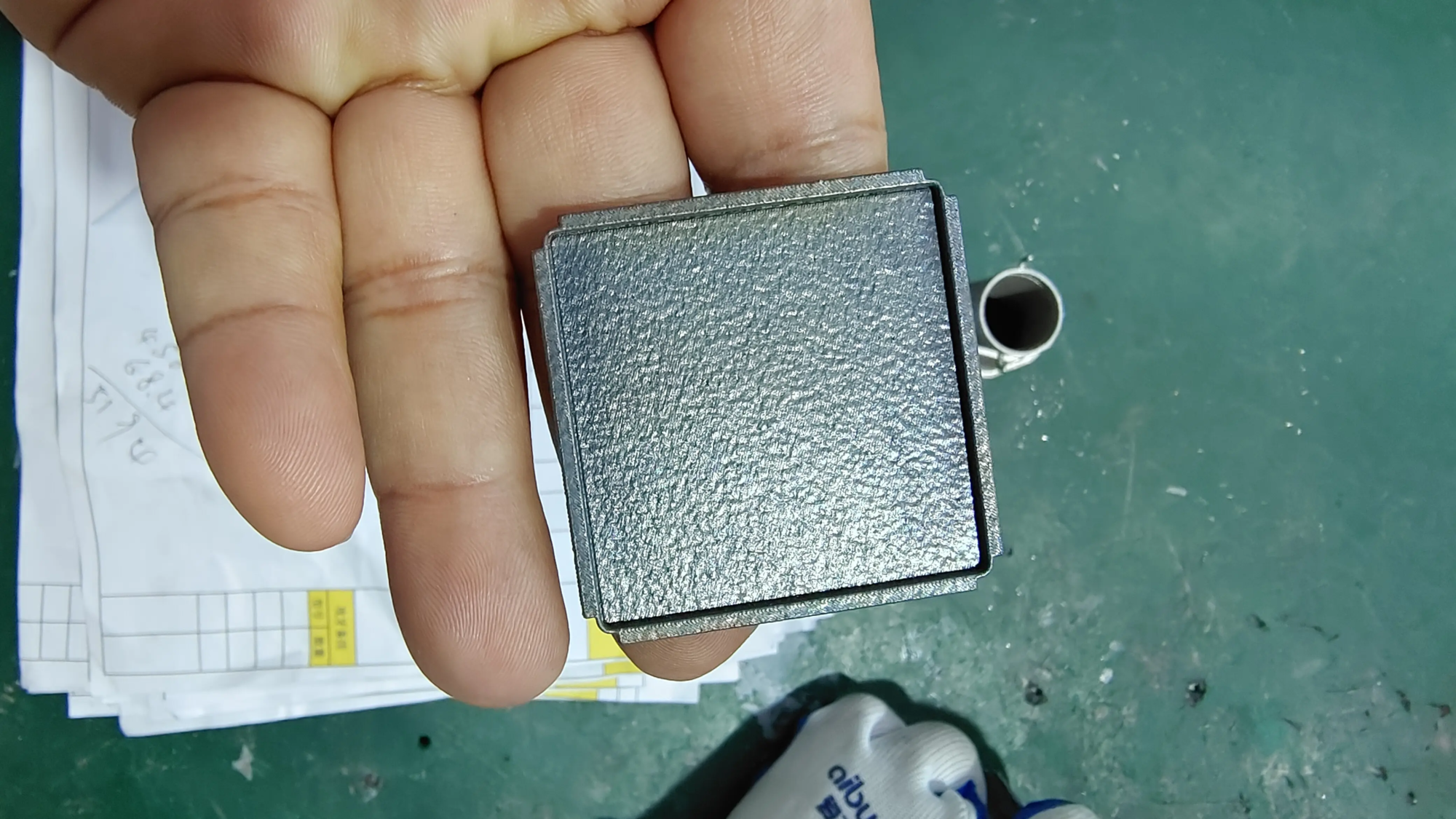
- Industrial grade metal 3D printing: Using Selective Laser Melting (SLM), we have created sturdy stainless steel, aluminum or titanium crane parts that are unparalleled in durability.
- Precise completion: CNC-machined joints, surface polishing, heat treatment – all under one roof.
- Fast Market: From STL files to certified metal components within 3-5 days.
- Custom optimization: Our engineers simulate loads and recommend alloys (such as ALSI10MG for strength weight) to handle the pressure profile of the crane.
Whether it is iterative hobby design or testing business promotion agencies, Greatlight provides a functional prototype that can tolerate real-world power. We solve challenges such as bending, porosity and friction wear with advanced SLM protocols, allowing your crane to operate on engineering.
in conclusion
Building 3D printing cranes combine creativity with core engineering principles, providing tremendous educational and practical satisfaction. By understanding design commands, optimizing print parameters and assembling components in an orderly manner, you will have a functional application mechanism. For projects that require heavier loads or harsh environments, professional metal prototypes transform your vision into resilient reality. Every crane from desktop models to industrial behemoth starts with prototypes. Through this guide and strategic partnership, your weightlifting ambitions are limitless.
FAQ (FAQ)
Q1: Can plastic 3D printed cranes lift weights?
Answer: Part. PLA/PETG has optimized geometry and thick walls that can manage ~1–2kg. For heavy loads (> 5kg), metal reinforced joints or SLM printed steel components are crucial.
Q2: What is the biggest design error in 3D printing cranes?
A: Ignore pure airplanes. Bolted connections must withstand transverse forces; avoid relying solely on layer adhesion. Insert nuts or use a shear pin in a thin section.
Q3: How to prevent plastic gear from peeling off?
A: Increase the gear module (tooth size), reduce the motor torque through PWM control, or print with wear-resistant materials (such as nylon). For longevity, metal gears generally perform better than plastics.
Q4: Why choose metal printing for functional crane parts?
A: Metals like 17-4ph stainless steel have fatigue resistance and low deformation under annular stress – crucially pulleys, hooks and bearings. SLM (Laser Powder Bed Fusion) achieves near-fill density of structural integrity.
Q5: How does Greatlight ensure the printing accuracy of moving parts?
A: Our industrial SLM printers operate within a tolerance range of 30 microns and incorporate critical interfaces with CNC. The parts are CT scanned to ensure internal integrity – invalid, no deviation.