

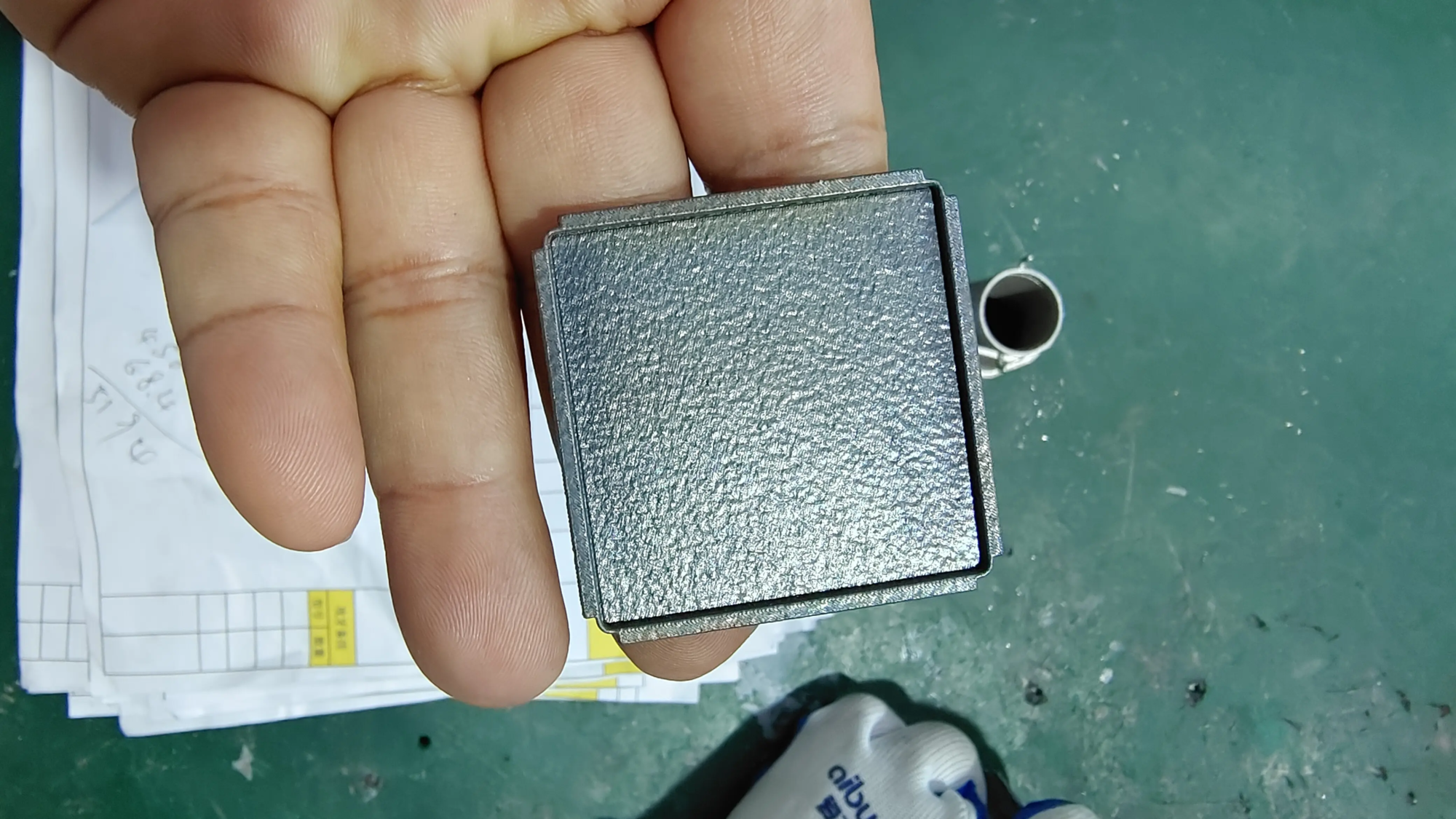
Mechanical wonder reborn: 3D printed functional Curta calculator replica
In the annals of computing history, nestled between the towering mainframes and the dawn of silicon, lies a miniature mechanical masterpiece: the Curta calculator. Invented by Curt Herzstark in the 1940s and revered by engineers and collectors alike, this handheld mechanical calculator is a symphony of precision engineering. More than 600 intricately interlocking parts, housed in a cylinder not much larger than a pepper grinder, enable complex arithmetic operations—an achievement bordering on mechanical wizardry. Today, thanks to the revolutionary capabilities of metal additive manufacturing, specifically Selective Laser Melting (SLM), this "math grenade" Going through an extraordinary rebirth. Let’s dive into the fascinating journey of 3D printing functional curta replicas.
Curta: an enduring symbol of originality
Imagine being able to perform addition, subtraction, multiplication and division using only an ingenious arrangement of gears, levers and ladder drums. Curta achieves just that. Turn the crank and the internal stepped drum rotates in linear proportion to the numbers set on the sliding rod surrounding its body. An excellent carry mechanism ensures that calculations are correctly transferred to numbers. Its compactness, reliability (no electricity needed to operate), and superior performance made it indispensable to engineers, surveyors, and scientists in the mid-20th century. Today, owning an original Curta is an expensive pursuit, often costing thousands of dollars. Enter 3D printing.
Recreating Complexity: 3D Printing Challenges
Copying Curta is no easy task. The functionality of the device depends on micron-level tolerances and the perfect interaction of numerous tiny interconnected components under load. Traditional manufacturing methods such as CNC machining or injection molding face problems with complexity, cost and the high number of unique small parts. This is where advanced metal 3D printing services, specifically SLM, stand out.
SLM uses high-power lasers to selectively melt fine metal powders to build parts layer by layer. This process unlocks unparalleled design freedom:
- Complexity is released: SLM specializes in producing Curta’s miniature gears, levers, springs, pins and housing components, even those with internal channels or complex organic shapes that cannot be machined using traditional methods. Every tiny detail crucial to the calculator’s functionality is faithfully reproduced.
- Strength and durability: Metal powders such as stainless steel (316L, 17-4PH), titanium, aluminum alloys or tool steel can be used. When machined correctly, these materials provide the strength, rigidity, and wear resistance needed for mechanisms that withstand repeated rotational forces. The resulting components are much stronger than replicas made by plastic printing.
- Integration and assembly: SLM allows the creation of pre-assembled or partially assembled functional units. Imagine printing gear sub-assemblies that already interlock! While Curta still requires skilled assembly, printing significantly simplifies the process compared to sourcing or machining hundreds of discrete parts.
- Uncompromising sophistication: The SLM process does not compromise complexity. Designing parts with fine teeth, thin walls, or complex internal geometries costs no more (in terms of process difficulty) than printing a simple cube. This unlocks the true potential of replicating legacy mechanics.
Overcoming Obstacles: Beyond the Print Bed
Printing the Curta part is just the beginning. True functionality requires extreme precision and surface properties:
- Tolerance is king: Submillimeter accuracy is critical. Number of gear teeth must perfect mesh; shaft must Rotates freely in bushing without wobbling; clearance must Keep it minimal but tolerant. Expert calibration of the SLM machine and careful design to compensate for potential thermal shrinkage are non-negotiable.
- Need for speed (in post-processing): Metal parts fresh out of an SLM printer are still wrapped in unused powder and often have a rough surface. Achieving the smooth movements necessary for curta requires a lot of Post-processing: Careful powder removal (especially internal channels), support structure removal, precision machining (for critical mating surfaces such as shafts), wire EDM (for separation if printed on board), surface finishing (media blasting, tumbling, polishing) and possible heat treatment for optimal material performance and stress relief. This requires a comprehensive One-stop metal fabrication solutions Under one roof.
- Materials expertise: Choosing the right metal powder alloy is critical. It must balance strength, wear resistance (gears), corrosion resistance, processability in post-processing, and dimensional stability during printing. Expertise ensures optimal performance and longevity.
Gretel’s role: turning digital dreams into mechanical reality
As a specialist rapid prototyping manufacturer specializing in advanced SLM 3D printing services, GreatLight embodies the capabilities needed to breathe life into a project as demanding as a functional Curta replica. Our expertise bridges this gap:
- Advanced SLM Fleet: We utilize state-of-the-art SLM printers capable of micron-level precision to process the high-resolution metal powders necessary for micro-mechanical components.
- Metal Mastery: We offer a wide range of customizable metal materials and have deep materials science knowledge to recommend the best alloy for your specific application – whether wear resistance, lightweight performance or sheer strength is a priority.
- Full Spectrum Finishing: we truly shine One-stop post-processing and finishing. Our facilities seamlessly integrate key steps such as CNC machining to critical tolerances, EDM, grinding, extensive polishing/tumbling options, heat treatments and specialty coatings. This holistic approach transforms raw printed parts into smooth-running mechanisms.
- Engineering partners: Complex mechanical projects require more than just fabricating parts. Our engineering support understands kinematics, tolerances and assembly requirements. We work closely throughout the design optimization (DFAM – Design for Additive Manufacturing) and troubleshooting process to ensure the printed components perform as expected in assembly.
- Fast accuracy: We focus on accelerating progress without sacrificing quality. From concept to finished functional component, GreatLight streamlines the process, delivering Customized precision machining And done quickly and affordably.
Conclusion: Protecting heritage and inspiring innovation
Successfully 3D printing a functional replica of the Curta calculator is more than just a novelty. It is a powerful demonstration of how advanced additive manufacturing, especially SLM, combined with expert finishing, can resurrect complex machined artifacts that were once considered impossible or cost-prohibitive to reproduce. It democratizes access to engineering history and demonstrates the capabilities required for the complex modern micro-institutions. Projects like this push the limits of metal additive manufacturing, blending traditional processes with digital manufacturing.
For engineers, designers and enthusiasts working on projects that require unparalleled complexity, micro-tolerances and functional metal components, it’s critical to partner with a manufacturer with end-to-end SLM capabilities and advanced finishing services. The Curta Replica is more than just a calculator; It is the benchmark for precision manufacturing. Pushing this benchmark even further is where expert rapid prototyping really excels – building the complex mechanisms of tomorrow inspired by the wonders of yesterday.
FAQ: 3D Printing Curta Calculator Replicas and Metal Prototypes
-
Q: Do 3D printed Curta replicas really work?
- one: Of course, when printed using high-precision metal additive manufacturing (such as SLM) and professionally post-processed (machining of critical surfaces, polishing, etc.). Parts requiring sliding, rotating or meshing contact (gears, shafts) must meet tight tolerances achieved through calibration printing and precision machining. Plastic replicas exist but lack the strength and durability for serious use.
-
Q: What metal materials are best for functional replicas like Curta?
- one: Common options include:
- Stainless steel (316L): Excellent general purpose choice – strong, corrosion resistant, good machinability.
- Stainless steel (17-4PH): Heat treated to provide greater strength and superior wear resistance.
- Tool steel: Extremely hard and wear-resistant, ideal for highly stressed gears, but more challenging to machine.
- Aluminum alloy: Lightweight and easy to work with, but softer than steel (higher risk of wear).
An experienced prototyping partner such as GreatLight will provide recommendations based on required strength, wear, weight and cost.
- one: Common options include:
-
Q: Why is SLM preferred to other metal 3D printing methods for Curta?
- one: SLM (Selective Laser Melting) offers the best combination of:
- Highest accuracy and resolution: Crucial for tiny gears and fine details.
- Superior material density and strength: The resulting parts are nearly as strong as forged metal.
- Design freedom: Seamlessly handle the interior complexity and complex geometries of the Curta without assembly.
- one: SLM (Selective Laser Melting) offers the best combination of:
-
Q: Why is post-processing so important for functional metal replicas?
- one: Raw SLM parts often have surface roughness that requires support removal. For the mechanism:
- Smooth rotation/sliding: Contact surfaces (shafts, bushings, gear teeth) need to be machined, ground or precision polished.
- Key dimensions: Features such as bore diameter may need to be fine-tuned through machining to achieve a precise running fit.
- Relieve stress: Heat treatment prevents warping and enhances material properties.
- Durability: Coatings can increase wear resistance. Neglecting finishing can lead to sticking, excessive wear and failure.
- one: Raw SLM parts often have surface roughness that requires support removal. For the mechanism:
- Q: Can GreatLight handle the entire project from design files to finished parts?
- one: Yes! GreatLight is designed specifically as One-stop metal fabrication solutions:
- Collaborative Design Review (DFAM Optimization).
- Material selection and prototyping strategies.
- High-precision SLM printing.
- Comprehensive post-processing suite (powder removal, CNC, EDM, finishing, heat treatment).
- Quality inspection and functional verification support.
We simplify complex projects and ensure high-quality, ready-to-assemble functional metal parts. Customize your precision rapid prototyping parts today!
- one: Yes! GreatLight is designed specifically as One-stop metal fabrication solutions:


