Making Iconic: The Final Guide to 3D Printing Darth Vader Helmets
Darth Vader’s grand appearance is the most famous in film history. For Star Wars enthusiasts and manufacturers, copying the helmet through 3D printing is not just a project. This is a passion-driven pursuit of authenticity. While it is challenging, achieving a screen-accurate or personalized rendition is very beneficial. This guide delves into the process, blends creativity with technical precision, and explores how professional solutions can extend your build beyond a typical DIY approach.
Why 3D Print Darth Vader Helmet?
Unlike ready-made replicas, 3D printing provides unparalleled customization and control. You can extend it to a perfect fit, adjust the details to match specific film versions (ANH, ESB, ROTJ), and even include unique modifications (such as integrated lighting or ventilation). The journey from digital design to tangible artifacts itself – develops valuable skills in modeling, printing and finishing.
Core process: From pixels to polished armor
-
Procurement Model: Accuracy is the key
- Free with paid documents: There are many Darth Vader helmet models on platforms such as Thingiverse, Cults3d and myminifactory. Free files may be a great starting point, but advanced, highly accurate models from talented designers (e.g., Galaxy Armory, Empire Surplus) are often worth investing in for excellent detail and structural integrity. Pay close attention to the size of the model and the expected printing direction.
- Version is important: Specify what kind of movie helmet design you are targeting. Episode 4, there are subtle differences in mouth grilling, frown nets, glasses and dome details between V and VI.
-
Ready to print: All in slices
- Directions and support: The helmet is a large complex shape. Strategically slicing them is critical to minimize support (especially inside the dome and under the chin), reduce warping and optimize surface quality on key visible areas such as cheeks and forehead. Printing in multiple sections (crown, panel, back cover, vents, etc.) is usually better than trying a single large-scale print.
- Layer height and fill: For most FDM printers, a layer height of 0.15-0.2mm strikes a good balance between resolution and printing time. Use medium fill density (15-25%) – sufficient strength without excessive use. Consider thicker walls (3-4 circumferences) for stiffness.
- Material selection:
- PLA: Beginner friendly, wide color range, easy to print, but less heat resistance. Suitable for decorations.
- PETG: More durable than PLA, heat and impact resistant, and printing is slightly tricky. Excellent choice for helmets worn or displayed in different environments.
- Asa: Similar to ABS, but with better UV resistance and less prone to warping. Ideal for helmet exposure to the sun. Requires ventilation.
- Exceeded the standard wire: For truly unique and powerful results, consider Metal-containing filaments (such as copper, bronze or steel PLA/PETG) For amazing finishes or explore professionals SLM (Selective Laser Melting) Metal 3D Printing For amazing durability and true metal construction (more below).
-
Print: Patience and durability
- Print preparation is crucial: Make sure the print bed is carefully smooth and clean (using adhesive promoters such as adhesive rods or PEI paper).
- Monitoring the first layer – These set the foundation. Large prints need to be stable; the shell helps to mitigate drafts and temperature fluctuations.
- Failed printing occurs! Prepare to troubleshoot complex parts (e.g., adjust temperature, speed, or support).
- Post-processing: Where the magic happens
This stage requires the most time and skill to transform the original print into a polished Lord Sith artifact.
- Supports disassembly and assembly: Carefully shear and polish the support material. Assemble parts using strong adhesives (epoxy, specialized plastic glue) or mechanical fasteners. If needed, key joints can be strengthened internally.
- Fill and polish dynasty: Looking forward to multiple rounds:
- Gap filling: Use automotive spot putty, Bondo or epoxy filler to bridge the seams and layered lines. The sand is smooth.
- Gradually polished: Start the rough (120-220 particle size) for significant filling and shaping, then make a perfectly smooth surface with finer gravel (up to 400-600+ grit). Wet sand helps achieve the final result. This is labor-intensive but not commercially acceptable, for professional appearance.
- start up: Apply high-build fill primer. This reveals the flaws. sand. repeat. The goal is flawless – paint jobs depend on this foundation. Expect 3-5 rounds of start and polish.
- Painting and finishing:
- Primer: Apply a smooth black coat to the iconic surface.
- Detail painting: Use high-quality model paint or spray gun to carefully mask different grey/silver mouth and cheek decorations. this "frown" The grid requires precision.
- Weathered (optional): Authentic replicas often show wear. The delicate silver brushes of edges and controlled washing can add to great realism.
- Final touch:
- lens: Firmly install the dark smoked or metal mesh lens behind the eye appearance.
- grill: Manufactured or sourced from precise oral and temple grills (etched metal is ideal).
- Internal: Add comfortable filling, chin straps and potential cosmetic elements such as fabric lining. For wearable capabilities, please integrate careful ventilation.
Improve your build: When DIY meets professional manufacturing
Creating a truly great Vader helmet, especially one with reinforcement materials or finishes, often pushes the limits of desktop FDM printers and hobbyist skills. Here, work with professional rapid prototyping services Great Become a game rule. We focus on overcoming the complex challenges inherent in ambitious projects:
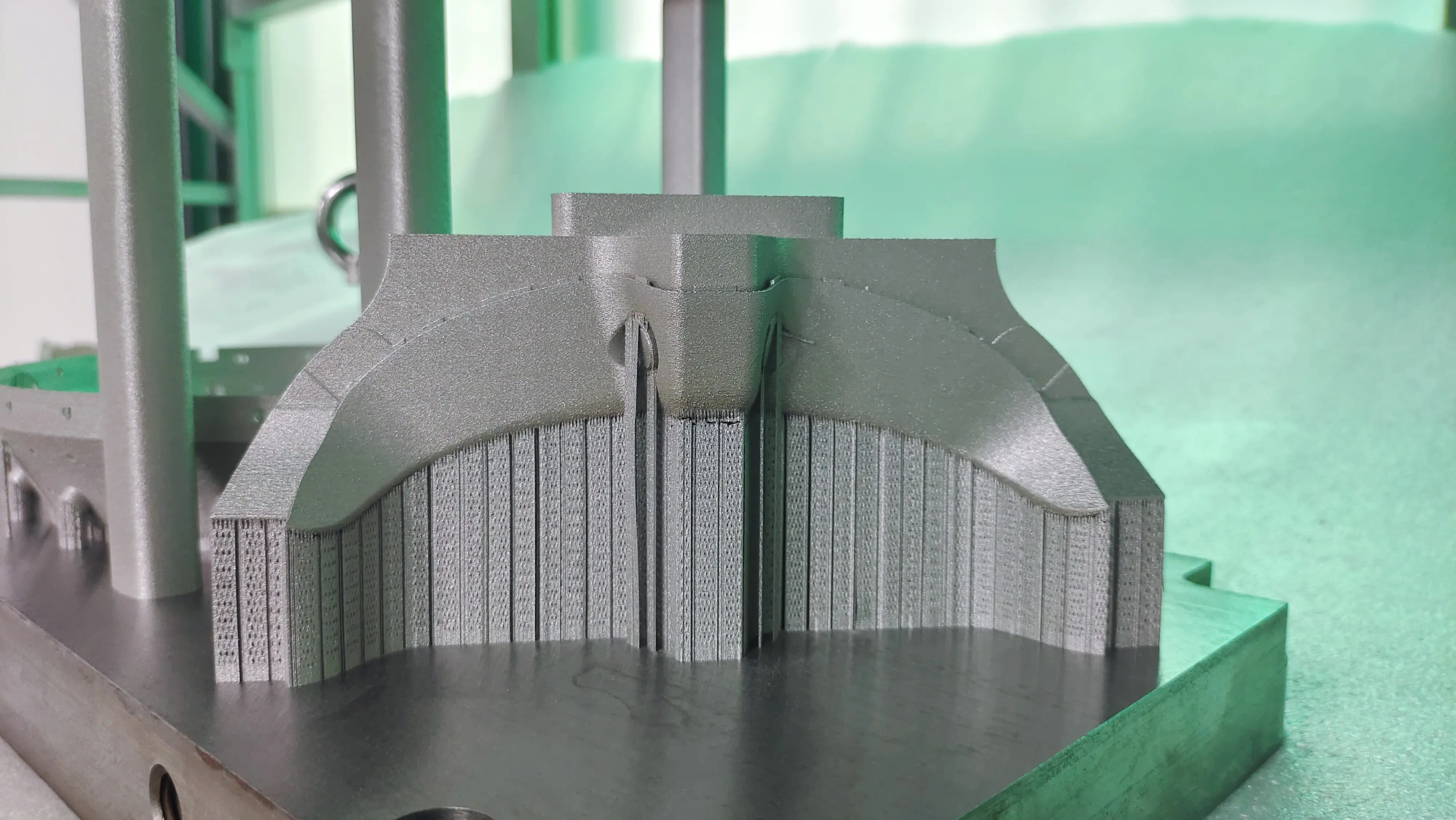
- Conquer complexity and scale: Our Industry SLM (Selective Laser Melting) 3D Printer Excite in the place where the filament printer struggles. Print complex details, large single piece sections (restore seams), and even try Running metal components Like hinges or structural reinforcements, with unparalleled accuracy.
- Metal Mastery: Actual forged helmets Stainless steel, aluminum, titanium or complex alloys By SLM. This provides unparalleled durability, thermal resistance, weight distribution, and inherent authentic metallic aesthetic that paint cannot replicate. It transforms props into heirlooms.
- Advanced Materials: Enter standard wires other than engineering grade nylon (SLS), heat-resistant resins or specialty composites (for unique characteristics) – impact resistance, flexibility or temperature tolerance.
- Simplified post-processing expertise: Our comprehensive One-stop post-processing service priceless:
- Professional smoothing: Surface finishes are achieved by precise machining/polishing through industrial vapor smoothing (for certain plastics) or metal parts.
- Painting and coating: Grade-friendly paint booths, car finishes, electroplating, powder coatings or specialized ceramic coatings for metal parts provide a perfect, durable and authentic look.
- Assembly and Organization: Visit expert conferences, custom fill manufacturing, professional lens/grill installation and weathering services – save countless time and ensure exquisite final products.
- Rapid Prototyping Agility: Need to quickly design iteration? Are there any complicated modifications? We focus on effectively solving fast prototype problems that can be designed to explore and refine without the time/cost of traditional methods.
- Customized at its core: Whether you need a zoom copy, subtle design tweak, or a unique project to a completely custom iteration of the Vader helmet, we will collaborate to make your vision come true.
If it’s daunting to solve the complex post-treatment or desire to address the reputation of a true metal helmet, Greatlight is ready as your expert partner. We handle a lot of technological advancements to keep you focused on your vision.
in conclusion
3D printed Darth Vader helmets are substantive and substantial in the fusion of artistic vision with a technical level. From meticulous model selection and slicing to demanding post-processing marathons to ultimately satisfying paint and details, every step is indispensable. Accept the challenges and iterative nature of the process – Perfection is done through the patient’s elaboration. For those seeking unparalleled surface treatment, durability, or unique properties such as engineering plastics or metals, such as stainless steel or aluminum, the results of leveraging Greatlight’s rapid prototyping expertise, such as Greatlight’s rapid prototyping expertise, go far beyond the capabilities of desktop printing. Transforming digital files into a piece of truly powerful Sith Lord Regalia with advanced SLM technology and comprehensive post-processing becomes a reality. Visit Greatlight today to explore how we can help you customize precision parts and achieve the ultimate Star Wars build.
FAQ: Your Darth Vader Helmet 3D Printing Questions Answered
-
Q: What is the best 3D printer for Darth Vader helmet?
- one: For amateurs, large FDM printers with good parts cooling (300x300mm build board or larger build board) are crucial. Printers like the Creality CR-10 series, Any Cubic Kobra Max or Prusa XL are popular choices. For truly high range, structural integrity or metal construction, it is recommended to use professional SLM/SLS services from Greatlime (such as Greatlime).
-
Q: How long does it take to 3D print a complete helmet?
- one: Printing time varies according to size, details, layer height and fill. Printing in sections allows for better manageability. A complete helmet printed with decent quality on a consumer FDM printer can take more than 100 to 300 hours. Industrial metal printing services, despite printing time, usually manage post-processing effectively, but still perform overall turnaround faster.
-
Q: I need Print with metal?
- one: Absolutely not. When done correctly, high-quality plastic wire (PETG, ASA) produces excellent, wearable helmets. Metal printing is an unparalleled choice for durability, unique aesthetics (real metal), potentially better balance and high-end customization that requires metal properties.
-
Q: Why is the polishing and startup phase so critical?
- one: Under paint, especially smooth black paint, layers, seams and printed artifacts become very noticeable. Perfect polishing and starting for seamless, professional, "Completed" Appearance on the screen or display. Skipping this step guarantees disappointing results.
-
Q: What is the most challenging part of building?
- one: For most manufacturers, Post-processing – Endless cycles of filling, sanding, primer and repeating are the most time-consuming and dangerous obstacles. Mastering patience and technology here separates amateur attempts from replicas of appearances. Achieving symmetry and perfect paint finishes also present major challenges.
- Q: How does Greatlight help such a project specifically?
- one: Greglight provides an end-to-end solution:
- Design support: Printability (especially metal), improvements to custom modifications.
- Advanced Printing: High-dimensional plastic (SLS, MJF) or metal (SLM) parts outside the limit of FDM.
- Expert post-processing: Perfect smooth (vapor, tumbling, machining), professional painting/painting, gold plating, precision components.
- Quick turnaround: Accelerate the prototype and manufacturing phases.
- Material expertise: Select and handle the ideal polymer or metal alloy for your specific requirements (wearability, durability, weight, aesthetics). Our one-stop service transforms complex completion burdens into guaranteed high-quality results.
- one: Greglight provides an end-to-end solution: