The ultimate guide to 3D printed dildo safety: Navigating innovation responsibly
The rise of accessible 3D printing technology has sparked a surge in DIY creations, including intimate entertainment products such as dildos. Although this opens the door to personalized design and exploration, Creating a body-safe 3D printed dildo is much more complicated than simply hitting it "Print." Ignoring key materials and treatment factors can lead to serious health risks. As a professional rapid prototyping manufacturer with extensive expertise in biocompatibility applications, we are forced to guide users to a safer approach.
Why is security not optional
The human skin and mucous membranes are very sensitive. Insertable product requires materials and surface treatment:
- Non-toxic: Leaching of harmful chemicals is unacceptable.
- Not Confucius: Preventing bacteria and fungal ports (biofilms) is crucial to avoid infection.
- Biocompatibility: Materials must not cause irritation, allergic reactions or cytotoxicity during prolonged contact.
- Structurally there is sound: Integrity must bear the intended use without risk of rupture.
- Completed smoothly: Micro-effects help with infection.
Failure to meet these can lead to skin irritation, allergic reactions, urinary tract infections (UTIs), vaginal infections (such as bacterial vaginosis or yeast infections), and even in extreme cases even toxic shock syndrome (TSS). Safety should be the absolute baseline, not the afterthought.
1. Material Important: Choose a safe substrate
Not all filaments or resins are created for intimate use. Many common desktop printing materials pose significant risks:
-
Unsafe materials (absolutely avoided):
- PLA (polylactic acid): Often touted as "Biodegradable" But highly porous. Its low calorie resistance makes sterilization difficult, creating a breeding ground for bacteria. Potential leaching of additives such as additives or colorants is a major problem.
- ABS (acrylonitrile butadiene styrene): Styrene vapor (potential carcinogen) is emitted during printing. Without solvents (such as acetone), it is difficult to smooth effectively, which can be persistent and harmful. Too stiff and crisp to be comfortable.
- Standard TPU/TPE wire: Many consumer-grade flexible filaments contain plastics (such as phthalates), which are easily oozing and are endocrine disruptors. Even at heights, surface porosity still exists.
- Standard photopolymer resin (MSLA/DLP/SLA): Unfixed resin is highly toxic and irritating. accomplish Complete Interior and surface curing is very challenging for dense solid objects. The requirements after curing are strict and the biocompatibility of substances that are exposed to skin are rarely guaranteed. Unreacted monomers can bring significant health risks.
- Any material with added color/dye/glitter: Pigments and additives often lack biocompatibility testing and may leaching or microcontinuity.
- Potential candidate materials (requires great caution and treatment):
- Medical grade silicone: The gold standard for non-hole, body safety and flexible sex toys. Important nuances: you cannot Directly 3D printing of finished silicon danders on standard printers. However, there are expertise such as MOLDJET printing to create Mold From negative prints (using specific resins and other safe materials The only one for mold). Liquid platinum-fixed silicone is then applied to these molds. Ensuring mold compatibility and achieving perfect curing is complex.
- Industrial/Medical 3D printing materials:
- Medical grade nylon (PA12/PA11) powder (SLS): It provides good biocompatibility (ISO 10993 test grade) and better smoothness compared to FDM. A wide range of professional post-processing (vapor smoothing, sealing) is required to eliminate all micropores inherent in the powder sintering process. Crucially, only specialized powder mixtures and treatments that can be achieved on industrial equipment will greatly reduce pores.
- High performance resin (via SLA/DLP): The only one The candidate is a resin that is clearly proven by long-term skin or mucosal contact (PER 10993). Require Perfect Print, wash and extensive multi-stage curing after curing under optimized conditions to ensure 100% polymerization of the entire section and eliminate toxic liquid-free monomers. This is very difficult to guarantee hobby equipment. The residual isopropanol in the washing must also be completely removed, which is challenging for solid prints.
2. Reduce porous hazards: Surface surface is the most important
Porosity is the hidden enemy of 3D printed inserts.
- FDM: The layer line is a canyon of bacteria. Fusion with a dedicated nozzle (e.g. 0.2mm) at high temperatures will be slightly relieved on a perfectly dialed machine, but the surface must smooth And seal. Gradually polish (more than 1000 gravels), then carefully clean and remove the ridges. It is crucial that a body-safe sealant (highly pure platinum silicon immersion/coat or medical grade epoxy carefully apply and completely cure) must be used to create a poreless surface. For complex internal cavity it is nearly impossible to apply it evenly inside.
- SLA/DLP: Although the layer is thinner than FDM, there are still microscopic textures. Thorough washing and curing eliminates the resin IP bath, but curing must penetrate the entire mass. The surface smoothing may be required by vapor polishing (specific solvents) or carefully polished, and then a proven body-safe coating is required.
- SLS/MJF: Powder sintered (nylon) is porous in nature. Smoothing with vapors of specific chemicals and then coated with a biocompatible sealant (FDA-approved silicone, specialized epoxy), is essential for insertable parts. Achieving this without damaging the parts requires a controlled industrial process.
3. Engineering Safety: Beyond Materials
- Strength and durability: The design must explain the torsional and bending forces during use. Unless the walls are very thick, the hollow design is particularly prone to cracking. Using flexible materials reduces this risk compared to rigid plastics. Stress simulation analysis during prototype process is invaluable.
- Basic requirements for bulge: Definitely mandatory Used for any anal safety design. Prevent potentially dangerous accidental insertions that searches beyond searches.
- Smooth transition: Avoid sharp edges, ridges or complex undercuts that are not efficiently clean or smooth. A circular profile is essential for comfort and hygiene. The design tool should include curvature analysis.
4. Post-treatment: Seal safety place
This is the key shift "Print object" arrive "Probably a product that is safe" occur. Expertise is not negotiable.
- clean: Strictly remove all printing holders, unfixed material (resin support requires active solvent washing, then solvent removal), powder residue (SLS requires a large amount of peeling chamber) and manufacturing oil.
- smooth: Targeted polish (hand or CNC finish), gradually fine grit, steam smooth, suitable for material, ultrasonic cleaning.
- Sealing/coating: Application of biocompatibility barrier. Platinum silicon immersion (multiple thin layers, curing between layers) is flexible. Medical grade epoxy coatings require precise application and complete curing protocols. These processes require cleanroom-level control to prevent contamination. Internal channel? This becomes very difficult.
- Final sterilization: Gamma rays or autoclaves (if the substance permits) are gold standards, rather than simple cleaning to kill all microbial life. It is not feasible for most home users.
Professional tips: On Greatlight, we achieve a level of safety that is not possible on a hobbyist setup using automated post-processing lines with substance-specific protocols, medical-grade coatings and contract sterilization services.
5. User cleaning and maintenance
- Pre-use: Be sure to make small patches of less sensitive skin over large periods (24-48 hours). Wash thoroughly before first use.
- Clean after use: Clean Immediately After using mild soap and warm water. rinse extremely Thoroughly remove any soap residue (soap can damage the flora/mucosal). All attention is paid to any surface feature. The stirring flow is the best.
- drying: Dry completely with a non-confusing towel. Before storing, completely dry in a clean, dust-free environment.
- Deep cleaning/disinfection: For non-porous sealed surfaces (Basic!): Boiling (check material compatibility – silicone castings and specific resins, never FDM! Usually 3-10 minutes). Soak the bleach (1:10 home bleach to water for 10 minutes, then Very Rinse thoroughly). Advanced isopropanol (70%+, wipe or short soak). Always confirm the manufacturer’s instructions.
- Storage: Dedicated, clean container. Avoid direct plastic contact (no cotton bags) if possible.
- retire: Change immediately in the first sign of clouds, sticky, cracks, debris, scratches or peel off the coating.
Conclusion: Expertise is not an option, it is essential
3D printing provides significant customization potential for private products. However, Achieving true body safety for insertable 3D printed dildos is a complex engineering and manufacturing challenge. Although there are theoretical avenues for using mold or industrial-level processes, achieving predictable safety with home/hobby equipment involves obvious (usually unwise) risks due to porosity, incomplete curing, material toxicity and insufficient aftertreatment capabilities.
DIY enthusiasts should realize that it is very difficult to produce a reliable body-safe dildo outside a controlled professional environment. For those seeking 3D printing intimate AIDS benefits (custom, complex geometric shapes), It is highly recommended to work with professional rapid prototype manufacturers.
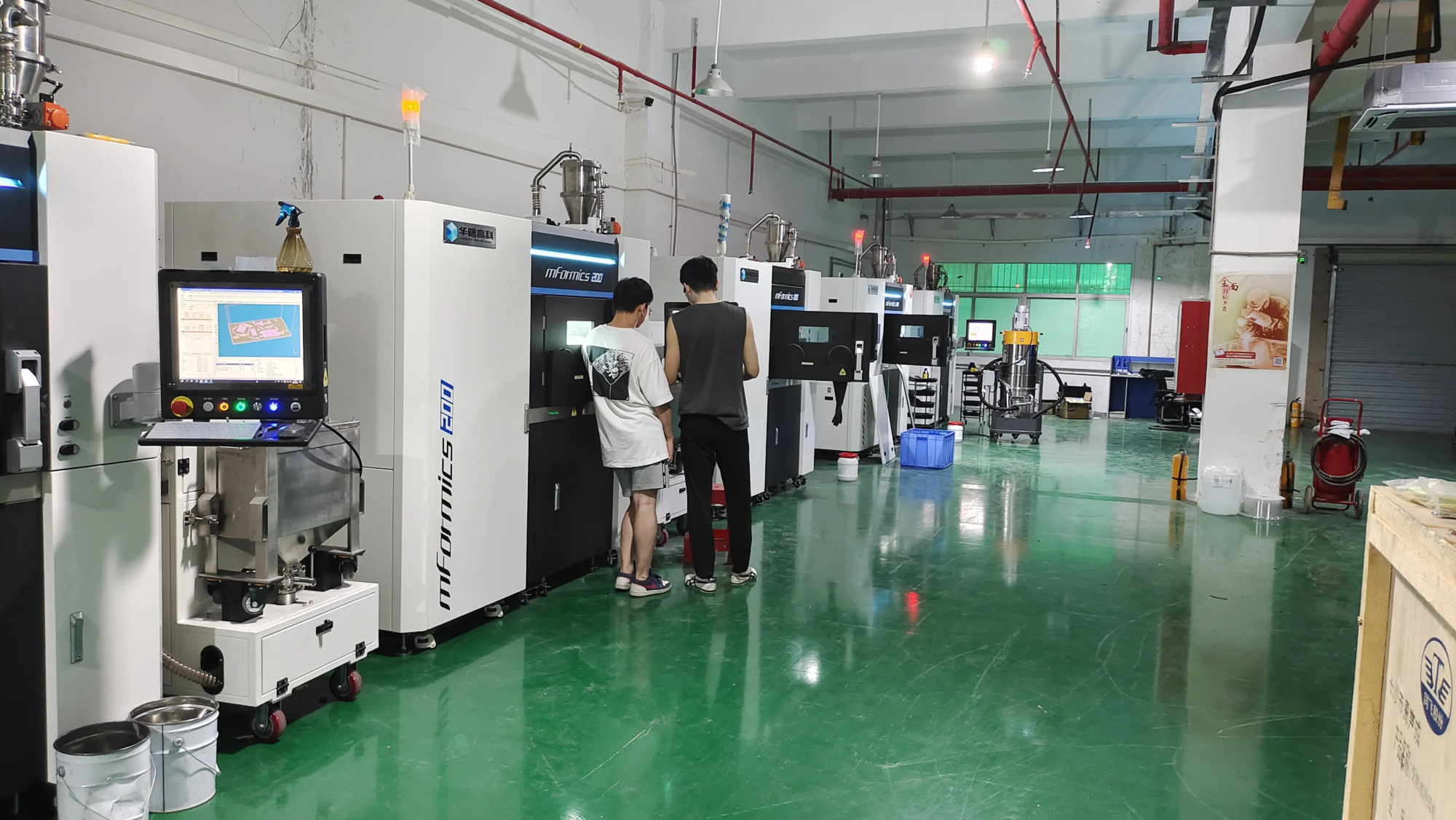
At Greatlight, we bring advanced industrial SLM, SLS and Precision SLA/DLP technologies with rigorously proven, biocompatible materials (if applicable) and perform in-depth post-processing solutions – covering precise completion, medical grade seal/coating applications as well as certified disinfection channels. Our engineering expertise ensures structural integrity and safety essential functions (such as flared foundations). We transform innovative designs into prototypes that meet the strict standards required for intimate use, prioritizing your health and safety.
FAQ: 3D printed dildo safety
-
Q: Can I use a home FDM printer and PLA to make a safety dildo?
- A: We strongly recommend it. PLA is porous and difficult to completely disinfect, and potential exudates from additives or materials themselves pose significant health risks. Realizing truly non-porous, body-safe surfaces at home are very difficult and unreliable.
-
Q: Is it good to print with food-safe PLA silk?
- Year. "Food Safety" Usually refers to acute intake. The mucosal membrane and internal body environment (vaginal/anal) are more sensitive and vulnerable than the intestinal mechanisms of humans. Porosity is still an unsolvable problem for FDM.
-
Q: Can I apply a 3D printed dildo with regular silicone?
- Year. The easiest silicone sealants or coatings to obtain contain additives, fillers and curing agents that are toxic and not physically safe. Only specific high-purity platinum solid silicon Clearly formulate and certified For skin/mucosal contact, tips should be considered to avoid air bubbles and ensure complete bonding without trapping the contamination below.
-
Q: After curing, is the resin-printed dildo safe?
- A: This is very risky. Even using professional post-curing equipment, it is extremely difficult to verify 100% internal polymerization and remove all unlicensed monomers. Residual toxicity and challenges in achieving completely non-porous finishes without professional grade materials, verification and coating issues.
- Q: How do I know if the 3D printed dildo I buy/is manufacturing is safe?
- A: If you purchase commercially, please request documentation: Evidence of ISO 10993 Biocompatibility Test Final finished product (Material + Coating), sterilization method verification and complete disclosure of materials and processes. For DIY: Unless you have industrial equipment and deep materials science expertise to verify Every step (material purity, printing accuracy, complete curing, pore-free sealing, sterilization), assuming it has health risks. Professional manufacturing partners provide the most reliable safety pathways.
The pursuit of pleasure and personal expression is effective and important. But when it comes to anything in the body, compromises to safety are never worth the risk. Invest in your well-being by prioritizing products based on strict, verifiable safety standards.