Digging up the past: The revolution of 3D printed dinosaur skulls
towering iconic image Tyrannosaurus rex The skeletons in the museum hall evoke wonder and curiosity. But behind the scenes, paleontology is undergoing a quiet revolution, one driven not just by picks and brushes but also by lasers, digital scanning and advanced manufacturing. Be at the forefront of this "ancient technology" Movement is 3D printed dinosaur skullchanging the way we study, represent and understand Earth’s ancient giants.
Beyond plaster casts: documentation and the digital revolution
Traditional fossil research relies on elaborate physical plaster casts, a process prone to error, loss of detail, and brittleness. Today, the journey to 3D printed skulls begins with advanced imaging technology:
- High resolution scan: Fossil bones are often fragile and embedded in rock, requiring the use of tools such as Computed tomography (CT), Structured light scanningor photogrammetry. These capture complex external morphology and, most importantly, internal structure What’s not visible to the naked eye – sinuses, braincase details, lesions, even replacement teeth hidden within the jaw.
- Digital reconstruction: The raw scan data creates a messy, fragmented digital point cloud. Skilled paleontologists and technicians use specialized software to clean, assemble and digitally reconstruct the complete skull, filling in gaps based on scientific principles and comparisons. This creates a precise, actionable digital twin.
Printing the Crucible: Bringing Bones Back to (Virtual) Life
This digital file becomes the blueprint for physical entertainment. This is where modern manufacturing capabilities shine:
- Fossil materialization: Different printing technologies serve different purposes:
- High-resolution resin printing (SLA/DLP): Ideal for capturing extremely fine surface details, delicate structures, and clearly observing internal anatomy. very suitable Display replicas, research models and educational tools.
- Fused Deposition Modeling (FDM): Stronger for larger skulls or functional parts. While layer lines may be more noticeable, advanced finishing techniques can overcome this.
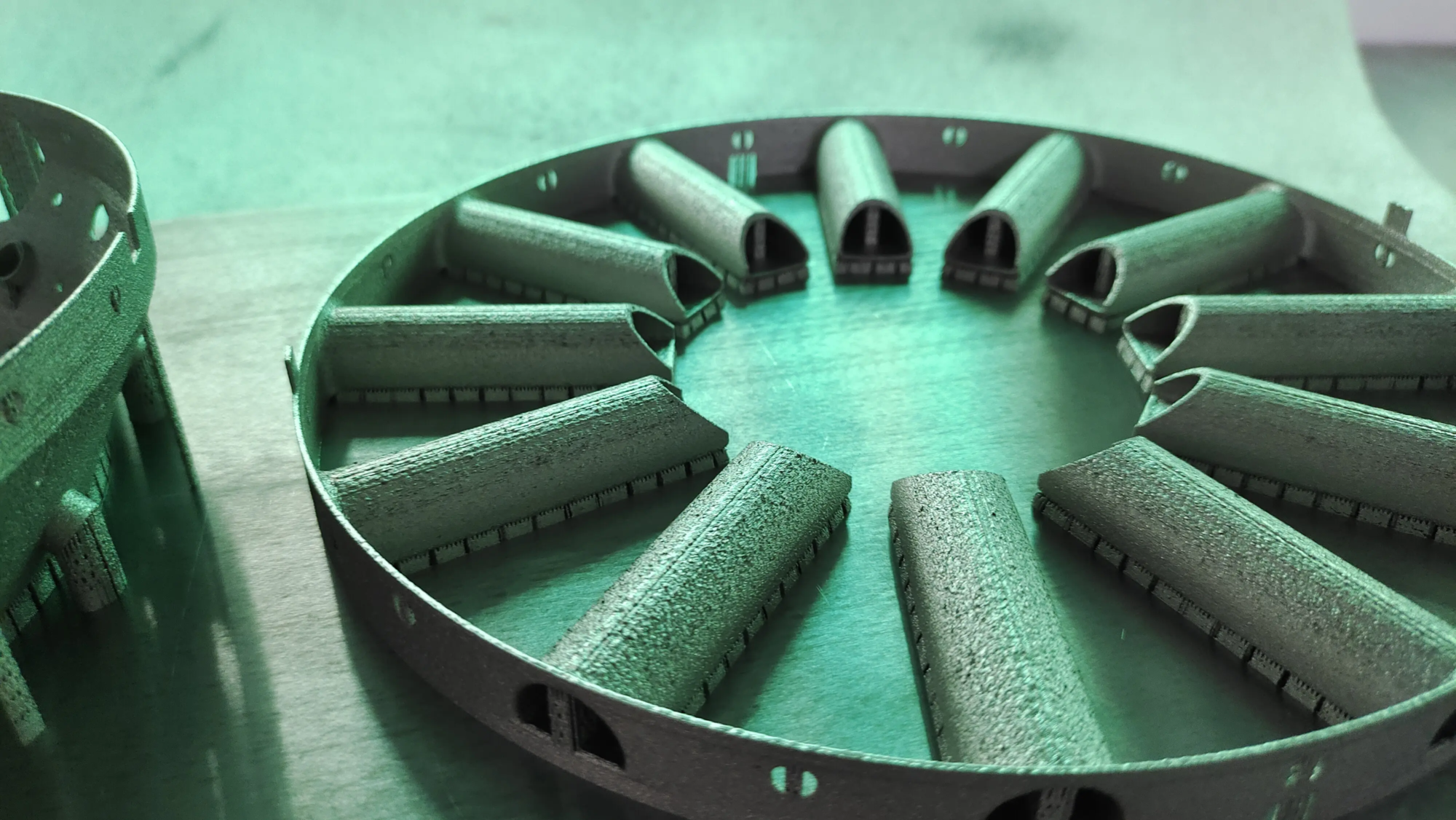
- Industrial metal printing (SLM/DMLS): For special applications requiring extremely high durability, e.g. Functional joint testinginstall heavy-duty pieces, or create super-elastic display components that replicate bone density. (This is where GreatLight excels – our advanced SLM technology creates complex, high-strength metal skeleton assemblies that are critical for unparalleled robustness and scientific rigor.)
- Beyond the Boulder: Printing isn’t limited to complete skulls. Fossil fragments found in the wild can be printed individually, allowing scientists to digitally and then physically test different joint hypotheses without the risk of irreplaceable originals.
Why choose 3D printing? transformative impact
The advantages compared to traditional methods are profound:
- Unprecedented access and collaboration: Digital files can be shared instantly across the globe. Researchers on all continents can study the same high-resolution digital or physical replicas simultaneously, enabling unprecedented collaboration in descriptions, comparisons, and phylogenetic analyses.
- Damage Indestructible: Studying fragile originals carries its own risk of damage. Sturdy replica allows for hands-on manipulation, complex measurements, joint testing, Biomechanical modeling is even possible using techniques not possible with fragile fossils (e.g., applying stress simulations).
- Education and Outreach Revolution: Institutions can print durable, scientifically accurate reproductions for classrooms, exhibitions, or loaner kits. Visitors can safely touch, hold and examine the skull up close, creating a deeper connection than is otherwise possible "Do not touch" Original.
- Test the hypothesis: Is the mandible okay? real Can it withstand this biting force? How do these corners interlock? Printed replicas allow paleontologists to physically test biomechanical hypotheses, revealing insights into feeding mechanisms, locomotion, and combat.
- Reconstructing the missing: Advanced software allows paleontologists to mirror fragments or reconstruct missing parts based on scientific principles. Printing these reconstructed images creates a tangible representation for research and presentation, clearly distinguishing original and reconstructed areas.
- Disaster Prevention Archives: Digital scans and durable prints serve as insurance against loss or damage to irreplaceable holotype specimens. The paleontological record gains strong digital/physical backup.
Conclusion: Reshaping paleontology in the digital age
3D printed dinosaur skulls are not just a novelty; It is an essential tool for reshaping paleontology. It bridges the gap between the exquisite, irreplaceable fossil record and the needs of modern scientific inquiry and public engagement. By leveraging high-fidelity scanning and advanced additive manufacturing, paleontologists can process specimens in ways once unimaginable, collaborate in real-time across the globe, and bring dinosaurs closer to students and the public than ever before. A fusion of ancient evidence and cutting-edge technology—— modern ancient technology – Unlock a deeper understanding and inspire a lasting fascination with the prehistoric world. The ability to accurately reconstruct bone structure, especially using strong metal components in critical applications, demonstrates the powerful synergy between scientific discovery and advanced prototyping solutions.
FAQ: 3D Printing Dinosaur Skulls
-
How accurate is 3D printing a dinosaur skull?
- Accuracy is crucial. It starts with ultra-high-resolution scans that capture subtle textures and internal structures. Skilled digital reconstruction ensures scientific fidelity. Detail printed using resin stereolithography (SLA) can reach micron levels. Importantly, the process can be replicated exactly, ensuring a consistency not possible with traditional casting.
-
What materials are used?
- Presentation/Research: Highly detailed resins that mimic bone color or are tinted for clarity are common. Sometimes, specialized clear resin can reveal the internal anatomy.
- Robust application/durability requirements: Industrial thermoplastics (via FDM/SLS) and even Metal alloys (e.g. titanium or aluminum alloys via SLM/DMLS) For functional parts, articulation mechanisms, mounting hardware or ultra-durable exhibition elements. The choice of material depends entirely on the intended use of the skull and the desired properties.
-
Can I tell the difference between a replica and the original?
- Professionals always mark reproductions clearly and often intentionally distinguish the material color or texture from the original bone. Close inspection can often reveal the layered structure of an FDM print or the specific surface finish of resin/metal versus fossilized bone. this internal The structure revealed by the printed fragments could be a major clue.
-
Why use metal? Not enough plastic/resin?
- Resins and plastics are great for displays and many research needs. However, Metal Printing (SLM) Crucial when copying required elements Exceptional strength, stiffness, wear resistance or thermal stability. Examples include:
- Durable joints for joint testing biomechanics.
- Mounting structures for heavy fossil fragments in dynamic displays.
- Robotic functional components for motion studies.
- Durable fixture for repeated use in research laboratories. Metal’s strength-to-weight ratio and durability are unmatched for demanding applications.
- Resins and plastics are great for displays and many research needs. However, Metal Printing (SLM) Crucial when copying required elements Exceptional strength, stiffness, wear resistance or thermal stability. Examples include:
-
What to do with fragile or incomplete fossils?
- The printer excels here! Non-invasive scanning of fragile fossils. Different segments can be printed individually. Paleontologists then safely handle these replicas, assembling them digitally or physically, testing gaps and reconstructing missing parts without compromising the originals.
-
Can museums scan fossils from other institutions?
- Scanning usually requires permission. Many agencies collaborated on the scan. Ownership of scans is complex, but sharing benefits science. Museums are increasingly democratizing access to fossil data by making non-sensitive scans freely available online or through research and education repositories.
- What about when you’re done? How real do they look?
- Finishing techniques vary widely. Prints are often carefully cleaned, sanded, filled, and airbrushed, using a scientific palette to imitate fossil colors (ochres, browns, grays) or bone textures. Some advanced techniques apply weathering and sedimentation to museum exhibits. Metal parts can be polished, sandblasted, chemically treated, or coated to achieve the desired appearance. The level of finishing detail transforms the print into a stunningly realistic piece of art.
Experience the power of modern ancient technology and precision manufacturing
Bringing dinosaurs back to life (at least in replica form) depends on combining cutting-edge scanning with equally complex fabrication. For projects that require unparalleled precision, durability for functional applications, or complex multi-material assemblies, leveraging industrial-grade prototyping expertise is critical. huge light Focus on transforming complex digital models into high-performance physical realities. Take advantage of advanced Selective Laser Melting (SLM) Metal Printingour expert engineers tackle the challenges posed by complex geometries, demanding metallurgical requirements and the need for flawless integration in assembly-critical projects. Whether creating custom joint hardware, sturdy mounts for fragile fossils, or entirely new paleontological tools, our promise is precision, strength and fast execution. Discover how we can help unlock the next generation of paleontological discovery and presentation.Contact Gretel now Discuss your ambitious dinosaur skull or paleontology-related prototype project.