The fascinating world of 3D-printed dragons in eggs: Your ultimate creation guide
The dragon emerging from its shell is magical in nature, a symbol of power, mystery and a new starting point. Use one 3D printed dragon in egg Models have become fascinating applications for additive manufacturing, hybrid art, complex mechanical design and precise engineering. Whether you are looking for amazing display pieces or the boundaries of designers, this guide will take you on a layer to bring this mythical creature to life. Similar expertise for projects requiring precision, durability or unique materials Great Become a valuable asset.
Why is the design of the tail dragon attractive
The dragon hatched from eggs is not only a static figurine, but also combines several elements to demonstrate the unique advantages of 3D printing:
- Narrative and aesthetics: It tells a visual story that immediately evokes fantasy and miracles.
- Complex geometric shapes: Dragons require complex organic shapes (wings, claws, scales), while eggs and hidden hinge mechanisms require precise coordination.
- Moving parts (hinges): The core magic lies in the open mechanism that is seamless or articulated. This depends on almost perfect tolerance control during printing.
- Sacrifice support: Printing closed models often requires complex support structures inside the egg and around the dragon, which must be cleaned without damaging the delicate details.
Designing your dragon and eggs: main things to note
Before printing, thoughtful design is crucial:
- Hinge creativity: This is the core of the model. Common methods include:
- External "vase" &PEG: A printed sleeve is mounted on the outside of the egg half and secures it together. Accurate exterior wall thickness is required.
- Comprehensive living hinges: Thin and flexible partial printing is part of two half shells. Rely heavily on material properties (such as TPU or elastic resin) and correct thickness adjustments.
- Based on hidden pin hinges: Each half-shell has small holes designed and individual pins (printed or metal) are inserted before printing. Very accurate hole position and size are required.
- Interlocking flange: Tongue and ditches feature on the edge of the egg closes it and opens through the rotation/separation of the half. High-dimensional accuracy is required.
- Anatomy and details: Optimize the printability of the dragon model. Overhanging wings, thin tails and fine scales require proper support strategies and orientations. Simplifying overly complex details can improve reliability.
- Clearance and tolerance: The gap between the dragon and the inner shell wall must be sufficient to prevent bonding, but small enough to look very fit. The hinge assembly requires specific clearance to operate smoothly. This is where high-precision printing becomes crucial.
- Directions and support: Strategically position the model on the build plate to minimize support for visible surfaces and key mating features such as hinge points or inner surfaces of the shell. Internal support is usually required, but must be movable.
Select your materials and techniques:
The ideal choice depends on the desired look, feel, function and size:
-
FDM (Fusion Deposition Modeling – Plastic):
- Material: PLA (simple, good detail, rigidity), PETG (sturdy, more flexible), ABS/ASA (heat resistance, easy to pass frequently), TPU (flexible – suitable for integrated hinges).
- advantage: For larger models, huge material choices (color, silk, wood filling effect) are cost-effective.
- shortcoming: The visible layer lines need to be carefully set for smooth hinge mechanics, complex internal support is tricky to remove. Best for amateurs or prototypes, requiring less precision and surface perfection.
-
SLA/DLP/LCD (resin printing):
- Material: Standard resin, rugged/durable resin, flexible resin, special casting resin, color resin.
- advantage: Very smooth surface surface and incredible detail capture, perfect for complex scales and small features. Ideal for fixed or PIN-based hinges, requiring high precision.
- shortcoming: Unless a specific resin is used, over time, required (wash, cure), the resin is handled with caution and is more brittle than FDM parts unless a specific resin is used. Better is smaller, detailed models or masters for casting.
- SLM/DML (Direct Metal Print):
- Material: Aluminum alloy (Alsi10mg-lightweight, good strength), stainless steel (17-4 pH-strong, slightly corrosion-resistant), titanium (Ti6al4v-high strength, lightweight, lightweight, biocompatible).
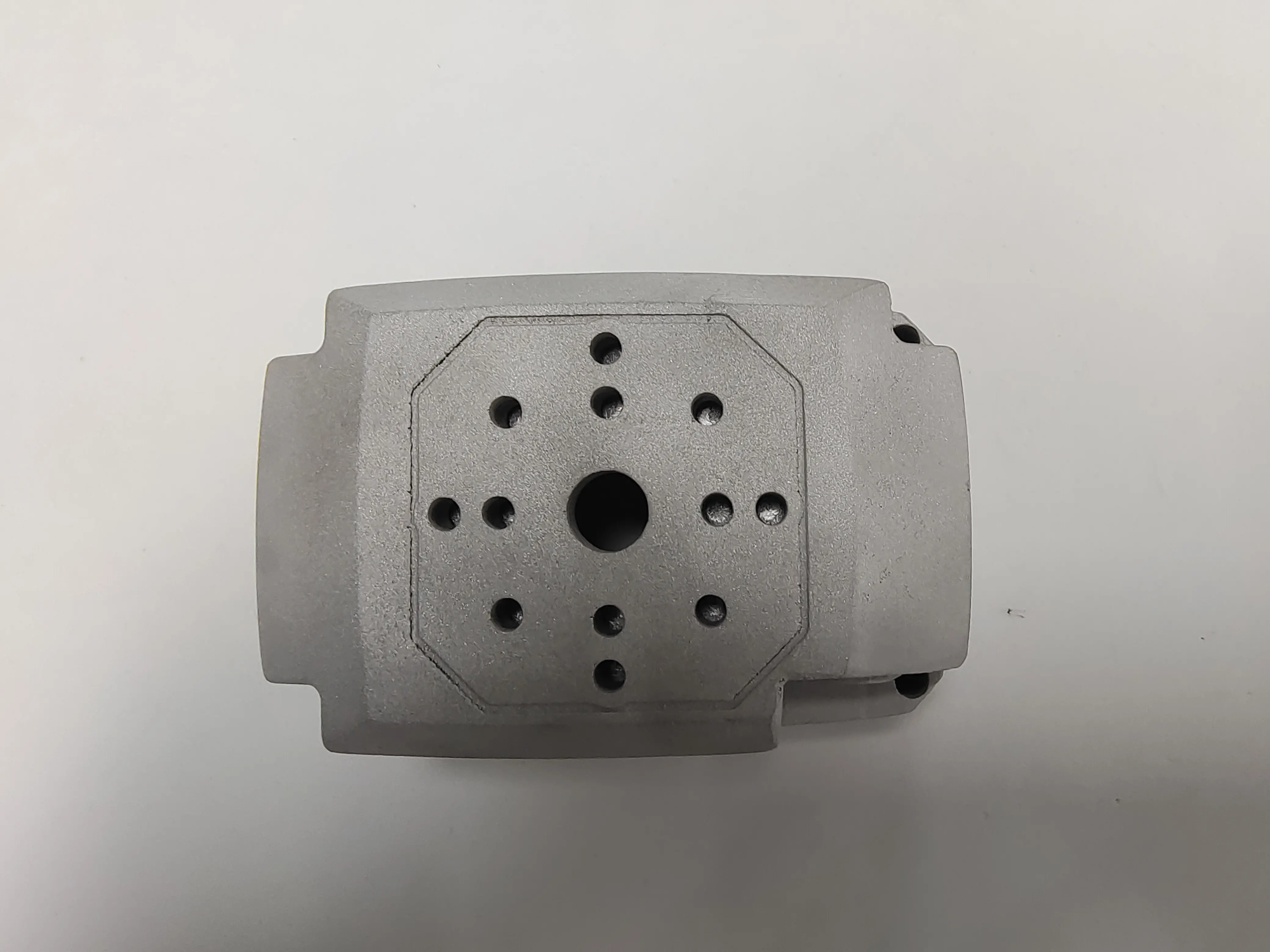
- advantage: Creates strong, durable, practical metal parts. Excellent accuracy allows for flawless low friction hinges and smooth internal cavity. Unrivaled material properties and lifespan. From polished chrome to brushed bronze, a unique metal finish is available.
- shortcoming: The cost is much higher and requires industrial equipment (e.g. Greglight SLM printer). Necessary post-treatment (e.g., support removal, heat treatment, pressure relief, surface finishing – all services we offer). This is the pinnacle choice for heirloom quality, robust or the only demanding design.
Step by step to your dragon:
- Source/Design Model: Find well-known STL file providers (paid models usually offer better engineering). For custom creatures, use CAD/Blender/Zbrush design with the emphasis on printability.
- Slicer preparation: Import the model into the slicing software. Carefully:
- Select the direction (e.g., place the egg half upright according to the characteristics, dragon).
- Generate support (the support of the tree is usually suitable for cavity/closed areas).
- Set layer height (more details, longer printing time).
- Adjust tolerance/gap (experimental level expansion/clearance offset).
- Configure the print settings (speed, temperature, cooling) for the material you choose.
- print: Loading materials, ensuring the build plate is flat/adhesive, initiate printing and closely monitored, especially early layers.
- Post-processing: This is crucial!
- Support removal: Egg half and the extreme care needed around the dragon. Use rinsing cutting machine, tweezers, dental selection. Scratch/sand residue mark.
- clean: Clean FDM printing; Clean and UV curing resin printing. Metal printing is professionally processed.
- finishing: Grind (through finer gravel), primer, painting (acrylic or spray gun). Optional: polished, clear coating, weathered. For SLM metal parts, we offer professional finishes: grinding, tumbling, polishing, anodizing, electroplating, etc., to achieve unparalleled results such as Museum-Metal finishes or stunning industrial aesthetics.
- Hinge assembly: Carefully test the flexibility to fit and assemble any external sleeves, nails, pins or check for integration.
- Revelation: Assemble halfway, slowly open them up and enjoy the emerging dragons you (or ours) make!
Why collaborate with Greatlime for your Dragon Egg Masterpiece?
While DIY printing makes sense, achieving truly flawless, durable or unique dragon eggs often requires industrial-grade solutions.
- Unparalleled precision: Our Advanced SLM 3D Printer Providing micron-scale accuracy is critical to the seamless hinge mechanism encountered by desktop machines, perfect internal clearance, and exquisite replication of detail.
- Material mastery: In addition to plastics and resins, we specialize in Custom metal manufacturing. Achieving weight, strength and amazing finishes of aluminum, steel or titanium – ideal for materials with complex mechanisms and long-lasting artwork.
- One-stop post-processing expertise: Remove fragile support from complex internal cavity? Implement mirror polish or specific textured surfaces on metal? Our Comprehensive sorting service Deal with the most demanding completion requirements and deliver flawless ready-made parts. We address the complex postprocessing challenges inherent in these models.
- Rapid prototype strength: Do I need to iterate over a custom dragon design or hinge mechanism? We’re good at Quick turnaround No damage to quality and effectively verify the design.
- Engineering Consulting: Facing complex design challenges? Our team provides expert advice for optimizing manufacturing models using SLM technology and ensure structural integrity and functional success.
- Competitive customization: We work closely with you to get the perfect materials and deliver them High-quality custom parts are of great value.
Conclusion: Proof of Modern Creation
The 3D-printed dragon in eggs is not just a model. It is the power of transformation of the fusion of imagination and additive manufacturing. From the initial spark of the concept through sophisticated design and precise manufacturing, it truly demonstrates what is possible. Whether you are on this journey with a desktop printer or working with experts like this Great To achieve the perfection of metal, the result is a fascinating work that embodies the art of technology. Ready to bring your most ambitious dragon vision to life, especially in amazing durable metal? Greatlight has professional SLM expertise, material versatility and one-stop post-processing solutions to achieve it. Contact us today to discuss your project requirements and discover how we make your unique magic.
FAQ About the Dragon in 3D Egg
Q: Can I make dragons with eggs on a regular home FDM printer?
A: Yes, absolutely! PLA is the most popular choice because it is easy to print. Success depends largely on the well-designed printer, the well-designed STL model (especially the hinge), and the patient’s post-processing support removal. Choose a simpler hinge design for FDM.
Q: What is the toughest hinge design?
A: For FDM/resin, usually the strongest hinges or pin-based hinges are the strongest, relying more on pin materials than thinner printed plastics. For metal prints through SLM, integrated living hinges or extremely precise pin systems are very powerful choices due to material strength and precision.
Q: I’ve been getting the support of my capture in my eggs. help!
A: Internal support is tricky. Strategy:
- use "Tree" Support in a slicer (less surface contact).
- Slightly increase the support z distance.
- Use a dragon to design the gaps on the shell slightly (if possible) (if possible).
- Print slower and cooler for better adhesion to the support plate.
- Consider removing professional support on complex metal prints – Our post-processing team excels in this regard.
Q: Should I permanently stick to the eggs after printing?
Answer: Gluing defeated the purpose of the opening agency! The challenge is to design reliable hinges. Glue may only be used to decorate sewing components (such as the exterior "vase") back The functional hinge is working, but avoid sticking the main eggs together if you wish to open.
Q: I want metal! Is SLM printed dragon/egg feasible?
A: Yes, it’s amazing! This is the major of Greatlight. SLM handles precision well. Design considerations vary slightly (minimum wall thickness, design support). The end result is a very durable, beautiful and unique piece. Contact us for a metal design optimization consultation.
Q: Where can I find good STL files?
A: Reputable markets include worship 3D, myminifactory, cgtrader. search "Dragon hatch," "Dragon in eggs," "Dragon Egg Problem," And so on, looking for models with proven prints, reviews and pictures. Ensure compatibility with the target printer and materials. Need a fully custom dragon? We can help make your unique designs.
Q: Is post-processing always necessary?
A: This is almost always the case for truly high-quality finishes. Support leaving marks. Layer line display. Sand, primer and painting (for plastics/resin) significantly enhance the appearance. Metal SLM parts Mandatory Support removal and heat treatment are required to maintain stability and then any surface surface you want (we offer it professionally). Skip post-processing will leave rough, unfinished products.
Q: How much does it cost to customize metal?
Answer: Costs vary greatly based on the following aspects:
- The size of the model.
- Select metal (aluminum is the most cost-effective titanium premium).
- Complexity of geometry (support, internal void).
- Surface finish requirements (e.g., original blasting with mirror polish).
- quantity. At Greatlight, we offer competitive quotes focused on delivering extraordinary value to high-quality precision metal components. Contact your specifications for accurate estimates.