Creating edible masterpieces: How 3D printing is revolutionizing gingerbread houses, powered by industrial precision
As the holidays approach, the timeless charm of gingerbread houses is back. These festive structures blend culinary arts with playful design, but handcrafting complex, consistent, and reliable forms can be a challenge, especially for bakeries that produce at scale or artists pursuing complex visions. Enter the power of change 3D printing. But what does industrial-scale rapid prototyping have to do with edible traditions? The connection lies in Precision moldcutting-edge manufacturing technology brings unparalleled creativity and efficiency to gingerbread production.
Beyond handcrafting: the future of precision mold making
Traditional gingerbread house construction often relies on cutting the dough by hand or using a basic cookie cutter. This limits complexity, consistency, and scale. 3D printing bridges this gap, not by printing edible gingerbread itself, but by revolutionizing the mold-making process. Using metal 3D printing, manufacturers can create highly detailed, durable master molds to quickly and reproducibly produce identical, complex gingerbread components.
How does GreatLight fit into this?
As a leader in rapid prototyping specializing in metal fabrication through selective laser melting (SLM) technology, GreatLight leverages its expertise to solve problems across industries, including food safety applications. Our precision gingerbread house molds exemplify how industrial innovation can enhance tradition:
- Release complexity: SLM technology creates molds with microscopic details such as lattice windows, ornate Victorian decorations or custom brand logos that are far beyond the capabilities of manual engraving.
- Speed and scale: After printing and post-processing, the molds can withstand hundreds of baking cycles without degradation, making them ideal for bakeries with high-volume production needs.
- Food safety and reliability: We use FDA-approved stainless steel (such as 316L) to machine our molds, ensuring safety while resisting corrosion and bacterial build-up. Rigorous polishing eliminates tiny pores where contaminants may remain.
- Standard customization: From individual cabin designs to architectural replicas, uniqueness is simplified through digital modeling and rapid processing without expensive reorganization.
The production journey: from digital dreams to edible reality
The process demonstrates the synergy between digital design and industrial execution:
- Design stage: Artists create CAD models of the gingerbread house components (walls, roof, doors) and optimize them for dough layering and baking constraints.
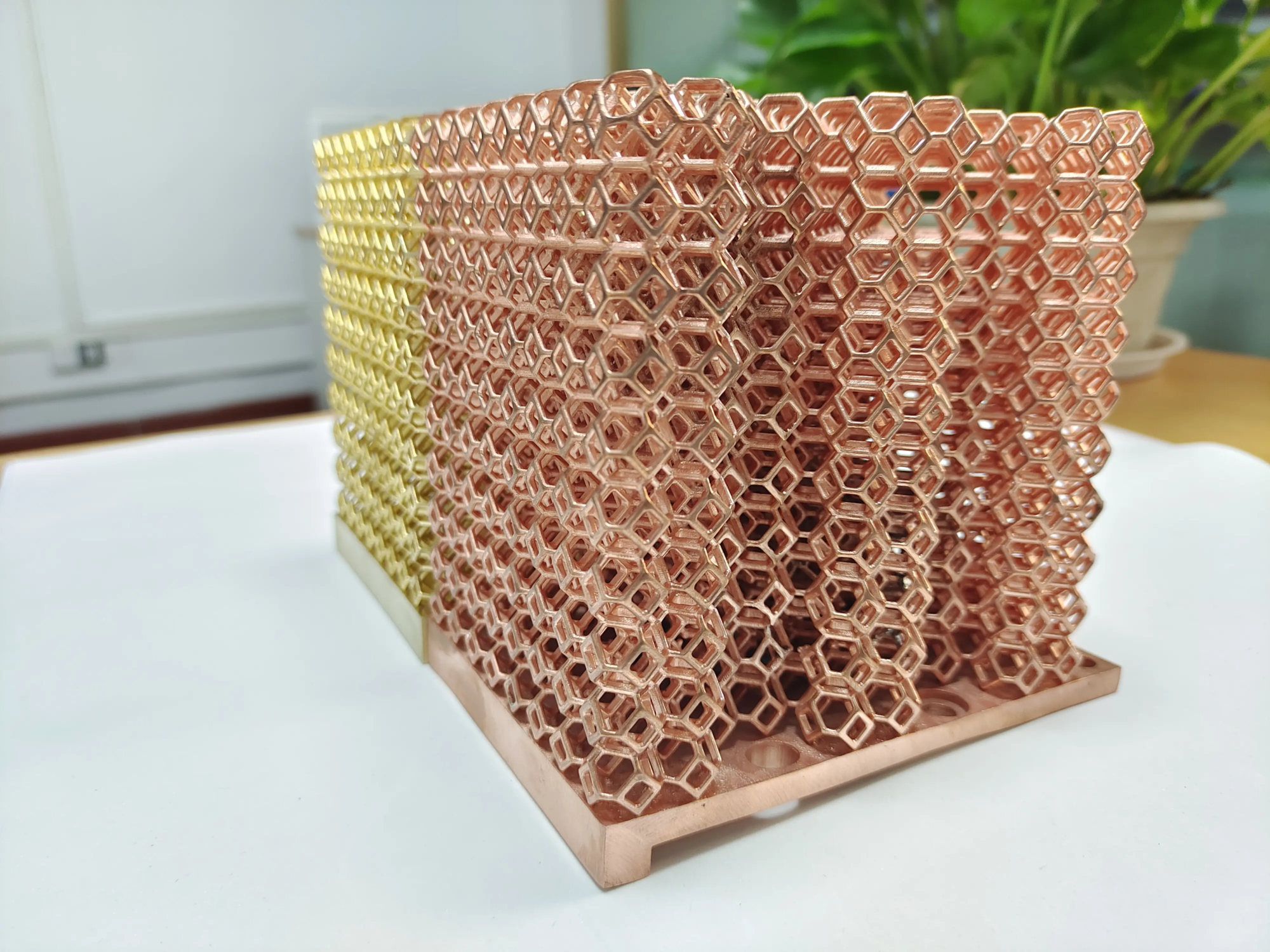
- Print and refine: GreatLight uses SLM technology to print mold cavities directly on metal. Layers as thin as 20 µm fuse metal powders for exceptional precision.
- Post-processing: Each mold is smoothed, ultrasonically cleaned and polished – our professional service ensures a flawless surface that is food contact safe. The edges are deburred for safe handling.
- Bake and assemble: Bakers press gingerbread dough into molds, bake and cleanly assemble the components without tedious knife work or mismatched parts.
Why metal molds are better than alternatives: Compared to silicone or plastic molds, metal SLM molds can withstand high temperatures, do not deform over time, and can deliver finer details. When producing 50 or 5,000 gingerbread houses, consistency is important – GreatLight’s method guarantees quality and durability.
Tangible benefits: innovation meets tradition
- Economic expansion: Dramatically reduce labor costs with reusable precision tools – ideal for seasonal peaks.
- Creative freedom: implement previously thought designs "Impossible"—Multi-level castles, character-themed looks, or branded corporate gifts.
- Zero waste: Precision molds minimize dough waste compared to hand cutting.
- quality assurance: Uniform baked shape ensures faster, sturdier assembly.
For bakeries, enthusiasts or event planners, this technology democratizes the intricate art of gingerbread—turning lofty dreams into tangible, delicious innovations.
Conclusion: The combination of craftsmanship and cutting-edge technology
Gingerbread houses symbolize warmth, creativity and celebration. By incorporating industrial 3D printing into their creations, we are honoring this spirit while pushing it forward. GreatLight’s rigorous SLM technology elevates gingerbread from charming handcrafting to professional precision without losing its soul. Every intricate snowflake pattern or arched door made of metal becomes a reliable vessel of joy, transforming kitchens and businesses alike. This holiday season, you can imagine not just gingerbread houses, but a future where precision manufacturing makes tradition even sweeter.
Frequently Asked Questions (FAQ)
1. Can 3D printed metal molds be used for edible products?
Absolutely. When metal molds are machined from FDA-approved stainless steel (such as 316L) and polished to food-grade standards, there are no health risks. GreatLight uses ultrasonic cleaning and electropolishing to eliminate tiny residues and ensure compliance with food safety protocols.
2. How detailed can my gingerbread mold design be?
SLM printing captures extraordinary detail – as fine as 0.05 mm! Think mural-like etchings, interlocking seams, miniature tiles or floral patterns. We recommend minimizing extreme overhangs to ease dough release, but intricate designs beyond the capabilities of hand cutting will thrive.
3. Which metals are safe and preferred for food molds?
Stainless steel 316L Ideal: Corrosion-resistant, non-reactive, durable and FDA-approved for food contact use. Alternatively, titanium molds are ultra-lightweight and suitable for frequent handling.
4. How many batches can one mold handle?
Depending on the abrasiveness of the dough and care of use, SLM-made molds can reliably withstand 500+ baking cycles Won’t degrade – much more than silicone or plastic tools.
5. What post-processing options does Honglaite offer for molds?
In addition to the mandatory smoothing and cleaning, services include:
- Mirror polish makes it easy to release the dough from the mold.
- Targeted machining adjustments via CNC (if modifications are required).
- Non-stick coatings such as PTFE for high-sugar doughs (on request).
6. How long does it take to make the mold?
Once the design is confirmed, typical gingerbread mold components are printed 2-4 daysadded after post-processing 1-2 days. Expedited service can speed up production by 30-50%.
7. Can I see a virtual prototype before submitting it?
Yes! GreatLight provides polymer functional prototypes to test dough flow and demolding feasibility prior to metal fabrication, reducing risk.
8. Why choose metal prototyping instead of printing gingerbread using a food 3D printer?
Food printers encounter difficulties with structural stability, accuracy, and volumetric scaling. Metal molds efficiently transfer intricate designs onto standard gingerbread dough – combining artistry with the feasibility of mass production.
Change the way you imagine gingerbread this holiday season. With GreatLight’s rapid prototyping expertise, SLM printing, and commitment to innovation, no design is too bold. We provide end-to-end solutions – from digital modeling and precision printing to food-safe finishing – supporting bakeries, brands and visionaries alike. Customize your stunning gingerbread masterpiece today – ask for a quick quote.