The truth about 3D printed dumbbells: possibilities, traps, and the ray of professional prototypes
Dumbbells – a typical staple for strength training. They look simple enough: the shape weight of the rod end. So it’s natural for manufacturers, fitness enthusiasts and innovators: "Can I 3D print dumbbells?" The short answer is: It’s complex and full of interesting potential, but practical and security challenges. This guide delves into the reality of 3D printed dumbbells and explores why DIY attempts often shake and how professional rapid prototyping services unlock true potential.
Why consider 3D printing dumbbells? charm
This concept is not without its advantages:
- Customization cannot be compared: Imagine the ergonomic shape of dumbbells your Handheld, aesthetically designed to match your home gym or have an integrated ergonomic profile. 3D printing is excellent in unique geometric forms and is difficult to achieve through traditional casting or processing.
- Complex internal structure: In theory, lattice fillers or optimized designs can provide different strength-to-weight ratios than solid metals, potentially achieving lighter handles or unique weight distributions – especially related to rehabilitation or professional training.
- Rapid prototype and iteration: Designers can quickly create physical models for ergonomic testing, visual attraction assessment or conceptual models for patented applications, much faster than traditional manufacturing allows.
- Niche Applications and Accessories: Printing custom holders, racks or end caps to modify or protect existing metal dumbbells is a practical and safe application.
- Education and conceptual models: Showing the weight principle, creating non-functional replicas for the display, and even artistic interpretation are completely feasible uses.
The harsh reality: Why your FDM printer may not handle it
Despite its temptation, it is usually homemade 3D printing (such as common FDM with PLA or PETG) Unsuitable and unsafe Functional dumbbells for weightlifting:
- Density dilemma (the biggest obstacle):
- Standard plastics (PLA, ABS, PETG): The density is about 1.2-1.4 g/cm³. Steel is about 7.8 g/cm³. Cast iron has a slightly lower density than steel. To match a relatively lightweight 5 lb (2.27 kg) cast iron dumbbell head (volume ~ 0.3 liters) 1.5-1.8 liters – Huge, unrealistic dimensions.
- this "Fill in full" trap: Try adding sand, ball bearings or lead shots Increase weight, but significantly impair structural integrity. During dynamic lifting movements, under huge stresses, the plastic shell becomes a thin, weak container. Regardless of shell thickness, printing layer adhesion is a key weakness.
- Structural integrity: Not only weight:
- Impact and dynamic load: Weightlifting involves acceleration, deceleration and potential drops. Compared with steel or cast iron, plastics have lower impact strength, fracture toughness and fatigue resistance. Capturing the handle to medium range is a serious safety hazard.
- Creep: The plastic permanently deforms under continuous load. Holding a heavy-duty (even if successfully printed) plastic dumbbell can cause it to slowly bend or deform over time.
- Layer adhesion: The fundamental properties of FDM printing create inherent weaknesses between layers. Even high fill percentages can be stratified under pressure.
- Handle Ergonomics and Durability: The handle experiences the most concentrated power. Printed plastic handles are easy to bend, catch or cut. With FDM, achieving an effective and lasting, rigid texture (critical to grip strength) is very difficult.
- UV degradation and wear: Plastics exposed to sunlight and sweat degrade faster than metals. Continuous treatment and floor contact can lead to rapid wear.
Professional Metal 3D Printing Changes Where Games
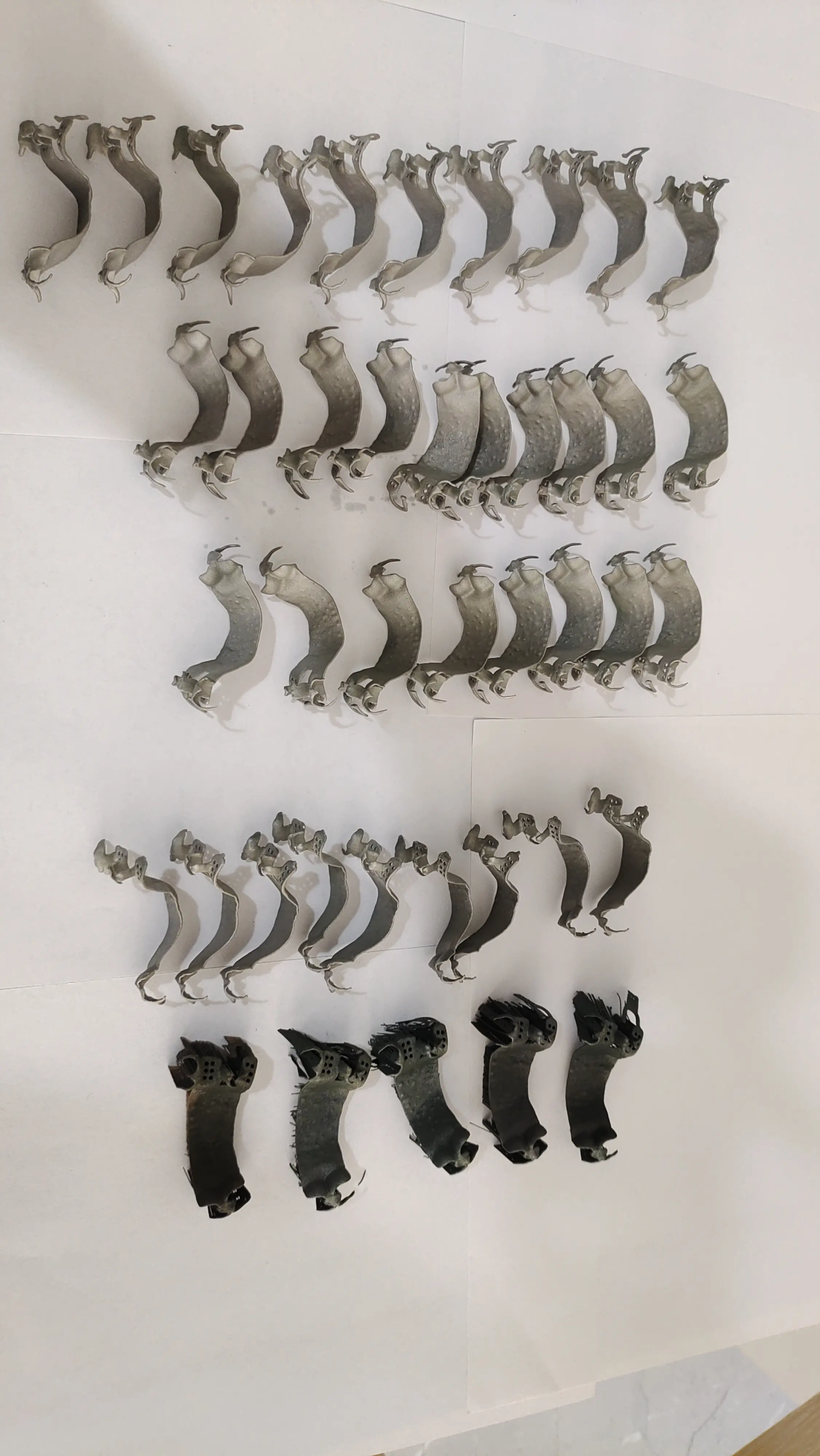
Here is where highly professional solutions emerge: Metal additive manufacturing (AM)specifically Selective laser melting (SLM) or direct metal laser sintering (DML). The company likes it Greatequipped with advanced industrial SLM systems and deep expertise, provides a way to make 3D printed dumbbells Possible For specific applications, although in most cases it is not a direct substitute for traditional weights.
How Greatlight makes metal 3D printing dumbbells work:
- Material Power: Use real metal, for example:
- Aluminum alloy (e.g., Alsi10mg): Provides good strength to weight ratio, is lighter than steel and corrosion-resistant. Ideal for making lighter weight components or handles.
- Stainless steel (e.g. 316L, 17-4 pH): Provides high strength, excellent ductility and corrosion resistance. Suitable for more robust prototypes, functional components under pressure or actual weight components (within range).
- Titanium alloys (such as Ti6al4v): Excellent strength to weight ratio and biocompatibility (funny for professional handles or grips), but much more expensive. Greatlight has access to a wide range of materials and can tailor solutions.
- True metal density: These metals are much denser than plastic, making compact, high-quality components physically possible. They behave like real metal because they yes Real metal.
- Excellent strength and durability: The nearly dense portions produced by SLM are close to their mechanical properties and sometimes exceed their conventionally manufactured counterparts. They can withstand impacts, dynamic loads and fatigue Like metalunlike plastic prototypes.
- Complex design freedom has been achieved: This is a superpower. SLM unlocks geometry by casting or machining:
- Topology optimization: Software algorithms design structures that maximize strength while minimizing material usage. Imagine a dumbbell head or handle with a complex internal lattice that weighs much less than a solid block.
- Integrated features: The threaded insert is embedded directly during the printing process, creating complex coolant channels for specialized applications or forming a unique ergonomic grip that perfectly reflects the user’s hand scan.
- Perfect prototype: Greatlight’s expertise ensures optimal printing of parts for strength and accuracy. They are thoroughly post-treated (CNC machining for critical surfaces, heat treatments, surface finishing – sandblasting, polishing, coating) Crucial. one "Born" Printed metal dumbbell handles usually have rough surfaces that are not suitable for holding; professional finishing makes them functional and safe.
- Rapid innovation: SLM’s speed allows for rapid design iterations – ideal for refining ergonomics, testing internal structures, and faster than traditional routes.
Even important considerations for metal printing:
- cost: Metal 3D printing, especially when powder beds such as SLM are fused, is much more expensive than traditional casting. Its strength is in small volume, highly complex or customized parts, with value greater than per unit cost.
- Weight accuracy: accomplish Accurate Weight increase (for example, transferring from 10 pounds to 12.5 pound dumbbells through complex lattice structures in metal) can be challenging and expensive. Metal printing Enable Core functions, but absolute accuracy may require a complementary process.
- Application focus: Today’s metal printed dumbbells are perfect for:
- High-performance prototype: Verify the verification form, function and ergonomics of new commercial designs.
- Professional equipment: The unique handle for Paralympic athletes requires customized treatment tools with specific geometric shapes.
- Low volume customization: Premium fitness equipment or personalized training tools.
- Element: Custom collars, dedicated end covers, unique rack solution.
Conclusion: Innovation through expertise rather than amateur plastics
Although the idea of printing functional dumbbells at home is full of impracticality and dangers, 3D printing undoubtedly has the potential for future transformation of adaptive device design and customization. The key is to use the right technology: Industrial Metal Additive Manufacturing (AM).
For viable, safe and innovative metal dumbbell prototypes or professional components, professional rapid prototyping services (e.g.) Great It is essential. Their advanced SLM/DMLS capabilities, a wide material portfolio, and key post-processing expertise (CNC machining, heat treatment, surface modification) bridge theory design gaps between freedom and functionality, load reality.
Whether you are a pioneer in fitness equipment, designing the next generation of ergonomic weights, engineers creating professional therapeutic equipment, or inventors exploring radical new concepts, Greatlight offers professional rapid prototyping solutions that transform your vision into a tangible, rigorously tested metal reality. They address the density and power challenges inherent in 3D printing weights, providing the necessary expertise to browse this complex application safely and efficiently. Customize your precision metal prototypes now at the best prices!
FAQ: 3D printed dumbbells
-
Q: Yes real Print heavy dumbbells with my home FDM printer?
A: Not safe or effective. Standard plastics (PLA, PETG, ABS) lack density and strength. Meet weight requires huge, unrealistic size. The filled shell is structurally weak. Plastic handles are easy to capture under load. -
Q: How is the metal 3D printing service different from Greatlight?
one: They use industrial machines (such as SLM/DML) to fuse real metal powders (aluminum, steel, titanium alloys) with lasers. This creates sections with close to fill density, high strength and true metal properties, making functional load prototypes possible. Crucially, they add professional post-processing. -
Q: Which post-processing is crucial for metal printed dumbbell parts?
Answer: The basic steps include: Removal of support structures, CNC machining of critical load surfaces (such as precision holes or smooth grips), heat treatment to reduce stress and enhance performance as well as surface finishes (such as grinding, grinding, polishing, polishing, coating), corrosion resistance, corrosion resistance and grips. -
Q: How much does a metal 3D printed dumbbell handle weigh?
one: It all depends on the metal alloy, the specific design (it is very helpful to use topology optimization), part size, print direction and post-processing quality. While a prototype of a strong, functional test for a specific load is feasible, it is a complex engineering challenge rather than a simple mind. The load capacity must be strictly verified. -
Q: Is metal 3D printing cost-effective for all dumbbells?
Year. SLM/DML is often too expensive to replace the mass-produced standard dumbbells you buy commercially. Its value is Prototyping novel designs, small volume customization/customization equipment (e.g., professional therapy tools), proof of concept models and components (handles, collars) Complexity or customization can justify the cost. -
Q: Where is the knee on the handle? Can I print 3D?
one: SLM/DML can produce textured surfaces, but are as effective as solid, durable and functional knee patterns, as challenging as processed steel knurlings on commercial dumbbells. The initial wear of printed metal cradles may be less sharp and may vary. After the knee can be carried on the SLM part, it is usually a necessary condition for optimal grip. -
Q: Why are you in trouble? Why not use traditional metal?
Answer: For standard weights, tradition is the best. Metal 3D printing can unlock possibilities by machining or casting: a very lightweight but powerful internal lattice structure, super artificial grip tailored for a single scan, perfectly integrated features (mount points, sensors), and a quick iteration of complex designs that would be expensive or impossible or otherwise very expensive. -
Q: How do I deal with density issues even if I need a very light handle?
one: This is where topology optimization is. The algorithm designs metal structures to maximize stiffness and strength while using minimal materials elsewhere, resulting in an internal lattice or hollow structure. Aluminum alloys also provide good baseline strength to weight ratio. -
Q: Is 3D printed metal dumbbell safe?
one: Safety depends entirely on the proper design, material selection, expert manufacturing and rigorous testing. Prototypes developed using professional services such as Greatlight, following engineering best practices and thoroughly disruptive and non-destructive testing can be safely anticipated, proven load safety. It is not safe to try or breed with uncertified parts. - Q: If I had a concept of custom dumbbells, how would I get started?
one: Contact professional rapid prototyping services Great. Discuss your concept, the required weight range, material preferences and applications. They can be critical post-processing required for feasibility, optimal printing strategies, material selection, design optimization of AM and turning your innovative ideas into high-quality functional metal prototypes. Start a conversation about custom precision prototypes now!