Breathing Cleaning: The Revolution of 3D Printed Dust Separators
Anyone who spends time on a DIY project carpentry, metalworking or deep in the knees knows the permanent battle with dust. It shrouds the air, blocks the tools, and carries serious health risks. Although traditional dust collectors exist, they are not always practical, affordable or well suited for a specific setup. Enter the Miracle of Modern Manufacturing: 3D printed dust separator. It’s more than just a gadget. This is a customizable solution that utilizes cutting-edge manufacturing to effectively conquer airborne debris. Let’s dive into how 3D printing reshapes dust collection.
Understanding the Dust Separator: Arrayless Seminar Hero
The core of the dust separator is a device that removes larger and heavier dust particles and debris from the airflow forward It can reach your store vacuum cleaner or dust collector. This prevents filter clogging, extends the life of the device and maintains suction power. Most principles-based work Tornado separation: Dusty Air tangent enters the chamber, forming a powerful vortex. Centrifugal force clamps the heavier particles outwards to fall into the collection box, while clean air passes through the central tube outlet. It is the physics that works for a cleaner environment.
Why 3D printing is the perfect match for dustproofers
For custom or small batch applications, traditional metal fabrication for complex cyclone chambers can be very expensive. Here is where 3D printing shines:
- Unrivaled design freedom: Cyclone efficiency depends on precise internal geometry – smooth curves, optimized inlet angles and eddy current finder size. 3D printing effortlessly creates these complex shapes that cannot be milled economically or mold. The peak performance of iterative designs is fast and cost-effective.
- High quantification: Need a separator that fits unique spaces, perfectly integrated with your particular store VAC model or connects to uncommon catheter sizes? 3D printing makes custom solutions practical. Designed once, the printer can copy it perfectly.
- Rapid prototyping and small volume production: Test design concept overnight. If there is no large-scale tool investment, produce exactly the number of units you need. Ideal for niche applications or to develop optimized designs for performance enthusiasts.
- Material versatility: Different environments require different materials. For most workshops’ purposes:
- PLA: Economical for prototypes or less critical applications.
- ABS/ASA: Provides better temperature resistance and toughness to general workshops.
- PETG/Communist Power: Excellent chemical resistance (resistant to solvents in surface treatment) and resistance resistance.
- Nylon (PA): High durability, chemical resistance and excellent strength for harsh environments.
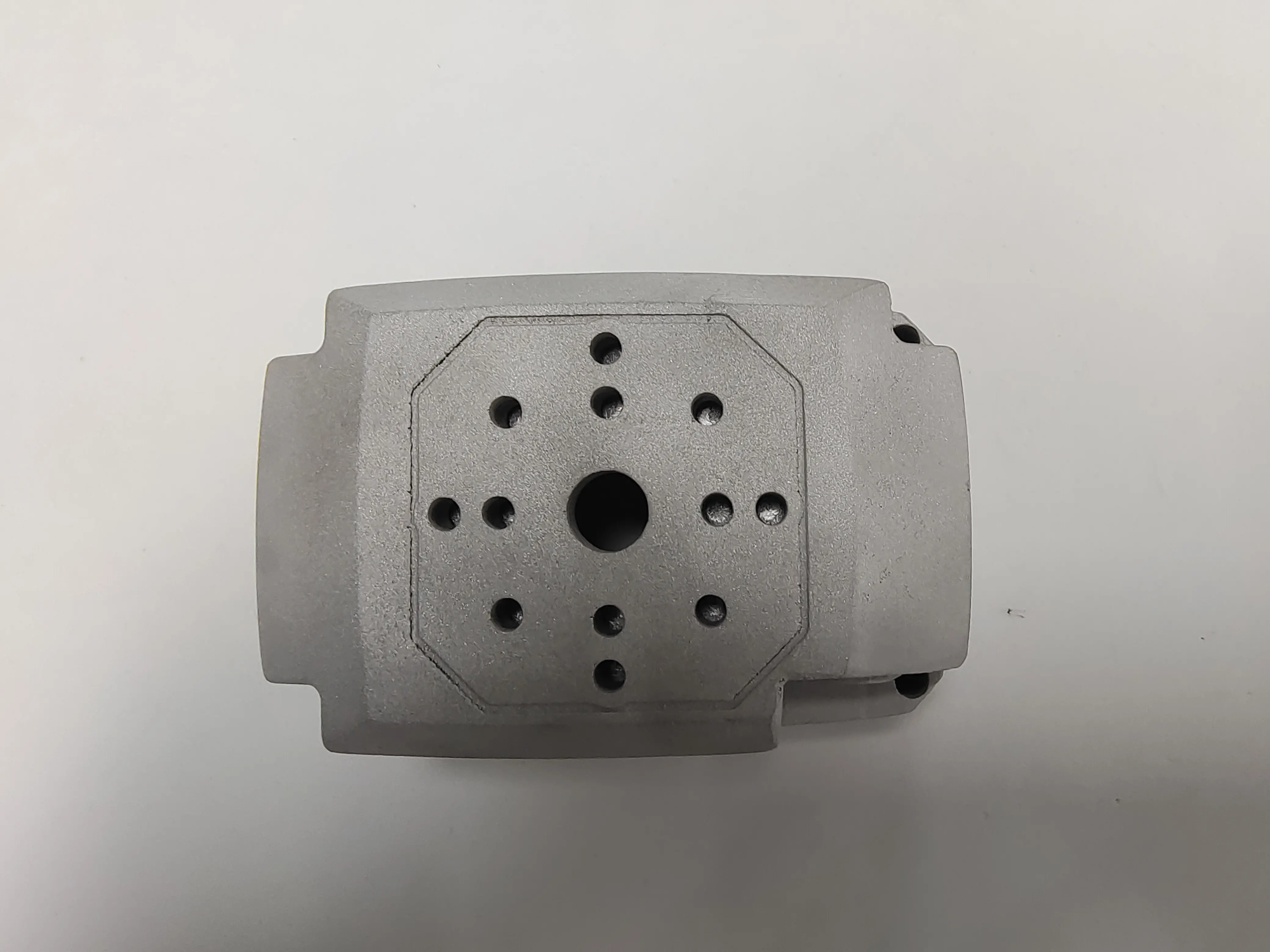
- Metal (stainless steel, aluminum): For industrial environments that require extreme durability, heat resistance, fire safety or ability to handle highly abrasive media. (This is where professional expertise like Greatlight becomes crucial).
Key design considerations for peak performance
Creating an effective 3D printing separator is more than just printing. Key engineering aspects need to be carefully considered:
- Inlet speed and shape: Determines the initial vortex formation; is crucial for separation efficiency.
- Barrel diameter and height: Influences the residence time and separation kinetics of particles.
- Taper angle and length: Promote condensed dust to travel downward without re-entering in the airflow.
- Vortex Finder (Export Pipe): Diameter, depth and smoothness significantly affect air outlet flow and separation efficiency. Its edge profile is crucial.
- Air to cut ratio: Especially important if connected to Shop Vacs vs. higher CFM dust collectors; the design must match the airflow characteristics.
- Sealing and connection: Ensuring a seal between the printed parts and the hose/vacuum is essential to maintaining suction. Integration of gasket grooves or precise tolerance fit is common in designs.
Better than ready-made units
- Optimized performance: Specially adjust the design for your airflow requirements and dust generated (e.g., wood dust and metal chips).
- Cost-effective (custom solution): For one-time or complex designs, 3D printing can be much cheaper than custom machining.
- Integration: Seamlessly build the mount, tool adapter, or hose connector directly into the separator body.
- Repairability and Upgradeability: The damaged part? Print a replacement. Improved design? Print a new version.
Industrial strength: When metal 3D printing enters the center stage
Although plastics are well suited for many workshops, industrial applications often require the robustness of metals. Highly abrasive dust flow (such as metal grinding), requires unshielded components, high temperatures or life ultimately, to call for the ultimate dust environment of metal dust separators. Selective laser melting (SLM) Technology shines here. SLM allows creation of:
- Dense, water-impermeable metal parts with a strength comparable to that of forged materials.
- Extremely complex aerodynamic internal paragraphs optimize maximum dust separation efficiency.
- Custom alloys suitable for specific wear or corrosion resistance.
- Parts are combined from multiple traditionally manufactured components into a robust unit.
To achieve this requires not only SLM equipment, but also deep expertise in additive manufacturing (DFAM), parameter optimization and rigorous post-processing – the area of professional service providers Great.
Utilize expertise: Gremight Advantage
Developing high-performance, durable dust separators, especially in metals, requires not only printers. This is where to work with professional rapid prototyping and manufacturing experts Great Prove it is priceless. Greglight stands SLM metal 3D printing technology,issued:
- Cutting-edge production: Leverages advanced SLM systems for consistent, high-quality metal parts, with their characteristics tailored to suit demanding applications such as dust separation.
- Comprehensive problem solving: Expertise specifically targets the challenges of complex rapid prototyping of functional metal components, including complex internal geometries that are critical to cyclones.
- One-stop post-processing: SLM parts need to be completed. Greatlight provides essential services such as stress relief, support measures, heat treatment, hip joints (thermal isostatic pressures) for densification, precise machining of key features, and specialized finishes to ensure that parts meet functional and aesthetic standards.
- Material flexibility and speed: Ability to handle a variety of metal powders (stainless steel, aluminum alloy, titanium, tool steel, etc.) and produce quickly to meet tight deadlines.
- Engineering Insights: Not only does Greatlight provide valuable advice on material selection and design optimization for additive manufacturing, it also ensures that your dust separator is not only printable, but also features durable and durable.
Conclusion: Clean air, precise design
3D printed dust separators represent a significant leap in workshop and industrial dust control. By enabling complex, optimized designs that suit specific needs, 3D printing turns custom dust management into a practical reality. From efficient, high-performance plastic prototypes accelerated on desktop printers to industrial-grade metal cyclones made for extreme environments using SLM technology, there is a lot of possibilities. For those seeking the ultimate metal dust separation solution (maximizing efficiency, durability and safety), such as the expertise provided by Greatlight, with advanced manufacturing capabilities and comprehensive post-processing are essential. Embrace the accuracy of 3D printing and turn your dust chaos into a clean air-efficient model.
FAQ: 3D printed dust separator
Q1: Is the 3D printed dust separator durable enough to be used with heavy duty?
A1: Absolute, but material choice is crucial. PLA is used for prototypes. Used for regular workshops, ABS, PETG, nylon or copolymers have excellent influence and longevity. For truly harsh industrial environments involving wear, heat or critical environments, 3D printed metal dust separators (e.g. through SLM stainless steel or aluminum alloys, for example, specially used for Provides excellent durability, wear resistance and structural integrity that competes or exceeds traditional manufacturing.
Q2: How long does it take to 3D print the separator?
A2: Time varies greatly by size, complexity and printing technology. Smaller plastic cyclones may take 10-20 hours of FDM printers. Larger or more complex units take longer. Industrial metal printing (SLM) is fast prototyping compared to tool manufacturing, but can take hours of medium parts. Service providers like Greatlight to optimize speed processes while maintaining quality. Delivery time includes design, printing and essential post-processing.
Question 3: Can 3D printed separators be as efficient as commercial metals?
A3: Yes, it is usually more effective! 3D printing allows designing highly optimized internal aerodynamic shapes, which are traditionally difficult or expensive. Well-designed 3D printing cyclones (especially metals) can match or exceed the separation efficiency of standard commercial units. Efficiency depends entirely on the design quality of the dust type and material suitability.
Q4: What post-treatment is needed, especially for metals?
A4: plastic: Minimal finishes may be required, such as sanding the mating surface, adding silicone seals.
Metals (SLM is crucial): Basic post-processing includes:
- Remove the support structure.
- Reduce pressure to reduce internal pressure.
- Heat treatment to achieve the desired mechanical properties.
- (usually) hot isostatic pressing (hip joint) to eliminate internal porosity.
- Precise processing of critical interfaces or threads.
- Surface finishes (e.g. polish, shooting, coating, coating). Companies like Greatlight handle these complex steps in full.
Q5: Why choose a professional service like Greatlight instead of my own printer?
A5: For plastic prototypes or simple designs, your printer may be enough. But, because:
- Industrial grade metal separator: Expensive SLM equipment and deep technical knowledge are required.
- Best performance guarantee: Fluid dynamics and DFAM expertise.
- Advanced Materials: Access professional metal powders and processes.
- Key post-processing: Complex heat treatment, hip joints and precise completion functions.
- Scalability and consistency: Ensure reliable production quality.
Greatlight offers advanced technology and engineering proprietary technology to create reliable high-performance metal dust separation systems that DIY printing often fails to match.