Feathers reimagined: How 3D printing is revolutionizing flight
For thousands of years, birds have effortlessly dominated the skies, their complex feather structures granting unparalleled flight efficiency, maneuverability and silent operation. Mimicking this natural masterpiece has long fascinated engineers. Now, a breakthrough technology convergence is emerging: 3D printed feathers. This isn’t science fiction; This is a rapidly growing field that uses advanced additive manufacturing to create artificial feathers with unprecedented precision and functionality, promising to have a transformative impact on aerospace, drones, robotics and materials science.
Unlocking the secrets of bird flight through digital fabrication
Bird feathers are a marvel of evolutionary engineering. Their complex microstructure—a central axis (shaft) that supports interlocking barbs and featherlets—enables remarkable properties: lightness, strength, flexibility, aerodynamic lift, insulation, and near-silent flight through sophisticated noise damping. This complex, multi-scale hierarchical structure is difficult to replicate with traditional manufacturing methods.
3D printing, especially high-resolution technologies, e.g. Multi-jet fusion (MJF), stereolithography (SLA), and Selective Laser Sintering (SLS)change the game:
- Uncompromising sophistication: AM builds the design layer by layer based on the digital model. This allows engineers to recreate the complex branching structures of barbs and barbules, graded stiffness along the axis, and even biomimetic surface textures not possible with subtractive methods.
- Material Versatility: Use advanced polymers (such as nylon PA11/PA12, TPU for flexibility, PEEK for high temperatures), composites, and even emerging printable metals. Material properties can be precisely adjusted within a feather—hard at the base for support, flexible at the tip for joints.
- Lightweight control: Generative design algorithms optimize the internal lattice structure to replicate a skeletal lightness while maintaining strength. This makes the components significantly lighter than their traditional solid metal or plastic counterparts, which is critical for flight efficiency.
- Quickly iterate and customize: Digital design allows for quick modifications—changing stiffness, barb density, camber or twist—enabling engineers to quickly test and optimize aerodynamic performance for specific applications.
Beyond bionics: Potential applications rapidly developing
3D printed feathers go beyond simple imitation and open the door to novel functionality:
- Silent Drone: Micro-drone equipped with synthetic feathers can significantly reduce the acoustic signature, making them ideal for wildlife monitoring, search and rescue in noise-sensitive environments, or discreet surveillance. Research shows that specially designed feathered propeller shrouds can significantly reduce noise caused by turbulence.
- High performance aerospace surfaces: Morphing wing concept becomes feasible. Imagine aircraft wings covered in responsive, feathery panels that dynamically change shape for optimal lift, drag reduction and control during takeoff, cruise and landing, without the need for bulky, complex mechanical actuators.
- Advanced Robotics: Soft robots or bionic drones can incorporate feathers to enhance locomotion (e.g., flapping wings), fine-grained manipulation, or improve environmental interaction, dynamically adapting to wind currents or obstacles.
- Sensory integration: It becomes possible to embed sensors into printed structures during the manufacturing process. Feathers can measure airflow, pressure, temperature or structural integrity in real time, acting as smart skins for drones and aircraft.
Meeting the challenge: The next step in innovation
Despite the huge potential, obstacles remain:
- Scale and speed: Printing large quantities of tiny, intricate feathers at commercially viable speeds requires continued advances in printer resolution, multi-material capabilities and throughput.
- Material restrictions: The development of truly feather-like materials that combine ultra-lightweight, extreme flexibility, robustness to environmental stresses (UV, humidity, temperature) and long-term durability is an active research and development focus. Materials scientists are exploring new polymer blends and composites.
- Function verification: Rigorous wind tunnel testing, flight trials and long-term reliability studies under real-world conditions are required to validate aerodynamic performance and feasibility beyond laboratory prototypes.
- Integration and driver: Seamlessly integrating soft, flexible feathers onto rigid aircraft structures and developing efficient, lightweight mechanisms for active feather joints present engineering challenges. Shape memory alloys (SMA) or soft actuators are potential solutions currently being investigated.
The way forward: A feathery future
Research institutions and aerospace giants are actively investing. Early prototypes demonstrate significant reductions in noise signature and promising fluid-structure interactions. Future advancements are expected through:
- Artificial Intelligence Driven Design: Machine learning algorithms optimize feather geometry and material distribution to achieve specific aerodynamic goals beyond natural form.
- Active control system: Smart feathers dynamically respond to sensor feedback, allowing them to autonomously adapt to flight conditions.
- Multi-material mixed printing: Combining rigid, flexible and functional materials in a single feather structure for unparalleled performance.
in conclusion
3D printed feathers represent more than just biomimicry; they mark a shift in the way we design and manufacture complex, multifunctional flying surfaces. By harnessing the precision and versatility of advanced additive manufacturing, engineers are overcoming the limitations of traditional technologies to create structures that rival nature in their lightness, adaptability and aerodynamic efficiency. Scaling, materials, and integration challenges remain important frontiers, but the trajectory is clear. From silent drones patrolling cities to aircraft wings that morph like birds, 3D printed feathers will fundamentally reshape the future of flight, making aircraft quieter, more agile, and more efficient.
Ready to transform your vision into an ambitious reality?
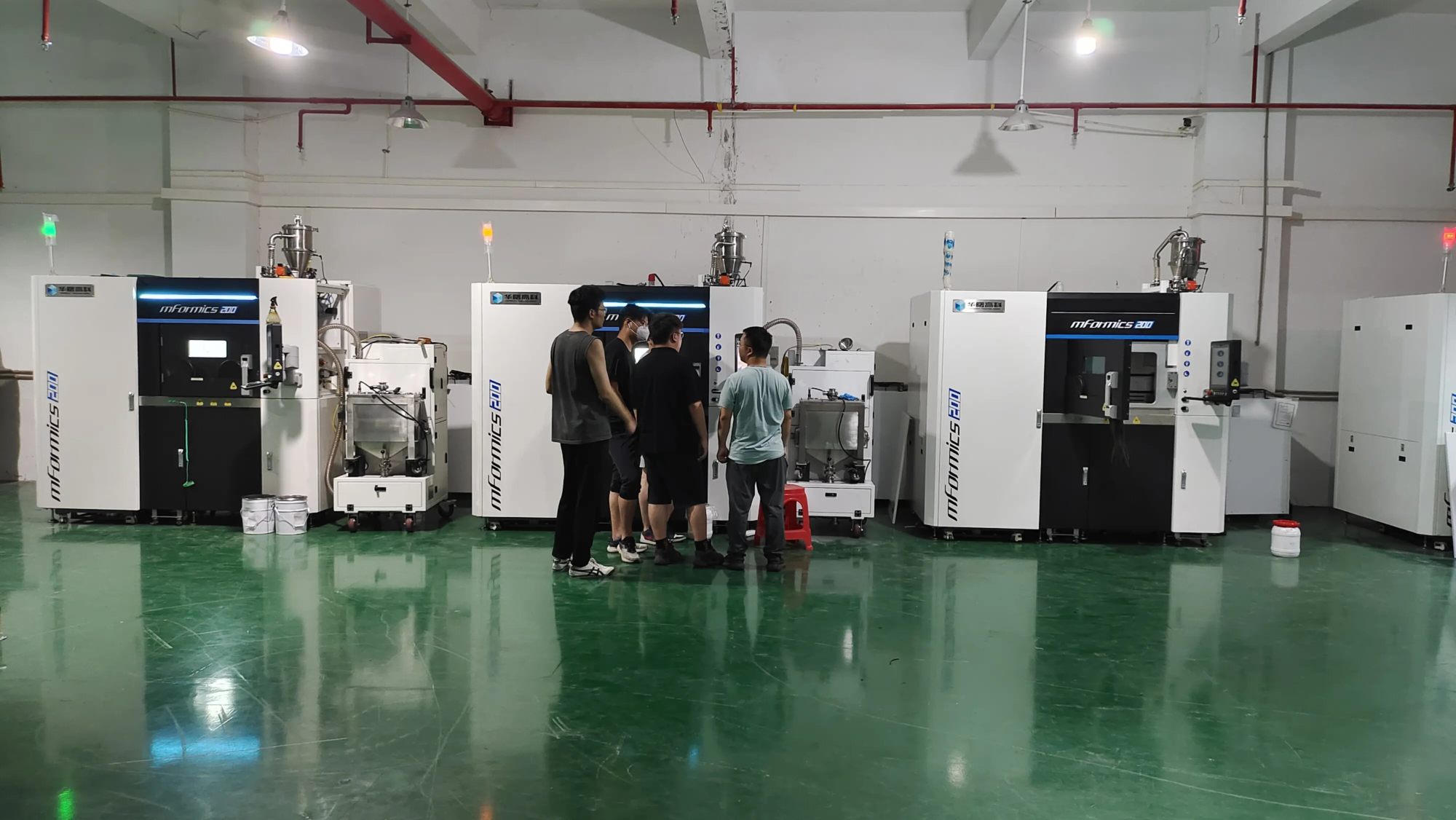
exist huge lightwe don’t just imagine the future of flight, we help build it. as prime minister rapid prototyping manufacturerwe specialize in transforming complex innovative concepts into tangible functional realities. Our cutting-edge arsenal SLM (Selective Laser Melting) 3D Printer Advanced production technology allows us to tackle the most challenging metal part prototyping projects.
Whether you’re pushing the boundaries of complex metal feather assemblies for aerospace, developing custom drone mechanisms, or exploring novel actuator designs, our expertise covers Rapid prototyping, one-stop post-processing (including precision machining, heat treatment and special surface treatment), and Custom material solutions.
We are proud to deliver Excellent quality, quick turnaroundand Competitive pricing. Trusted by innovators around the world One of the best rapid prototyping companies in ChinaGretel is your important partner for realizing breakthrough aerospace applications.
Customize your precision rapid prototyping parts today and stand out from the competition with GreatLight. Get started with a free quote!
Frequently Asked Questions (FAQ)
-
What are the advantages of 3D printing feathers over traditional materials?
- Lightweight efficiency: An optimized internal lattice enables an unparalleled strength-to-weight ratio.
- Complex bionics: It is not possible to replicate the complex feather structure (barbs, barbules) by machining or moulding.
- Integrated features: Embed sensors or change material properties within individual printed components.
- Rapid design optimization: Faster aerodynamic testing and improvement iteration cycles.
-
Are current 3D printed feathers strong and durable enough for actual flight?
Although the prototype showed promising results, Long-term durability and fatigue resistance The situation under real flight pressure is still being verified. Advances in materials science (high-performance polymers, composites, metals) and rigorous testing are continually improving performance. Early applications may focus on non-structural components or smaller drones. Rigorous qualification standards developed by organizations such as ASTM International are guiding materials testing protocols for flight-critical aerospace uses.
-
Which 3D printing technologies are best for feathers?
- Polymer feathers: Selective Laser Sintering (SLS), Multi-Jet Fusion (MJF), Stereolithography (SLA) – offering fine details and diverse polymer options (nylon, TPU, resin).
- Metal Feathers/Components: Selective Laser Melting (SLM/DMLM) – critical for highly stressed feather mounts, actuators or integrated aerospace structural elements that require metal strength and temperature resistance.
Functional prototypes often start with polymers, while flight-critical structural elements move to specialized metals.
-
What are the main barriers to wider adoption?
Key challenges include scaling up production to cover larger wing areas economically, perfecting materials that mimic the characteristics of bird feathers (while being light, flexible, and tough), developing reliable and lightweight actuation systems for deforming feathers, and ensuring long-term reliability certification consistent with stringent FAA/EASA human flight standards.
-
What would an airplane with 3D printed feathers look like?
The aircraft is expected to be quieter, with surfaces that resemble intricately textured skin or segmented panels covered with overlapping synthetic feathers, allowing for aggressive wing deformation without the need for traditional flaps or slats. This reshapes the aerodynamic control paradigm from discrete control surfaces to distributed flexible deforming structures.
- How does GreatLight support innovators working on projects like 3D printed feathers?
GreatLight provides end-to-end Precision Rapid Prototyping Solutionsfrom advanced Metal SLM 3D printing Comprehensive post-processing and precision machining of critical components. Our expertise in complex geometries, lightweight structures, custom materials and rapid iteration cycles are invaluable to aerospace R&D. We work closely with our customers to address design challenges, select the best materials, including high-performance metals and polymers, and deliver robust, functional prototypes that significantly accelerate development times.