The Reality of 3D Printing Glock Magazines: Beyond the Hype
The worlds of gun enthusiasts and home builders have a unique intersection surrounding 3D printing. The idea of 3D-printing magazines for popular handguns like the Glock is a topic that has generated much attention, debate, and often misinformation. While the concept promises customization and accessibility, practicality—especially in terms of reliability, security, durability, and legality—is complex and critical. Let’s dive into the science, engineering, and legal world surrounding 3D printed Glock magazines.
Beyond desktop polymers: Learn about different approaches
Not all 3D printed magazines are created equal. The technology and materials used greatly affect their survivability:
-
Consumer grade plastic (FDM/FFF):
- Material: Mainly PLA, PETG, ABS, and occasionally nylon. Convenient transportation and affordable price.
- promise: Low cost, home customization (capacity, finger rest, aesthetics), accessibility in prohibited countries (fraught with legal risks – see below).
- Reality: Easily cracked and deformed under spring tension and insertion/extraction forces. Critical geometry (feed lip, locking plate engagement) wears out quickly. The magnetic capture area fails under pressure. Paper feeding reliability is notoriously poor—paper feeding errors, failure to lock back, and paper jams are common. Temperature sensitivity can weaken structural integrity. generally believed extremely Unreliable with severe use and potentially unsafe due to deformation/failure under pressure. Lifespan is measured in a few to dozens of cycles at most.
-
Industrial polymers (SLS/MJF):
- Material: Stronger nylon (PA11, PA12, PA6) or composite. Industrial machinery is required.
- promise: It has higher strength, wear resistance and thermal stability than FDM. Closer geometric accuracy. Potential for more functional prototypes or specialized low-volume applications.
- Reality: A significant improvement over FDM, but still inferior to injection molded polymer magazines under high cycle, high stress use. Over time, the feed port remains a critical failure point. Spring force deformation still occurs. Cost-effective for prototyping, but has not been proven to be stable for long-term use. Longer life than FDM, but still limited.
- Metal Additive Manufacturing (SLM/DMLS):
- Material: Stainless steel (316L, 17-4PH), titanium (Ti-6Al-4V), maraging steel, aluminum alloy (AlSi10Mg). Advanced industrial equipment and expertise are required.
- promise: Theoretically approaches or matches the strength and durability of OEM magazines. Complex internal geometries can be achieved. Potential for optimization features not possible through molding (e.g. complex reinforced meshes).
- Reality: This is where cutting-edge industrial manufacturing comes in:
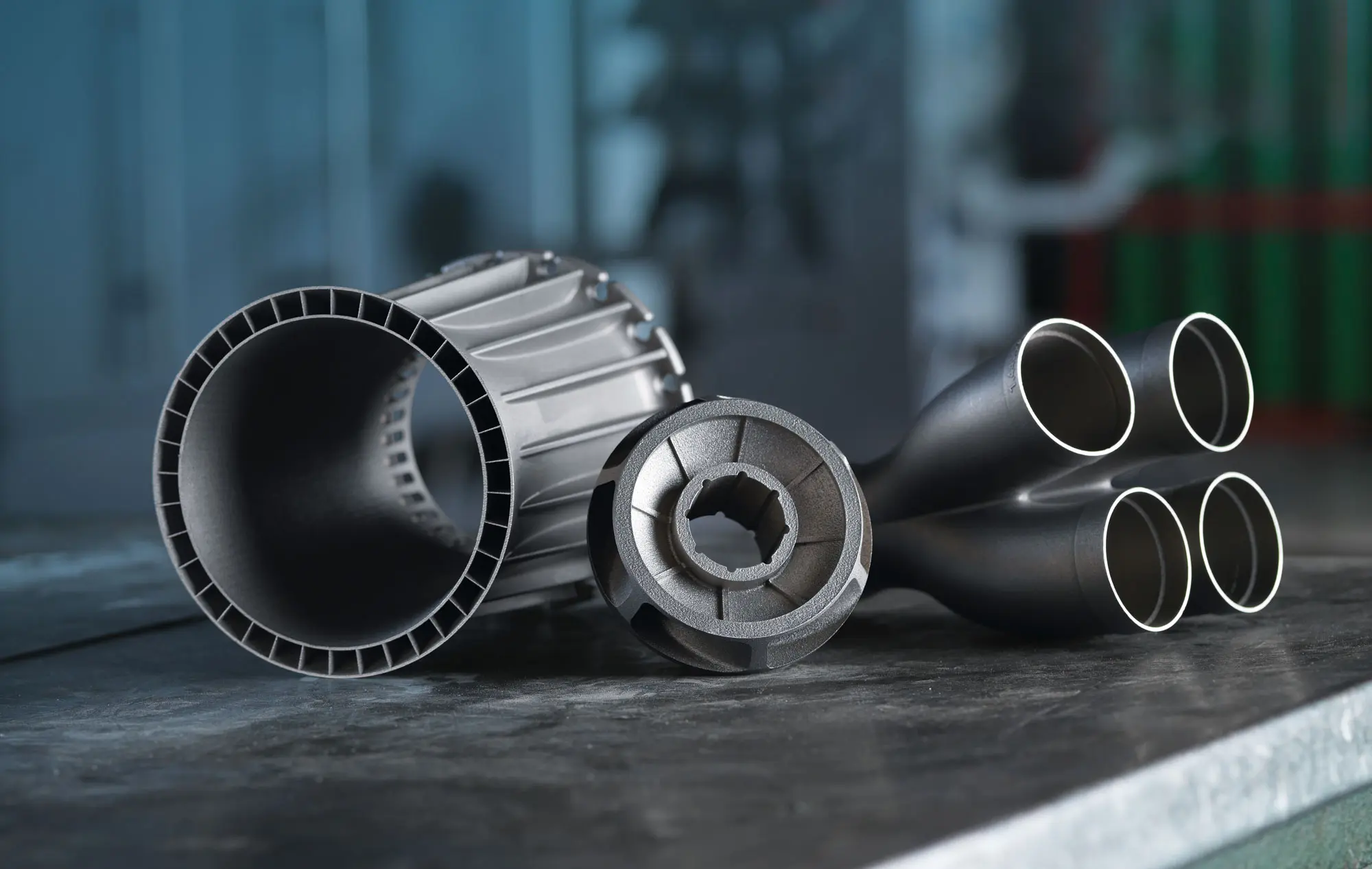
- Production: Processes such as Selective Laser Melting (SLM) precisely fuse layers of metal powder. company likes huge lightleveraging advanced SLM equipment and deep metallurgical expertise, is pushing boundaries. They tackle challenging aspects such as optimizing laser parameters (power, speed, hatch spacing) and precise chamber atmosphere control (oxygen levels critical for titanium) to produce high-integrity metal parts.
- Key factors: Metal printing presents unique challenges. Internal stresses generated by rapid heating/cooling cycles can cause warpage and require computational simulation (process modeling) to compensate. Achieving high relative density (>99.5%) is critical – any porosity will affect strength.
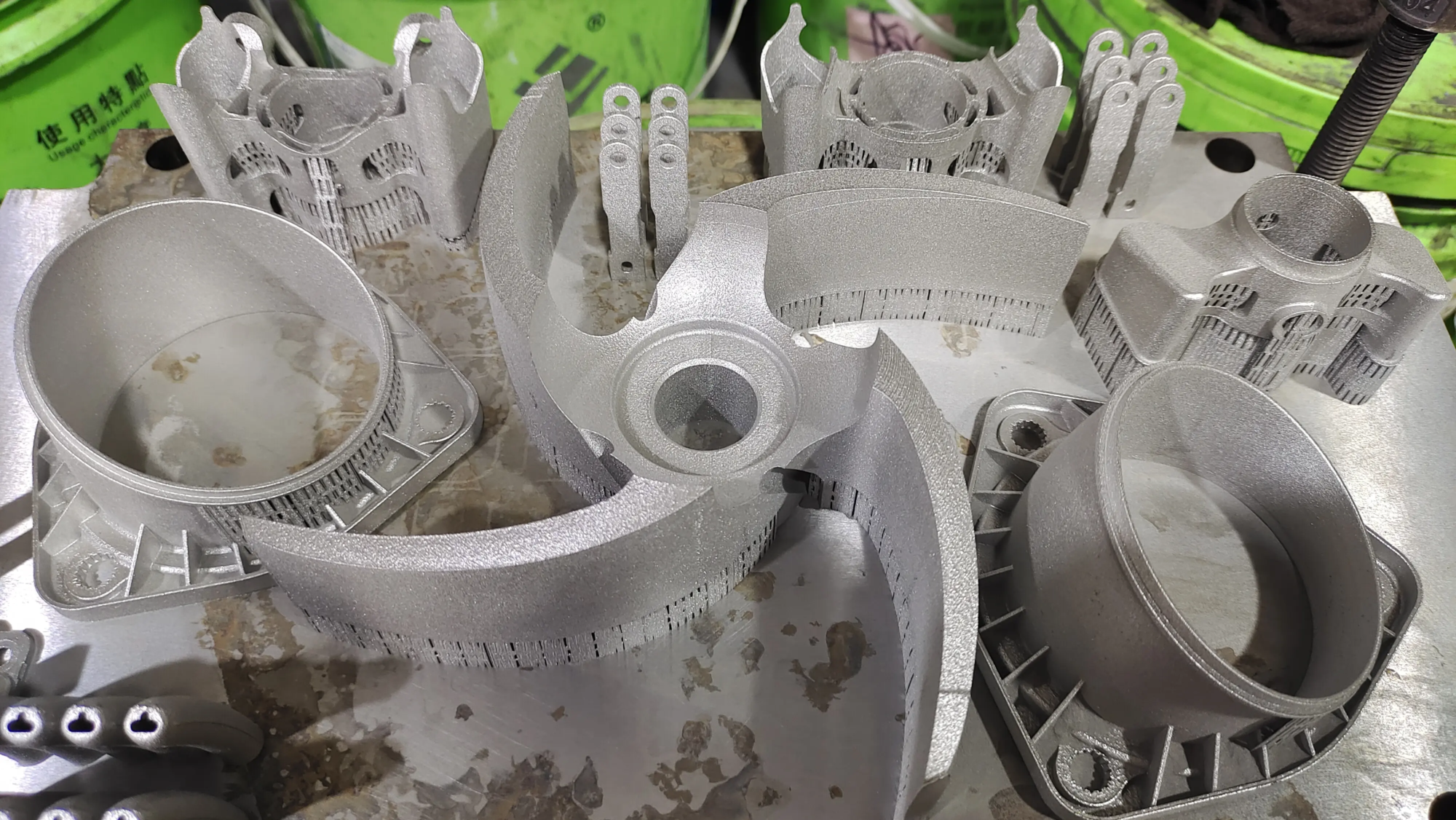
- Key enhancements: post-processing: The original print is not ready yet. Post-processing is crucial and requires a lot of expertise:
- move: Cleverly separates from the build plate without causing any damage.
- Support removal: Carefully remove complex support structures near critical geometries such as feed lips and locking tabs.
- Relieve stress: Targeted heat treatment to eliminate internal stresses (prevent cracking under load).
- *HIP (optional but very beneficial): Hot isostatic pressing squeezes the part under high temperature/pressure, causing the pores to collapse, thereby significantly increasing density and fatigue life. Critical for high cycle parts. (GreatLight** provides this key functionality).
- Surface treatment: Smooth internal feed path/pellet track and critical external surfaces (magnetic catchers, locking lugs) reduce friction/premature wear. Technologies include barrel grinding, CNC machining interfaces, and electrochemical polishing.
- Function: Properly printed and machined metal magazines able Close to OEM functionality, durability and reliability. The feed lip withstands circulation significantly better. Anti-fatigue ability is greatly improved. This is suitable for serious prototyping and niche applications that require custom metallurgy/geometry beyond standard products.
- cost: Very high – machine time, expensive powders, intensive post-processing. Reasons include custom R&D, low-volume special applications, or exploring novel designs that would be impractical any other way.
functional gap
Even the best print magazines face inherent engineering obstacles:
- Spring force is king: The magazine spring creates tremendous pressure. Over time, continued compression weakens the spring, but improperly designed or manufactured magnets can accelerate this through friction or misalignment. The plastic body’s lack of rigidity exacerbates the spring’s weaknesses.
- Feed Lips: Achilles’ Heel: This geometry determines the timing and feed angle of the cartridge. Even slight misalignment or wear (imminent in plastic printed magazines, slower in metal magazines) can cause failure. Metal feed lips printed via SLM and precisely post-processed have the best chance of extending service life, but are expensive.
- Locking mechanism: The engagement with the magazine catch requires precise geometry and high material strength to resist deformation from repeated insertion/removal and weapon recoil. Weak materials deform very quickly here.
- Follower updates: Smooth travel is crucial. The rough printed surface inside the magazine body creates friction that can lead to sticking and failure. Post-processing is critical for metals; an inherent limitation of plastics.
- Environmental factors: Humidity, heat/cold cycles can severely degrade plastic magazines. Metal performs better here.
Grand Rapids test: Revealing vulnerabilities
notorious "grand rapids test" Demonstrates the actual weakness of DIY plastic magazines. Pick up the magazine for the top chakra. If the feed lip deforms enough to allow the bullet to slip out, or worse, breaks off completely, it fails. Many Printed Plastic Magazines Fail immediately. Metal magnets specifically designed and post-processed for this stress point are the only viable 3D printing option with the potential for repeated passes.
Important Disclaimer: Legality
This is Paramount It cannot be emphasized enough:
- Gun Control Act (GCA): Federal regulations prohibit the production of magazines larger than 10 rounds sell or distribute No manufacturer’s license. Relevant laws personal manufacturing Because gun parts are complex and ambiguous.
- State Law: Many states prohibit the use of magazines above a certain capacity (such as 10 rounds). Manufacturing or possessing a print magazine in violation of state law, whether within or outside the state, may result in severe penalties. "assist" Laws may also apply.
- Undetectable Firearms Law: If you produce a purely Plastic magazines are for centerfire ammo with no steel parts (a terrible functional idea) and federal restrictions may apply.
- National Futures Association: elongated "assault weapons" Some countries have definitions that capture magazine capacity.
- Notify yourself: Laws are constantly changing. Who are you Solely responsible Understand and comply with all federal regulations