

The final guide to 3D printing golf ball markings: precision, personalization, and performance
Golf is a sport full of tradition, but modern innovation can be reshaped even with the smallest accessories – like the humble golf markings. Once a simple plastic disc, the marking evolves into statements of personal style and function. With the rise of accessible 3D printing technology, golfers now have unparalleled freedom to design and create truly unique markers to enhance their games and reflect their personality. This guide explores how 3D printing has changed the way golf markings are and why this trend is more than just a novelty.
Why 3D printed golf markers are a game-changer
-
Unrivaled customization: Forgot the general, mass-produced mark. 3D printing unlocks endless design possibilities. Engrave your abbreviation, recreate the barrier index, combine your favorite sports team logo, or design a miniature sculpture that reflects your hobby. This level of personalization ensures that your markup is truly unique.
-
Advanced functional design: In addition to aesthetics, 3D printing also allows for complex functional functions. Design marks:
- Sliding microenvironment for easier handling
- Integrated magnets of specific strength to secure to gloves or hats
- Unique aerodynamic shape stable under high wind conditions
- Ultra-thin silhouette sitting on green green
-
Advantages of material science: Utilizing advanced 3D printing techniques such as selective laser melting (SLM), it can now be marked with advanced metals that were previously difficult to drive in traditionally difficult to drive:
- Stainless Steel 316L: Highly corrosion resistant, durable and polished to a brilliant glow.
- Titanium (Ti6al4v): Very lightweight yet incredibly powerful with a unique modern look.
- Bronze or copper alloy: Offers unique aesthetics and traditional weight.
- Engineering polymers (such as PA12 nylon): Lightweight, affordable and with bright colors – perfect for complex designs.
- Rapid prototype and iteration: Want to test for new shapes or features? 3D printing allows quick design adjustments and physical prototypes in days rather than weeks. Optimize weight distribution before final production runs, ergonomics or visual appeal perfection.
How to create a 3D printed golf marker? Technical appearance
The journey from idea to Tee-Box tag involves precision engineering:
-
Design phase: Markers were carefully modeled using CAD software (e.g. Fusion 360, Solidworks, Tinkercad). Key considerations include diameter (standard ~31-32mm), thickness (usually 2-4mm), edge chamfering to prevent green damage, and any personalized elements. The file is exported in STL or step format.
-
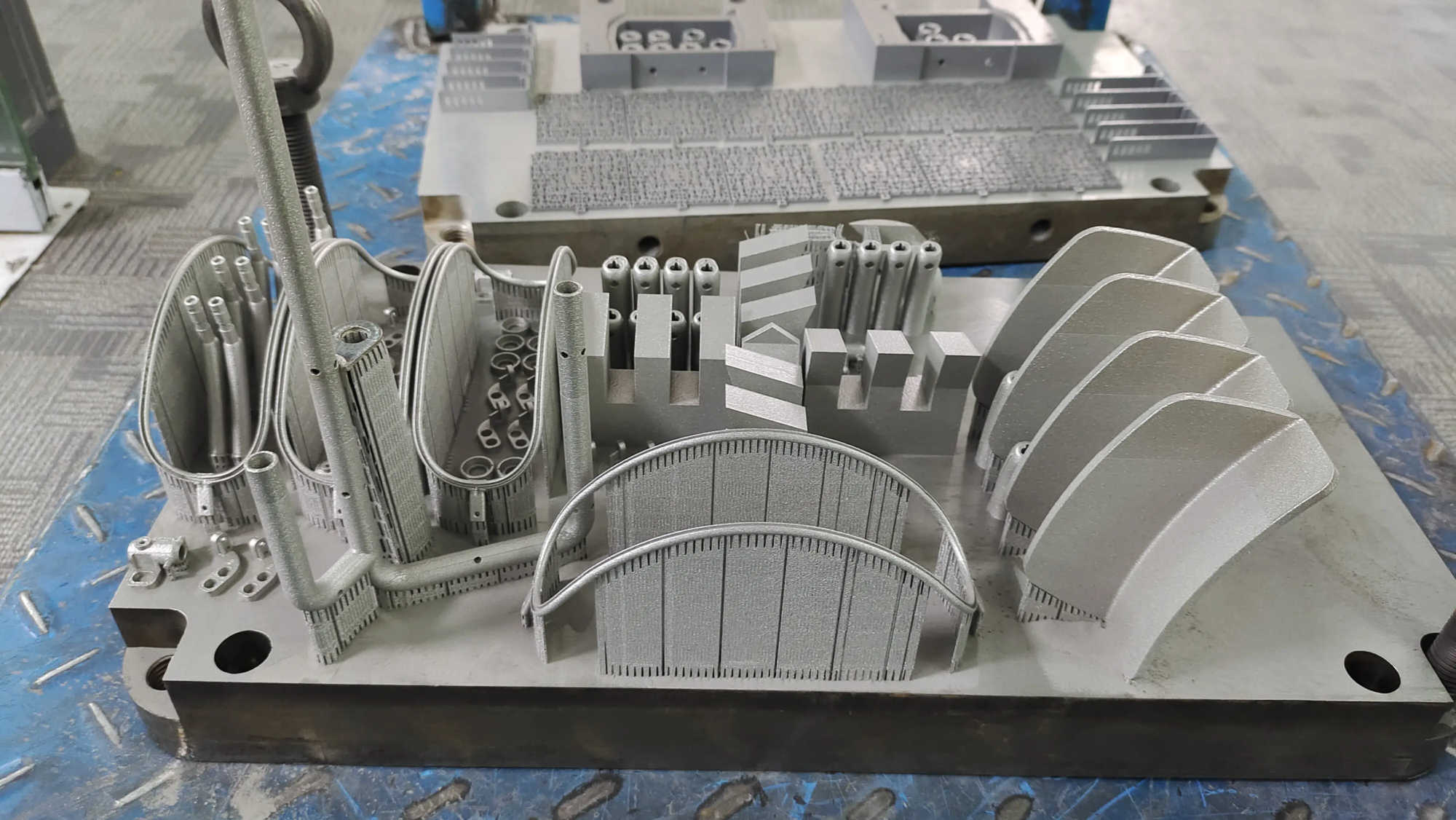
Printing technology: For premium, durable metal markings, Selective laser melting (SLM) Usually the gold standard. This industrial process:
- A fine metal powder layer atoms are fused with high power lasers.
- Creates fully dense (>99%), powerful metal parts with excellent resolution of detail.
- CNC machining may not be possible to produce complex internal geometries (for example, for magnetic inserts).
-
Materials and construction preparation: Fine metal powder (SS 316L, TI, etc.) is loaded into the printer room. The support structure is automatically generated by slicing software to secure parts and prevent warping during printing.
- Post-processing and completion: Critical improvements were made to the original printed section:
- Support removal: Usually carefully distinguished from the support by cutting or wire EDM.
- Media Explosion/Polishing: Achieve a smooth, scratch-free surface (from matte beads to mirror-coated finishes).
- Heat treatment (annealing): Relieve internal stress caused by strong heat from SLM.
- Coating/electroplating (optional): PVD coatings (such as DLC-diamond-like carbon) have additional hardness and scratch resistance, or for plating (gold, nickel) for luxury aesthetics.
Choose your perfect manufacturer: Why expertise matters
Unless you have a high-end metal printer, it is crucial to work with a professional rapid prototyping service. Here is what to look for (why Greatlight Excearls):
- Material Options: Ensure a high-quality, golf-friendly metal and finish. Greglight Lovers Advanced SLM and SLS printers, offering SS 316L, Titanium, Gronze, Copper, Pa12 nylon, etc.
- Design of Manufacturing (DFM) Feedback: Experts can highlight potential printing problems early (e.g., thin walls are prone to rupture, insufficient support, tolerance). Greatlight’s engineers provide proactive DFM reviews.
- Accuracy and tolerance: The markers are small; slight deviations make them useless. ±0.1mm accuracy is usually essential. Greatlight maintains strict tolerances (+/- 0.05mm achievable on SLM) to ensure perfect fit and functionality.
- Surface finishing options: Looking for a range – polished, matte, plated. Greatlight offers a comprehensive aftertreatment including CNC grinding, polishing, bead blasting, PVD coating, plating and custom shading.
- Speed and reliability: Prototypes should be fast; the final production run requires predictable quality. Greatlight specializes in fast, project management turnover while ensuring partial accuracy.
Why Greatlight stands out on your golf gear journey:
Greglight is one of the most important experts in China’s high-precision metal additive manufacturing industry. We don’t just print parts; we designed the solutions.
- Cutting-edge SLM infrastructure: Our fleet of industrial grade metal printers ensures the density, strength and accuracy required for durable, high-performance golf markings.
- Engineers’ support for engineers: Our team understands the nuances of 3D printing and the functional needs of golf accessories. We actively solve challenges.
- End-to-end control: From initial file inspection to final plating, all processes are managed internally to ensure consistency and confidentiality.
- Customization and scalability: Whether you need 1 prototype or 500 production units, we offer precision parts tailored to your exact specifications at the best value.
in conclusion
3D printed golf markings represent a perfect blend of tradition and technology. They provide golfers with unprecedented opportunities for self-expression through their highly personalized design, while achieving performance advantages through biomechanical optimization and advanced materials. Using processes like SLM unlocks the strength and lifespan of robust metals in unique and complex forms. Choosing a capable manufacturing partner, such as Greatlight, can ensure that your vision (whether it’s a playful miniature logo or a high-precision tournament marker) becomes a real reality with uncompromising quality. Enhance your presence on the green with custom engineering as unique as the game.
FAQ: Your 3D printed golf ball marking question has been answered
Question 1: How long does it take to get a customized 3D printed golf mark?
A: The timeline depends on complexity, materials, finishes and order quantity. Simple polymer prototypes can take 3-5 working days. Complex metal markings with electroplating can take 7-14 days. Greatlight prioritizes fast turnaround while ensuring quality.
Q2: Is the 3D printed metal marking tournament legal?
A: Yes, usually. USGA rule status tags must not be "Designed to help players with stroke." Durable metal markings with standard shapes and non-concave surfaces (which may aid in alignment) usually meet the conforming status. If you are not sure, consult specific event rules. The traditional design copied by printing is fine.
Q3: What design files are needed?
A: Start with a CAD file such as step, sldprt, iges or x_t for the best results. We also accept STL files. Make sure the design is "water proof" (No holes/gaps) is crucial.
Q4: How durable is the printed metal marker compared to CNC-processed metal marker?
A: High-quality SLM printed marks made of powder made of stainless steel 316L or titanium achieve near-full material density (>99%) and mechanical properties (strength, hardness), which can be comparable to, sometimes even more than traditionally processed parts, especially for parts of complex shapes. Surface treatment (PVD, PLATIT) further enhances scratching properties.
Q5: Can I add a magnet after printing?
Answer: Absolute. Options include bonding/inserting new magnets during the build process, embedding the magnets into a layer of metal powder during the SLM printing process, or adhering it after printing. Discuss your magnetic strength/size preferences with us.
Question 6: What is the pricing range?
A: Costs vary widely: Materials (titanium>steel>polymer), complexity (complexity = more support/time), quantity (batch discount) and post-processing (PVD/PLATINGS increase cost). A single metal prototype may start around $x, while a simplified polymer version begins around $y. Depending on your design, please contact Greatlight for a specific quote.
Ready to declare your custom golf accessories advantages?
Transform your unique concept into precise high-performance golf markings. Greatlight combines state-of-the-art SLM technology, expert engineering insights and comprehensive completion capabilities to deliver excellent results. We excel in custom rapid prototyping and precise production runs – delivering quality parts quickly and competitively. Explore possibilities and ask for your personalized quote immediately. Improve the game with metal innovation.


