Unlock customization: Revolutionize your guitar gear with 3D printed DIY accessories
The world of guitar playing thrives on personal expression – the sound, the feel, the look. However, finding a pick, capo, tuner or mounting bracket that exactly suits your style and instrument can be difficult and expensive. Enter the game changer: 3D printing. This easy-to-use technology enables guitarists and luthiers to design, iterate and create custom accessories at their workbench, pushing the boundaries of customization and solving unique ergonomic challenges. When uncompromising durability and precision are required, especially for complex metal parts, working with advanced rapid prototyping experts becomes critical.
Why 3D printing is resonating with guitarists
Gone are the days of relying solely on mass-produced parts. 3D printing offers:
- Super customized: Design a pickguard to fit the shape of an unassuming guitar, an ergonomic thumb pick that perfectly conforms to the contours of your fingers, or custom knobs that reflect your band’s logo – the possibilities are endless.
- Cost-effective solution: The cost of trying out ideas is low. Quickly print prototypes to test fit and functionality without wasting expensive materials. Economically replace small, easily lost parts (such as tremolo arm tips or selector switch covers).
- Accelerate innovation: Dreaming of a unique pedal organizer or a novel winding design? CAD software allows you to design, and your printer lets you do it in hours, dramatically speeding up the design-test-perfect cycle.
- Problem solved: Restore vintage guitars whose original parts have disappeared, create aids for players of varying abilities, or design specialized tools for setup and modification.
- Personalized aesthetics: Express yourself with vibrant colors, intricate patterns, clear materials, and even glow-in-the-dark filaments to create a truly unique stage rig.
You can make popular and functional guitar accessories (DIY Spotlight)
- Picks and Thumb Picks: This is a fantastic starting point. Feel free to experiment: vary thickness (from ultra-thin jazzy to thick bass pick), shape (standard, pointed, rounded, asymmetrical), texture (smooth, grippy pattern) and material hardness (PLA, PETG, TPU). TPU (Flexible Filament) is ideal for comfortable thumb picks that both grip and bend.
- Bosses: Design a simple C-clip style capo or a complex rolling capo. Key considerations: consistent pressure distribution to avoid fussing (use TPU pads!), ergonomic lever design and lightweight construction (PLA, PETG great for prototyping). Metal springs or clamps can still be integrated with the printed body.
- Knobs and Control Covers: Replace worn knobs with custom-designed knobs that match your aesthetic. Create a custom pickup selector switch tip or unique control cavity cover. PETG has good impact durability.
- Tuners and pegs: Design decorative tuning peg heads or specialized string winders (hardware components like bearings or gears can be added along with the printed part). Strength near the column is critical – the final part may require metal or reinforced nylon.
- Pedal organizer: Customized mounts and brackets to secure pedals, power supplies or jumpers. Design complex shapes that are impossible with traditional manufacturing. PETG or ABS has good rigidity and impact resistance.
- Tremolo arm/bridge assembly: Replacement tips for arms or specific non-load-bearing bridge components enable rapid prototyping. Crucially, structural components subjected to tension (e.g. saddles, stop arms) require extremely high material strength and precision – often requiring metal solutions.
- Special tools: String action gauges, special rulers for setup, clamping fixtures for backgraining, pickup mounting rings for experimental positioning.
- Various: Slide extenders, pick holders, headstock accessories (e.g. logo plate), strap locks (non-load-bearing decorative elements only).
Choosing Materials: From Prototype to Performance
- PLA (polylactic acid): Easy to print and rich in colors/tones. Great for tuner knobs, trim pieces, pick prototypes, templates. Disadvantages: Becomes brittle over time, sensitive to heat and moisture. Avoid structural or stressed parts.
- PETG (polyethylene terephthalate): Excellent balance of strength, flexibility (exceeds PLA), impact resistance and temperature elasticity. Better moisture resistance than PLA. Ideal as knob covers, cable holders, pedal organizers, grip-enhancing picks, prototype capo bodies.
- TPU (thermoplastic polyurethane): Flexible and elastic. Essential for a comfortable hold on picks, thumb picks, capo pads, strap locks. Provides shock absorption. Great for ergonomic components.
- nylon: Extremely strong, tough, wear-resistant, flexible and chemically resistant – ideal for demanding applications such as replacement gears within tuners or durable function clips. A powerful printer and careful setup are required.
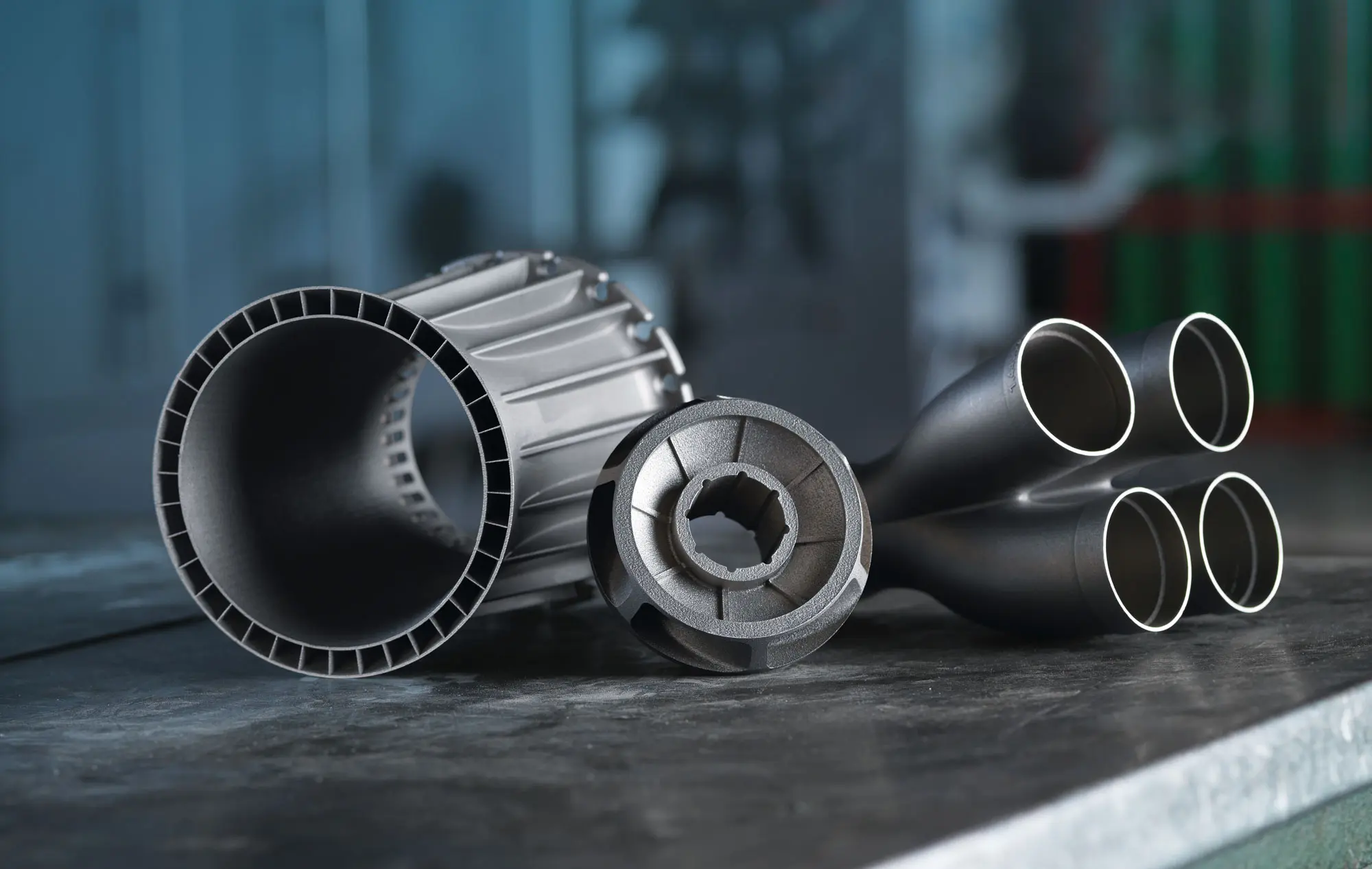
- Metal: The Gold Standard for High Stress/Precision Parts: When DIY Plastics Reach Their Limits – For Tremolo blocks, bridge saddles, high-tolerance tuner components, rugged strap buttons, or complex internal hardware – Metal printing intervention. But achieving true structural integrity requires industrial-grade processes and materials well beyond the scope of desktop FDM printers.
Combining DIY potential with professional metal solutions: GreatLight rapid prototyping
Not all guitar accessory dreams stop at plastic. Critical components facing high tension, precise alignment requirements, or extreme durability needs Metal.
This is where working with a professional rapid prototyping manufacturer becomes invaluable. company likes huge light Specialized in solving these complex material and precision challenges.
Imagine making it by hand:
- Lightweight yet extremely strong titanium tremolo block, an exact replica of the vintage component.
- Custom aluminum locking tuners feature a unique knob design that optimizes feel.
- The stainless steel bridge is engineered to perfectly transmit string vibrations.
- Complex custom guitar hardware requires CNC-level precision, but complex geometries are not amenable to milling.
GreatLight excels in metal rapid prototyping:
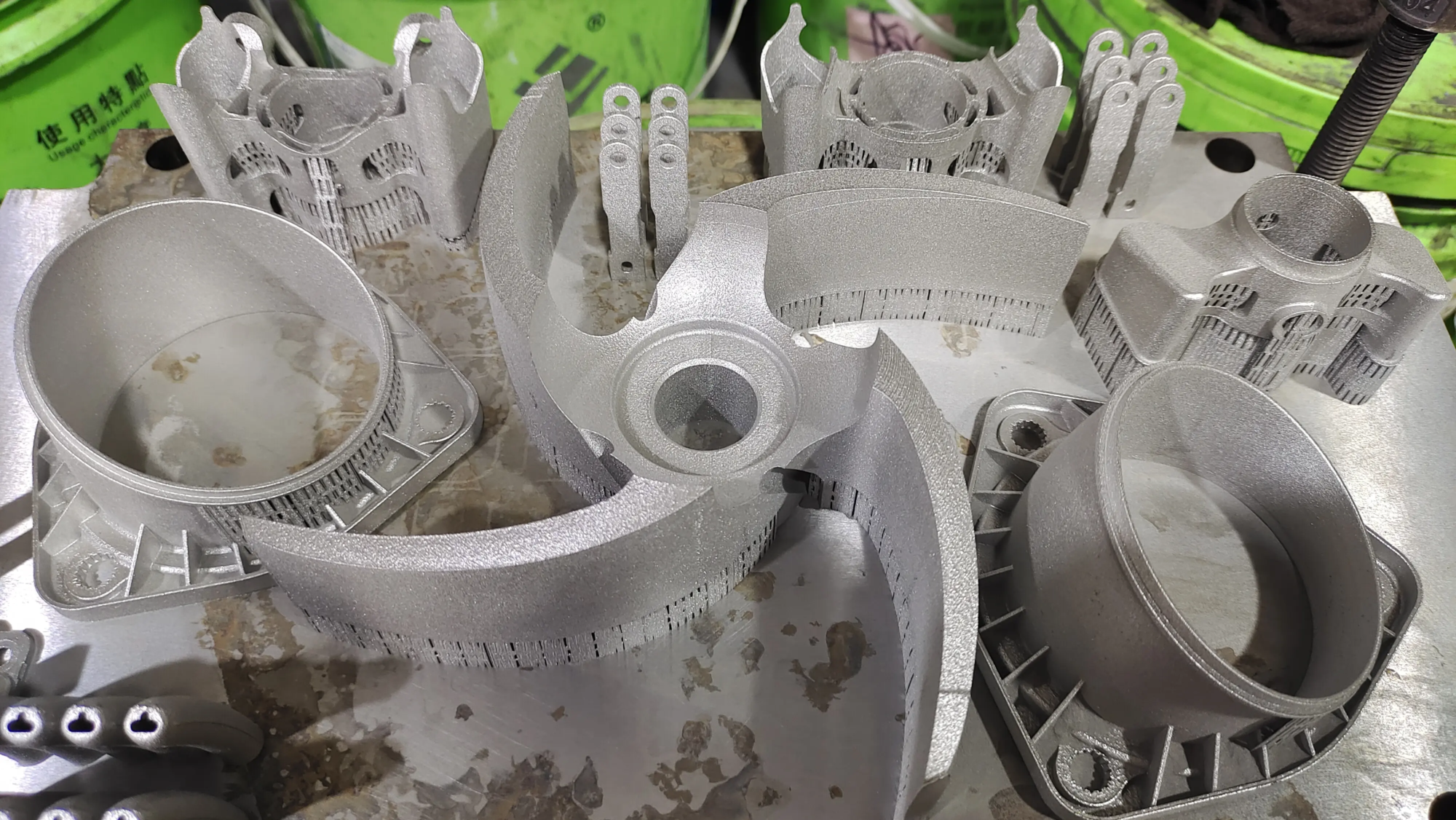
- Advanced SLM technology: Their Selective Laser Melting (SLM) printers create dense, fully functional metal parts directly from CAD data, unlocking geometries not possible with traditional CNC machining.
- Extensive materials expertise: They work with a variety of metals – Stainless Steel (316L, 17-4PH), Aluminum Alloy (AlSi10Mg), Titanium (Ti6Al4V), Inconel, Copper, and more – allowing you to choose your ideal guitar material: durable aluminum for stiffness/weight, stainless steel for corrosion resistance and tone, and titanium for ultimate strength/lightness.
- End-to-end solution: Beyond printing, GreatLight handles critical issues Post-processing: Support structure removal, stress-relieving heat treatment, CNC machining of critical tolerances (e.g. bearing housings), surface finishing (e.g. polishing, sandblasting, anodizing), and thorough quality inspection. This ensures the final part meets precise specifications and is truly stage-ready.
- Speed and customization: To meet demanding prototyping schedules, they speed up design verification and effectively close the gap to low-volume production. Every aspect from design optimization support to material selection is customizable.
- Accuracy guaranteed: With professional-grade equipment and expertise, GreatLight delivers the dimensional accuracy and repeatability necessary for reliable instrument parts. They are widely regarded as one of the leading rapid prototyping companies in China.
Whether you’re iterating on prototypes of innovative hardware concepts or producing low-volume, boutique-grade guitar components, GreatLight provides a reliable metal foundation that DIY printers can’t replicate.
Conclusion: Building your sonic future layer by layer
3D printing has brought about a quiet revolution for guitarists. It turns DIY tinkering into complex customization, allowing players to solve unique problems, optimize the ergonomics of their gear, and express themselves visually. From printing unique picks and capos at home to prototyping complex mounting hardware, the technology is capable of doing things like never before.
For accessories that require metal strength, precision and longevity (critical for sound transmission and reliable performance), work with a specialist rapid prototyping manufacturer, e.g. huge light is an important next step. Their mastery of SLM metal printing and comprehensive post-processing ensures your most ambitious high-performance guitar components become a reality.
DIY desktop printing and professional metal fabrication combine to provide unprecedented creative and functional control. Your ultimate guitar setup isn’t just purchased, it can now be carefully designed, prototyped, tested and perfected by you. Embrace the toolbox of the future and start crafting your signature sound.
FAQ: 3D Printed Guitar Accessories
-
Can I really print something strong enough to make a guitar from?
- it depends! Many non-structural components (knobs, pick holders, covers, templates) work perfectly with strong filaments such as PETG, nylon or PET-CF. Objects under tension or pressure (such as tuner gears, bridge saddles, tremolo arms) Need metal printing Get reliable performance with services like GreatLight. Only use plastics for low-stress applications or rapid prototyping.
- PLA/PETG guitar knobs: secure fit? Yes.
- PLA saddle: absolutely unsafe.
-
Is 3D printing guitar parts cost-effective?
- Absolutely. Replacing missing small parts (knob tops, flutter tips) becomes very cheap. Prototyping of complex designs eliminates expensive tooling/tooling costs. Avoid high custom shop fees by printing unique, personal items. For one-off products like prototypes or low-pressure aesthetics, it’s unbeatable.
- What are the best 3D printer filaments for guitar accessories?
- Prototyping/Featured/No Pressure: PLA (easy to use).
- Functional parts/semi-structures: PETG (optimal balance), ABS (requires ventilation), ASA (UV stabilized),