A Revolution in Turbomachinery: A Comprehensive Guide to 3D Printed Impeller Design
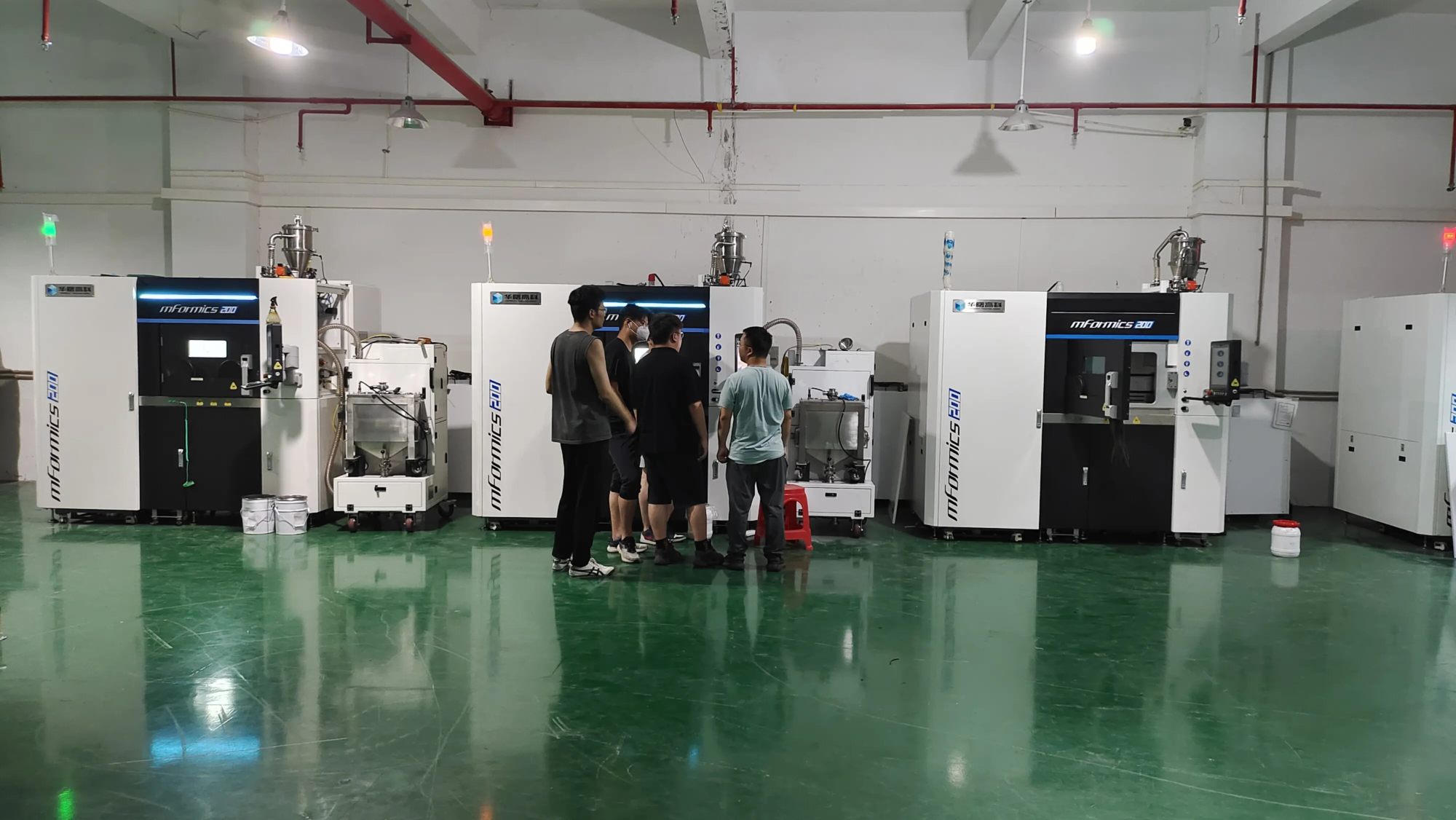
Impellers are at the heart of countless fluid systems. From aerospace turbine pumps and industrial compressors to medical equipment and marine thrusters, these rotating components are responsible for transferring energy to fluids—effectively accelerating, pumping or mixing them. Their performance directly affects overall system efficiency, noise levels and longevity. Impeller design has traditionally been limited by traditional manufacturing, but has undergone a dramatic transformation thanks to additive manufacturing (AM), specifically metal 3D printing. This guide delves into the intricacies of designing an impeller specifically for 3D printing, unlocking the potential for unprecedented performance and innovation Struggling with complex geometries? GreatLight leverages advanced SLM (Selective Laser Melting) 3D printing technology to liberate your designs, enabling complex internal channels, optimized blade profiles, and lightweight structures simply not possible with milling or casting.
Why 3D printing is changing impeller manufacturing
Impeller steering additive manufacturing is driven by its unique capabilities:
- Geometric degrees of freedom: Get rid of the constraints of subtractive processing. Design complex blade shapes including variable curvature and thickness, integrated internal cooling channels, conformal lattice structures for lightweighting, and optimized hub geometries without the need for expensive tool segmentation or inaccessible undercuts.
- Performance optimization: Use computational fluid dynamics (CFD) and topology optimization software to create superior impellers with truly aerodynamic or hydrodynamic performance. Additive manufacturing allows these optimized shapes to be manufactured with few changes to the digital model.
- merge: By integrating multiple components (e.g. blades, hubs, diffuser sections) into a single solid unitary part, the need for assembly is eliminated. This reduces potential leak paths, assembly errors and overall system complexity.
- Prototyping speed: Quickly iterate on design variations for functional testing or performance verification. Compared with traditional manufacturing, the development cycle is significantly compressed.
- Complex internal features: Integrating complex internal cooling channels directly into the impeller structure for temperature management or internal flow modification – a game changer for high temperature applications.
- Material efficiency: Additive processes produce minimal scrap compared to subtractive machining of solid blanks.
Key design considerations for 3D printed impellers
Designing for additive manufacturing needs to adapt to traditional rules while embracing new possibilities. Prioritize these key aspects:
- Blade geometry optimization: Go beyond traditional wing shapes. Use CFD early to optimize blade angular distribution (entry/exit angle), curvature (radian), thickness distribution and twist. Designed to achieve smooth transitions, minimize flow separation and turbulence, maximize hydraulic efficiency and minimize cavitation risk. Advanced techniques such as blade element momentum theory or surrogate modeling can iteratively guide this optimization.
- Wheel design: The hub connects the blades to the shaft. Balance strength requirements by minimizing weight and inertia. Innovation through optimized internal lattice structures, integrated shaft connection features such as splines or keyways, and aerodynamic contours of surfaces. Ensure sufficient stiffness to prevent blade deflection under hydraulic loads.
- Critical radii and fillets: Eliminate sharp corners! These concentrate stress and are difficult to print cleanly. Use generous fillet radii where the blade intersects the hub or shroud surface and at the leading/trailing edges of the blade. Large radii (typically R>2mm) significantly reduce stress concentrations, improve fatigue life, enhance flow characteristics, and make it easier to print reliably. Sharp corners are hot spots for failure.
- Wall thickness: Determine the minimum and nominal wall thickness appropriate for your material and load. Avoid extreme variations – thick parts can cause excessive residual stress and warping, while ultra-thin parts can be difficult to print without defects or warping. Consider process capabilities when defining blade and hub thickness.
- Support structural strategies: Overhanging features below the critical angle (usually about 45 degrees from the horizontal for SLM) require temporary support structures. Integrate support needs early:
- The lower surface of the blade (especially near the hub) and complex internal features may require support.
- Strategically design support contact points – minimizing contact area but ensuring adequate anchorage.
- Set up a manageable support removal process – Electrical discharge machining (EDM) can often handle challenging locations. Breakaway supports require accessible pullout paths.
- Shield integration: Closed impellers require shroud surfaces. This surface is designed with fluid flow constraints and manufacturability perspectives in mind. Balance ribs or webs within a closed volume provide rigidity without unduly adding weight. Open impellers require careful design of the blade tips close to the casing clearance.
- Stress concentration: Use finite element analysis (FEA) early and often, especially modal analysis and centrifugally/hydraulic loading stress analysis. Pay close attention to the blade root fillets, hub transitions and shaft interface areas. Iterate the geometry to reduce peak stresses.
- Post-processing precautions: Specify critical surfaces that require levels of dimensional accuracy or surface finish that exceed typical additive manufacturing capabilities. Includes machining allowances on features such as shaft bores, sealing surfaces, or balancing surfaces. Communicate these requirements clearly to your manufacturing partners. GreatLight’s integrated approach leverages our advanced post-processing capabilities (CNC machining, precision grinding, polishing, balancing) to deliver production-ready impellers that meet the tightest tolerances directly from our factory.
- Balancing considerations: Consider rotational balancing requirements early. Mass-reducing removal locations should be designed to be accessible and usable within symmetry constraints. Consider integrating sacrificial bosses specifically for balance purposes.
Material Selection: Matching Metal to Mission
The operating environment determines the best alloy:
- Stainless steel 316L: First choice for excellent corrosion resistance as well as good mechanical properties and printability. Suitable for most industrial pumps, marine propulsion pumps and chemical handling applications.
- Titanium alloy (Ti6Al4V/ELI): Excellent strength to weight ratio