The Rise of DIY Adventure: Build a 3D Printed Jeep to Dominate Off-Road
Imagine you’re speeding down a rocky trail in your Jeep Build it yourself – Instead of using wrenches and welding guns, use cutting-edge digital design and additive manufacturing. What was once science fiction is quickly becoming reality. 3D printing technology, especially advanced metal printing, opens up unprecedented possibilities for automotive enthusiasts and professionals. dream? Create a rugged, performance-driven off-road vehicle completely tailored to your terrain and ambitions. This blog takes a deep dive into the exciting world of 3D printing your own Jeep components and explores how this revolution is reshaping off-road customization.
Why 3D printing a Jeep is not only possible, it’s revolutionary
When printing all While a Jeep frame from scratch remains largely the realm of advanced research and specialized projects due to the complexities of structural certification, 3D printing excels at manufacturing complex, high-performance components. The real revolution lies in Custom parts Push the boundaries:
- Unlimited customization: Get rid of existing limitations. Design unique suspension mounts optimized for extreme joints, custom rock sliders that double as recovery points, intricate grille inserts or lightweight mounts specifically designed to add weight to your rig setup. Your imagination is the main limitation.
- Rapid iteration and prototyping: Need a redesigned brace after a trail run? Modifying the CAD model and printing a new version overnight greatly accelerated the development cycle. This kind of agility is unimaginable with traditional CNC or manufacturing methods.
- Reduce weight without sacrificing strength: Topology optimization software enables 3D printing engineers to design parts that remove material only where it is not needed, creating geometrically complex, ultra-lightweight brackets, connecting rods, and even suspension components that rival or exceed the strength of heavier cast parts.
- Things you can’t get from revival: Replicate obsolete or impossible-to-find components to restore classic Jeeps. Scan damaged parts, digitally repair models, and print replacements in durable materials.
Core components that 3D printing excels at
Setting ambitious goals is key. Focus on influential areas:
- Custom Brackets and Mounts: Engine mounts, gearbox mounts, suspension mounts (control arm mounts, shock absorber mounts), body mounts – can be precisely adjusted and optimized.
- Professional accessories: Unique light bar mounts, custom shift knob, intricate instrument panel, specialized tool racks, reinforced recovery gear points (D-ring mounts).
- Suspension link: Combines CNC machined rod ends with custom designed 3D printed link ends optimized for weight/stress requirements. This helps prototype complex geometries for integrated bushings or unique pivot configurations.
- Air intake system and ducting: Design complex, optimized paths that are difficult to mold or extrude using traditional means.
- Prototype shell/casing: Develop custom enclosures for switches, electronics or auxiliary systems.
Navigating the maze of materials: choosing metals suitable for off-road use
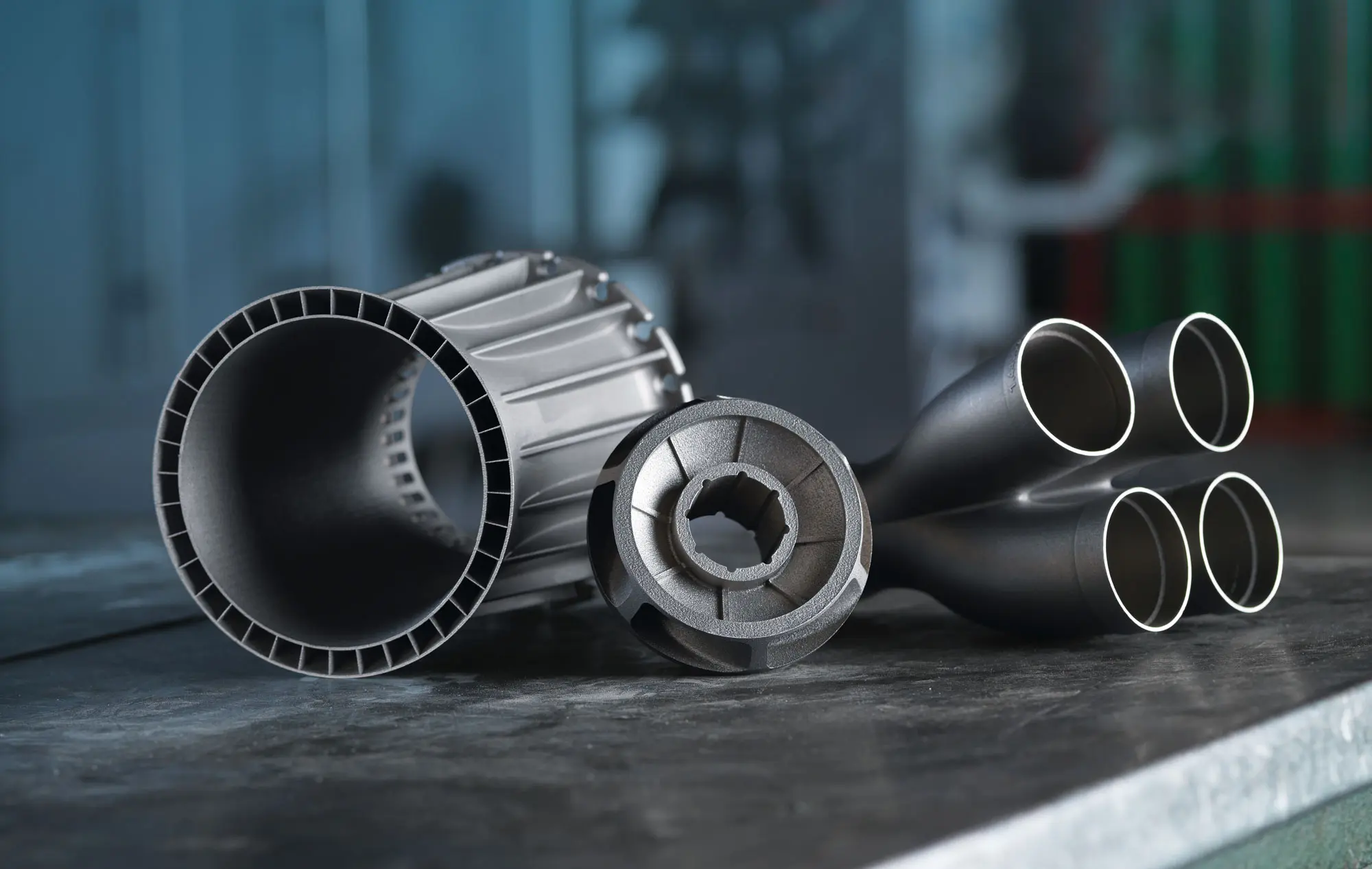
Off-roading requires toughness. Not all 3D printing materials are created equal. For critical structural and suspension components, metal additive manufacturing (AM) is non-negotiable. Polymers are suitable for decorative parts and low-stress elements, but metal additive manufacturing can unlock real performance. Crucially, choosing the right metal alloy and printing process is crucial. This is where working with specialist manufacturers e.g. glow rapid prototyping become priceless. They bring deep expertise in materials science and processing:
- Aluminum alloy (AlSi10Mg, Scalmalloy®):
- advantage: Excellent strength to weight ratio, good thermal conductivity, corrosion resistance. Scalmalloy has higher strength and fatigue resistance close to titanium.
- Guoguang advantages: Proprietary SLM printing parameters ensure the density and strength critical to brackets and mounts. Precision machining post-processing ensures a perfect mating surface.
- Maraging steel (1.2709):
- advantage: Excellent strength (comparable to heat-treated hardened tool steel), high toughness and dimensional stability. Ideal for highly stressed suspension links, recovery points and shock mounts.
- Guoguang advantages: Expertise in precise heat treatment cycles after printing to achieve optimal mechanical properties. Achieving superior surface finishing through CNC machining or polishing is critical.
- Titanium (Ti6Al4V – Grade 5):
- advantage: The gold standard in strength to weight ratio and corrosion resistance. Perfect for the ultimate lightweight critical component where cost is second only to performance.
- Guoguang advantages: Their advanced SLM system efficiently processes titanium under inert atmosphere control, minimizing oxidation and ensuring material integrity. Complex internal cooling channels within components become feasible.
- Stainless steel (316L, 17-4 PH):
- advantage: Exposed parts offer excellent corrosion resistance. After heat treatment, 17-4 PH has high strength. Ideal for corrosive exhaust components, breathers or brackets.
- Guoguang advantages: SLM can be used to create complex designs while ensuring correct formation of the passive corrosion layer through precise printing and controlled post-processing. Post-build machining allows for precise sealing surfaces.
Beyond material docking: It’s critical to choose a manufacturer that truly understands the interplay between material selection, part orientation during printing, internal lattice structure, and post-processing consequences. GreatLight’s expertise seamlessly bridges this gap.
The journey: from pixels to origins
Building reliable 3D printed Jeep components is more than just hitting the target "Print." This is an integrated workflow:
- Powerful CAD design: Start with detailed 3D modeling. Consider loads, stress points, material behavior under impact (FEA simulation) and integration points. Contact your prototyping partner early for DFAM (Design for Additive Manufacturing) recommendations.
- Precision printing: GreatLight uses Selective Laser Melting (SLM) to build your parts layer by layer in a high-performance metal powder fusion environment. SLM ensures superior density and potentially enhanced grain structure compared to older metal additive manufacturing methods.
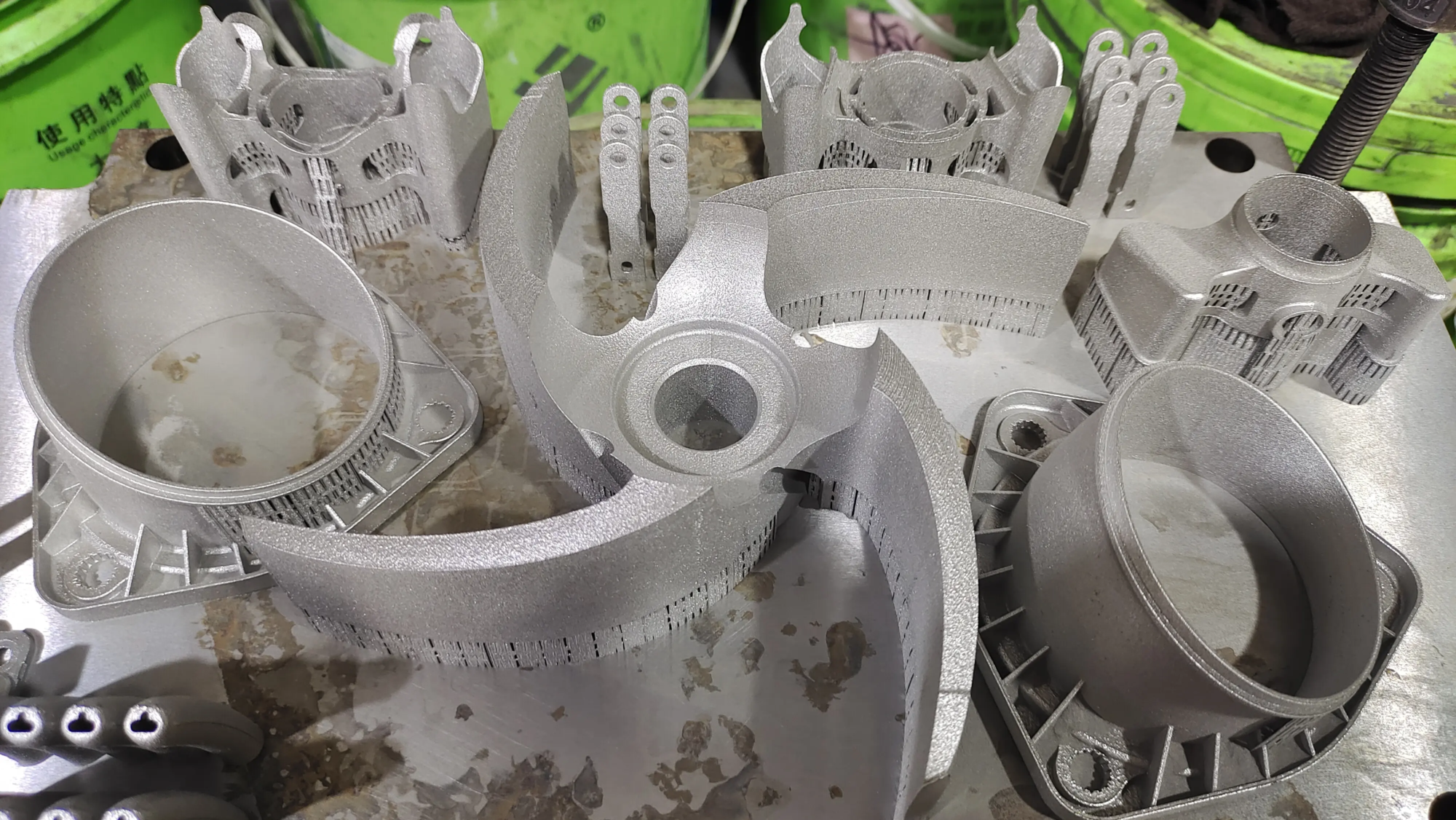
- Necessary post-processing: Original printed parts are not roadworthy.
- Support removal: Carefully remove the sacrificial support structures used during the printing process.
- Heat treatment: Stress relief, solution annealing, precipitation hardening – are critical to unlocking the strength of titanium and maraging steels and relieving internal stresses.
- Precision CNC finishing: Machining critical surfaces to precise dimensions and smooth surfaces (e.g. bolt holes, sealing surfaces, bearing surfaces). This step is required to achieve precise tolerances (commonly ±0.05mm).
- Surface enhancement: Shot peening improves fatigue resistance and polishing improves appearance or corrosion resistance and stress relieves the coating.
- Rigorous testing: It is critical to conduct static load testing, fatigue cycling, dimensional verification and destructive testing on representative samples before hitting the road. Reputable partners assist in developing appropriate testing regimes.
One-stop manufacturing: Outsourcing to a partner like GreatLight can greatly simplify this process. Instead of managing printers, powder sourcing, heat treat suppliers and multiple machine shops, you can achieve seamless integration: upload CAD files, specify materials and requirements, and receive production-ready precision parts after full finishing.
Embrace the future with eyes wide open (Challenges and Solutions)
The challenges are real, but the solutions are evolving:
- cost: Metal AM is still expensive compared to high-volume casting/stamping of simple parts. value? Prototypes, complex geometries, low-volume custom parts, and weight reduction. As the technology matures, costs are falling significantly.
- Safety: There is no room for negotiation. Full analysis (FEA) and physical testing must be performed under actual loads that exceed expected path conditions. Never compromise here.
- Certification: Full vehicle homologation of printed frames/chassis remains complex. Unless participating in a certified R&D program, the focus should be on components rather than primary structure.
- Expertise: Designing and qualifying parts requires engineering knowledge. Work closely with experienced additive manufacturing manufacturers from the design stage.
Conclusion: Your custom off-road dream is built layer by layer
3D printing the Jeep piece by piece is an exciting testament to the fusion of innovation and tradition. It enables enthusiasts to transcend the limitations of mass production and create machines uniquely suited to their vision and terrain. While printing the entire chassis awaits wider certification, practical applications in mounting solutions, suspension components