Unleashing the Potential: A Comprehensive Guide to 3D Printed Latch Design
The humble latch—a deceptively simple mechanism—is the basis for countless applications, from protecting enclosures and cabinets to locking tool boxes or custom compartments. Traditionally, latches have been manufactured via injection molding or machining, often requiring trade-offs between cost, complexity and customization. Enter 3D printinga revolutionary technology that transforms latch design and manufacturing, enabling unprecedented flexibility and speed. This guide delves into the complexities of designing, optimizing, and producing functionally reliable 3D printed latches.
Why choose 3D printed latches?
Choosing additive manufacturing has clear advantages over traditional methods:
- Ultimate customization: Need a latch for an oddly shaped enclosure? Are there any specific aesthetic requirements? Uncommon ergonomic needs? 3D printing thrives on custom designs without the high cost of tooling. Every hook angle, spring element or mounting point can be precisely customized.
- Rapid prototyping and iteration: Test multiple design variations in hours or days instead of weeks. Quickly identify weak points (such as stress points) and optimize geometry for optimal performance. This agility is invaluable in the product development cycle.
- Complex geometry made simple: Design complex internal features (such as built-in springs or complex locking mechanisms), organic shapes, or integrated hinges that are impractical or impossible to economically machine or mold.
- Small batches and on-demand production: Ideal for prototypes, spare parts, replacements or niche applications not suitable for high-volume processing. Produce exactly what you need, when you need it.
- Material Versatility: The materials used range from durable engineering thermoplastics for standard applications (e.g. nylon PA11/PA12, ABS, PETG) to metals (e.g. stainless steel 316L, aluminum, titanium) for high strength, high temperature resistance or corrosion resistance. Flexible materials such as TPU can even be used for spring components.
Key design considerations for 3D printed latches
Designing a functional latch requires careful consideration, especially taking advantage of additive manufacturing and respecting its limitations:
- Material selection: This is the most important thing.
- Function: Consider load requirements, impact resistance, stiffness vs. flexibility, operating temperature, UV exposure and chemical exposure. Is a spring action required? Choose flexible resin or TPU. Need high intensity? Look for nylon or metal.
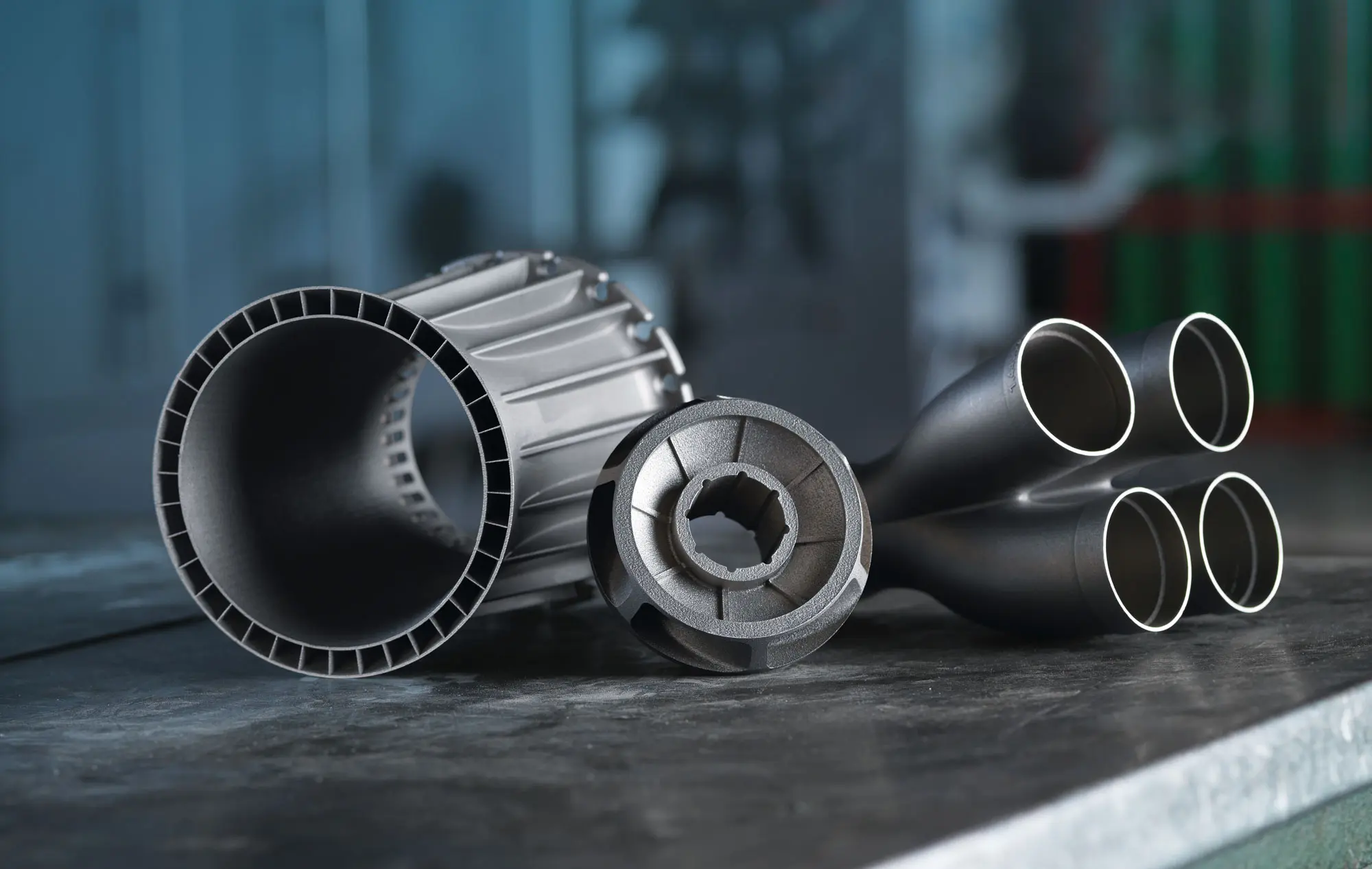
- 3D printing process: SLS (nylon) has good isotropic strength; FDM requires careful positioning; SLA/DLP provides high detail but can be fragile; metallic SLM/DMLS provides ultimate durability. Make sure the materials/services you choose support the required post-processing.
- Hinge/joint design: Pivot points are critical. Common options:
- Integrated living hinge: Designed using flexible materials (thin-walled parts) inside the lock body. Careful iterative design of bend radius, thickness and material selection is required to ensure longevity.
- Pin hinge: Traditional pin bushing arrangement. Consider pin clearance (precise tolerances are often required), bushing wear (consider material compatibility/metal pins/nylon bushings) and ease of assembly. Can miniature bearings be installed?
- Snap-on clevis connector: Utilize the snap-fit feature for assembly/disassembly. Design snap arms with calculated deflection tolerances.
- Spring mechanism: Often integrated for automatic shutdown or locking operation.
- Cantilever spring: Common and relatively simple, but design is critical for stress concentration at bends. Make sure the thickness transition is gradual.
- Torsion spring: Can be designed around hinge pins. Simulation tools are needed to accurately model the spring constants and fatigue life of metal prints. Alternatively, if space permits, prefabricated metal springs can be used.
- Flexible material spring: Use non-linear materials such as TPU directly integrated via multi-material printing or as separate components.
- Tolerances and Clearances: Additive processes have inherent tolerances and anisotropic shrinkage.
- Design mating/interlocking parts with appropriate clearance (typically 0.2mm-0.5mm depending on process/material). Undercuts and vertical surfaces often require draft angles to allow for easier printing and removal from the support. Use test prints to refine clearance fits.
- Latching mechanism details:
- Engagement angle: Ensure adequate engagement depth/hook angle for positive locking.
- Actuation (Lever/Force): Design the handle/lever to achieve adequate mechanical advantage over spring force and friction.
- LATCH SECURITY: Positive locking function (eccentric mechanism, auxiliary catch) if there is a risk of accidental release.
- Firing Pin/Retainer Design: Ensures a strong interface between the latch and retainer/firing pin plate.
- Structural Integrity and Load Paths:
- Identify stress concentration points (sharp corners, sudden changes in thickness) and use large fillets/radii to mitigate failure. It is wise to consider reinforcing high load areas.
- Design load paths so that forces act along layer lines as much as possible to achieve FDM (Anisotropy Mitigation). Metal SLM/DMLS is less affected by anisotropy. Simulation software is valuable here.
- Install: Efficiently integrate mounting bosses, slots or holes. Design screw bosses with adequate wall thickness. Through holes generally print better than blind holes.
- Directions and Support: Imagine the orientation of the latch during printing. Minimize large overhangs and critical functional surfaces requiring support to reduce post-processing efforts and maintain surface quality. Ideally, critical sealing or bearing surfaces should be facing upward or require minimal support contact.
Optimize the printing process
- Process selection: Align latch functionality/quality needs with printer capabilities and material availability. High intensity prototype? SLS metal? Complex and detailed prototypes? SLA. Low-cost functional testing? Frequency division multiplexing.
- direction: Strategically position parts:
- Minimize major overhangs requiring support.
- Position critical functional surfaces away from support contact points.
- Maximize strength by aligning critical loads (especially FDM) perpendicular to the ply lines.
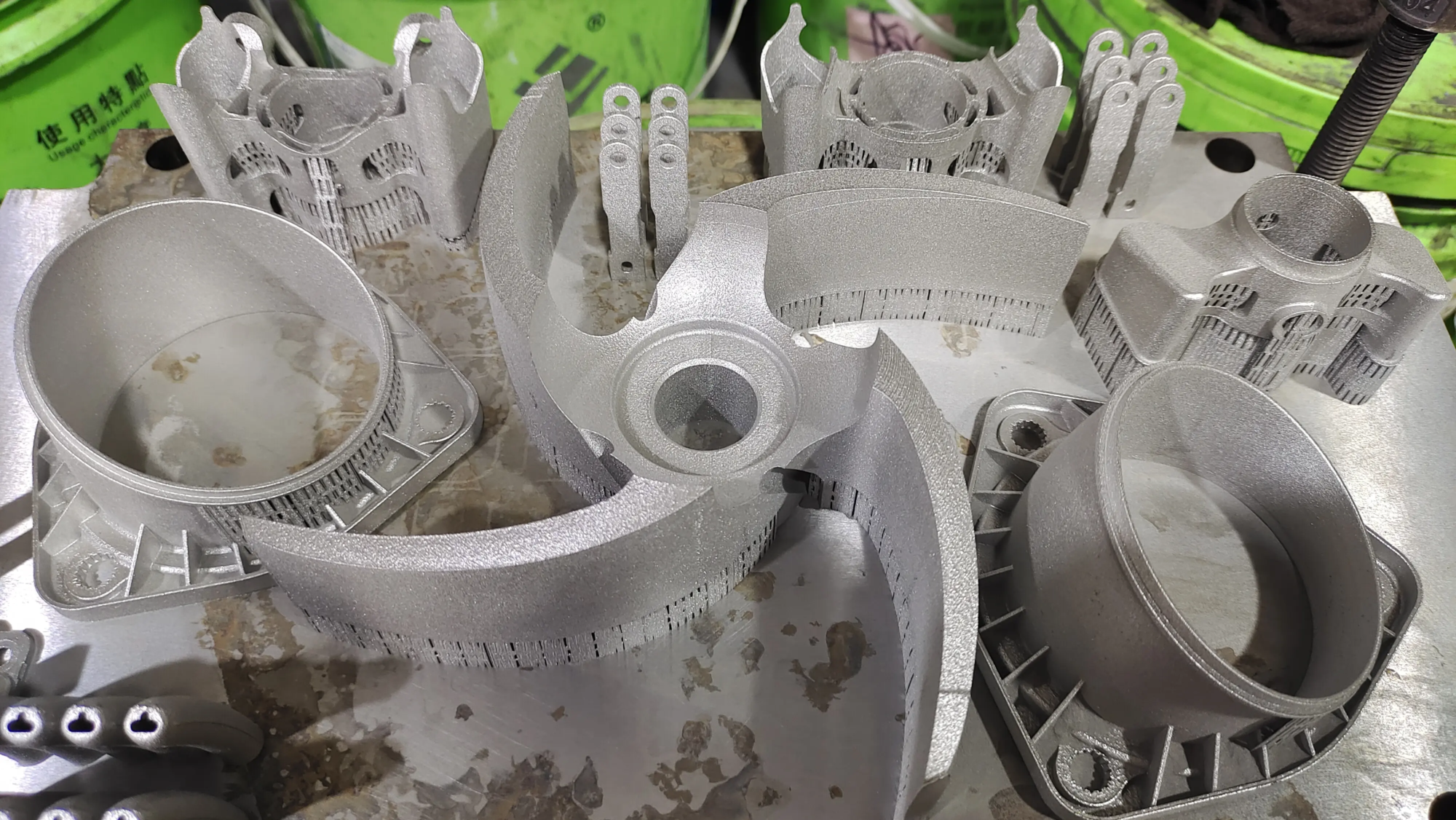
- support: Required for steep angles greater than ~45 degrees. Use as few discrete supports as possible. The sacrificial lattice structure can effectively support the complex geometries of metallic SLM/DMLS. Design features inherently minimize support requirements.
- Wall thickness: Maintain minimum wall thickness specified by material/printer to avoid brittleness. Avoid overly thick sections to prevent warping/shrinkage issues and save material/time. Effective use of fill patterns – denser fill near stress points.
Test and iterate – don’t skip this!
Your first design iteration may not be perfect. Take advantage of the speed of 3D printing:
- Print simplified prototypes to test critical dimensions and fit early.
- Print a rigid version (e.g. ABS/Nylon) to test basic geometry and strength.
- Print functional prototype parts with integrated flexible elements and hinges.
- Perform cycle testing: repeating the locking/unlocking mechanism hundreds or thousands of times to identify wear points or fatigue failures.
- Measure driving force, holding force and deflection.
- Iteration: Use test data to optimize material selection, thickness, radii, gaps and geometric details.
The power of professional collaboration
Designing and manufacturing a truly strong, production-worthy 3D printed latch requires expertise spanning design for additive manufacturing (DfAM), materials science, advanced printing techniques and precise post-processing. Partnering with experienced prototyping experts can unlock your full potential.
where is this huge light Excellent performance. As a professional rapid prototyping manufacturer with advanced capabilities including Selective laser melting (SLM) technologyGreatLight offers compelling solutions for your custom latch needs:
- Expertise: Gain a deep understanding of DfAM principles to guide your latch design for manufacturability, strength and functionality from the start.
- Advanced equipment: Cutting-edge metal and polymer printing capabilities help achieve complex geometries with high precision.
- Material mastery: A variety of engineering grade polymers and metals are available for demanding latch applications.
- One-stop solution: Comprehensive post-processing services (such as CNC machined interfacing, precision surface finishing, heat treatment, vibration polishing, anodizing, electroplating) ensure parts meet precise specifications and appearance standards.
- Speed and cost effectiveness: Rapid turnaround time for prototypes and low-volume production provide significant time-to-market advantages.
- Key points to solve the problem: Dedicated to solving complex rapid prototyping challenges professionally and efficiently.
in conclusion
3D printing enables engineers and designers to reimagine latching mechanisms. The freedom to create custom shapes, integrate features like springs and hinges, and quickly iterate unlocks performance and functionality not possible with traditional methods. Success depends on understanding material properties, utilizing DfAM principles for joint/hinge/spring design, managing tolerances, and optimizing the printing process. Crucially, rigorous prototyping and testing cycles are critical for durability. For latches that require exceptional strength, precision or complex geometries (especially metals), work with an expert prototyping partner such as huge lightequipped with advanced SLM technology and comprehensive finishing services, providing a guarantee of high-quality, functional results. Unlock the potential of custom fastening solutions; start exploring 3D printed latch designs today.
FAQ: 3D Printed Latches
- Are 3D printed latches strong enough for real-world use?
Absolutely. Strength depends largely on design, Materialand Printing process. Engineering thermoplastics such as nylon (PA12) or polycarbonate (PC) printed with SLS have excellent toughness. For the highest load carrying capacity, corrosion resistance or extreme temperatures, metals such as stainless steel 316L, aluminum (AlSi10Mg) or titanium (Ti64) printed with SLM/DMLS can be used with