The ultimate DIY guide to 3D printing amazing custom LEGO flowers
Lego’s beauty is infinite. While the LEGO Group’s own plant collection attracts builders of amazing floral displays, the world of 3D printing opens up a larger area of creativity: designing and producing your own custom Lego-compatible flowers. Forgot to look for elusive rare petal pieces – with 3D printer and some expertise, any The flowers you can imagine can become clickable reality.
This comprehensive guide dives into creating your own unique 3D printed Lego flowers, covering design considerations, best practices, secrets of post-processing and assembly tips for real professional results. Enhance your brick creativity with the magic of additives.
Why 3D printing Lego flowers?
- Unlimited customization: Create flowers that do not exist in traditional LEGO collections – unique species, alien plants or flowers in custom colors and sizes.
- Replacement and repair: Print hard to find, terminated or damaged parts for your existing plant collection set.
- Cost-effective: Printing a single professional work may be much cheaper than buying rare LEGO parts on the secondary market.
- Enhanced details: Implement complex organic shapes and textures that can be challenging to completely mimic the standard LEGO elements.
- Scale and adventure: Build huge flowers for dramatic displays or tiny flowers to make their complex micro garden perfectly suit your vision.
Phase 1: Designing Lego-compatible flowers
Success depends on the precise design. Focus on these key aspects:
-
Understand the LEGO Dimensional Standard (LDU & Stud Pitch):
- LDU: Lego Units (LDUs) are the foundation. 1 LDU = 0.4mm. Standard size (stud height, plate thickness, etc.) is a multiple of LDU.
- Stud pitch: distance center The two adjacent studs are 8.0mm. This is sacred – make a mistake, your flowers will not be able to connect safely.
- connect: Design columns on petals, stems, leaves and centers, with Lego technology pins (4.8mm of friction ridge outer diameter 4.8mm), shaft (3.2mm shaft) or shallow stud sockets (4.85mm inner diameter all have appropriate gaps/inserts). If designing from scratch, use a caliper to measure real Lego parts.
-
Utilize LEGO Community Resources:
- Ldraw Library and Parts Designer Guide: When it comes to custom parts, studying the conventions here provides valuable insight into the principles of Lego engineering (permit, tolerance).
- Existing models: Platform likes Thingiverse,,,,, Printableand cults3d The host carefully designed Lego compatible flowers (rose, tulip, lily, orchid, abstract bloom, vase!). If you print and share, always owes the credit to the designer. Inexperienced creators should start here.
- Design from scratch (advanced):
- software: Using CAD software Tinkercad (beginner), Fusion 360or Solid work (Advanced).
- Accuracy is crucial: Continuously measure the LDU and actual LEGO parts. Create tolerance test sockets/staples.
- Organic shapes: For petals and leaves, sculptural tools (e.g., mixer/ZBrush) or organic forms are required in CAD. Focus on visual appeal while maintaining printable functional and structural integrity.
- Function: Make sure the petals are stacked firmly, keeping the stems in the center, which are easily attached to the brick or base. A clever clutch that mimics Lego requires precise tolerance.
(Strategic Transition Point – Improve Results): While designing complex organic shapes in plastics, real implementation can be achieved through hobby printers Flawless Finishes, unique textures such as realistic metal stems or durability beyond standard PLAs often require professional grade equipment and finishing technology. This is where professional partners shine.
Stage 2: Printing plant bricks
Choose your technology and materials wisely:
-
Printer selection:
- FDM (Fusion Deposition Modeling): Easiest to access. Perfect for stems, leaves, large petals and vases. Small functions need to be calibrated carefully. Use a 0.4mm nozzle or smaller (0.25mm/0.3mm) for details.
- Resin (SLA/DLP): Higher details such as stamens, very small petals or highly complex sculptural flowers with intricate details on them. Creates a smoother finish from the printer. Safety precautions and post-wash/curing are required.
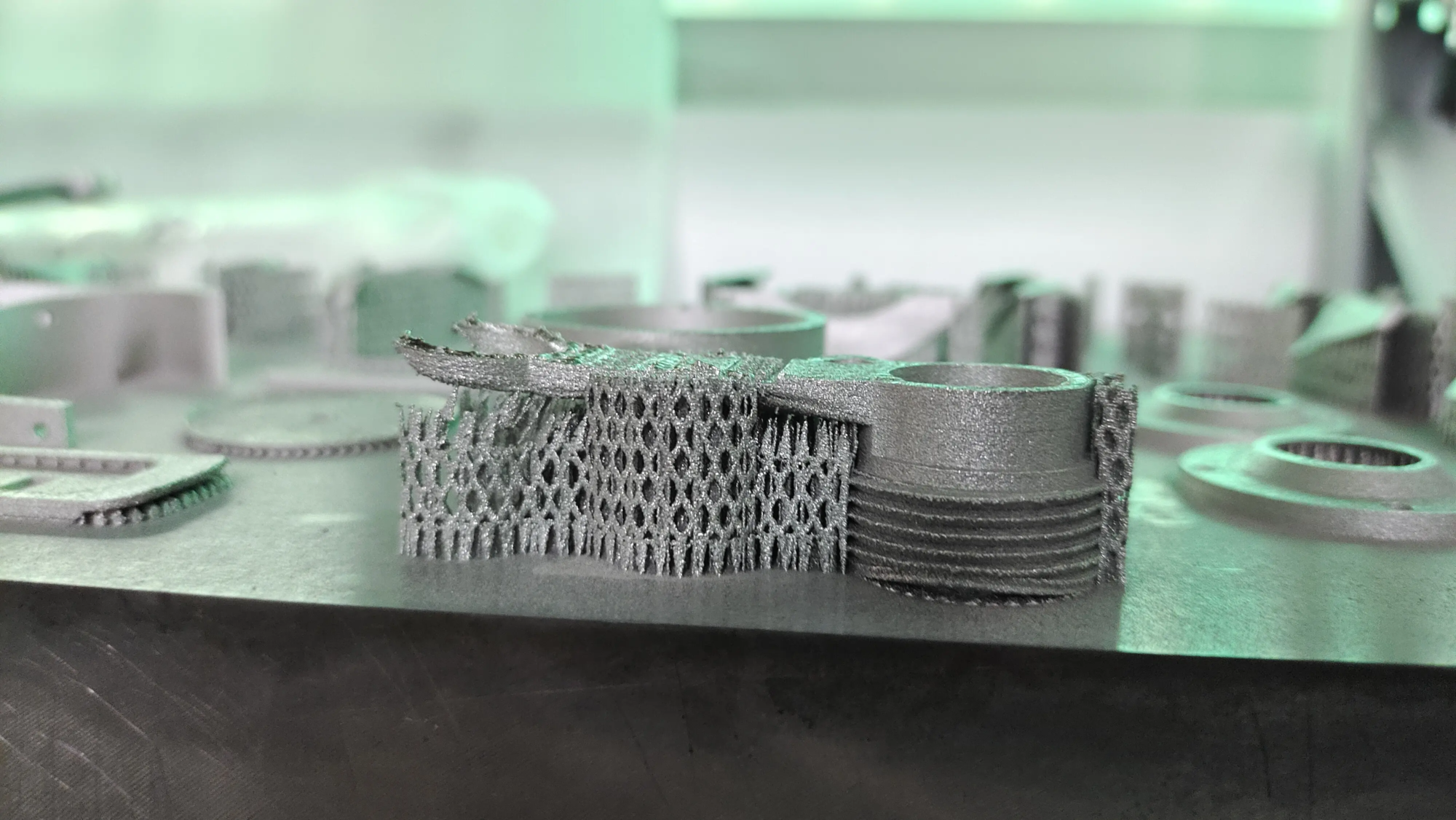
- Beyond Amateurs: For truly demanding applications that require high strength metals (such as custom structural stems or theme display racks) or advanced polymer properties, the Industrial SLM (Selective Laser Melting),,,,, SLSor MJF The printer offers unparalleled features and finishes. The company likes it Greatadvanced industrial equipment leveraging SLM printers (such as SLM printers) can produce incredibly strong, complex and unique metal components that push the boundaries of Lego flowers – think of stainless steel rose thorns or bronze art style holding stations.
-
Materials Important:
- PLA: Easiest printing, width range, biodegradable. The standard choice for most hobby flower projects. It will feel slightly fragile on thin parts.
- PETG: More powerful, more durable than PLA, with excellent impact. Better to suit curved parts, such as stems. Less color options. Need higher temperatures.
- Resin (standard/professional): Provides incredible detail and smoothness. Flexible or hard resin is suitable for curved petals/thin stems. Sunlight resistance varies.
- Engineering Materials (Professional Service): To obtain the ultimate durability, heat resistance or unique aesthetic (through the metal finish of professional painting/paint), use nylon (SLS/MJF), ABS-like resins and even materials such as nylon (SLS/MJF), and even Titanium, stainless steel or aluminum alloy (printed by SLM metal) Become feasible. This unlocks robustness, far exceeding typical home printed parts, perfect for permanent displays or demanding environments.
- Optimize Print Settings (FDM Focus):
- Layer height: 0.1mm -0.15mm, for high details of petals/stamens. Stem/Vase acceptable 0.2mm.
- filling: Petals and leaves (linear or capacity) are 15-30%. Robust stem or junction 50%+. Consider adding walls (3-4).
- Support structure: For overhangs > 60 degrees, it is crucial (bottom of the petal, complex curve). It is easier to remove using trees or organic support measures. Optimize angle/support density in slicer.
- cool down: Maximum cooling is crucial for PLA clarity. Prevent good bed adhesion (clean bed, glue stick/raft/edge) and correct bed temperature.
- direction: Minimize support by orienting parts. Print delicate stems vertically. Unless the sculpture is sculpted, the petals are printed flat for the best detail.
Phase 3: Perfect post-processing
Original printing is just the beginning. Completed appearance enhancement:
- Support removal: Be careful to steal the support. Use a rinse cutter and exquisite tweezers. Small pieces of sand that remain start at ~220 grain size and seamlessly finish at 600+.
- Grinding: FDM parts are essential. Delete layer lines through gravel (e.g. 220, 400, 600, 1000). Wet sand minimizes dust. Resin parts usually require less polish.
- Start and Painting:
- Use plastic-specific fine-filled primer spray. Lightweight jacket.
- Apply acrylic model paint (the spray gun is great for smoothness and the brush will work too). A thin coat prevents covering details. Primer layer first.
- Consider washing and dry brushing to increase the depth and sense of reality of the petals/leafs.
- Smooth (Advanced):
- FDM: Carefully apply solvent vapor (e.g. cold acetone vapor from abs/asa – Be extra careful) or resin-based smoothing methods are designed specifically for PLA.
- Resin: Polishing can be done with better abrasives or UV-resistant gloss/matte spray.
- Clear Coating: Protect your paint and finish. Depending on the desired effect, use a clear coat spray with matte, satin or glossy UV (matte = realistic petals, gloss = painted look).
- (For the prompt): Achieve a truly professional injection-style appearance, especially for complex shapes or harsh materials, often requires professional equipment and expertise. Industrial post-processing servicescan be done through manufacturers, etc. Greatoffers sand blue, vibrating finishes, advanced painting techniques (powder coatings, specialized metallization), precision dyeing of nylon, and professional clear coatings that usually do not get results at home. This is particularly valuable for metal parts or complex components for permanent display.
Stage 4: Assembly – Make your flowers come to life
- Test fit: Before putting in, make sure all parts – petals on the petals, stems enter the center, etc. – are properly connected. Print connection test if you design your own parts.
- Adhesive (seldom used!): Avoid using glue unless absolutely necessary to maintain playability. If essential (for example, bonding multiple printing layers to thick petals or fixing fragile resin parts), use a small portion of super glue (CA) or plastic cement designed for a specific material. Clip friction is preferred.
- Weight distribution: Large or top flowers may require weighted alkali or thicker/metal stems to stabilize. The 3D printed base is loaded with sand or coins, which works well.
- Creativity enhancement: Combine printed floral parts with real Lego elements!
in conclusion
3D printing provides LEGO enthusiasts with a breathtaking new dimension. It democratizes the opportunity to obtain an unlimited variety of floral designs, pushing the boundaries of creativity beyond the shelf of the official plant collection. From downloading your first tulip model to mastering carved orchids or designing intricate alien blossoms, the journey makes just as meaningful as stunning results.
While enthusiast printers are good at standard plastic flowers, remember that industrial capabilities exist to further your vision. Whether you need unparalleled realism, extreme durability, custom nature of unique metals, or just a professional-grade finish to enhance plastic petals, specialized rapid prototyping manufacturers (e.g. Great have Advanced SLM metal printing technology, precise processing expertise and comprehensive post-processing services Solve demanding challenges. They quickly and effectively transform complex concepts into high-quality functional components – including extraordinary LEGO-compatible creations. Explore customization options to make your LEGO flower shop truly memorable. Your perfect custom bouquet is just a design!
FAQ: 3D printed Lego flowers
Question 1: Is 3D printing of LEGO compatible parts legal?
A: Yes, printed parts that are functionally compatible with Lego bricks are often considered legally used in personal use where the patent doctrine expires. You are copying Function (Size of clutch system) Not protected vision design (such as Minifigs or unique copyrighted shapes). Sell prints LEGO’s actual design (Copy Minifigs, sells printed parts, depicting the official set logo/shape) Infringement of copyright/trademark. Create your own The original Designs that are functionally compatible with Lego are generally acceptable and can be practiced extensively.
Q2: What is the best budget printer for Lego?
A: For beginners, a well-tuned FDM printer like the Ender 3 V3 SE/KE or Any Cubic Kobra 2 can produce excellent results, especially for stems and simpler flowers. For the superior details of small, sophisticated petals/stamens, an entry-level resin printer like the Anycubic Photon Mono 4K/M5S is a great choice. Prioritize comments that focus on detail and reliability.
Question 3: My design is incredibly complex, but my home printer keeps failing. Is there any choice?
Answer: Absolutely! This is the main situation of professional rapid prototype services. The company likes it Great Specializes in the use of industrial complex geometric shapes and demanding material requirements SLMSLS and MJF printers. They provide expert guidance, support production, printing and the necessary professional finishing to bring your challenging plant vision to life and achieve reliable, high-quality results.
Q4: My print floral connection is too loose/tight. How to solve tolerances?
Answer: Tolerance is the key!
- Too loose: In your slicer, enable "Horizontal hole expansion" (or similar function) and enter Negative Values (e.g. -0.05mm to -0.1mm) to make the hole smaller/post larger.
- Too tight: use Positive The value of horizontal pore expansion makes the pore larger. Light polishing of columns/holes can also be fine-tuned.
- Always print small tolerability test pieces first! For standard LDU connections, the optimal clearance rate is usually +0.1mm to +0.2mm.
Q5: Do I have to draw my flowers?
Answer: No! Many filaments have beautiful colors. You can design flowers using different color prints. However, painting allows gradients, realistic effects and unique wire mesh effects that are often not possible. Starting and painting also helps smooth the FDM layer lines.
Question 6: Can I use 3D printed flowers as part of the official LEGO idea submission?
A: This is very tricky. While printing prototypes are common, LEGO Thought Guide National Submissions must use real LEGO Elements possible. Unique mechanism with a single custom printed part possible It’s acceptable with the LEGO element, but a fully printed flower is likely to be rejected. Best for personal display or MOCs displayed through other channels. Always check out the official ideas rules for the current policy.
Q7: Can I 3D print metal Lego flowers?
Answer: Yes! Metal 3D printing (such as SLM used by Greglight) Makes a strong, unique metal assembly feasible. Imagine that stainless steel or titanium stems, bases or decorative elements merge with plastic petals to form a sharp contrast. While it may be too expensive for a delicate flower throughout, metal printing is excellent in structural parts or key parts that require excellent durability or quality aesthetics – ideal for permanent art installations or high-end custom displays.