Rediscovering play: the art of making 3D printed LEGO skeletons
Hey fellow makers! Have you ever felt restricted by the official LEGO catalog? As a lifelong LEGO enthusiast turned 3D printing enthusiast, I started a new field: design and printing Customized Lego Skeleton Breathe life into unique architecture. Forget hunting for rare minifigure parts – imagine summoning glow-in-the-dark skeletons or armored warriors straight from the printer. In this deep dive, I’ll guide you through every step of blending nostalgia and innovation, while exploring how precise prototyping principles can elevate DIY projects into professional-grade wonders.
Why choose 3D printing LEGO? Beyond plastic, towards infinite possibilities
The magic of Lego is its standardization "game system," But creativity thrives when we break the rules. 3D printing shines here:
- Restore discontinued parts: Replaces broken old bones or missing knight armor.
- Super customized: Design bones with extra joints, oversized limbs for monster building, or embedded magnets.
- Material experiment: Test filaments that LEGO has never used before, such as carbon fiber-infused PLA for stiffness or PETG for flexibility.
Pro tip: Always give priority to non-commercial use and respect LEGO’s intellectual property – this is personalized creativity, not mass production.
Designed as "Lego standard": Accuracy is non-negotiable
LEGO bricks run to microscopic tolerances (as tight as ±0.002 inches). If it fails, the pieces won’t break. Here’s how to nail:
Tools and Techniques:
- software: Use CAD tools such as Fusion 360 or Tinkercad. Please refer to LDraw’s open source database for precise dimensions of bricks, studs and pipes.
- critical dimensions:
- Stud diameter: 4.8mm
- Stud spacing: 8.0 mm center to center
- Brick wall thickness: 1.5–1.6 mm
- joint physics: Ball and socket cages require the ball joints to be slightly undersized (0.2mm clearance) to avoid frictional locking.
Checkpoint: Start by printing a connector piece. Does it turn smoothly? Will it snap into standard bricks? Iterate!
Materials Science: Filament Comparison
| Material | advantage | shortcoming | most suitable |
|---|---|---|---|
| ABS | Durable and slightly flexible | Easy to deform and smoke | articulated joint |
| polyethylene terephthalate | Impact resistant and glossy | Drawing wire, lower accuracy | structural bones |
| Resin (SLA) | Pixel perfect details | Fragile and UV sensitive | decorative skull |
| Polylactic acid+ | Suitable for beginners and full of energy | Will break under pressure | Non-load-bearing parts |
Printing Process: Calibration Secrets
- Floor height: ≤ 0.1 mm for smooth seams.
- filling: 30–50% strength (no volume).
- support: Enabled for overhang >45°. Peel slowly to avoid leaving scars on the socket.
- Temperature test: Run Calibration Cube – ABS prefers 230°C bed/100°C nozzle; PETG prefers 240°C bed/75°C nozzle.
Post-processing is key:
- Sanding: Start with 400-grit sandpaper and polish with 1000-grit sandpaper.
- vapor smoothing: With ABS, acetone vapor will invisibly fuse the layers (use PPE!).
- Primer/spray paint: Prime the parts before adding the skeleton tint.
Assembly and the release of creativity
Assembling my first printed skeleton felt like a mad scientist meets a child! Ideas to enhance your build:
- Luminous power: Mix phosphor powder into resin preprint.
- magneticmodular: Embed 3x1mm magnets into pelvis/limbs for removable armor.
- scale distortion: Mega Castle Guardian’s high-end skeleton 200%.
When DIY meets industrial precision: Enter Gretel
As you perfect these skills, you’ll master them without even realizing it Rapid prototyping basics. But what if your project requires titanium drone parts or FDA-grade medical parts? This is where industrial partners shine.
GreatLight’s Prototyping Excellence
When your PLA skeleton sparks joy, pros believe huge light For mission critical prototyping:
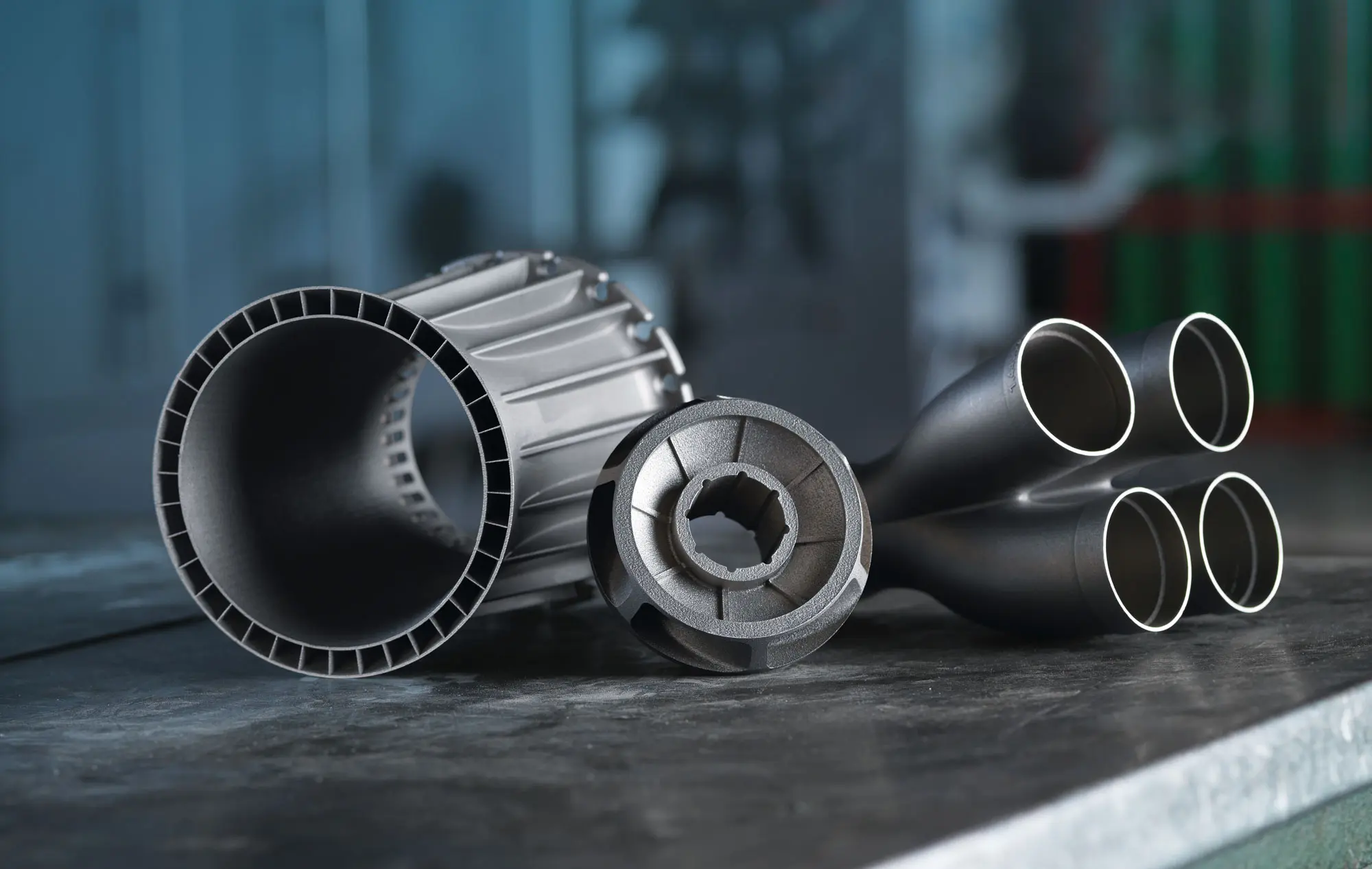
- Metal Mastery: SLM (Selective Laser Melting) printers fuse alloys like stainless steel 316L or titanium into dense, complex geometries – think aerospace lattices or hydraulic fittings.
- One-stop completion: From stress relief heat treatment to CNC milled threads or powder coating.
- Eat the edge: ISO 9001 certified workflow; material traceability; tolerance of ±0.0008 inches.
Practical use:
- A Formula 1 team prints lightweight titanium gear connecting rods overnight.
- Medical lab creates porous bone implants that mimic trabecular structure.
Why GreatLight is right for your vision: Whether you’re prototyping ergonomic tool handles out of nylon or conductive copper heat sinks, their multi-material flexibility and GD&T precision can solve problems DIY can’t.
Conclusion: Where imagination meets machine
Printing a LEGO skeleton is more than just play, it’s a gateway to understanding design constraints, material behavior, and precision manufacturing. When you iterate on a skeleton that solves joint friction or filament selection, you’re building skills that are transferable to aerospace or robotics prototyping. Remember: every great invention begins as a tinker’s dream. Keep designing, stay curious, and when your vision grows beyond the scope of PLA, industrial partners like GreatLight are ready to elevate it.
FAQ: LEGO Printing and Prototyping
Q1: Is 3D printing Lego illegal?
A: Personal/custom designs used for non-sale purposes generally fall under "Fair use." Selling LEGO-compatible designs infringes on patents – focus on original creations.
Q2: Which LEGO filament is the most durable?
A: The durability of ABS is comparable to LEGO’s acrylonitrile plastic. PETG follows closely behind. Avoid using PLA for high-wear joints.
Q3: Can a resin printer make functional LEGO joints?
Answer: Yes, but there are caveats. use "tough" or "flexible" Resins (e.g., Siraya Tenacious). Standard resin breaks under pressure.
Q4: How important is printer calibration?
Answer: Very important! A misalignment of the nozzle of 0.05 mm will cause the bricks to become misaligned. Calibrate electronic step size, flow rate, and bed leveling weekly.
Q5: Does GreatLight print consumer-grade LEGO parts?
A: Their SLM technology is specifically for aerospace grade metals and engineering polymers (PEEK, ULTEM), not hobby plastics. Ideal for functional prototypes that require mechanical rigor rather than toy reproduction.
Q6: What tolerances can GreatLight achieve compared to DIY printers?
Answer: Household FDM: ~±0.1 mm. Gretel’s SLM: ±0.02 mm Via closed-loop laser control – critical for hydraulic sealing or implanting stents.
Q7: Can I create GreatLight shards?
Answer: Of course! They support STP/OBJ files in Trolling support. Early stage projects benefit from self-optimization consulting.
Power your next project – whether it’s a fun skeleton or a turbine blade – www.greatlight.com.cn offers an instant quote. what will you Next up is a prototype? 🚀