Unlocking innovation: How 3D printing is revolutionizing linear actuator design and manufacturing
For decades, linear actuators—the basic components that convert rotary motion into precise linear motion—have been limited by traditional manufacturing constraints. While it’s ubiquitous in industries from aerospace to robotics, achieving a truly optimized design often means sacrificing performance, weight or complexity due to available tooling. Additive manufacturing (AM) or 3D printing is a transformative technology that breaks down these barriers. At GreatLight, we are at the forefront of leveraging advanced 3D printing, specifically Selective Laser Melting (SLM), to push the boundaries of what is possible with linear actuators, enabling unprecedented levels of customization, performance and efficiency.
What exactly is a linear actuator?
Consider any mechanism that requires controlled linear motion: robotic arm joints extending, solar panels deployed on satellites, valves opening precisely in medical equipment, or automated assembly lines adjusting tool heights. Essentially, what facilitates these movements may be linear actuators. Traditionally, they are manufactured using subtractive methods (CNC machining) or casting, assembling components such as housings, screws, nuts, gears and motors.
Traditional manufacturing bottlenecks
Why consider changing a well-established process? Because traditional methods bring inherent limitations:
- Complexity Cost: Complex internal channels for lubrication, lightweight mesh structures or integrated mounting features significantly increase processing time, complexity and cost. Often, the required design is simply not feasible.
- Weight Limit: Aggressive weight reduction is critical for aerospace and robotics, but is hampered by the inability to subtractively create organic, topologically optimized shapes.
- The pain of prototyping: Developing and testing novel actuator designs requires long lead times and expensive tool changes, inhibiting innovation.
- Dependencies on assembly: Multiple machined parts require precise assembly, which can lead to failure points, gaps or misalignment.
- Customization barriers: Creating custom actuators for niche applications is cost-prohibitive for traditional low-volume production.
3D printing: Redefining linear actuator production
AM, especially metal 3D printing like SLM, offers a paradigm shift:
-
Unparalleled design freedom: Forget about machining paths or formability limitations. SLM allows engineers to design extremely complex actuators:
- Internal cooling/oil channels are integrated directly into the housing.
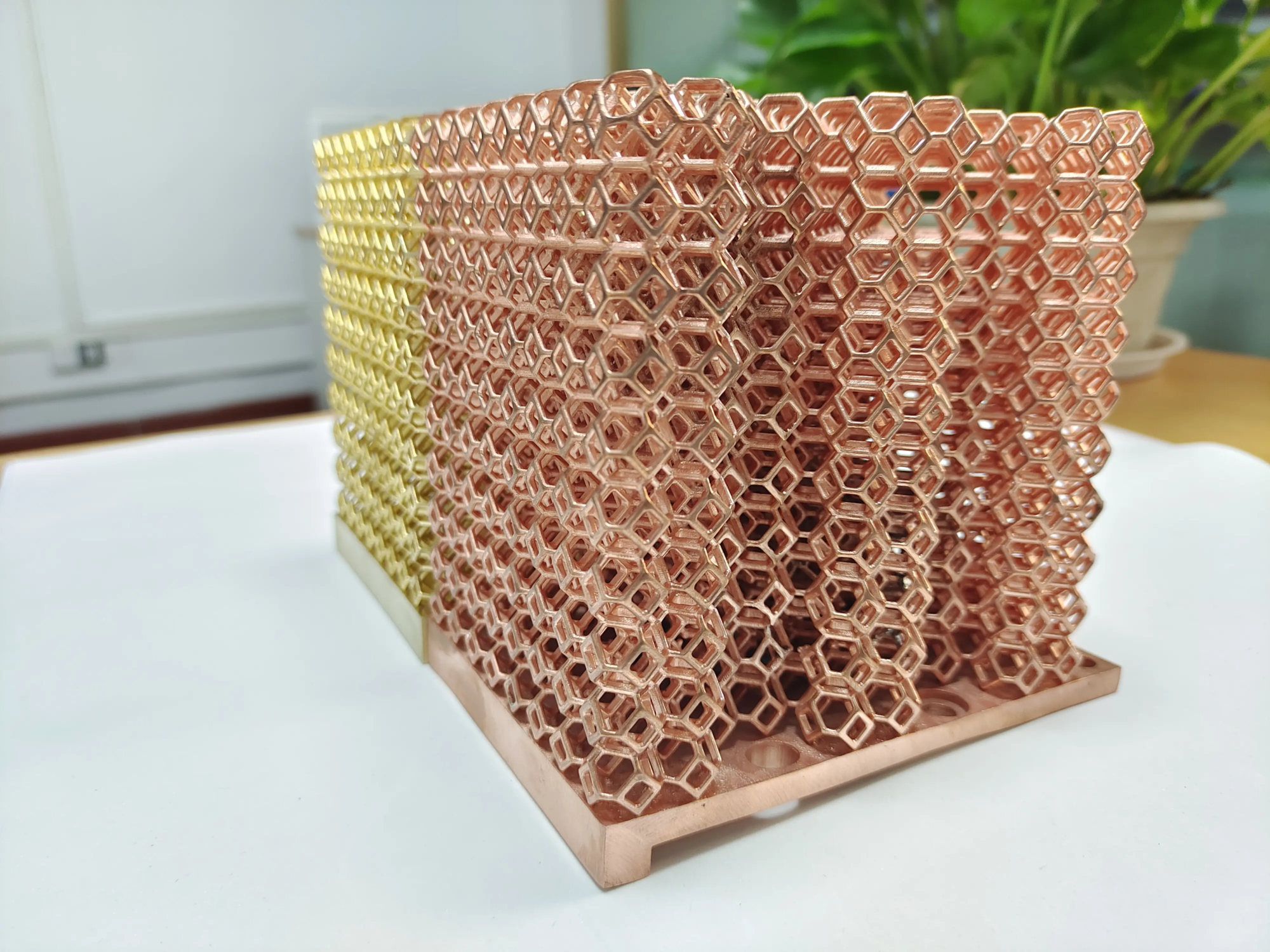
- Complex lightweight structures (lattices, gyroscopes) minimize mass without sacrificing strength.
- One-piece monocoque design eliminates assembly points and improves rigidity/sealing.
- Direct integration of mounting functions, brackets or sensor chambers.
- Biomimetic geometries replicate efficient natural forms.
-
Lightweight without compromise: By placing material only where the structure requires it (topology optimization), SLM can reduce weight by 30-50% compared to its conventionally machined counterparts. This directly affects key indicators such as energy consumption (robots, electric vehicles) and fuel efficiency (aerospace).
-
Rapid prototyping and iteration boom: Gone are the weeks-long waits. Complex actuator assembly prototypes can be printed overnight. The speed at which design flaws are discovered and corrected increases exponentially. Concepts can be physically tested in days instead of months, significantly speeding up development.
-
Cost effective for small batches and customization: SLM shines where traditional methods fail—low to mid-volume and highly specialized parts. It eliminates expensive tooling (molds, dies, complex fixtures). Need a unique actuator with non-standard mounting, specific dimensions, or special material properties? 3D printing makes this economically feasible.
- Performance enhancements: Integrated design reduces potential points of failure and increases rigidity. Optimized geometry enhances heat dissipation through internal channels. Lighter actuators require less motor power and improve dynamic response.
GreatLight’s expertise: Precision SLM for demanding actuator applications
Unlocking the full potential of SLM to implement robust linear actuators requires specialized expertise and infrastructure. This is the advantage of GreatLight:
- Advanced SLM technology: Utilizing state-of-the-art metal 3D printers, we are able to produce parts with exceptional dimensional accuracy (±20 microns), high resolution and excellent surface quality, even for complex actuator assemblies.
- Extensive material palette: In addition to common engineering alloys such as stainless steel (316L, 17-4PH), aluminum (AlSi10Mg, Al 6061) and titanium (Ti6Al4V), we also specialize in processing specialty alloys (e.g. Inconel, maraging steel) that are critical for high-performance actuators in high-temperature or corrosive environments. We handle complex material customization needs.
- Post-integration processing: SLM parts often require finishing to achieve functional requirements. GreatLight provides a true one-stop shop:
- Support Removal: Carefully remove to protect fragile actuator function.
- Heat treatment: solution annealing, precipitation hardening (for materials such as 17-4PH), stress relief.
- Surface treatment: CNC machining of key interfaces/bearings, polishing, media blasting (shot blasting, sand blasting), electroplating/coating.
- Non-destructive testing (NDT): Ensure structural integrity through CT scans and dye penetrant testing.
The advantage of 3D printed linear actuators: a wide range of applications
These benefits translate into tangible advantages across many high-tech industries:
- Aerospace and Defense: Ultralight actuators for landing gear deployment mechanisms, UAV control surfaces, missile guidance fins, satellite sunshields – reducing launch costs and extending mission life.
- Robotics: Joint actuators benefit from weight reduction, allowing for faster movement and longer battery life (mobile robots), as well as compliant/collision-proof connections to integrated sensors (collaborative robots).
- car: Optimized transmission shift actuators, lightweight brake actuators, electric vehicle custom actuators (e.g. battery pack positioning, thermal management dampers) improve efficiency and performance.
- Medical devices: Custom surgical robots require precise motion control using sterile materials (titanium, medical-grade stainless steel), and custom implants with integrated motion mechanisms.
- Industrial automation: Compact, highly integrated actuators for specialized assembly tasks, vibration-damped actuators with grids, chemically resistant actuators for harsh environments.
Designing for Success: Key Considerations
SLM unlocks potential, but requires careful design (DfAM):
- Orientation question: Part orientation during printing can significantly affect surface finish, internal stress distribution, support requirements, and final mechanical properties. Essential for carrying the actuator components.
- Support optimization: Drastic overhangs require supports, which must be designed to minimize contact points and be easy to remove without damaging the actuator geometry.
- Stress analysis: Leverage FEA early to simulate loads and optimize material placement through topological methods. Consider the inherently anisotropic behavior of additively manufactured parts.
- Functional integration: Features such as threads, bearing housings, seals and mounting points are strategically integrated. While final accuracy may require post-processing, smart design can minimize this need.
- Material behavior: Understand how specific alloys behave during SLM processing and how subsequent heat treatment affects final properties such as strength, ductility and corrosion resistance.
Innovation at a Glance: Case Study (Hypothesis)
challenge: An aerospace customer required a critical thrust vector control actuator that was 40% lighter than its machined titanium version while maintaining the same strength range and operating temperature. Complex internal cooling channels were deemed necessary but could not be manufactured in conventional ways.
Juguang solution: Our engineers use advanced topology optimization software to generate an organic lattice structure within the actuator housing walls. Internal spiral cooling channels are incorporated directly into the design. We used an SLM system to print the casing as a single titanium (Ti6Al4V) component. Post-processing includes precision machining of the bearing interface and an optimized heat treatment plan.
result: The final 3D printed actuator exceeded weight reduction targets (45% lighter), demonstrated superior cooling efficiency through internal channels during testing, passed stringent thermal and vibration certifications, and significantly reduced part count and assembly complexity – eliminating potential leak paths identified in previous assembly.
in conclusion
3D printing, specifically SLM metal additive manufacturing, is more than just a novel method of manufacturing linear actuators; it is a fundamental enabler of superior design and performance. It breaks free from the constraints of subtractive manufacturing, allowing engineers to create actuators that are lighter, stronger, more integrated, faster to prototype, and tailored to specific applications. While material properties and standardization are still evolving, the trend is clear: additive manufacturing is quickly becoming key to the development of cutting-edge actuators.
At GreatLight, we combine powerful SLM technology with deep process expertise and comprehensive post-processing capabilities to transform complex actuator concepts into practical, high-performance realities. Rapid prototyping is more than just a service, it’s in our DNA. We enable inventors and engineers to iterate faster, push boundaries further, and create linear actuators that redefine what’s possible in machinery.
Ready to optimize your actuator design with advanced 3D printing? Partner with GreatLight – let’s design the future of motion control together.
FAQ: 3D Printed Linear Actuators
-
Are 3D printed actuators as strong as traditionally manufactured actuators?
- answer: Yes, and probably more powerful. When optimized for SLM/metal additive manufacturing using topology optimization and printed with appropriate parameters/post-processing, actuators can meet or exceed the strength-to-weight ratio of their conventionally manufactured counterparts. Key alloy properties (such as Ti6Al4V or 17-4PH) can be achieved through SLM plus appropriate heat treatment.
-
Can I print the entire linear actuator assembly at once?
- answer: Usually not completely Functional assembly. While housing structures, gears, brackets or complex linkages are prime candidates for integration, functional elements (such as lead screws/nuts in direct sliding contact) or electrical components (motors) that require specific tribological properties are often printed and assembled separately. The goal is to maximize integration thereby adding significant value.
- What are the limitations of 3D printed actuators?
- answer: Major limitations include:
- Surface finish: The printed surface usually needs to be machined or polished to seal/brush the surface.
- Anisotropic properties: The strength may vary in different build directions.
- size: Current SLM printers have print volume limitations (although significant progress is being made).
- Material standards: Certification of critical aerospace/medical components requires rigorous process validation.
- cost: For very high volumes, traditional manufacturing may retain cost advantages – SLM excels in complexity, low volume and cost
- answer: Major limitations include: