When Technology Subverts Tradition: The Precision Revolution of 3D Printed Prosthetic Middle Finger
The human hand is a marvel of engineering, capable of delicate tasks and powerful gestures. When an injury, illness, or congenital condition affects just one finger (especially the middle finger), the effects extend far beyond the body’s functions. Social interactions, emotional well-being, and simple daily tasks become unexpected challenges. Traditional prosthetic solutions often fail to meet the unique aesthetic, functional and economic needs of finger replacement. Enter Additive Manufacturing (AM)meticulously printed one layer at a time, changing possibilities. This is especially true for complex structures like functional middle finger prostheses.
Beyond customization: Customizing anatomy pixel-by-pixel
Traditional finger prostheses typically involve labor-intensive sculpting, casting, and assembly, often resulting in passive cosmetic solutions or basic mechanical hooks. 3D printing breaks these limitations:
- Precision anatomy mirror: A high-resolution 3D scanner captures the precise contours, dimensions and geometry of the patient’s remaining hand and intact contralateral digits. This data becomes a blueprint for a prosthetic limb that is anatomically indistinguishable from a natural finger, including a unique knuckle shape, nail bed, and even skin texture.
- Where materials science meets medicine: This is what companies like huge light Demonstrate true expertise.
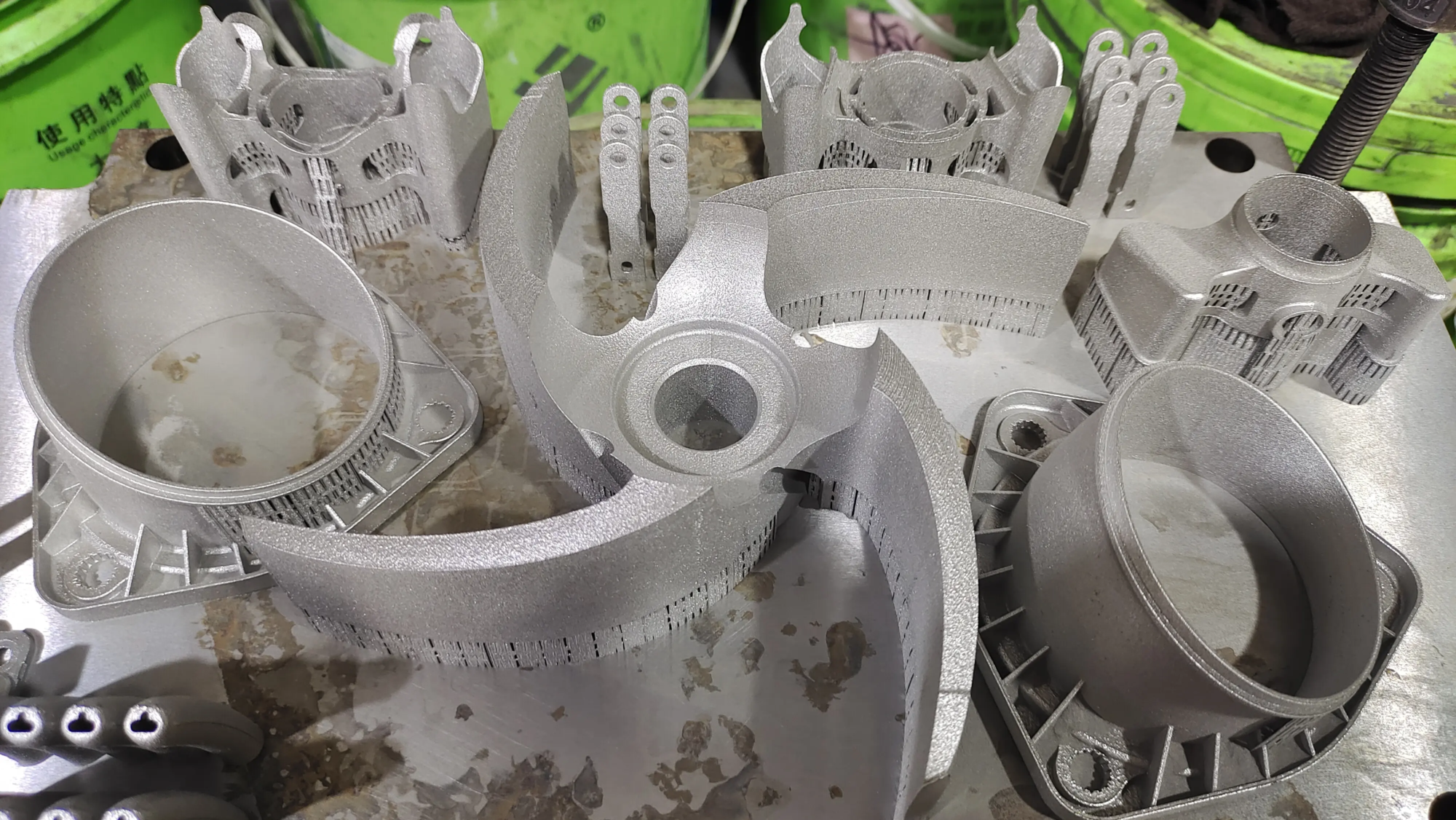
- Metal Core Strength and Clarity: For structural bones or joints within the fingers (especially for users who require active movement), Selective Laser Melting (SLM) technology – Honglaite’s core advantages – Can be printed using biocompatible titanium alloy (Ti6Al4V) or cobalt-chromium alloy. These materials provide the necessary strength-to-weight ratio, fatigue resistance, and osseointegration potential for implants that interact with bone/muscle. Complex internal hinge mechanisms for metacarpophalangeal (MCP) or proximal interphalangeal (PIP) joints can be printed as a single optimized component that cannot be machined with traditional machining methods.
- Flexible/sensing components: Photopolymer resin (using SLA or PolyJet) to print flexible joint coverings, nail details or lifelike objects "skin" A sheath that mimics tissue flexibility and texture. Combined with soft materials surrounding a rigid core, it creates a seamless, natural feel and look.
- Functional integration: Active prostheses require seamless communication with the user.
- Tendon insertion points: Precision-engineered mounting brackets (often printed with titanium SLM for strength) are specifically designed to interface with surgically repositioned tendons or advanced myoelectric sensors.
- Cable routing channels: Internal channels printed within the prosthetic phalanges efficiently and aesthetically route control cables for body-powered devices.
- Sensor housing: Microcavities precisely designed during the digital modeling stage accommodate force sensors, accelerometers or electromyography electrodes for advanced myoelectric control systems.
Overcoming functional challenges with additive design
Manufacturing a functional middle finger prosthesis involves unique problems that additive manufacturing brilliantly addresses:
- Hostile force issues: Strengthening the opponent are the powerful forearm muscles that control the flexion of the fingers. Prosthetics must be able to withstand these enormous forces, especially in the presence of active grasping. SLM-printed titanium parts provide the required strength without being excessively bulky. Internal lattice structure printed by SLM (GreatLight’s expertise in optimizing lattice parameters is crucial here) significantly reduces weight while maintaining stiffness, improving comfort and functionality.
- Connection complexity: Mimicking natural PIP/DIP joint flexion requires a compact, durable hinge mechanism. Additive manufacturing allows complex internal low-friction bearing surfaces and pivots to be printed as an integral part of the prosthetic phalanx, which is not possible with traditional machining.
- Cosmetic sophistication: Subtle veins, wrinkles and specific nail shapes can only be reproduced through high-fidelity PolyJet printing or by printing intricate patterns in silicone overlay molds. GreatLight comprehensive post-processing – including micro-bead blasting for matte skin texture, precision painting and final sealing – elevating the prosthesis to an unparalleled level of aesthetics.
Why Metal Additive Manufacturing Matters: Ferrite’s Domain
While plastics play an important role, achieving strong, long-term functionality, especially of articulation points and load-bearing elements, requires metal additive manufacturing:
- Biocompatibility and durability: Grade 5 titanium (Ti6Al4V) and medical CoCr alloys offer proven biocompatibility, corrosion resistance and excellent fatigue strength – critical as prosthetics experience daily cyclic stresses of more than 100,000 cycles per year.
- Design freedom: SLM allows topology optimization – computationally designing internal structures to place materials exactly where stress occurs – to maximize strength while minimizing weight, resulting in a more comfortable and responsive prosthetic limb (Key areas for Honlaite optimization).
- merge: Complex assemblies traditionally made from multiple pins or welded parts can be printed as a stronger, more reliable unit, reducing points of failure and simplifying maintenance.
Complete workflow: from scan to function
- 3D scan: High-resolution capture of stump and intact hand.
- Virtual design and simulation (CAD/CAM/FEA): Expert prosthetic designers create digital twins that combine anatomical mirroring, functional mechanisms (joints, attachment points), internal lattices, and appearance features. Finite Element Analysis (FEA) ensures structural integrity. GreatLight offers designers collaboration or execution based on expert input.
- Various printing techniques: Use SLM for titanium structural/mechanical parts and PolyJet/SLA for flexible/sensing/decorative parts.
- Expert post-processing (key to success):
- Metal: Stress relief annealing, support removal, CNC precision machining of critical interfaces, surface finishing (polishing/matt blasting), thermal/electrochemical polishing.
- polymer: Supports removal, UV curing, sanding, painting, texturing, and applying silicone laminate.
- assembly: Integration of mechanical components (bearings, springs), sensors, tendon attachments, final decoration. GreatLight’s integrated “one-stop” post-processing capabilities ensure seamless transitions and top-notch fit/finish.
- Fitting and prosthetist integration: Works with clinicians on attachment, cosmetic adjustments, and functional adjustments.
Conclusion: Flip the script on disability
The 3D printed middle finger prosthesis symbolizes more than just technological prowess; it represents a paradigm shift in restoring human capabilities and dignity. Advanced additive manufacturing technologies, especially by such huge lightsupply:
- Unprecedented fidelity of anatomy and appearance: Achieve near-perfect visual and tactile similarity.
- Functional level performance: Strong titanium core allows for reliable articulation and grip.
- Personalized biomechanics: Devices are adapted not only to the patient’s anatomy but also to their specific functional goals and lifestyle.
- Reduce delivery time and costs: Streamlined digital workflows can often significantly reduce production times compared to traditional methods.
For those who have lost their middle finger, the journey is more than just physical reconstruction; It’s about restoring social comfort and personal expression. Advanced 3D printing, combined with rapid prototyping and post-processing expertise from leading companies like GreatLight, is flipping the script, transforming what was once a palpable reminder of loss into a seamless extension of the self. This technology enables individuals to confidently interact with their world with fully formed hands.
FAQ: 3D Printed Middle Finger Prosthetics
-
Are 3D printed finger prostheses strong enough for daily use?
- Of course, especially when using metal core components produced by SLM (Selective Laser Melting). Biocompatible titanium (Ti6Al4V) has strength exceeding human bone and excellent fatigue resistance. Design optimizations such as the internal lattice ensure a lightweight yet strong structure, designed for grip and the forces encountered during daily activities. Rigorous testing verifies durability.
-
How realistic does it look?
- Extremely realistic. A combination of precise scanning, anatomical mirroring, high-resolution printing of flexible photopolymers for the “skin” and expert post-processing (painting, texturing, nail details) creates a prosthetic that is virtually indistinguishable from a natural finger to casual observation. A silicone sheath over the printed core further enhances the realism.
-
Can it move like a real finger?
- Yes, the functionality levels vary:
- Physical motivation: Uses a cable attached to the harness, usually controlled by shoulder/wrist movement. Printed joints allow for flexion/extension. GreatLight integration ensures smooth cable routing
- Myoelectricity: Use muscle signals (EMG) from the muscles of the residual limb to control a small motor/battery within the prosthetic limb. Requires implanted electrodes or surface sensors. The prosthesis has built-in bending points.
- Passive beauty: Highly realistic look and natural drape, but no active movement – pure aesthetic.
-
How long does it take to get one?
- Significantly faster than traditional prosthetics. After scanning and design finalization (1-2 weeks), printing and post-processing of complex metal/polymer composite fingers often requires huge light 1-3 weeks depending on complexity and quantity. This is in stark contrast to Monthuhl, who uses manual methods.
-
What about biocompatibility and safety?
peror *Material safety is paramount. GreatLight uses only certified medical-grade materials:
- Metal: ASTM F136 (Ti6Al4V ELI), ASTM F75 (CoCr)
- Polymer: Biocompatible silicone, USP Class VI certified resin.
- The surface treatment is rigorously verified to ensure skin safety and durability. The entire equipment undergoes strict QA/QC inspection.
-
How specifically does metal 3D printing (SLM) help fingers?
- Strength of minimum space: Create tiny, complex bone analogues and joint mechanisms with strength not possible with mechanical processing.
- Reduce weight: Internal lattice maximizes strength while significantly reducing weight and preventing fatigue.
- Design freedom: Integrated tendon attachment points, internal cable channels and sensor housing are implemented within the finger structure.
- Durability: Joints that undergo continuous bending motion, such as PIP joints, have excellent fatigue life.
-
Can I get one if I only need part of a finger (for example, amputation at the PIP joint)?
- Yes. 3D printing excels at partial digital replacement. The scanning and design process accurately matches the level of amputation (distal, mid, proximal phalanx) and blends seamlessly with the residual anatomy. Functional recovery focuses on available muscle tissue/control areas.
-
Is it much more expensive?
- Costs vary depending on complexity (cosmetic vs. active myoelectric, materials used). While high-end active prosthetics are a significant investment, advanced additive manufacturing can often provide A better value proposition:
- Reduce labor-intensive handcrafting.
- Production is faster.
- Excellent functional/cosmetic effects,
- Reduced long-term maintenance due to robust design. GreatLight focuses on competitive pricing and maximizing return on functionality.
- Costs vary depending on complexity (cosmetic vs. active myoelectric, materials used). While high-end active prosthetics are a significant investment, advanced additive manufacturing can often provide A better value proposition:
- Can a company like GreatLight handle the entire process?
- Yes. As a premier rapid prototyping manufacturer specializing in metal additive manufacturing (SLM) and comprehensive post-processing, GreatLight offers a true one-stop solution: High-resolution scanning consultation, expert CAD/CAM design support/full execution, multi-technology printing (SLM, PolyJet, SLA), extensive metal and polymer finishing, precision assembly and rigorous quality control – delivering fully functional, aesthetically pleasing prosthetic components ready for clinician/prosthetist integration. Customization and speed are at the heart of our service.