The ultimate guide to 3D printing of Ninja Stars: From Design to Display
If you’re fascinated by Japanese weapons, creative DIY projects, or just the stylish geometry of Shuriken, the 3D-printed Ninja Star offers a perfect blend of engineering and art. This project is more than just making a cool prop. This is a practical exploration of materials science, design optimization and safety considerations. At Greatlight, we transform complex ideas into tangible prototypes every day, and we will tear each stage of this process while highlighting the opportunity to move your project beyond accurate plastic to elevate it to precisely made metal.
Why 3D Print Ninja Stars?
Ninja Stars, or Shurikenis an iconic cultural symbol with complex geometric figures. Print one allows you to try symmetry, aerodynamics and weight distribution. It is ideal for role-playing props, display works or educational tools (such as inertia in engineering workshops). However, safety and legality are crucial: Always verify local weapons regulations and designs with intentionally bleak edges to prevent accidents. This is not just convention, it is legal insurance.
Step 1: Design your shuriken
- tool: Start with user-friendly CAD software such as Tinkercad or Fusion360. Advanced users can work with solids.
- Key Specifications: The diameter is achieved at 8–12 cm. Integrate holes in the center of a star or arm to reduce weight and material use – Additionally, it helps polymer adhesion during printing. Avoid razor edges; fillets (rounded corners) improve safety. Prototype iteration: Simulate rotation balance in software to avoid swing.
- resource: Platforms like Thingiverse offer downloadable designs, but customization enhances uniqueness – adjusting arm thickness or etching patterns.
Step 2: Materials Important: Plastics and Metals
- PLA/PLA+: Affordable and printable on desktops, but fragile. Falling stars often break. Best for visual models.
- PETG/Nylon: Functional model is more difficult, anti-film agent choice. Controlled printing is required to avoid warp.
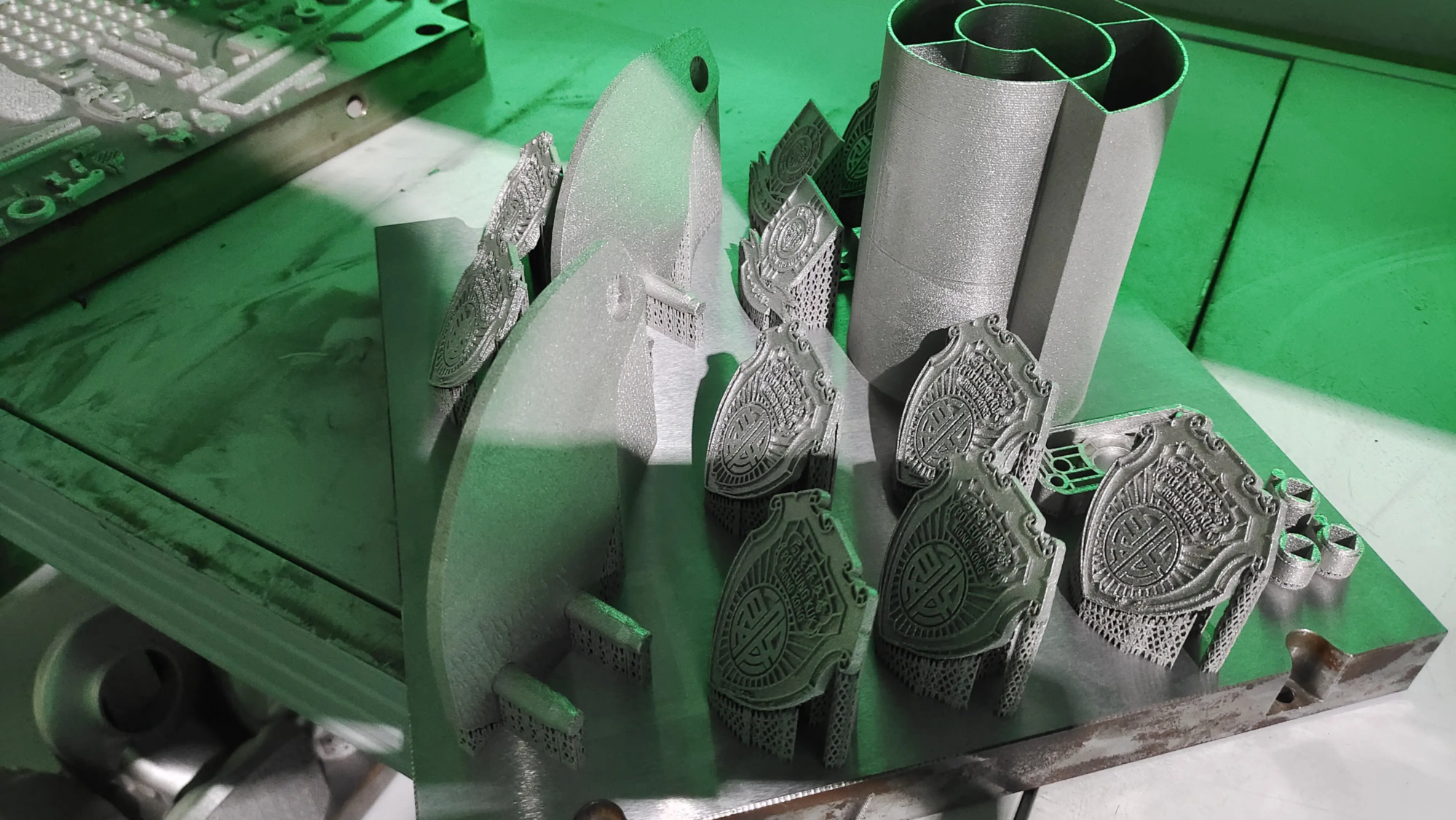
- Metal (stainless steel, titanium, aluminum): Industrial-grade selective laser melting (SLM) technology is required – in fact, Greatships specializes in. Metals produce realism, lifespan and weights of satisfaction. Ideal for high pressure applications such as dynamics demonstration tools. Our SLM printers build stars layer by layer, reaching a density of 99% > 99%, with tensile strength comparable to forged parts. In addition, alloys like Alsi10mg are both lightweight and robust.
Step 3: Printing Best Practices
- Printer settings: Optimize cooling of plastic stars to stop warping; use ≥40% filler (thyroid mode is recommended). The eastern point is slightly upward to minimize support. The lower layer height (0.1mm) improves smoothness.
- Metal printing: Outsourcing to experts. At Greatlight, we implement laser parameters fine-tuning to eliminate porosity. Predeformation of heat treatment avoids pressure.
- troubleshooting: Warp? Heating beds and fences is crucial. Layer split? Increase extrusion temperature or dry pre-printing.
Step 4: Post-processing and finishing
- polymer: The sand starts at 120 grains and is up to 800 and is smooth. Epoxy coatings increase weather resistance. The tumbling of the stone enhances surface uniformity.
- Metal finishes (Gremight’s expertise): Options include:
- CNC bead blasting: matte texture, hiding smaller defects.
- Electropolishing: Mirror gloss on stainless steel.
- Anodizing: Customized color of aluminum stars.
- Powder coating: a scratch-resistant color layer.
- Safety finalization: For gaming-safe stars, stick the rubber cap to the point or embed the magnet into the hub for display.
Step 5: Verify and Deploy
Stress test your design. Spin! If unbalanced, please sand or reprint. For documented items, consider Greatlight’s dimension check report (micrometer accuracy of metal). Always mark the prototype as non-weapon.
Conclusion: Beyond the Fans’ Playground
3D Printed Ninja Star Bridge Culture and Manufacturing. Plastic DIY prints are a meaningful starting point, but metal transforms it into durable artifacts – whether it’s historical displays, engineering teaching aids, or even unorthodox drone counterweights. The project highlights the common fact that prototyping is more than just building a thing;It is the test material boundary and precision limitation. At Greatlight, we support this innovation every day, using SLM technology to convert ambitions into aerospace-grade metal components in days rather than months. Your star concept (caused by the keen acuity of our prototypes) may be at the heart of the collection.
FAQ
Q1: Is 3D printed Ninja Star legal?
A: It depends on the local weapon control law. Most regions allow blunt non-metallic stars as display/novel items. Metal versions may need to show nonweapon intentions (e.g., paperwork for educational purposes). Before printing, please consult the legal norms within your jurisdiction.
Q2: How much does it cost to print metal ninja stars and plastic?
A: Desktop PLA star’s filament may cost $1-$2. Professionally printed metal stars have stainless steel volumes of about $50, size and post-processing zoom. At Greatlight, we optimize nesting (grouping in builds) to reduce costs, thus making a low-capacity prototype order economy.
Q3: Is the design of Greatlight Wance Wance Wance Wheaktability Wheake adjusted?
A: Yes. Our engineers usually perfect client files to avoid print traps – for example, adjusting the wall thickness of the wall to ensure pressure resistance of aluminum or suggesting hollow structures to reduce costs without compromising integrity. We mark design risk before building.
Q4: How long does it take to 3D-print Metal Ninja Star?
A: Plastic prints take 2-6 hours on a hobbyist printer. SLM metal printing takes about 4-10 hours, plus sintering/cooling. With post-processing, Greatlight offers finished metal stars in 3-5 working days.
Q5: What is the safest material for stars to be processed by children?
Answer: Avoid rigid metals. Using TPU – Flexible, rubber-like filaments – "Bubble Star" Equivalent. They will bend over and strike, bringing negligible risks.
Explore the fusion of martial arts traditions and cutting-edge technologies. Whether it is a plastic prototype or a titanium masterpiece, you can strictly design your vision. Ready to iterate? [Upload your design for an instant quote]- At each point.