Demystifying the 3D Printed PCB Template Guide: Revolutionizing Prototype Assembly
In the complex world of electronics manufacturing, PCB templates are indispensable. They ensure that solder paste is accurately applied to the circuit board before components are placed. Although laser-cut stainless steel formwork dominates mass production, 3D Printed PCB Template Guide Rapid prototyping workflows are changing. At GreatLight, as experts in advanced metal additive manufacturing, we recognize the profound impact this innovation has on speed, cost and flexibility.
Core functions of PCB steel mesh
A PCB stencil is a flat template with precisely cut apertures that align with the solder pads on the circuit board. During the surface mount technology (SMT) assembly process, solder paste is applied to the stencil, filling the holes to deposit the precise volume of solder paste onto the PCB. Accuracy is non-negotiable here—misplaced or uneven pasting can result in bridges, gaps, or tombstones.
Traditionally, templates include:
- laser cutting foil: Typically stainless steel for high durability.
- picture frame: Sturdy aluminum frame maintains tension/stability.
- bonded mesh: Secure the foil to the frame.
Template guide (or fixture)Instead, align and secure the PCB and stencil, which is critical for fine-pitch components such as BGA or QFN. Traditional steel fixtures require expensive CNC machining and long lead times.
Why 3D printing can solve prototype template challenges
3D printing enables rapid iterations and complex geometries that traditional methods struggle with:
- speed: Part design can be completed in less than 24 hours, whereas metal molds can take weeks.
- Cost effective: Eliminating CNC setup can save 60-80%.
- Customized: Rails can be tightly integrated with any form factor PCB.
- complex features: Easily integrate hinges, clips or dowels.
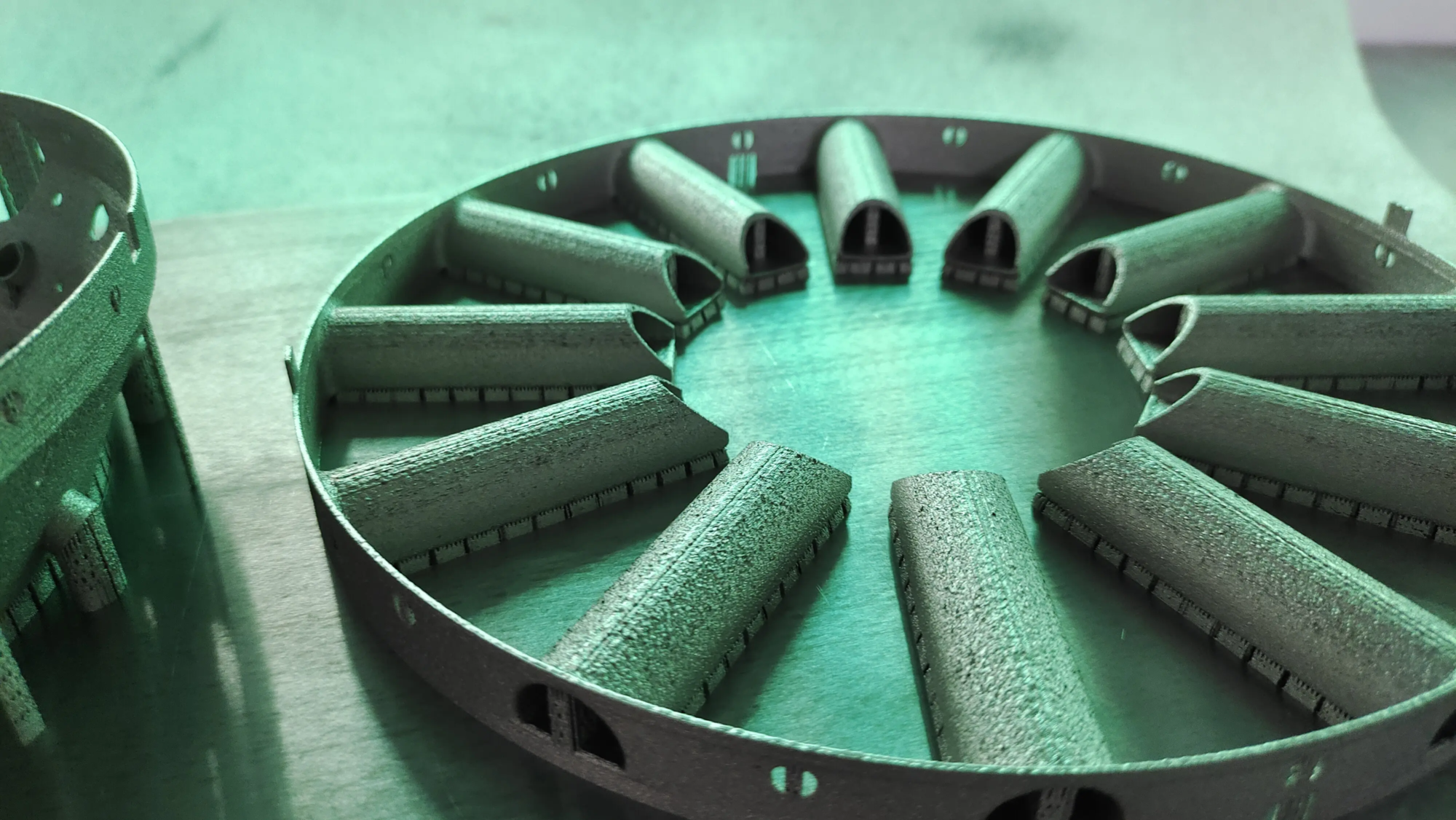
Plastic Nylon PA12 (durable, impact resistant) or ABS A lightweight, cost-effective option for guides. For high temperature/harsh environments, Metal 3D printing (AlSi10Mg) Provides excellent service life.
Guide to Designing Effective 3D Printing Templates: Key Principles
Success depends on careful design:
- accuracy: Prioritize dimensional stability (±0.1mm tolerance).
- Register: Integrated alignment pins/sockets that match PCB datums.
- clamp: Flexible design of buckles to fix PCB without slipping.
- Material selection: Metallic resins for ultra-precision molds; budget versatility of plastics.
- stress analysis: Reinforce high load points through topology optimization.
At GreatLight, SLM printers ensure uniform material properties and intricate detail, which is critical for guides that require microscale precision.
Applications Beyond Guidelines: Stencil Foil itself?
Although impractical for high-volume SMT, 3D printed templates have niche prototyping utility:
- low run board: Replaces expensive metal formwork (fits ≤10 boards).
- niche materials: Replacement slurry (conductive epoxy resin, adhesive).
- hybrid design: Plastic frame with recessed metal foil holes.
There are limitations (e.g. risk of clogging) that make them unsuitable for high-volume processes. However, they excel at rapid R&D validation.
Why work with Gretel?
As a pioneer in rapid prototyping, GreatLight blends additive expertise with real-world electronics assembly insights:
- Metal SLM and Polymer SLS: The most suitable process to create durable and complex guide rails.
- Master a variety of materials: Combine plastics/metals/alloys into a unified workflow.
- Engineering solutions: We optimize the manufacturability of designs through FEM simulation.
- Completed end-to-end:Media blasting, sealing, coating – ready for shop use.
Whether it’s a pilot-scale template guide or an experimental SPI/PnP tooling fixture, our integrated approach accelerates innovation cycles.
in conclusion
3D printed PCB template guide democratizes precision– Make solder paste deposition available for low-volume builds as novel designs unfold. By shortening lead times and cutting costs, they enable hardware developers to iterate faster, fail smarter and innovate with confidence. While laser-cut steel formwork still dominates ultra-large-scale production, the adoption of additive tools during the R&D phase signals tactical foresight. At GreatLight, we provide mechanically optimized, functionally proven 3D printing solutions designed to transcend the limitations of traditional prototyping, blurring the lines between concept and assembly shop floor.
PCB Stencil Guide FAQs
Question 1: Can I 3D print the solder paste template directly?
A1: Yes, but there are some caveats. Printing aperture stencils (foils) in metal or resin is suitable for low-volume/low-density boards. Avoid fine pitch components (<0.5mm pitch) due to resolution limitations and solder paste release challenges. Template guides/jigs are universally printable.
Question 2: PLA, ABS, nylon: Which plastic works best?
A2: PLA is fragile; avoid. ABS balances strength and endurance for benchtop testing. Nylon PA12 has excellent impact resistance, abrasion resistance and chemical stability, making it suitable for harsh environments.
Question 3: How accurate are the 3D printing template guidelines?
A3: The accuracy of SLM metal guide rails reaches ±0.05–0.1mm. Polymer guide rails (SAF/SLS) can control ±0.1–0.3 mm, which is sufficient for prototype requirements. Critical applications require tool simulation verification.
Q4: Can metal rails withstand industrial SMT equipment?
A4: Aluminum-silicon alloy printed by SLM matches the stiffness of CNC alum. They robustly withstand clamping forces, SPI measurements and cleaning cycles, especially during grain refinement by hot isostatic pressing (HIP).
Q5: Are there any PCB/thickness restrictions?
A5: No need. Smooth printing allows rails to be adapted to rigid-flex boards, unconventional shapes, stacks or components with gaps ≤5mm. Design optimization can alleviate torque/coplanarity issues.
Q6: Sustainability impact?
A6: Compared with traditional processing, CNC material waste is reduced by 40-50% + saves energy emissions. Metal printing waste becomes recyclable raw material.
Q7: Design document requirements?
A7: STEP, Parasolid or SolidWorks are preferred for CAD. Provides PCB Gerber/Dimensions for alignment critical items. Our DFM analysis improves drawings for free.
Designed to tackle tomorrow’s toughest prototyping challenges, GreatLight delivers iterative agility with uncompromising precision. [Contact us] Simplify your SMT workflow today.