Unlocking the Symbols of Medication Management: The DIY Revolution of 3D Printed Pill Boxes
Forget looking for that elusive pill organizer at the drug store that’s perfect for your weekly cocktail of medications. Forget the frustration of compartments that are too big or too small, a design that’s not travel-friendly, or a lack of features for arthritic fingers. The solution lives right on your desktop (or perhaps in a dedicated facility): 3D printing. Welcome to the world of DIY and custom 3D printed pill boxes – boss? A combination of personalization and practicality.
Why DIY pill boxes?
Millions of people have been adequately served by traditional pill organizers. But for many people, they are not enough:
- Unique needs: Complex dosing regimens, with pills that vary widely in shape and size, non-standard dosages, or specific timing requirements.
- forget: Design cannot effectively combat forgetfulness through intuitive layout or reminders.
- Auxiliary functions: Turntable, latch or compartment size can be a challenge for users with dexterity issues.
- Loss and Portability: Bulky boxes are not convenient for traveling or carrying throughout the day.
- Personalization: The desire for customized products – a favorite color, an integrated label holder or a design that matches your personal aesthetic.
3D printing allows you to move from compromise to control. You become a designer and a maker.
Designing your personalized pill box: key considerations
Getting started with CAD software? hold on. Successful design starts with planning:
- Compliance/Storage Schedule: How many doses per day? (AM/PM? Breakfast/Lunch/Dinner/Bed? Hourly?) How many days? (1 week? 2 weeks? A month?). This defines the basic compartment grid.
- Pill size and shape catalog: Measure largest pill size (including tall oval supplements). Given the odd shape – the capsule may need to be slightly taller than the diameter. Designed to be loose to avoid crushing pills.
- Accessibility mechanisms: Push-up bottoms? Flip cover (hinged vs. detachable)? Sliding compartment? Removable insert? Choose a mechanism that suits the user’s motor skills. Consider adding texture or large finger grips.
- Ergonomics: Shape, size, weight (especially important for multi-week metal boxes). Should it be carried in a pocket? Does it feel comfortable to hold/open?
- Material selection: Determines safety, durability, ease of cleaning and aesthetics (see next section).
- Add-ons: Integrated handle? Travel lock? Dedicated label slot? Moisture absorber holder? Alarm clock stand? Built-in tracker slot? Think of the “Tetris” of drugs.
- Security and legibility: Clear labeling strategy – molded markers, engraved symbols or fixed areas for printed labels? Make sure compartments are clearly marked.
Bringing designs to life: printing processes and materials
Your choice of printer and materials affects functionality, safety, and longevity:
-
Home FDM/FFF Printing (Plastic):
- Material: PLA (normal, Only use PLA certified food safe pure ingredientsmultiple colors), PETG (best choice for home use: durable, slightly stretchy, inherently food safe, chemical resistant), ABS (tough but difficult to clean print, may require ventilation).
- advantage: Lowest cost, fastest prototyping/iteration, wide material selection/multiple color options.
- shortcoming: Layer lines are prone to bacterial growth, and surface textures are more difficult to completely disinfect. If wet cleaning, careful sealing is required. Strength limits of complex mechanisms. Existing biocompatibility certifications are limited.
- Best for: Early prototype, temporary or low-use design, aesthetic-focused organizer for less sensitive medications (e.g., vitamins). It is crucial to: Verify food safety Certification of any filament with priority given to PETG.
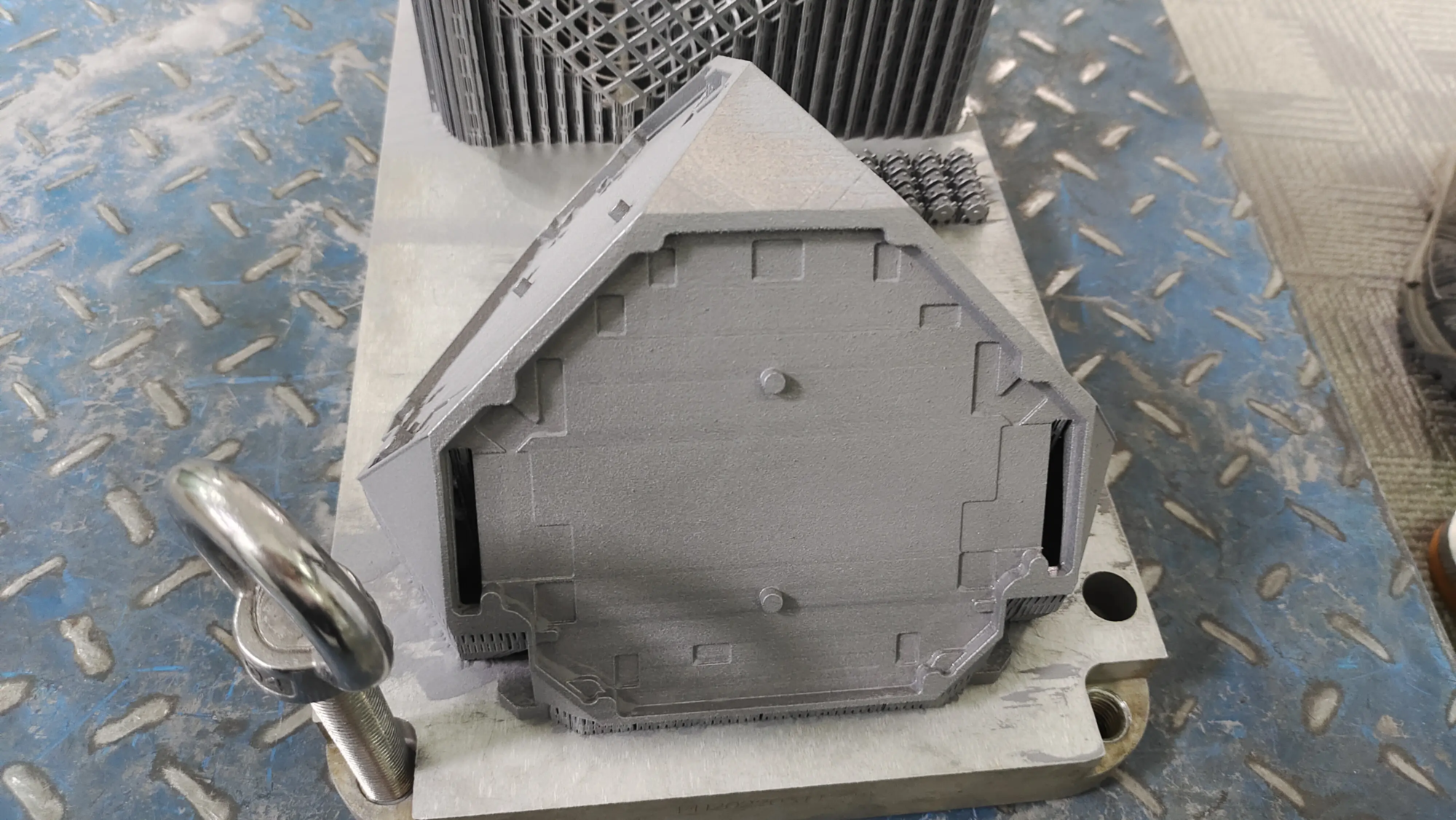
- Professional powder bed fusion (SLM/SLS):
- Material: Medical grade titanium (Ti6Al4V ELI), dyed}.
Steel 316L (medical/surgical grade powder), cobalt chromium alloy (extremely hard, wear resistant), and if using SLS, possibly specialty polymers like PEEK (biocompatible, sterilizable).
- advantage:**
- Safety: Biocompatible materials are certified according to ISO 10993 and ISO 13485 standards. The non-porous surface allows for complete sterilization (autoclaving, chemical sterilization). Ideal for sensitive pharmaceutical/critical healthcare environments.
- Durability: Unmatched strength to weight ratio. Handles complex mechanisms, thin wall design, strong latches/dimensional stability. Resistant to cracking and falling.
- Function: Create integrated moving parts (smooth hinged lids), strong snap-fit, miniaturized components not possible with FDM. The surface finish is smoother than FDM and easier to sterilize.
- Customized accuracy: Metal Printers Build metal printers as small as about 30 microns directly from CAD models! Ideal for patient-specific identifiers, microdosing chambers, complex internal channels for air/humidity control.
- shortcoming: Higher upfront cost per part. Requires access to disease service provider.
- Best for: Permanent, high-utility, medical-grade storage box. Professional/commercial production. Complex mechanical designs require metal strength/precision. Critical hygiene applications.
Perfect your pill box further: Is haute couture possible?
This is where DIY’s powerful real-world customization shines, especially in advanced manufacturing such as metal 3D printing:
- Personalization: Embed patient name, facility ID, or a carefully etched or formed personalized symbol. Color-code entire compartments using different stainless steel finishes or plastic inserts.
- Accessibility enhancements: Integrated braille and visual markers. Extra-large controls and large grip areas are designed for usability studies. Enhanced leverage mechanism for weak grip strength. Knock on the door!
- Smart integration: Design cavities within the structure to accommodate rechargeable batteries, discreetly packaged pill bottle RFID modules, colored alarm LEDs or micro-buzzer units. Space for a reactor-style Bluetooth tracking chip.
- Customized medicine: The dimensions of the chamber are accurate to a tenth of a millimeter for the size/shape of the specific molecular drug. Mesh insert securely holds powder or liquid.
- Advanced Logistics: The design integrates a locking mechanism to secure the compartment with a wrist strap, a GPS tracking unit slot within the titanium frame, and a pill inventory sensor to detect compartment emptying/closing.
Market niche and who needs this most
While a custom 3D printed storage box is convenient for anyone managing daily supplements, its unique advantages can solve serious problems:
- Complex chronic conditions: Patients who manage multiple drug regimens during the most challenging of times will benefit greatly Avoid dangerous mistakes.Ideal epilepsy,Parkinson’s protocols modular management. Constant dose-adjustments standardizedAppliances look-wise.
- Clinical trials: Ultra-precise dosing adherence tracking requires tamper-proof Eurion constellation observers to lock single-cell access.
- Disability and aging populations: Tailor-made accessibility facilities can help patients with arthritis, visual impairment, and paralysis achieve independence.
- Travel professionals: Seamless TSA-oriented secure luggage storage, compliant with international pharmaceutical transportation laws.
- Highly sensitive drugs: Sterile environments eliminate degradation risks for immune-compromised individuals Biocompatible materials are a must.
Shift to professional customization
As wonderful as it feels to experiment with home printing, Safety needs to be serious. Are there risks in printing on regular plastic? Critical applications require expert material selection and hygienically specialized manufacturing:
This is where working with experienced people comes in Rapid Prot Job Typing/Additive Manufacturing Specialist. The matter involves organization developer endorsement verification and deserves a high degree of trust. Key points:
- Material certification: Strict EP 10.3 traceability of biocompatibility status recorded in compliance with ISO 10993 patch.
- Sterilization verification: Post-processing cleaning/testing ensures pore-free cleanliness and particle-free.
- Accuracy Tolerance: The precise chamber maintains dose reliability below ±0.05 mm for continuous laser scanning.
- Design expertise: Validate the longevity of engineering structures against fatigue testing life cycles. Failure mode risk assessment.
- Quality control: Sustainable recycling of metal powder dust removal. Photomicrographs of cross-sections of the entire build plate were verified.
manufacturers like huge light Bridge perfection – combination State-of-the-art SLM metal printing Capabilities in certified medically safe materials such as ASTM F136 Titanium and strict ISO 13485 engineering specifications to expertly deliver:
✔️ Long-lasting accuracy ❶ Fail-proof! ! !
✔️ Safe and truly biocompatible approved
✔️ Professional sterilization/bag sealing
✔️Seamless verification reporting
We intelligently solve complex compliance challenges architects dream up to meet the needs of your complex demanders. Includes programmable ultra-custom geometries! Whether it’s a demanding plastic functional prototype or a mission-critical titanium prosthetic component – our full-service concurrent post-processing polishing suites are designed to complete your challenges with excellence, in addition to your vision of quality satisfaction.
in conclusion
3D printed pill boxes represent more than just a novel fabrication project. they symbolize Essential innovations in personal empowerment and personal healthcare management. From quick DIY PETG prototypes at home streamliningvitamin intake, to rigorously engineered titanium organizers enabling complex medical regiments safely, the technology offers unprecedented tailoring to your needs that ordinary artificial pill boxes cannot do. GGo beyond searching store fixtures hopelessly – design expressly 드러내 Your command ideal medication aide remotely incredibly convenient allies nowhere selling stores alike.
Remember: Prioritize material safety and strive to create a healthy and accurate home. Advanced daily assistants are worth investing in. Technologically advanced manufacturing partners guarantee a rivalable level of pharmaceutical trustworthiness. Customer beacons remain intact. Pharmaceutical integrity is priceless!
FAQ: 3D Printed Pill Boxes
Q: Is it safe to store medications in 3D printed pill boxes?
one: Safety largely depends on materials and manufacturing. Generally speaking:
- Home FDM printing: For use only FDA-approved food-safe virgin plastics, such as PETG, Extremely smooth/sealed interior surface (food safe epoxy/resin),