Mastering Speed: Unleashing 3D Printing in Pinewood Derby Racing (A Proven Secret!)
For decades, the Pinewood Derby inspired enthusiasm and competition among Scouts and amateurs alike. Turning a small block of wood into a gravity-powered champion requires ingenuity, knowledge of physics, and meticulous craftsmanship. In recent years, 3D printing technology It has become a revolutionary tool that provides unprecedented advantages in optimizing these miniature race cars. But how to use it effectively in competition rules? This deep dive reveals the secrets to the advanced speeds achievable with 3D printing and shows how professional manufacturing, like GreatLight’s services, can enhance your approach.
Pinewood Derby Challenge and the Rise of 3D Printing
The traditional Pinewood Derby car started out as a solid piece of wood. The rules strictly dictated size, source of wheels, and prohibited hypergravity propulsion systems. Winning depends on:
- Minimize friction: Wheel bearings, axles (nails) and alignment are critical.
- Optimized weight distribution: Strategic mass placement lowers center of gravity and maximizes momentum.
- Perfect aerodynamics: Reduce drag with stylish styling.
- Make sure wheel alignment is consistent: prevent shaking or "scrub."
3D printing is not meant to replace mandatory wooden car bodies; Key components of supercharging Where the rules usually allow for flexibility: weights, custom wheels, alignment tools and clamps. It can:
- Ultra-precise customization: Complex aerodynamic weight geometries cannot be designed using lead alone.
- Rapid prototyping: Quickly test multiple weight designs, axle hole layouts or wheel modifications.
- Material Versatility: Use specialized filaments (or even metal through services like GreatLight) to create parts with specific properties.
- Advanced wheel adjustments: Creates perfectly concentric hub sleeves and alignment aids.
Unleashing the Secret of Speed with 3D Printing
Secret #1: Control Weight Distribution
Golden Rule: Place the maximum allowed weight (usually 5 ounces) as low and as far back as possible No Sacrifice stability.
- 3D advantages: Complex design "weight pod" Fits perfectly with the bottom of the car. Modeling using CAD software:
- Low-slung silhouette: Thin, dense weights sit millimeters above the track. Printing enables ultra-low profile shapes.
- Tail weight bias: Creating weight that extends rearward behind the axle moves the center of mass rearward for faster acceleration downhill and more momentum.
- Integrated installation: Design weights with channels or clips for ultra-strong bonding in or beneath wiring cavities. Eliminates glue-related shifting.
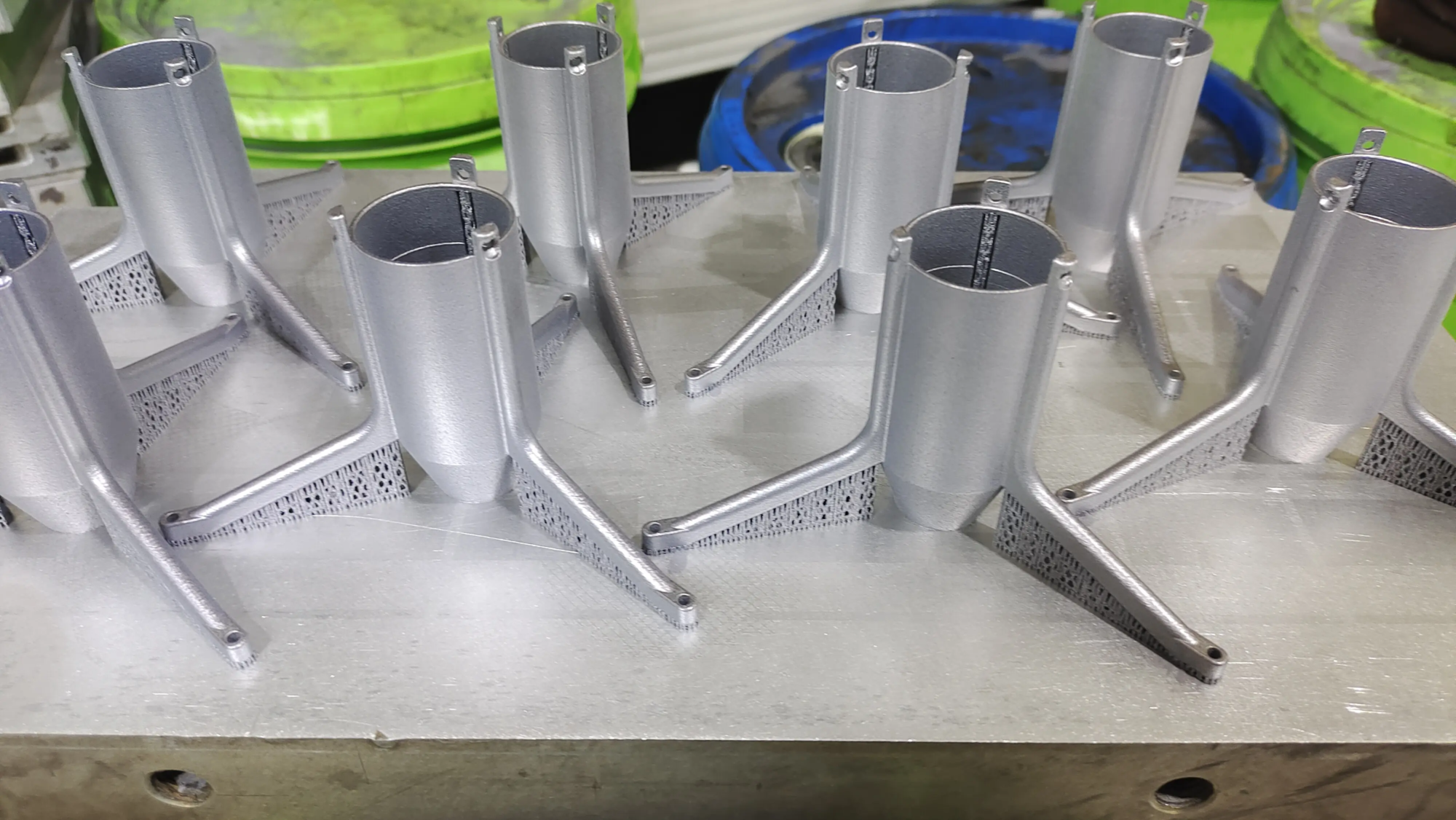
- Material selection: When working with PLA/PETG, for maximum density in the smallest space, consider outsourcing Metal weight passed SLM (Selective Laser Melting) Serve. suppliers like huge light Specializing in precision metal printing, creating tungsten or imitation lead alloys (ensuring compliance with the material’s event rules), allowing for the best quality placement previously impossible.
Secret #2: The Wheel and Axle Revolution (Holy Grail)
Wheels and axles are friction hot spots. Winning included polishing the axles, smoothing the wheel bores and ensuring perfect concentricity and alignment.
- 3D advantages:
- Precision hub sleeves/bushings: Print tiny precision sleeves that fit commercial wheel hubs (use a resin printer for smoothness). These sleeves can be perfectly cylindrical, have flanges for lateral stability, or contain lubrication grooves. They smooth out imperfections in the wheel wells and reduce contact friction with the axle (nail).
- Advanced Boring and Dressing Tools: Design and print custom mandrels/fixtures that fit your wheels and axles for perfect polish and alignment during assembly, ensuring the wheels spin freely without wobble.
- Shaft alignment fixture: Print the alignment rails and clamp the axles during installation, ensuring they are perfectly perpendicular to the body lengthwise and vertically level, this is critical to minimizing rolling resistance (scrubbing).
Secret #3: Advanced Aerodynamics and Fine-tuning
While the wooden body defines the main shape, 3D printing allows for subtle aerodynamic enhancements and tuning aids.
- 3D advantages:
- Micro wind tunnel components: Print accurate mounts and sensors for repeatable aerodynamic test setups (e.g., testing drag glide on flat sections).
- Deployable spoiler/fairing: Where regulations allow, small, lightweight aerodynamic appendages (front nose, rear spoiler) are printed and optimized using CFD simulation tools to reduce drag turbulence. Test iterations quickly.
- Balance and COG Tester: Print special jigs to measure the center of gravity and balance point with extreme accuracy after final weighing.
Professional Advantage: Metal Additive Manufacturing Integrated with GreatLight
While desktop FDM/resin printers open up huge possibilities, achieving peak performance often requires materials such as dense metal superalloys, or extremely fine, robust details.
huge lightis a leader in rapid prototyping and metal additive manufacturing (AM) in China, bridging this gap:
- Beyond plastic: Leverage SLM (metal 3D printing) Expertise:
- Ultra-High Density Tungsten Alloy Counterweights: Maximum mass concentration in the thinnest possible profile placed precisely in critical rear/low locations.
- Special Alloy Wheel Hub Assemblies: Special alloys are used to create extremely durable, low friction sleeves or bushings.
- Precision Engineering: Obtain micron-level tolerances and intricate internal structures that are not possible with wood or traditional machining of complex weight forms or optimized tools.
- End-to-end solution: GreatLight handles everything from CAD optimization for manufacturability to printing, advanced post-processing (heat treatment, precision CNC machining, friction-reducing polishing) and rigorous quality control to ensure scientifically accurate components are ready for championship racing.
- Speed and scalability: Rapid prototyping allows for rapid testing of multiple metal weight designs. Once perfected, production scaling is seamless.
- Materials Science Excellence: Technical expertise ensures the selection of the best materials (metals, hardened polymers) that comply with Pinewood Derby regulations and are designed for friction reduction and durability.
Step-by-step guide: Build a winning print-enhanced car
- Know your rules: Verify exactly which components can be printed (weights, accessories, tools) and allowed materials. If metal printing is used, this must be explicitly permitted.
- Strategic design:
- WEIGHT DISTRIBUTION: CAD low-profile, rear-biased weight optimized for maximum density placement. Prioritize COG location calculations.
- Wheel/Axle Components: Design hub sleeves and alignment tools with precise tolerances and surface finish.
- Prototyping and testing (desktop printer): Print prototype weights (PLA/PETG/resin) and tooling for fit/shape/fluid dynamics testing. Test wheel/sleeve friction combination.
- Professional improvement (optional for best performance):Use GreatLight services for:
- SLM/Metal Printing: Finalize ultra-dense metal weights or specialized bushings with optimized surfaces and tolerances.
- Advanced Post-Processing: Ensures metal parts are perfectly finished and hardened to minimize friction.
- Painstaking assembly: Polished axles. Use a 3D printed jig to create the perfect axle. Install wheels with precision printed sleeves. Observe the final weight carefully.
- Key tests: Rolling test, balance check, scale measurement.
Conclusion: A fusion of tradition and cutting-edge technology
3D printing goes beyond the novelty of Pinewood Derby racing. It is a powerful scientific toolkit for optimizing the fundamentals of physics—friction reduction, weight distribution, and aerodynamics—with unprecedented precision and flexibility. Strategically deploying printed weights (especially high-density metal versions from experts like GreatLight), friction-reducing hub assemblies and ultra-precision tuning jigs can unlock significant competitive advantages while respecting basic woodbody rules. Embracing this technology fosters innovation, deepens understanding of STEM, and pushes the boundaries of what’s possible on the iconic Incline Track. Remember, victory lies in combining technical skills, keen understanding of the rules, and advanced tools to turn that humble piece of wood into a champion.
Frequently Asked Questions (FAQ)
What parts of a Pinewood Derby race car can I legally 3D print?
Rules vary widely between organizations (BSA, Awana, etc.) and local events. Crucial: The main bodywork must almost always be of exact specification wood blocks. Generally allowed components If your event’s specific rules allow include:
- Weight system: Top 3D applications. Design complex shapes optimized for density placement.
- Hub Inserts/Bushes/Sleeves: Improve concentricity and reduce friction.
- Tools and Fixtures: Alignment guides, shaft insertion tools, polishing jigs.
- Non-structural decoration: Fairing/Accessories only if They do not affect structural integrity or violate size/weight restrictions.
- Metal restrictions: Explicitly confirm if the weights or bushings allow the use of dense metal alloys (such as those used by GreatLight for SLM printing). Never assume.
Can I 3D print the entire Pinewood Derby body?
Almost certainly not. The core rules of Scouts BSA, Awana and most sanctioning bodies explicitly require the body/chassis to be fabricated from official PINEWOOD blocks supplied as kits. Pure 3D printing of plastic or metal car bodies is generally prohibited in order to maintain the traditional ethos of craftsmanship and a level playing field surrounding woodworking techniques.
What are the advantages of metal 3D printing (such as GreatLight’s SLM) over plastic printing?
- Unparalleled Density: Metals such as tungsten have significantly higher densities than plastics (PLA: ~1.25 g/cm3; Tungsten: ~19.25 g/cm3). This allows you to pack maximum mass into a tiny, perfectly positioned volume, far beyond the capabilities of plastic or the thick nature of traditional lead weights.
- Superior mechanical properties: Metals offer greater strength, stiffness, durability and temperature stability compared to plastics, which is critical for thin-walled weight designs or highly stressed bushings.
- Advanced surface finish potential: Specialized metal additive manufacturing (like GreatLight’s) combined with post-processing (machining, polishing) results in incredibly smooth, low-friction surfaces that are even better than sanded plastic surfaces.
- Precision Engineering: SLM provides excellent dimensional accuracy and detail resolution for optimizing micro-parts such as anti-friction sleeves.
Can GreatLight help me purchase Pinewood Derby parts directly?
Yes, in a strategic partner role. Gretel is good at:
- Scientifically optimized manufacturing, high density Metal weight (using materials such as tungsten) to achieve the lowest possible center of gravity and rear mass deflection without compromising structural integrity.
- Produced robustly and precisely Metal bushing or sleeve If metal wheel components are allowed by the rules, they are carefully designed to minimize axle friction.
- Provide ultra-precision CNC finishing The traditionally processed wooden body is used to achieve perfect aerodynamic performance.
- Supply expert Design for Manufacturability (DFM) Consulting Complex CAD files. Avoid common pitfalls in weight or bushing design.
Contact GreatLight’s engineering team directly to discuss feasibility, materials science, optimized design, and strict compliance with event regulations.
No complex technology like professional 3D printing is used "Cheating"?
This is the delicate debate at the heart of the ethics of the Pinewood Derby. consider:
- Rule Compliance: Using advanced manufacturing techniques only on explicitly permitted components is not cheating; it utilizes modern engineering within an established framework. The judge inspects the car.
- Focus on STEM learning: The real value lies in applying the principles of physics (friction, inertia, aerodynamics) and the engineering process (design, prototyping, testing). Additive manufacturing greatly enhances this education.
- Auxiliary functions: While desktop printers are common, utilizing expert services like GreatLight can provide a wider scope for those who lack mechanical capabilities, emphasizing design intelligence and scientific understanding.
- Balancing tradition and innovation: The focus remains on shaping and optimizing the wood core. Advanced components simply enhance the physical execution allowed by the rules.
Always prioritize creative production, learning over winning, and most importantly, unequivocally respect the official guidelines for your specific event.
Where can I find reliable Pinewood Derby rules?
Always get them directly from the official source of the event:
- Boy Scouts of America (BSA): Official Grand Prix Pinewood Derby Rules.
- Established: Awana Grand Prix Official Rules.
- Other organizations: Check their specific publications/websites.
- Local competition: Please check with organizers – club/city competitions are subject to change. Never rely solely on forum advice.