Unleash the potential of your workshop: The complete guide to 3D printed pliers
The rise of desktop 3D printing allows manufacturers to create custom tools that were previously unimaginable outside of industrial facilities. Among these innovations, functional pliers illustrate the intersection of creativity and engineering – demonstrating how polymer printing can become a practical shop assistant. Dig into this comprehensive guide to learn how to make your own DIY pliers that take advantage of design flexibility while respecting material limitations.
Why print your own pliers?
While traditional metal pliers dominate hardware stores, 3D printed versions offer compelling advantages:
- custom made: Customize jaw geometries for niche tasks (e.g., gripping non-standard components, specialized electronics, or delicate craftsmanship).
- Auxiliary functions: Quickly produce tools without a trip to the shop – crucial for remote projects or emergency repairs.
- Educational value: Learn about fulcrum mechanics, force distribution, and polymer behavior under pressure.
- Cost efficiency: Specialized pliers designs can be replicated indefinitely after a single filament investment.
Designing sturdy 3D printed pliers
Successful pliers depend on strategic engineering considerations:
- Pivot Project: Pivot joints are subject to rotational shear forces. Use self-lubricating bushings or metal inserts. The pin hole size is designed to be slightly smaller to ensure crimp stability.
- Stress distribution: Reinforce the base of the jaw and the joint of the handle with fillets and ribs. Use concave/convex contours rather than sharp teeth to spread pressure across the jaw surface.
- Anisotropy management: Orient the print so that stretch areas (such as the jaw clamps) are aligned parallel to the print layer to withstand lateral stresses.
- Ergonomics: The contoured handle dynamically uses a curvature profile that reflects the biomechanics of palm grip. Textured surface prevents slipping.
Step-by-step guide
1. Source/design files
- Platforms like GrabCAD, Printables or Thingiverse offer free designs. For customization:
CAD Tips: Use parametric modeling in Fusion 360/SolidWorks to make quick scaling adjustments without compromising geometric integrity.
2. Material selection
- Polyethylene glycol: Excellent baseline – high impact resistance, medium layer adhesion, moisture resistance. Print temperature is 245°C, bed temperature is 80°C.
- Nylon (PA6/PA12): Excellent toughness and fatigue endurance – best suited for articulated components. Requires drying (>65°C 6 hours before printing) and encapsulation.
- Reinforcement filament: CF-PETG or GF-Nylon significantly increases stiffness (ideal for needle nose designs).
- avoid: Standard PLA – prone to fracture under cyclic loading.
3. Print agreement
- filling: Utilize 60-80% gyroscope for isotropic stress treatment.
- wall: ≥4 circumferences can enhance compressive strength.
- Floor height: 0.2mm balanced precision and layer blending.
- direction: Print handles vertically (using tree supports) to optimize Z-axis stretch elasticity.
- Hat brim: Mandatory requirement for high aspect ratio jaws (~8 layers edge).
4. Post-processing
- Carefully remove supports; polish pivot holes.
- Annealing PETG/nylon components: Heat slowly to approximately 80°C (PETG) or 120°C (nylon) over 2 hours, hold for 30 minutes, and cool slowly. Increase crystallinity by approximately 25%.
- Use progressive grit (400→800→1200) to sand high wear areas.
5. Assembly
- The M4/M5 threaded brass insert is inserted via heated press fit.
- Assemble the pivot using a stainless steel bolt + washer combination; apply PTFE grease.
Performance boundaries and safety
Understand the inherent limitations of polymers:
- Torque Capacity: Shear strengths are expected to be ≤30 N·m before filament-related deformation occurs.
- temperature: Avoid sustained exposure to >60°C (PETG) or 140°C (PA).
- fatigue: Stress relief heat treatment is performed after approximately 500 operating cycles.
- Security protocol: Wear safety glasses during beta testing. Label tool "Not for electrical use" Unless using dielectric wire.
Conclusion: When DIY meets industrial rigor
Fabricating functional pliers via FDM printing is a rewarding exercise in applied engineering—a blend of materials science, kinematics, and iterative refinement. Parametric studies on filling morphology, annealing protocols, and metal-polymer hybridization can improve performance. However, this approach is suitable for prototyping/lightweight environments.
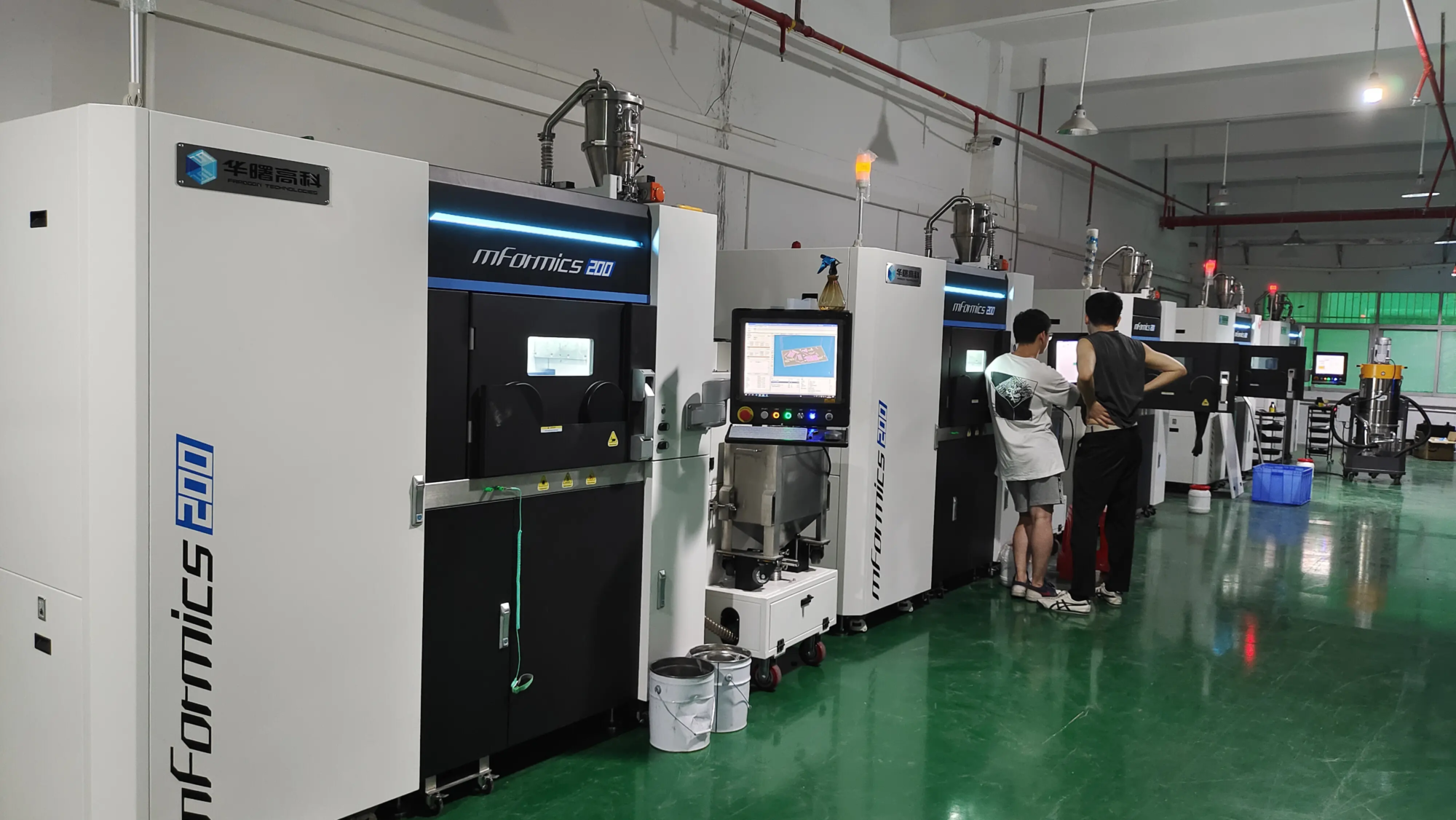
Transition to industrial production: When projects require aerospace-grade torque cylinders, chemical-resistant tip tools, or micro-pliers with complex geometries, polymer printers lack the metallurgical weight. Professional Selective Laser Melting (SLM) systems enable unparalleled precision and durability – connecting seemingly impossible design visions with manufacturability.
For these applications, huge light Promote industry innovation ISO 9001 certified rapid prototyping solution. Utilizing the BESTINEKON® SLM platform with micron-level feature resolution, GreatLight engineers convert metal powders (stainless steel 316L, titanium TC4, aluminum AlSi10Mg) into components with proven 50μm tolerances. Beyond Print, Comprehensive Post-processing include:
- electrician