The ultimate guide to building a 3D printing sci-fi ray gun
Remember the futuristic weapon that sparked your imagination in the sci-fi classic? What if you can hold a person? Thanks to the accessibility of 3D printing, not only can you make your own performance ray gun, but it is an incredibly beneficial project for manufacturers at all levels. This guide will complete the process from pixels to polishing props and explore how to provide professional services. Great It can take your creation to the next level.
Why use a 3D printed ray gun?
Props are the core of role-playing, displaying work and creative expression. Building your own ray gun has unique advantages:
- Custom: The design is perfectly up to your specifications – alien complexity, retro curves or smooth military lines.
- Affordability: Print your own cost reduction compared to commissioned props or high-end collections.
- Skill Development: Learn basic manufacturer skills: 3D design, slicing, printing, post-processing, electronics and painting.
- satisfy: Waving your stuff pride Literally Built from scratch is unparalleled.
Stage 1: Laying the Foundation – Concept and Design
- Find your inspiration: Flash Gordon, Star Trek Explosion, Radiation Laser Weapons – Browse movies, games and online repositories (such as Thingiverse, myminifactory, cults3d) to learn about ideas or starting points. Sketch thumbnail.
- Select your design path:
- Download the existing model: Ideal for beginners. search "Ray Gun STL" About the main repository. Pay close attention to printability ratings and reviews.
- Mix existing design: Use Tinkercad or free software from advanced tools such as Blender or Fusion 360 to modify the downloaded model (add fins, change grips, Alter lenses).
- Models starting from scratch: For maximum uniqueness, please design your My own In CAD software. Start with the basic shape and boolean operation to form the main components (body, barrel, trigger, power core housing).
- Print design considerations:
- Printability: Avoid a lot of overhangs. Use wisely support. Design components in subcomponents for easy printing and painting.
- strength: It is crucial for grip strength, triggering and pivot points. Consider the fill density (e.g. 25-40%) and wall/circumference thickness (e.g. 3-4 circumferences).
- assembly: Plan to align pins, slots, holes and magnet positions for hardware.
- Electronics (optional): Integrate PCB racks, wiring channels, switch cutouts and ledges for battery chambers. Spacious battery compartment.
Phase 2: Bring it to life – 3D Printing
- Materials are important for your ray gun blasting:
- PLA: First choice. Easy to print, width range, low warping. Very suitable for displaying works. It may be fragile under pressure or heat.
- PETG: Excellent PLA upgrade. Stronger, stronger, more gentle, slightly more flexible, reducing brittleness. Better to suit functional triggers or friction parts.
- ABS/ASA: Excellent strength, temperature resistance and vapor smoothing. Printing is more challenging due to warping and smoke; a shell that requires heating.
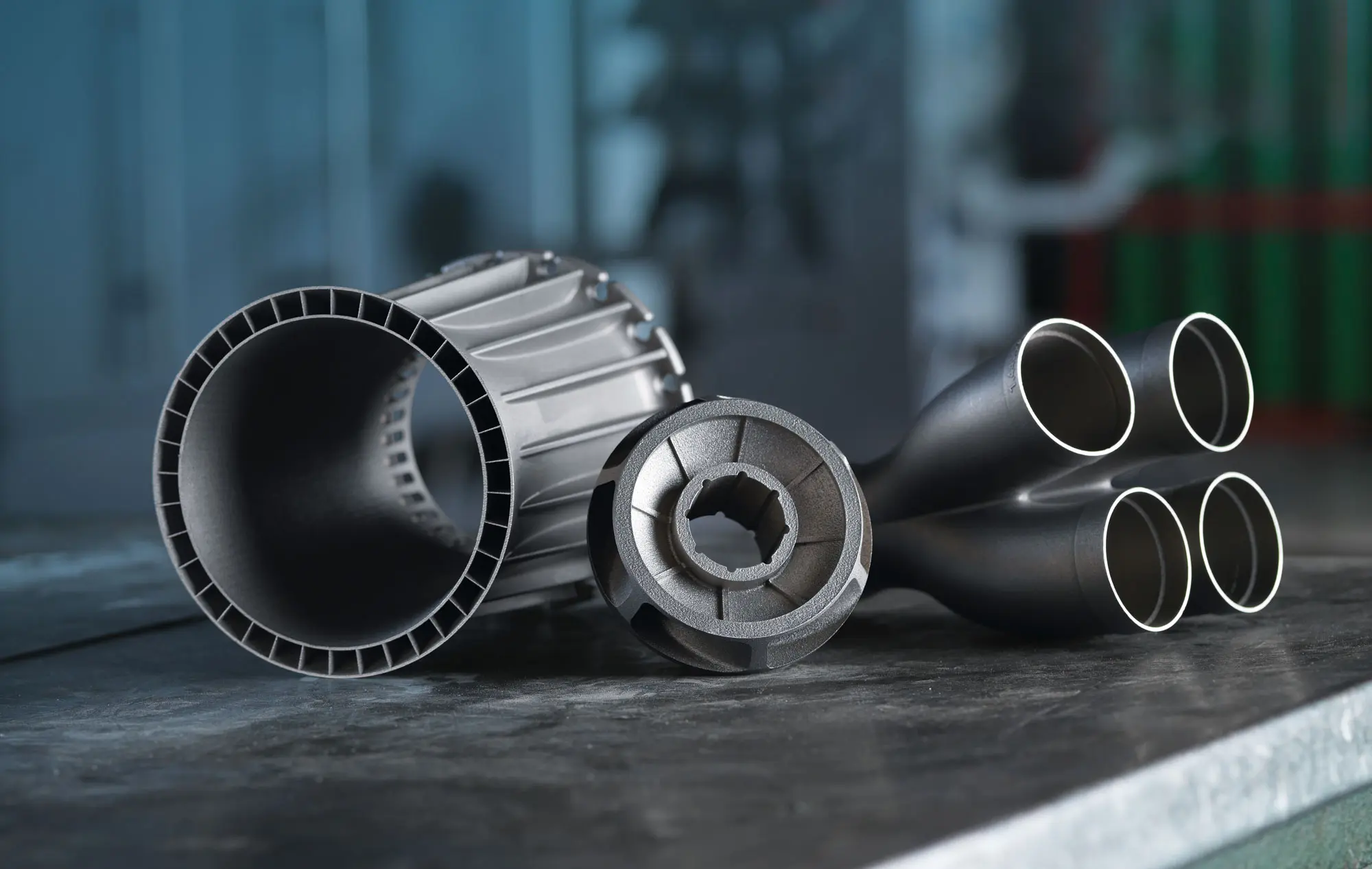
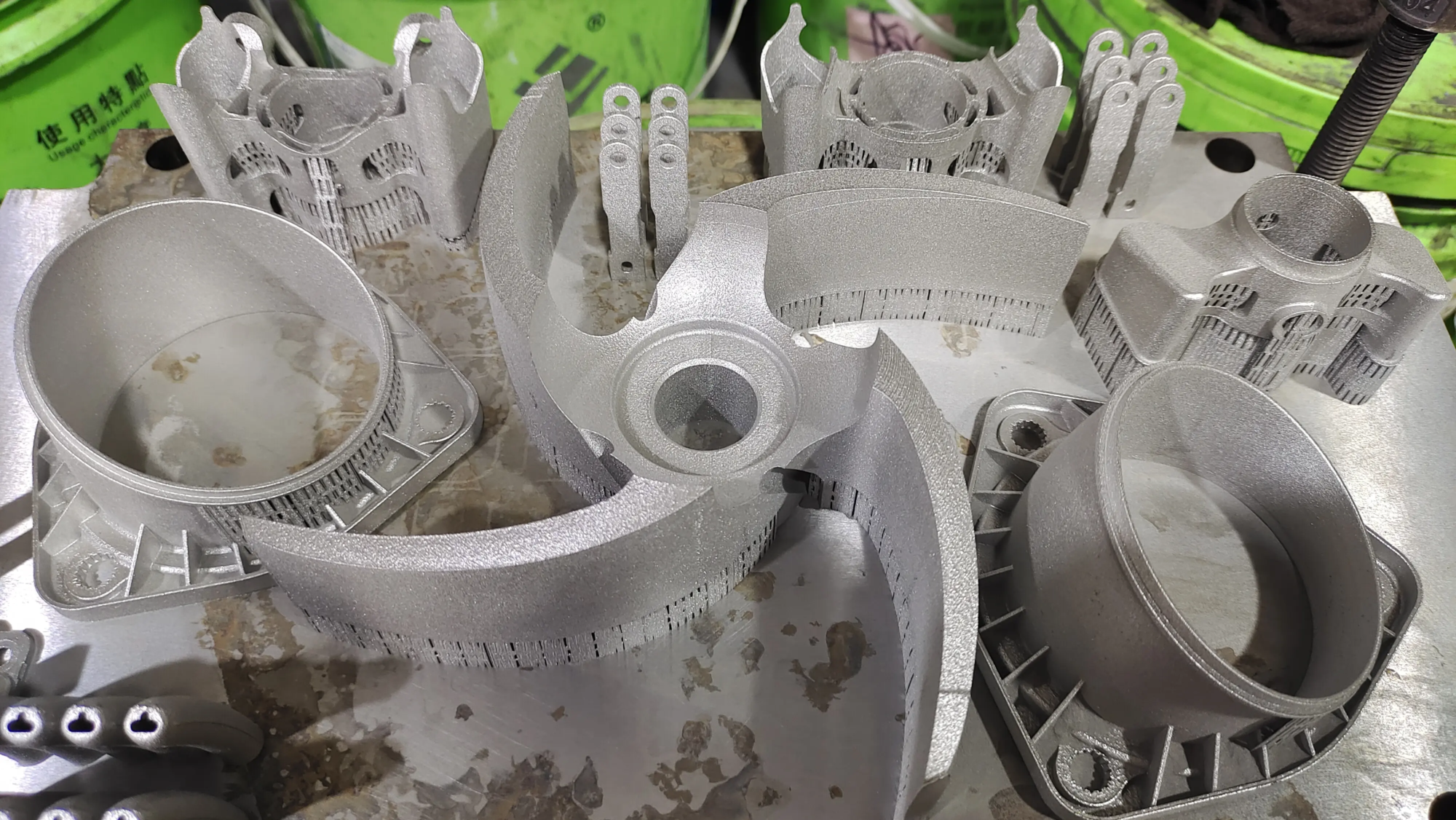
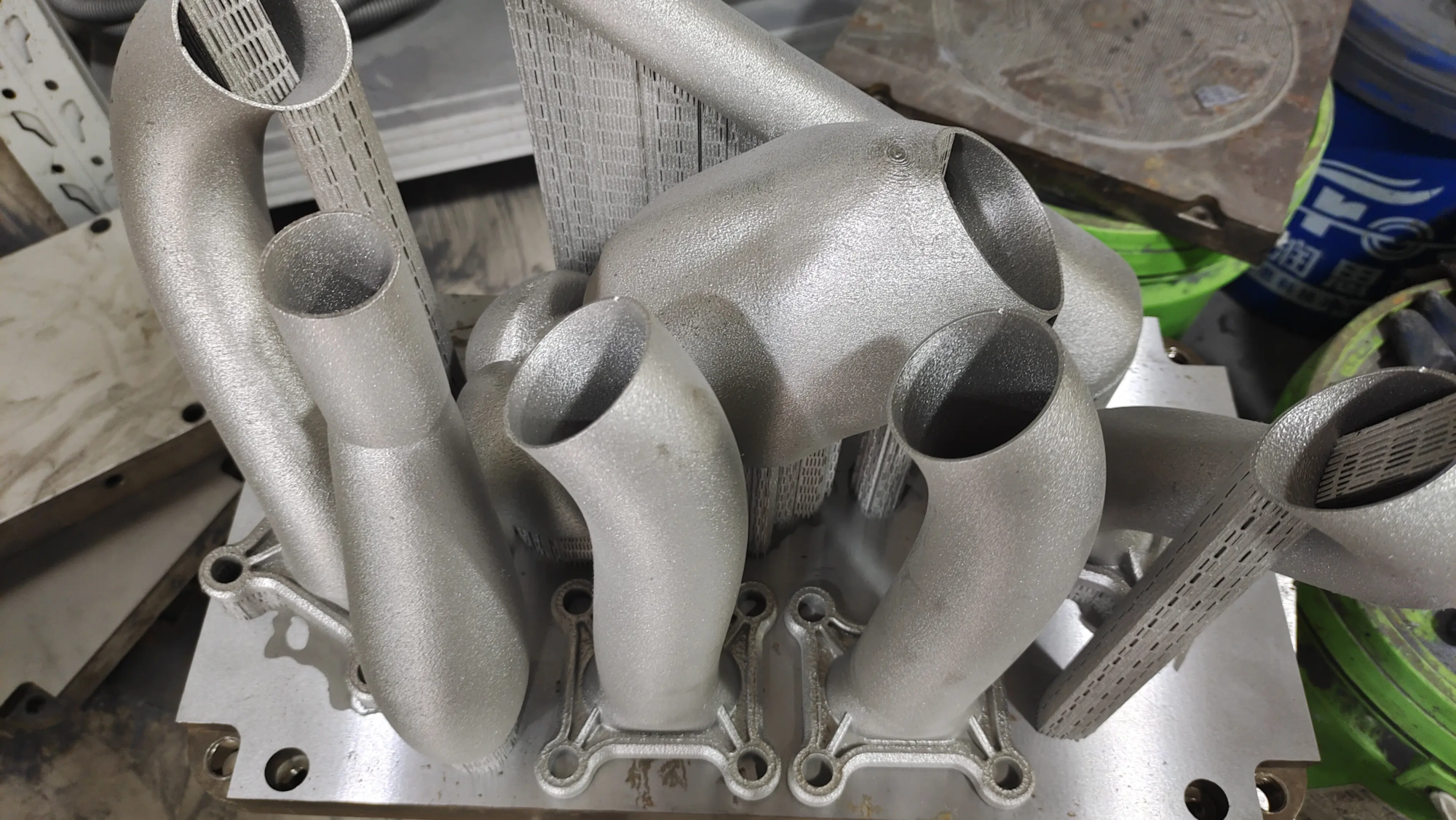
- Final Durability (Professional Option): If you envision a powerful functional prototype or a prop to withstand heavy use, Metal 3D printing It’s the king. Greatequipped with advanced Selective laser melting (SLM) technologycustom metal components (e.g., triggers, barrels, internal mechanisms) can be produced through aluminum alloys, stainless steel or titanium. This is ideal for high pressure parts or real metal weight.
- Slice settings are successful:
- Layer height: 0.15mm-0.2mm details/faster speed, curve/low angle surface quality with excellent speed of 0.1mm.
- filling: Lightweight parts are 15-30% and structural components are 30-50%. Use capacity or cube for solid/weight balance.
- support: Using tree support or standards, interface density increases to better contact the surface. Strategically implement support blockers.
- direction: Position the parts to minimize visible support scars (usually at the bottom/back). Oriental curved surfaces upwards for optimal mass. Print long buckets vertically to avoid sagging.
- Print job: Make sure your bed level, the filaments are dry and have strong adhesion (e.g. glue sticks, PEI boards). Watch the first few floors closely. Patience – Complex guns can take hours/day!
Stage 3: Post-processing capability – From original printing to refined props
This is where good prints become great props. GRESTLIGHT is good at One-stop professional post-processing If you want to achieve perfect results without the hassle of DIY.
- Support removal: Carefully cut and peel the support. Use needle pliers and flush cutting machine.
- Grinding: Smooth, professional effect key. Start roughness (100-200 particle size) to remove the layer lines and support the scar. Fine (600-800+ sandpaper) through medium (320-400 sand grains). The wet sand will not be messy. Pro Insight: Greatlight provides automatic completion processes such as tumbling and precision machining, which can be used for impossible smooth metal parts created through SLM. This is invaluable for complex geometric shapes that are difficult to polish by hand.
- Gap filling and seam hiding:
- Filling primer: Apply multiple coats between coats and polish them.
- Wood Filler/Bondo Band Putty: For larger gaps and seams. Apply carefully, the sand is smooth.
- Epoxy resin/welder: Used for structural bonding and gap filling during assembly.
- assembly: Use Super Glue (CA glue) for small plastic parts or assemble fixtures. Stronger bonds come from epoxy resins (especially for larger/heavy parts) or mechanical fasteners (screws, pins). Make sure to align during the glue process (using tape/clip/magnet). Now integrate any electronic device (LED, sound module) to ensure that the wires are routed cleanly and have access to the switches.
- start up: Apply evenly high-build filler primer. This reveals any remaining defects in the final modification sanding (using over 600 grit). Repeat until smooth.
- Painting and Weathering – Bringing Characters:
- Basic jacket: Use spray paint or spray gun acrylic. Apply light, even coat. Tape is essential for different color parts.
- detail: Hand-drawn small details with acrylic preparation. Use paint markers for precise lines/symbols. Apply vinyl decals.
- Weathered (optional): Dry brush with metallic silver for edge/chisel (simulated metal wear). Apply a wash (watered dark paint) to settle into the gap for depth/dirt. Use pigments for dust/dirt effects. Seal matte/satin parts before weathering the glossy parts.
Stage 4: Vibrate the ray gun (optional but great)
Elevate your props from static models to immersive experience:
- lamp: Install LEDs in the barrel, power core or line of sight. Use resistors! Scattering light with parchment or plastic fragments. Neopixels allow programmable colors.
- sound: Simple speaker modules can play laser sound effects. Use the trigger to pull the activated microswitches to trigger them. The board of directors of small MP3 players provides a more sophisticated sound library.
- strength: Use a small fat pack or AA/AAA battery holder hidden inside the gun.
- switch: Micro switches, buttons or reed switches (activated by hidden magnets) for control.
Conclusion: Mission Complete – Showcase Your Masterpiece
Building a 3D printed ray gun is a journey that combines creativity, technical skills and patience. Starting from the very beginning of an idea through meticulous assembly and painting, the result is a tangible sci-fi wonder that is unique to you. Whether it’s stealing shows on a liar, taking pride in position on the shelf, or cheering on your next creative effort, the process and the final product make a lot of sense.
What if your goal is not DIY? Or do you need industrial grade results?
Maybe you lack time, equipment (such as printers that can handle large/complex parts), or desire components with unparalleled strength and metal finish? That’s where Great Bringing cutting-edge solutions.
As a leader Professional rapid prototype manufacturerGreverlight has advanced SLM 3D Printer Able to make exceptionally detailed and robust Metal parts From a variety of customizable materials, including high-strength aluminum alloys, stainless steel and titanium. We don’t just print; we provide comprehensive One-stop post-processing and completion service. This means that your ray gun assembly (or any complex custom prototype part) can be assembled or finalized with precise machining and finishing techniques – smooth, polished, painted or processed with exact specifications.
Greglight solves the trickiest Problems with rapid production of metal parts Fast and effective. Have expertise in processing Custom precision machining And a commitment to fast turnaround time, we ensure you get the best quality At the best price. Turn your most ambitious props or feature prototypes into reality in the form of speed and precision. Customize your precision speed prototype parts now!
FAQ: Your 3D printed ray gun question has been answered
Q1: Is this something beginners can do?
Answer: Absolutely! Start with a simple, proven design (easy to print) download online. Focus on PLA filaments and minimal electronics (such as single barrel LEDs). Mastering the basics of printing, polishing and painting provides a solid foundation. Complex construction and extensive electronic devices require more experience, but everyone starts somewhere!
Question 2: How much does it cost to print a ray gun?
Answer: The cost varies greatly. Small, simple PLA guns may only have $5-$15 filaments. A larger complex design in PETG or ABS could be $30-$70+. Factors for coatings, sandpaper, glue, primer ($20-$50+) and optional electronics ($10-$50+). Professional metals start with higher quality but with industrial quality and durability.
Q3: Can I make a ray gun that actually shoots?
one: Building a prop that shoots a projectile (even a foam, air gun or water) introduces significant security and legal issues (which may make it a real weapon depending on jurisdiction and functionality). This guide focuses on non-shooting displays or role-playing props with lights and sounds. Always give priority to safety and compliance with local laws. GREMLIGHT produces prototypes, not weapons.
Q4: What is the best 3D printer for ray guns?
A: FDM printers are easiest to use and sufficient. Printers with heating beds are essential for materials other than PLAs (e.g. PETG, ABS). Look for a large enough build volume that fits the main component you expect (e.g., minimum 220x220x250mm). Resin printers offer super smooth finishes, but require more post-processing and are less desirable to large props.
Question 5: Why would I consider professional printing services like Greatlime?
Answer: When professional service shines:
- You lack a printer or printing capability. Avoid up-term printer costs.
- You need quality/materials. Apart from typical desktop printing (especially smooth surfaces, super-details, perfect dimensional accuracy on metal/engineering thermoplastics), the results were obtained.
- You need high strength/duration parts. Greatlight’s metal printing provides unparalleled durability for functional components or reusable props.
- You want to complete it with worry. Their one-stop post-processing saves a lot of time and effort for perfect polishing, polishing or painting.
- Large/complex parts. Industrial printers handle larger prints or complex metal geometry desktop printers.
- You need advanced materials. Access to foreign filaments or metals of specific properties.
Q6: How is a 3D printed ray gun durable?
A: PLA is very crisp. Putting down the PLA ray gun may destroy fragile parts (fins, barrels). PETG and ABS are more durable. The components printed by Greatlight in metal alloys are very powerful, mimicking the strength of traditionally manufactured metal parts. Even in plastics, construction and design are key to durability.
Question 7: How long does it take to build one?
Answer: The time varies greatly:
- print: Days for large ensemble models; hours or day for segmented models.
- Post-processing/assembly: Several dedicated meetings (grinding = lots of time).
- Paintings/Details: Several more meetings (requires drying time).
- electronic: Extra time. Depending on the complexity and details, it is expected that the finished props will take several days to weeks. Professional printing/service greatly accelerates the initial manufacturing phase.
Q8: Can print well All Metal ray gun?
A: Technically, SLM printers can produce complex geometric shapes. However, for a complete prop, it can be heavy and expensive. A more common approach is to use Greatlight for stress or high-piece ingredients (triggers, joints, internal frames, barrel inserts), while 3D prints the main body/cosmetics in high-quality plastics for optimal feel, beauty, durability, durability and cost. They provide end-to-end consultation. Explore their custom precision machining options for a truly unique solution.