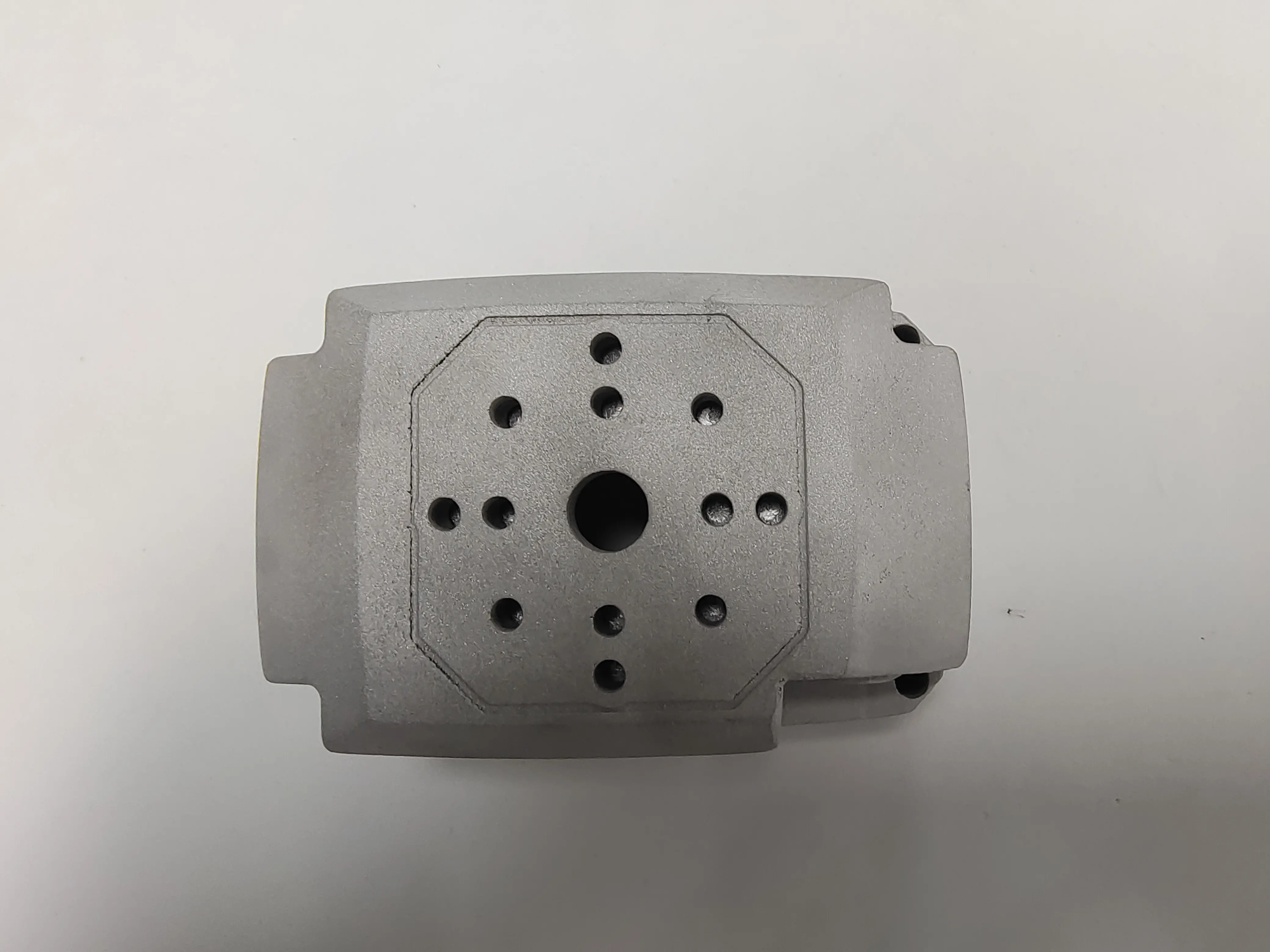
Unlocking Car Comfort and Safety: The Revolution of 3D Printed Seat Belt Clip Guide
In a complex automotive safety ecosystem, seat belt clips usually don’t attract people’s attention until they fail. These open components ensure that the seat belt retracts smoothly and remains accessible, eliminating driving interference. But producing reliable editing to endure daily mechanical stress poses unique challenges. Traditional manufacturing has high cost and limited flexibility to afford complex geometric shapes. Enter Metal 3D printingsolutions that can be redefined when producing seat belt clip guides.
Why are traditional methods insufficient
Traditional techniques such as injection molding or CNC machining rely on costly tools and battles with complex internal channels or organic shapes. Design iterations are slow, material waste is high, and production schedules are lagging. For parts with constant tension and friction, material selection is essential to avoid premature wear.
How Metal 3D Printing Addresses These Challenges
Selective laser melting (SLM) Technology drives innovation in this niche. This is why it is good at:
- Complex geometry and lightweight: SLM is built layer by layer from metal powder, making hollow structures, lattice support and ergonomic profiles impossible in molding or processing. This means that the clip can integrate snapshots, hinges and wear pads in a single print.
- Material versatility: Stainless steel (316L), titanium alloy (TI64) and aluminum (ALSI10MG) provide corrosion resistance, high tensile strength and fatigue endurance, which are crucial to the automotive environment.
- Fast, waste-reduced production:SLM eliminates molds or cutting tools, thus reducing lead time. Complex 3D printed parts are delivered in days rather than months.
Huge difference: Engineering excellence in action
At Greatlight, we use advanced SLM printers and a decade of metal 3D printing expertise to transform the production of seat belt clips. Our method:
- Co-design consultation: We use a generative design to test teeth alignment and load paths to optimize parts by simulation to prevent slipping or buckling.
- End-to-end processing: From powder bed fusion to pressure-comfortable heat treatment and CNC-resistant finishes, we offer ready-made parts.
- Proportional flexibility: Produce a prototype overnight or ramp to hundreds through an automated workflow.
In practice: The clips that automotive customers need are 40% lighter than stainless steel, but are equally durable. We designed a titanium version with an internally reinforced lattice that reduces weight without compromising integrity – all delivered within 72 hours.
Sensor-to-formula process:
- Digital design: CAD model optimized for additive manufacturing, focusing on wall thickness and stress distribution.
- print: High-precision SLM printer fuses metal powder under an argon atmosphere to ensure dense (>99.5%) layers.
- Post-processing:
- Support for deletion through EDM processing.
- Rolling polishing of key friction contact surfaces.
- Passivate to enhance corrosion resistance.
- verify: CT scan (for porosity) and bench tests for clip retention cycles (up to 50,000 drives).
Why Automakers Choose 3D Printing
- Cost-efficiency: Zero tools investment for low to intermediate volumes.
- Endpoint quality: No assembly is required; the clip runs immediately on the build board.
- obey: Comply with the flammability and strength standards of FMVSS 209/302.
- Sustainability: Near mesh printing reduces metal scrap by about 70%.
in conclusion
The shift to 3D printed seat belt clips marks a leap in automotive safety manufacturing. This approach seamlessly unifies precision, customization and speed, turning conceptual innovation into functional reality. Standing at the intersection of progress and application, Greatlight transforms SLM technology into an optimized solution for every buckle and brake disc. With electrification and autonomy, the agility of 3D printing ensures that safety systems do not lag behind.
Work with Greatlime: Is it a prototype custom editing or an extended security supply chain, our one-stop service (from printing to Poland) without compromise on rapid manufacturing. Today, please give your offer to engineers the future.
FAQ: 3D Printed Seat Belt Clip Guide
Q1: Are 3D printed metal clips strong enough to use cars every day?
Absolutely. Materials like the stainless steel 316L can withstand up to 550 MPa and resist corrosion, oil and UV exposure. After treatment (e.g., thermal isostatic compression) microscopes are eliminated to ensure reliability comparable to forged components.
Question 2: How much does it cost compared to injection molding?
For production runs of less than 1,000 units, 3D printing is 30–50% cheaper due to zero tools. For larger batches, a hybrid solution (print mold) promotes more savings.
Question 3: Can I customize the clips for a specific vehicle?
Yes – SLM thrives in customization. We modified the engagement angle, mounting points or aesthetic outline in the CAD file to adjust the clip’s retro classic or next-generation electric car.
Question 4: Does Greatshie meet the automotive industry certification?
We comply with the IATF 16949 quality protocol and are certified by ISO 9001. Substance traceability and test reports (e.g., stretching, impact) accompany each order.
Question 5: What is the fastest turnaround for emergency editing redesign?
Prototypes are shipped within 24–48 hours by priority SLM printing; volume production within 1-2 weeks (50-500 units).
Q6: Which metal balances weight and durability?
Titanium (Ti64) is good at weight use; aluminum (ALSI10MG) is suitable for cost-sensitive applications; for extreme environments, stainless steel remains the toughest.
Question 7: Do you deal with auxiliary services such as auxiliary services?
Yes. We offer PVD coatings for use with scratch resistance, anodization or powder coatings from the interior finishing department.
Question 8: How to verify the quality of parts?
Each clip laser scans CAD tolerances (±0.1 mm default; ±0.05 mm achievable) and multi-position stress cycles. We share real-time Q&A reports with our customer dashboards.
Q9: Can I provide my own raw materials?
Yes, if the powder meets ASTM standards. We also source certified metals such as EOS Inox IN718 or AM development alloys.
Find out how Greatlight’s metal 3D printing capabilities redefine your automotive components – Contact us for a design consultation at contact@greatlightprototyping.com.