Embrace customization and power: Unlocking the potential of 3D printed shelf stands
Gone are the days of searching for hardware stores almost Suitable or match your aesthetic vision. The world of home decoration and functional design is undergoing a revolution driven by the accuracy and versatility of 3D printing. Enter 3D printed shelf stand – A convergence of innovative manufacturing and tailor-made design solutions that provide unprecedented freedom and performance. Whether you are a DIY enthusiast, a professional architect, or a business that requires professional fixtures, these brackets can unlock the possibility that was previously restricted by traditional manufacturing restrictions.
Why choose 3D printing for rack stands?
It boils down to customization, complexity, and speed. Unlike the option of mass production, 3D printing allows you to design a stand that is perfect for its specific purpose:
- Tailored aesthetics: Design brackets are a true extension of your decoration – smooth modern lines, complex Art Nouveau patterns, industrial patterns or minimalist forms. Your shelf hardware becomes a deliberate design element, not an afterthought.
- Precision geometric shapes: Need a bay to fit an unusual corner, along curved walls or merge built-in cable management for floating media centers? 3D printing processes complex geometric and organic shapes, while traditional extrusion or casting will be very expensive or impossible.
- Optimized strength to weight ratio: With computational designs (such as topological optimization), the material can only be placed on the strategy if structural support requires it, resulting in lightweight but incredibly powerful brackets. This reduces material waste and visual amount.
- Rapid prototyping and small volume production: Get the prototype in a few days rather than weeks. Quickly test forms, fits and functions before final design. Ideal for custom furniture manufacturers, store fixtures or unique construction needs without large minimum orders.
- Miniaturization and integration: Design tiny, intricate stents for niche, display or scale models, or integrate the functions of mounting holes, alignment pins or embeddings directly into the bracket.
Materials Important: Power achieves versatility
Choosing the right material is critical to safety and performance, especially for load-bearing applications. Here is where the capabilities of advanced 3D printing technology really shine:
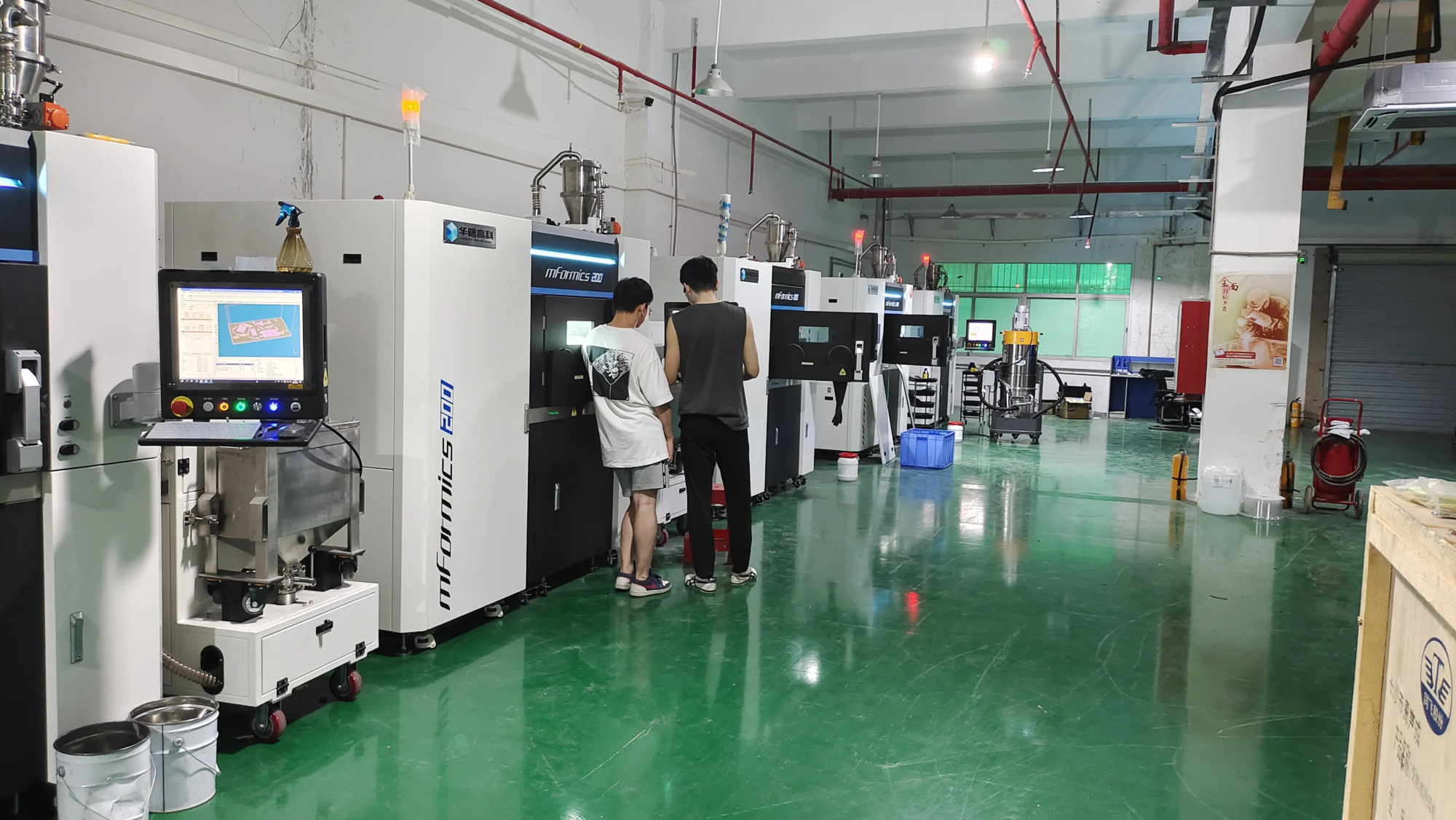
- Metal brackets – Gold standard for strength: For demanding structural applications, Metal 3D printing, especially selective laser melting (SLM), It’s the solution. Greglight uses industrial-grade SLM machines to build rack brackets layer by layer using high-power lasers that fuse high-quality metal powders. Our expertise ensures:
- Special Materials: Stainless steel (316L, 17-4 pH), aluminum alloy (ALSI10MG, ScalMalloy®), titanium (Ti6al4v), Inconel and Custom Alloys. These provide significant strength, corrosion resistance and durability, or over-processed parts.
- Inherent strength and density: SLM produces completely dense metal parts with mechanical properties comparable to exercise materials. No inherent weaknesses of joints or welds.
- No compromise complexity: SLM processes complex internal lattice structures achieved through topological optimization, maximizing strength while minimizing body weight – not possible through subtraction processing.
- Polymer Stents – Lightweight and aesthetic choice: Materials such as reinforced nylon (PA11, PA12 GF/CF), ULTEM™ or elastomeric resin (for SLA/DLP) are excellent choices for FDM, SLS or resin printing for lighter load or decorative purposes. Although not comparable to metal on heavy shelves, they perform well in specific situations: display stands, trimming elements, low-load fixtures in protected environments or as aesthetic covers on structural cores.
Design for success: Basic considerations
A well-designed 3D printed bracket is more than just the appearance. It’s about engineering integrity. Key factors include:
- Load calculation: Accurately estimate the static and dynamic loads that the bracket will bear (shelf weight + content + potential force). For security, this is not commercially acceptable. Consult engineering principles or experts. The safety margin of factors is very large.
- Wall thickness and ribs: Avoid excessively thin walls buckling easily. Strategy place ribs, fillets (rounded edges) and burrs (reinforced triangles) to distribute pressure and prevent cracking. Compared to polymer processes, SLM allows for thicker walls and internal structures.
- Strength direction: The direction of the build on a 3D printer affects strength. For SLM metal parts, Greatlight experts optimize directions to maximize load bearing capacity along critical axes and manage residual stresses.
- Stress Analysis (FEA): For critical applications, finite element analysis software can simulate load distribution and identify potential failure points before printing. Complex designs or overloading are highly recommended.
- Installation and Fasteners: Design a reliable mounting point and use sufficient material around the screw holes. Consider merging countdown screws for flushing or designing for specific hardware. Ensure maximum facial contact with the wall/shelf.
Why cooperate with professional services like Greatlight?
Although the desktop printer has its own location, it achieves real and reliable structure Especially the properties of metals require industrial capabilities and expertise:
- Industrial grade metal AM: The use of high-power SLM machines ensures the density and material properties required for a safe, robust, long-lasting metal bracket.
- Advanced Materials Portfolio: Machine-hard metals, such as titanium and high-strength aluminum alloys, are beyond desktop functionality.
- Post-processing of critical tasks: Original printed parts usually need to be completed. Provided by Greghime One-stop service:
- Support removal: Carefully remove the temporary support structure.
- Relieve pressure and heat treatment: It is crucial to maximize mechanical properties and eliminate internal stresses from metal parts, especially SLM.
- Precision machining: CNC milling/drilling for critical mounting surface or hole tolerances.
- Surface finish: Bead blasting, polishing, powder coating, anodizing (Al) or passivating (St.ST) for aesthetics, corrosion resistance and professional appearance.
- Materials and process expertise: Engineering guide for material selection, design optimization of manufacturability (DFAM) and ensuring that finished parts meet functional requirements.
- Speed and scalability: Iteratively design rapid prototyping and then efficiently produced when needed.
Unlock the app: 3D printing stand is excellent
- Custom furniture: Designer floating shelves, unique bookshelf, custom cabinetry.
- Retail and Display: Customized product display units, signage holders, museum exhibition accessories.
- Industrial: Specialized tool fixtures, fixtures, unique equipment fixtures, traditional bracket failures.
- architecture: Intricate curtain ledges, custom facade elements, internal functional support.
- Home decoration project: Customized solutions for awkward spaces, matching historical styles or creating unique visual statements.
- Automotive and Aerospace: Lightweight mounting bracket for internal components, custom fixing.
Conclusion: Raise the project with accurate 3D printed brackets
3D printed shelf stands represent more than just hardware; they are the portal for design liberation and functional excellence. The ability to create complex, customized high-strength components quickly empowers innovation across the industry. For projects with custom, unique geometry, optimized weight and structural integrity, Metal 3D Printing (SLM) is a definite solution through professional service providers like Greatlight (Greatlight). We combine advanced manufacturing technology, deep materials science knowledge and comprehensive post-processing capabilities to transform your unique bracket design into a reliable, high-performance reality.
Ready to bring the ideal shelf solution to life? Greglime is your trusted partner for Precision Metal 3D printing. Leverage our advanced SLM technology and one-stop post-processing services to create custom brackets with amazingly powerful.
FAQ: 3D printed shelf stand
-
Q: How strong is it compared to traditional 3D printed metal shelf stands?
- one: When produced using appropriate alloys (such as 316L stainless steel or ALSI10MG aluminum) and appropriately designed industrial SLM (selective laser melting), 3D printed metal brackets can exhibit strength and stiffness that can be compared to or sometimes exceed conventional cast or processed brackets. Strength depends on material selection, design optimization, printing direction and post-processing.
-
Q: Which material is best for a strong load-bearing rack bracket?
- one: For significant loads, Stainless steel (316L or 17-4 pH) and Aluminum alloy (ALSI10MG, ScalMalloy®) Printing via SLM is the highest choice because of their high strength ratio and durability. Titanium (Ti6al4v) has excellent strength and corrosion resistance, but is costly. Polymer options such as glass or carbon fiber reinforced nylon are only suitable for very lightweight applications.
-
Q: Can I 3D print the shelf holder myself on my home printer?
- one: Simple, Very light decoration Using a reinforced plastic stand, a desktop FDM or resin printer may be enough. But, Any significant structural load or long-term reliability is not recommended, especially for fixed weight racks, desktop printing is not recommended. Achieving the consistent material density, strength and dimensional accuracy required for safety requires industrial-grade equipment, engineering expertise and proper after-treatment. Delegate key brackets to professionals.
-
Q: How much weight can a 3D printed bracket hold?
- one: have No answer – It varies greatly! Weight ability depends on:
- Material: Metals (SLMs) are much stronger than plastics.
- design: Wall thickness, internal structure (e.g. lattice vs. solid), use of burrs/ribs, overall geometry.
- Printing direction: Influence the bond strength direction of the layer.
- Install: Wall type, screw size/quality, installation.
- Safe profit margin: Always design far exceeds the estimated maximum load.
- Crucial: First of all, safe! Never use 3D printed brackets for reloading without strict engineering calculations or proven professional production/test designs. Professional services like Greatlight can simulate load functionality during the design process.
- one: have No answer – It varies greatly! Weight ability depends on:
-
Q: What are the design considerations for strength?
- one: Beyond material choice:
- Spacious wall thickness: Avoid thin slices.
- Fillets and burrs: Use rounded corners and triangular steel bars at joints for diffusive stress concentration.
- Load path: The design will be directed to facilitate efficient propagation through the material.
- Avoid sharp corners: The pressure is rapidly concentrated in the inner corner.
- Optimize geometry: Use topology optimization software (if possible) to remove non-essential materials.
- Powerful installation: Ensure a strong connection pointing to the shelf and walls.
- one: Beyond material choice:
-
Q: Is post-processing required?
- A: Absolutely necessary, especially for metal brackets. Parts directly on the SLM printer require:
- Support removal: Technical Detachment.
- Heat treatment: Relieve internal stress and enhance mechanical properties (critical for structural integrity).
- Surface finish: Bead blasting, critical surface, optional coating for appearance/corrosiveness. Greatlime takes it as a core part of the service.
- A: Absolutely necessary, especially for metal brackets. Parts directly on the SLM printer require:
-
Q: How much does it cost to customize a 3D printing stand?
- one: Cost based:
- Material: Titanium>Stainless Steel>Aluminum>Plastic.
- Dimensions and material quantity: Larger/high volume parts cost more.
- Complexity and support: Highly complex designs require more support, increasing printing time and post-processing.
- Post-processing specifications: Polishing, gold plating, complex processing increases costs.
- quantity: Due to the setup, the cost per unit of the prototype is higher than that of small batches. This value is usually more expensive than simple, ready-made stands, but its value comes from unparalleled customization, optimized performance, and the ability to create otherwise impossible designs. Solutions such as topology optimization usually do reduce Material cost equivalent to traditional processing.
- one: Cost based:
- Q: Why choose Greatlight for my 3D printed stand?
- one: Greglight offer End-to-end expertise:
- Industrial SLM technology For robust metal parts.
- A wide range of material selection and Material science knowledge.
- Internal Design Support and Optimization (DFAM).
- Comprehensive One-stop post-processing (Heat treatment, processing, finishing).
- Focus on Accuracy, reliability and functional performance.
- Rapid prototyping and flexible customization solutions.
We turn your innovative bracket design into a reliable reality of high quality. Customize precision shelf stand with Greatlime now!
- one: Greglight offer End-to-end expertise: