Navigating the murky waters of 3D printed silencers: a legal minefield
The democratization of manufacturing through 3D printing, especially advanced metal processes such as selective laser melting (SLM), has brought incredible innovation to various industries. From aerospace components to custom medical implants, this technology enables engineers to quickly iterate and produce complex geometries once thought impossible. However, this powerful capability also raises significant legal issues when applied to tightly regulated areas such as gun accessories. The 3D printing of silencers (also known as suppressors) is one of the areas fraught with dangers. Before exploring the exciting possibilities of rapid prototyping for you legal For metal parts projects, it is crucial to understand the strict legal environment surrounding 3D printed silencers.
What are we talking about? The Secret of 3D Printed Silencers
A suppressor is a device designed to reduce the sound signature of a firearm when it is fired. Mufflers are traditionally made from metal using CNC machining or specialized techniques, with complex baffle chambers and rugged construction to withstand high pressures and temperatures. The beauty of 3D printing them is:
- Perceived accessibility: Bypass traditional manufacturing barriers.
- Cost avoidance: Avoid the $200 federal stamp duty required for transfers, add Cost of commercially manufactured suppressors.
- custom made: Potential for unique designs optimized for specific firearms or performance characteristics.
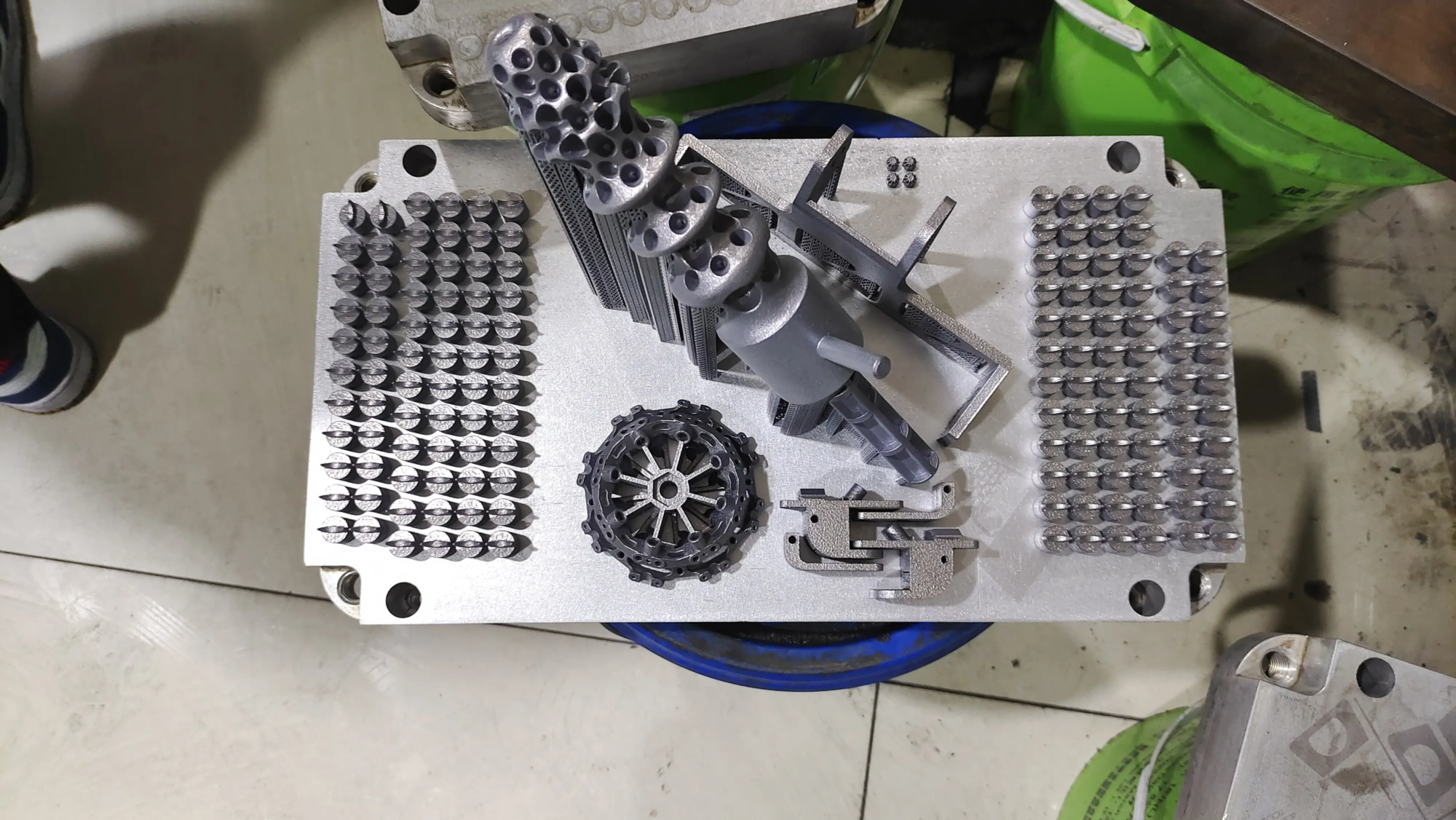
In theory, advanced metal 3D printing technologies such as SLM can produce functional metal silencer parts or even entire assemblies. Materials such as stainless steel, titanium or Inconel provide the necessary strength and heat resistance. However, achieving the required durability, safe precision tolerances (critical to preventing baffle strikes or catastrophic failure), and consistent performance remains a significant technical challenge compared to conventionally manufactured options. However, huge legal hurdles completely overshadow the technical feasibility.
Towering Legal Wall: National Firearms Act (NFA)
In the United States, silencers fall squarely under the purview of silencers. National Firearms Act of 1934 (NFA)as well as machine guns, short-barreled rifles/shotguns, and other destructive devices. This federal legislation imposes strict regulations:
- Definition is key: Federal law (26 USC § 5845) broadly defines a silencer. It includes equipment of any design or redesignmade or remakeas well as the expected For the purpose of suppressing, suppressing or diluting a report of firearms. Crucially, this includes any Parts combination Designed and used for assembly into silencers.
- Register before creating: only make Suppressors require prior approval from the Bureau of Alcohol, Tobacco, Firearms and Explosives (automatic transmission oil). Individuals must file ATF Form 1 ("Apply to manufacture and register a firearm")pay $200 tax, undergo a background check including fingerprints, and obtain ATF approval forward Manufacturing begins. This applies whether you are making one silencer for personal use or multiple silencers.
- Manufacturer License: If you intend to manufacture a silencer for sale or distribution, you must obtain a federal firearms license (Fluke) and special professional tax (Sauter) 2 class name. This involves strict licensing, inspections, record keeping and tax obligations.
- State level bans: Even under federal law, many states (e.g., California, New York, Illinois, New Jersey) complete ban on private ownership Complete silencer. federal legitimacy no Go beyond state bans.
3D printing: Legal risks multiply
Applying 3D printing to silencer manufacturing does not change the basic rules; it greatly amplifies the legal risks:
- Unlicensed Manufacturing = Felony: Create a silencer or any component using a 3D printer on purpose only for silencers (such as baffles or pipe sections), No Required pre-approved Form 1 (for personal production) or FFL+SOT (for commercial), constitute Manufacture of items without NFA approval. this is a federal felony.
- have: Possessing an unregistered silencer manufactured by any method, including 3D printing, is a federal felony. Constructive possession (e.g., possessing a part useful only for an illegal silencer and indicating intent) may also result in charges.
- "solvent trap" and "fuel filter" trap: Attempts to circumvent regulations by manufacturing products vaguely marketed as solvent traps or fuel filters, Then it’s easy to convert Converting it into a functional silencer with minimal additional parts or machining does not protect the creator. ATF will actively evaluate items based on their actual condition design intent and capabilities. If an object (even a printed one) can be easily converted into a silencer with minimal effort/parts, or if its design primarily resembles a silencer, then the ATF may classify it as a silencer part or a complete project, triggering NFA requirements immediately upon creation. Mere possession of a digital file printing such redeemable items may be considered intent.
- distribute: Sharing STL files or printed components specifically designed to assemble a silencer significantly increases risk. This could be construed as conspiracy to illegally manufacture NFA items, aiding and abetting, or illegal transfer/unlicensed manufacturing.
- Severe penalties: Conviction of NFA violations carries severe penalties: The offense is punishable by up to 10 years in federal prison, confiscation of the device and associated firearms, and a fine of up to $250,000. Felony status has lifelong consequences.
- Undetectable Firearms Law: Although the main legal hurdle remains violating NFA regulations, silencers made entirely of non-metallic materials may raise concerns under the Act.
The responsible path: innovation within boundaries
exist huge lightAs a professional rapid prototyping manufacturer driven by technology excellence (leveraging advanced SLM printers and comprehensive post-processing capabilities), our core mission is to empower legal Innovation. We specialize in producing high-precision metal prototypes and end-use parts for applications ranging from aerospace actuators and automotive components to complex medical instrumentation.
Our commitment is unwavering:
- Strictly comply with: We operate under strict protocols ensuring compliance with all applicable export controls (ITAR/EAR) and manufacturing regulations. We do not engage in nor permit the manufacture of any items suspected or known to be illegal firearm parts or accessories.
- Follow legal apps: We bring our expertise to solve complex engineering challenges in industries where the benefits of rapid metal prototyping are transformative – speed, complexity, weight reduction, functional integration – all pursued ethically and legally.
- Ethical Partnership: We work with clients who are committed to responsible innovation. Before undertaking any project, potential applications are thoroughly considered in light of the legal and regulatory framework.
Conclusion: Innovation requires responsibility
Powerful 3D printing technology combined with highly regulated items like silencers creates an area of extreme legal danger. Overcoming the technical challenges of printing functional metal suppressors pales in comparison to fighting federal felony charges related to unauthorized manufacturing, possession or distribution. The ATF’s interpretation of the NFA is clear and strictly enforced, especially for projects that circumvent regulations through design ambiguity.
Attempting to 3D print a silencer without clear, prior approval and permission under federal law is not a loophole, but a shortcut to life-changing criminal penalties. The risk of devastating legal consequences more than outweighs the appeal of DIY or low-cost solutions.
True innovation thrives within boundaries. For engineers and companies leveraging advanced additive manufacturing such as SLM, there is a broad area of focus legal Industrial, medical and consumer applications ensure smooth progress. Remember: For items regulated by the NFA, such as silencers, you must determine their legality forward Manufacturing begins – not after. For legal prototypes that require advanced metal 3D printing, complex geometries, and meticulous post-processing, expert partners like GreatLight are ready to work together responsibly and professionally.
3D Printed Silencers FAQs and Legal Risks
Q1: Is it illegal to own a 3D printer capable of printing metal parts?
one: Won’t. It is legal to own a metal 3D printer (such as an SLM machine). Legality depends entirely on What The information you print and whether you comply with all applicable laws (including NFA, ITAR/EAR Controlled Designs, etc.). Printing legal components such as aerospace stents or medical implants is OK; printing unregistered silencer parts is illegal.
Q2: If I submit ATF Form 1 first, can I legally print a silencer?
one: Yes, but only with explicit prior approval. If you are an individual who wants one For personal use silencers, you must submit, pay $200 tax, undergo a background check, obtain ATF approval (Form 1 Approval), until then Can you manufacture (including print) a single silencer as described in your application? Serialization requirements apply. Commercial manufacturing requires FFL + SOT.
Q3: How about printing? "solvent trap" or "fuel filter"? Is this safe?
Answer: The risk is extremely high. ATF evaluates projects based on their design and intent. If the object (plastic or metal) can be easily converted into a functional silencer with minimal additional parts/machining, or shares key design features that are primarily useful only For a silencer, ATF may classify it as a silencer component under NFA or a complete silencer at the time of creation. Mere possession of the file or printed portion may serve as the basis for a charge. Many sellers of these items have been prosecuted.
Q4: I only printed part Mufflers (like baffles), is this illegal?
Answer: Most likely yes. The definition of NFA includes "Any combination of parts intended to be assembled into a silencer." Possession of a component that has no practical purpose other than being part of a silencer (such as a specific baffle design) is a strong indication of constructive possession and unlawful intent to manufacture an NFA item. Prosecutions for mere possession of silencer parts do occur.
Q5: Are there any states where 3D printed silencers might be legal following federal approval?
one: Even if federal approval is obtained through Form 1, Several states outright ban private ownership of silencersincluding (but not limited to): California, New York, New Jersey, Illinois, Delaware, Hawaii, Massachusetts, Rhode Island, and Washington, D.C. Federal approval does not override state prohibitions. always comply with Both Federal and state/local laws.
Q6: Will a rapid prototyping company like Ferrite print muffler parts?
Answer: Absolutely not. Reputable prototyping and manufacturing companies operate under strict legal and ethical guidelines. They implement a screening process and will reject projects involving the manufacture of any component that is determined to be a regulated firearm part (especially NFA items such as silencers) without a verifiable, appropriate federal license (FFL+SOT) and customer-provided compliance documentation, which in itself creates significant complexity. The company only focuses on legitimate industrial, medical and commercial prototype applications.
Question 7: Where can I find clear guidance on silencer laws?
one: The authoritative source is U.S. Bureau of Alcohol, Tobacco, Firearms, and Explosives (ATF) website (atf.gov). View the National Firearms Act (NFA), ATF rulings, and FAQs. Don’t rely on forums or unofficial sources. For specific issues or complex situations, Consult with a Qualified Firearms Attorney Specializing in Federal NFA Compliance.