The Unknown Worker: Your Comprehensive Guide to 3D Printing SL
SLUGS – Those simple, usually cylindrical solid materials with no holes or complex features. At first glance, they seem almost too basic to guarantee advanced manufacturing such as 3D printing. However, these modest hosts have found a key role in the industry, 3D printing, especially metal additive manufacturing (AM), is revolutionizing the way they are designed and produced. Forget the limitations of traditional machining; AM unlocks unprecedented possibilities, making custom, complex or high-performance SLAs a reality.
So, what is a 3D printed slug?
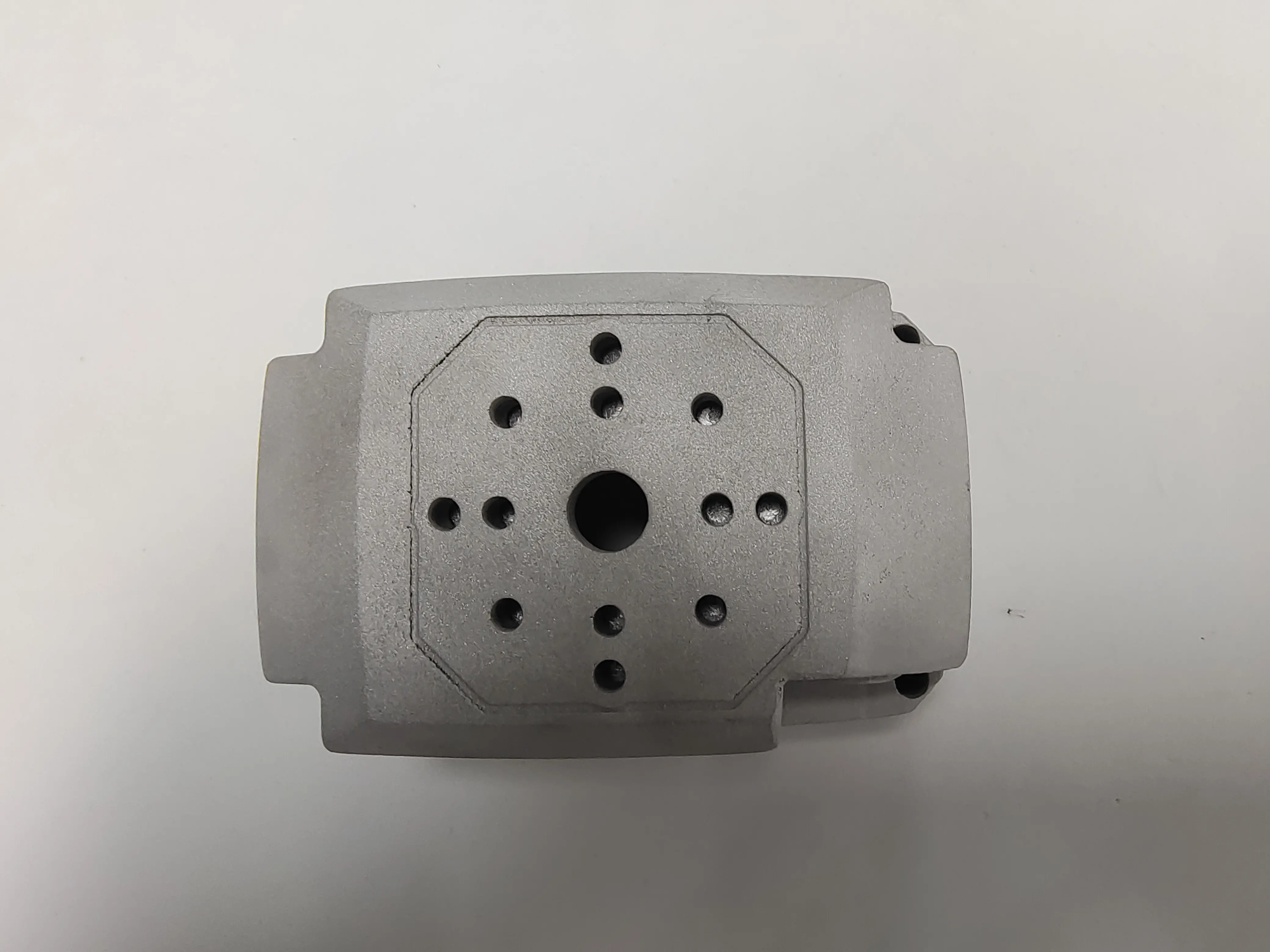
Think of SLUG as a solid-state dense block with a defined shape. The purpose is to provide mass, weight, influence or use as an insert in a custom shape. Traditionally, sl bullets are cut out from solid rod stock by milling or turning, smearing, forging or casting. 3D printing builds them layer by layer directly from digital blueprints, using materials ranging from high-performance thermoplastics to robust engineered metals.
Why do you want to 3D print a sl. Enthusiastic advantages
-
Geometric freedom without sacrifice: Modern AM technology, especially Selective laser melting (SLM)outstanding in producing solid, completely dense metal parts. This means you can create sls using the following methods.
- Internal channels: For cooling or embedding sensors/wires Within Solid – impossible to process.
- Optimized weight distribution: A specially balanced non-uniform density curve (e.g., rotating equipment).
- Perfectly customized exterior geometry: Match precise complex surface profiles without complex multi-axis machining settings.
- Conformal features: Integrate specific grip surfaces, positioners or other functional elements seamlessly into the slug.
-
Accelerate prototypes and tools: Need a custom rock weight for testing, unique impact tips for R&D or specialized mold inserts? 3D printed slash delivery time. Production of functional metal sls in a few days rather than weeks for iterative testing or emergency tool repairs.
-
Excellent material properties (especially metal):
- Custom alloys: Using advanced materials tools such as steel, inconel Superalloys, high-strength aluminum alloys), it is often difficult or cost-effective as bar stocking or machine.
- Near mesh shape: Minimizing raw material waste is essential, especially for expensive alloys.
- Enhanced features: Rapid solidification of SLM results in fine microstructures that usually produce the dominant strength to weight ratio and fatigue compared to cast equivalents.
-
Economical low volume and custom production: manufacture Single Unique slugs through CNC milling can generate significant setup and programming costs. 3D printing almost completely eliminates these. This is the ideal choice:
- One-time replacement of outdated mechanical parts.
- Small batch custom tools (hole punching, mold, mold insert).
- A prototype with exact material properties is required.
- Consistent density and mass: Metal powder bed fusion (SLM/DML) can produce sls with special material consistency. Each layer is precisely melted and fused under controlled conditions, ensuring that it is critical to applications that require predictable quality and impact characteristics. This exceeds the potential inconsistency of casting or smearing sls.
Among them, 3D printed s excel: beyond obvious
In addition to replicating ballistic warheads, their applications are also diverse:
- Industrial Tools and Fixtures: Custom pins, alignment sls, tool holders, heavy duty gaskets, replaceable pressure tips and inserts for complex molds of inappropriate standard sizes.
- Precision Instruments: Calibration weights with unconventional shapes for vibration damping or testing inertial mass.
- Ballistics and Defense: For the prototype all-metal SL (comply with regulations when needed), a specialized fragile SL board design.
- Micro Speed and Connectors: Small, solid conductive contacts or custom rivets/cultivation pins cannot be processed traditionally.
- Marine and Heavy Industry: A dense ballast weight or sacrificial anode designed to fit perfectly in awkward cavity.
- consumer goods: The precise weight of the balance, the special hammer head, is used for the unique formation process.
The technology behind it: mainly metal SLM
Although polymer SLS or multi-jet fusion can generate functional plastic sl for non-load applications, Metal SLM is a powerful force of high-performance SL, where density, strength and durability are crucial. This is why SLM is King:
- Full density: Create completely solid metal parts.
- Material versatility: Handle all kinds of alloys: aluminum (Alsi10mg, Scalmalloy), titanium (Ti64), stainless steel (316L, 17-4PH), tool steel (H13, Maraging Steel), nickel alloy (Inconel 625, 718), copper alloy copper, copper alloy, Copper Alloys, Cobalt Chrome.
- Accuracy and resolution: Achieving fine feature details and excellent surface quality is critical to the SL magazines used in precise components or tools. (Post-treatment such as CNC finishes can achieve micron level tolerances).
- Mechanical properties: Properties that offer meetings or properties beyond conventionally manufactured.
Successful design for 3D printed slugs: Key considerations
Harnessing the potential of AM requires intelligent design:
- direction: Placement on the build board will greatly affect the surface finish, the required support structure, residual stress and strength direction. Optimize minimum support and critical surface quality.
- Support structure: Solid ringtones require minimal support, usually just thin base plate accessories. Complex surface features may require more, which will affect the surface finish after removal.
- Density verification: Although SLM achieves nearly satisfactory density, design key applications rely on Accurate Quality (such as calibration weights) should take into account potential microporosity or specified density acceptance criteria. Non-destructive tests (e.g., ultrasound, CT scans) can verify this.
- Hot considerations: During printing and its functional life. Optimize the geometry to minimize stress during laser melting. Consider the operating environment and potential heat treatment.
- Post-processing: Define expectations as early as possible:
- Support removal: It is crucial to the surface contacting the support surface.
- Surface finish: Options range from temporary (slightly rough) to media blasting, grinding, polishing, coating (anodizing, electroplating) or precise CNC machining to achieve critical surface/tolerance.
- Heat treatment: It is often critical to alleviate internal stress and achieve optimal mechanical properties in tool steel or high-strength alloys.
Manufacturing Partner Tips: Choose an AM service provider that provides integrated Post-processing capability. From printing to CNC machining or specialized surface treatment ensures that the final SLUG precisely meets logistically-free specifications, thus moving seamlessly.
Conclusion: Embrace a solid and precise revolution
The unremarkable slug may be conceptually simple, but it has great potential in modern engineering. 3D printing, especially SLM Metal AM, transforms it from commodity components to complex custom solutions. With sophisticated internal functions, lightweight construction, exotic alloys and the ability to perfectly assemble (for prototypes and low volume operation) provides an unparalleled competitive advantage.
GRESTLIGHT: Your 3D Printing Innovation Partner
At Greatlight, we leverage our advanced SLM 3D printing technology and depth Rapid Prototyping Expertise Empower you with design capabilities. We know that even the simplest components can be crucial to the success of your project. Whether you need a complex slug prototype for testing or a small number of complex high-strength custom tool components, we provide Precise processing and comprehensive one-stop post-processing To provide functional finished parts that meet your exact specifications.
Why struggle with the limitations of traditional Slug manufacturing? Most materials can be customized quickly without endless procurement delays. Greglight is one of China’s leading rapid prototyping partners – ready to help you unlock the hidden potential of 3D printing sls.
Customize precision metal SL and fast prototype parts now and experience speed, quality and innovation at the best prices.
FAQ: 3D Printing SL
-
Are 3D printed SLs (especially metals) really solid and dense?
- Yes Used for high-quality SLM/DMLS processes. Reputable manufacturers have excellent microstructure integrity, achieving a near-satisfied theoretical density (usually > 99.5%), making them functionally equivalent to the machining or casting counterparts of most applications. Density can be verified by standardized testing.
-
How does the cost compare to CNC machining with simple slug?
- for Single sl Complex Geometric/special alloys, 3D printing is usually cheaper. It eliminates tool setup, complex clamping and a lot of CNC programming time and minimizes material waste. For very large running simple simple round sl, CNC cut out from standard bar stock possible Cheap, but AM offers unparalleled speed and geometric freedom for custom needs.
-
What materials can you use for 3D printing sl?
- Metal: Aluminum alloy (ALSI10MG, ScalMalloy), stainless steel (316L, 17-4PH), tool steel (H13, Maraging Steel), titanium (TI64), nickel alloy (Inconel 625, 718), Copper, Cobalt Chrome.
- polymer: Nylon (SLS/MJF), ULTEM (FDM), resin (SLA/DLP) – Suitable for less demanding applications (weight, non-structural fixation).
-
Is the 3D printed SL bullet strong enough?
- Metal slm sl: Yes, absolutely. They have excellent mechanical properties, usually comparable to or superior to castings, and are close to parts of forged materials after proper heat treatment. Material selection consistent with the application is key.
- Polymer sl: Depend on material and load. The strength is expected to be lower than that of metals, but engineered thermoplastics (such as PA12 (Nylon)) or Eutem can handle many functional applications.
-
Can I get the exact tolerance on 3D printed slugs?
- Metal SLM implementation "first aid" Tolerances are typically in the range of ±0.05mm to ±0.2mm depending on the machine, direction and design. For critical dimensions (e.g., accuracy fit), post-processing such as CNC machining is critical to achieving tight tolerances (e.g., ±0.02mm or higher). This is a standard service provided by integration manufacturers like Greatlight.
-
Is there a size limit?
- Yes, it is determined by the build volume of the 3D printer. Industrial metal SLM machines offer quantities ranging from smaller (≈100mm^3) to larger (up to ≈800x400x500mm or more). Although this adds complexity, very large sls may require splitting and welding. Discuss your dimensional requirements with the manufacturer in advance.
-
Is 3D printing feasible for large-scale slug production?
- Generally speaking, Not suitable for a lot of the same simple sls. For this purpose, traditional methods such as forging or stamping are more economical. Yes, for low to medium production, especially for complex designs, custom configurations or designs with reduced assembly steps. AM can greatly speed up the production of tools and fixtures.
-
Can you print sl bullets with holes or channels inside?
- Yes! This is one of the superpowers of AM. SLM allows complex internal geometries such as conformal cooling channels, internal wiring paths, or components inside solids Appear sl. Solid processing is impossible.
- 3D printing sl durable durability?
- Metal SLM sl bulbs, especially after proper heat treatment and surface finish, have excellent fatigue resistance, wear resistance and comparable toughness to traditionally manufactured parts, with the same grade of the material. Polymer SL is not durable, but is sufficient to accommodate lightweight applications.