Boosting Audio: The Final Guide to 3D Printing Custom Speaker Wall-mounted
Tired of the bulky speakers that mess up your floor space? Dream about a clean, minimalist home theater setup with your speakers perfectly positioned? 3D printing provides an incredibly powerful, customizable and often cost-effective solution: design and manufacture your own custom speaker wall-mounted mount. Forget the mount purchased by the general store; with 3D printing, you can customize the installation precisely based on the speaker’s size, weight, aesthetics, and sound requirements.
Why 3D printing is a wise choice for speaker mounts:
- Perfect fit and complete customization: Measure your speaker exactly? Design the mount to shake it perfectly. Need a specific angle of inclination to get the best sound projection? Model it. Worry about cable routing? Seamlessly integrate clips or channels. 3D printing allows you to solve your Specific questions.
- Ultimate Space Optimization: Wall-mounted installation frees valuable floor space, thus making the appearance cleaner and improves acoustics by decoupling the speaker from the resonant surface. 3D allows for complex compact designs.
- The power of intelligent design: By strategically using ribs, burrs, honeycomb fill patterns and correctly identifying the printing layer, a 3D printed mount (even plastic) can achieve a surprising strength-to-weight ratio that suits many bookshelf speakers.
- Aesthetic Integration: Match your room decoration! Print in a variety of colors and even textures. Designed to be installed in statement pieces that blend seamlessly or become fashionable.
- Cost-effective and prototyping: For single or unique mounts, 3D printing bypasses expensive injection molding setups. Easily iterating prototypes (design->print->test->refining) is fast and cheap.
Your step-by-step guide to 3D printing speaker wall mount:
1. Planning and Design: Key Basics
- measure: The speaker size (width, depth, height) is measured accurately and the mounting point (if present on the speaker itself) or the shape of its base.
- Weight is key: Determine the speaker’s weight. This is the most critical factor affecting material selection and structural design. Lightweight housing (<5 lbs) is a major candidate for printing thermoplastics. Over 7-8 pounds, professional metal printing becomes highly recommended for safety.
- Wall Assessment: Identify the wall type (drywall, stucco, concrete, stud position) and required hardware (wall anchor, specific screw). The design of the mount must integrate appropriate hanging points that match this.
- Functional requirements: Determine the required tilt angle, rotation function, and cable management function.
- CAD design:
- software: Use Fusion 360 (free amateurs), Tinkercad (beginners), Freecad or Solidworks (Pro).
- Design focus: Prioritize strength. Includes the following functions:
- Generous flange: Wide contact points, mounts are connected to the walls, and the cradle is best distributed to the load.
- strengthen: Ribs, cloak in stress concentration areas (curves, joints).
- Interference/Friction Fitting: Design a comfortable pocket for the speaker, perhaps an integrated groove for the non-slip rubber feet or mat.
- Hardware integration: Model embedded for screw head/wash or captive nut slots (hot platform inserts) for final assembly.
- Simulation (Advanced): Before printing, use basic stress simulations in CAD software to identify weaknesses.
2. Choose the right material: plastic and metal
*   **Light to Medium Speakers (<5 lbs, Robust Design):**

    *   **PETG:** The #1 Recommendation. Excellent layer adhesion, good toughness, impact resistance, and UV resistance. Handles vibrations well without becoming brittle like PLA. Prone to stringing – tune retraction settings.

    *   **ASA:** Similar strength to ABS but vastly superior UV and weather resistance (good for sunrooms or garages). Higher print temperature required.

    *   **PLA+ (Tough PLA):** Easier to print, "good enough" light duty strength for very small, lightweight speakers. Avoid regular PLA – its brittleness is a major liability over time with vibration. **Not recommended unless the speaker is extremely light (<2 lbs).**

    *   **Nylon (PA-CF/PA-GF):** Exceptional strength and toughness achieved through carbon or glass fiber reinforcement. Difficult to print (requires high temp, enclosure, dry filament) but offers near-metal properties for moderate loads.

*   **Medium to Heavy Speakers (+7 lbs) OR Critical Safety Applications:**

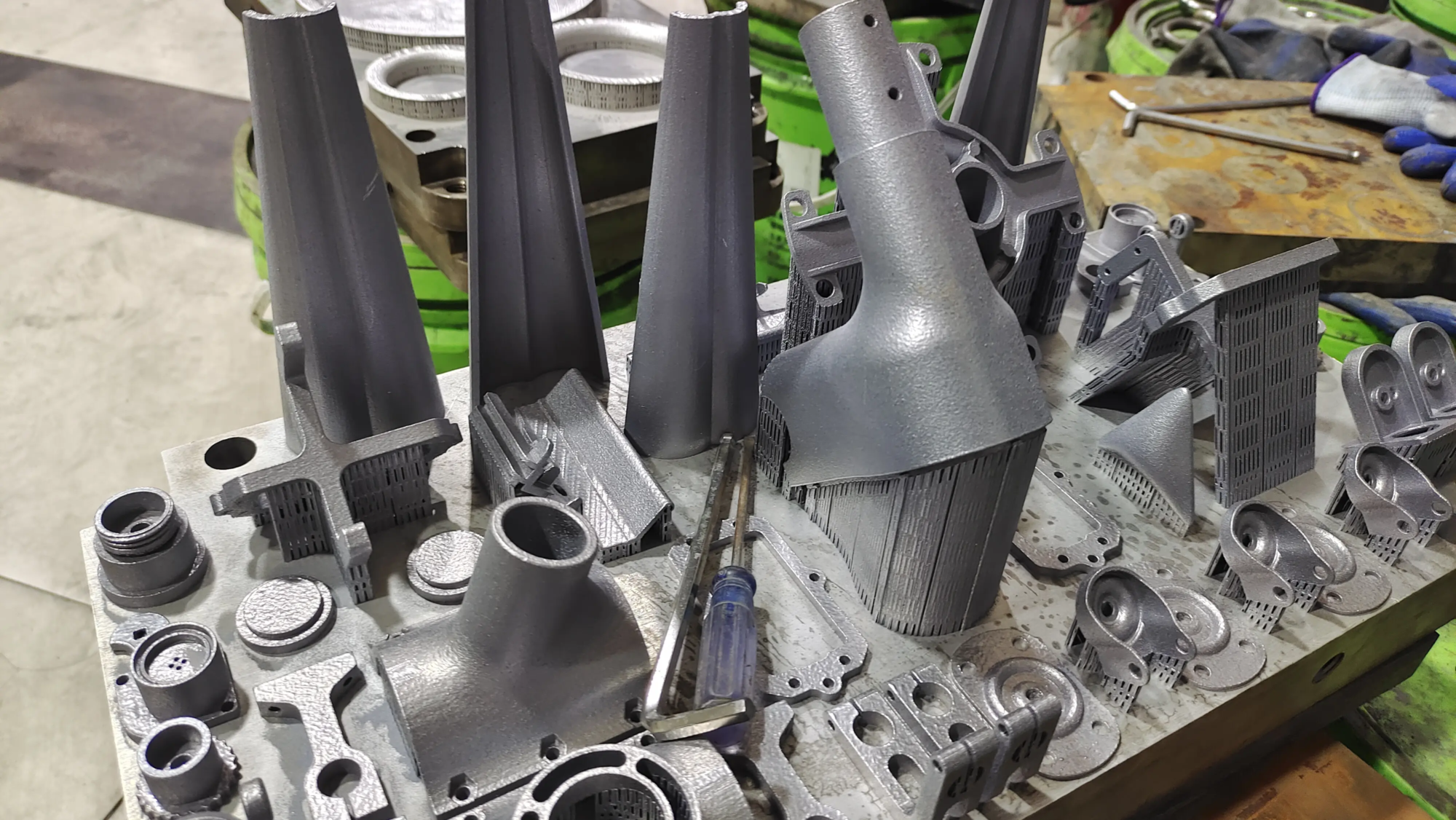
    *   **Metal 3D Printing (e.g., Aluminum, Stainless Steel, Titanium):** This is where professional **metal Additive Manufacturing (AM)** becomes essential for guaranteed strength, rigidity, and long-term reliability under significant load and stress. Don't risk heavy speakers falling due to creep (slow deformation) or layer delamination common in printed plastics under continuous stress. Metal printing provides superior structural integrity indistinguishable in performance from machined brackets.
(Naturally, as an expert in high-intensity applications, our Greatlight Lovelllawner Leverage toply state-of-the-art selective laser melting (SLM) technology can produce incredibly strong, precise metal speaker wall-mounted, fasteners and custom stands. Our professional metal ensures your professional metal ensures psychological peace when your audio gear is valuable and safe.).
3. Optimize the printing process (plastic):
- Printer strength settings:
- Layer height: Use a medium layer height (0.15mm -0.2mm) to maintain a good balance of strength and surface quality.
- Perimeter/Wall: Add numbers (4-6+). They provide the main structural skeleton. More important than filling!
- filling: Use high percentage (40-60%+) with powerful support mode ability (Excellent intensity in all directions) or straight line/Grid.
- Top/bottom: Added (6 layers).
- direction: Printing parts is so critical that the load-bearing surface is perpendicular to the build plate (minimizing the risk of stratification). Avoid peeling forces aligning with the layer lines.
- Temperature and cooling: Calibrate according to the filament specifications. generally Slightly Higher temperatures (+5-10°C) can improve layer bonding. Adjust cooling (usually Fewer Cool PETG/ASA) to improve adhesion.
4. Basic post-processing:
- Inspection and cleaning: Remove the bracket carefully. Check for defects or weaknesses.
- Sand and smooth (optional): Improve aesthetics and fit. Filling primers is useful.
- Surface treatment: The speaker base will stand still on the light-colored sand surface. Apply adhesives Anti-slip rubber pad or tape to prevent speakers from rattleing/moving and protect their finish.
- Install hardware: Insert the heat threaded plug-in with a solid mounting wire, or make sure the standard hardware screws are firmly nipped into the plastic.
- (for metal prints): This usually includes stress relief, support measures, surface finishes (bead blasting, polishing) and high temperature treatment based on alloys – a key service for professional treatment.
5. Safe installation of speakers:
- Wall preparation: Accurately locate studs (stud finder). For drywalls without studs, use the ratings of heavy-duty rotary bolts that are significantly more than the weight of the speaker.
- Dry running: Secure the installation to the wall and mark the screw position Perfect Through the mounting hole. Breakage before drilling.
- Safe installation: Use proper hardware to secure the installation to the wall (studs in long wood screws, anchored robustly into drywall). Make sure there is no swaying situation absolutely solid.
- Gentle load test: Place the speaker carefully. Apply gentle downward pressure. Listen to any cracking sound. If you are not sure, reduce weight and strengthen it.
- Cable management: Routing cables through integrated channels or clips, or adding adhesive cable brackets.
Conclusion: Confidence releases custom audio
3D printing unlocks the significant possibility of quantizing audio space. By designing and printing your own speaker wall-mounted mount, you can achieve a level of fit, aesthetics and optimization with ready-made solutions. Remember this Material selection and design integrity are essential for safetyespecially heavier speakers. Strong thermoplastics such as PETG and Nylon CF are excellent choices for lighter weights for correct design.
However, When dealing with heavy weight (usually over 7 pounds), critical applications, or demanding environments, turning to professional metal 3D printing is more than just an upgrade – it is essential. Companies like Greatlight offer expertise, advanced SLM machines and high-strength metal materials such as aluminum or titanium alloys to produce incredibly durable, precisely sized and well-designed mounts for absolute safety. Combined with one-stop post-processing to ensure a perfect finish, metal AM guarantees your premium speakers can hang securely in the position you want, providing high-fidelity sound without compromise.
Ready to expand your design to a professional level? Whether exploring DIY plastic prints or requiring industrial-grade metal stands, designing the perfect speaker wall mount is a meaningful project that can really enhance your listening experience.
FAQ: 3D printed speaker wall-mounted mount
Q: How heavy can a 3D printed mount be?
A: None of the answers; it all depends on:
- Material: PLA: Very limited (2-3 lbs). PETG: 5-8+ lbs with excellent design. Nylon CF/GF: 10-15+lbs. Metal (aluminum): 20 pounds or more is easy, usually more. For heavy-duty speakers (+7 lbs), professional metal printing is highly recommended.
- design: The quality and strength of CAD designs (ribs, flanges) are crucial.
- Print settings: Layer adhesion, wall/abercross, fill percentage/type.
- Wall accessories: The installation hardware and the wall structure itself must be sufficient.
Always significantly over-designed and carefully tested!
Q: What is the sturdy wall-mounted filling pattern?
Answer: For structural applications, ability Filling is usually the best choice because of its uniform strength in all directions and good shock/vibration absorption. Grid or straight line It is also a strong choice, although more directional. Avoid using patterns like pure strength or concentricity.
Q: How to make my plastic printing rack stronger?
Answer: Focus design work:
- Maximize wall/peripheral count.
- Integrate triangles (burrs) into corners.
- Increase the base/wall contact surface area.
- The print is optimally oriented to achieve layer strength.
- Use high strength materials (PETG, TPU for flexible parts or nylon composites).
- Ensure perfect layer bonding (calibrate temperature, using ABS/ASA/nylon housing).
- consider Insert metal nut or threaded insert Instead of screwing in plastic.
- If in doubt, Choose Professional Metal AM.
Q: Can I design a mount that is tilted and rotated?
Answer: Absolutely! This is one of the key advantages of DIY 3D printing. Design an adjustable bracket arm that connects to the wall panel and speaker cradle and combines hinge points and locking mechanisms (e.g., friction bolts or worm gears). Make sure the locking mechanism and hinge points are very strong and can handle weight without sagging or slipping.
Q: Why do I need professional metal 3D printing instead of using a home printer?
one: When failure is not an option. Professional Selective laser melting (SLM) Metal 3D printing provides:
- Superior material strength: Aluminum alloy, titanium or stainless steel parts are inherently stronger than any plastic, harder, and have no risk of creep or UV degradation.
- Industrial safety: For heavier speakers or critical devices, a fault may cause damage or injury.
- Accuracy and durability: Extremely high dimensional accuracy and surface quality for perfect fit and long-term reliability. Usually with professional certification.
- Complex design: Allows a single piece to create complex shapes that may not be able to be reliably printed in high strength or traditionally difficult to reliably in plastic.
Q: Does Greatlight provide any help besides metal printing?
A: Yes, totally. As a comprehensive rapid prototyping partner, Greatlight offers:
- Expert design consultation: Our engineering team can view your design documents and propose optimizations for strength and functionality tailored to additive manufacturing.
- Material selection guidance: Recommend the best metal alloy for your speaker mount requirements.
- Seamless post-processing: Handle all necessary cleaning, support removal, heat treatment and surface finishing (sanding, polishing, bead blasting, powder coating, etc.) to provide ready-made installation of high quality parts.
- Quick turnaround: Utilize our expertise and industrial equipment to quickly produce your custom metal speakers.
Start designing the perfect audio settings now!