Production accuracy: The revolution of 3D printing stitch marking guide
For knitting and crochet knitting, modest stitch markings are essential. These tiny hoop or clip tracking patterns repeat, increase and decrease, acting as trusted navigation tools in the sea of yarn. But, as any fiber artist knows, these little heroes are notorious for disappearing into sofa cushions, tangled together or rolling down the tables in the table. Enter a solution to change the game: 3D Printed Stitch Marking Guide. Well-crafted organizers are not only practical. This proves how modern manufacturing can enhance everyday manufacturing tools.
Why a special guide? Pain points of traditional solutions
Before 3D printing provides tailor-made solutions, handcraft often relies on temporary containers: small bowls, pill boxes, or sewing kits. These options lack specialization:
- Game Risk: Opening the container is easy to tip and scatter the mark.
- Inefficient access: Going through the tags will slow down the workflow.
- Size and size isolation: Different marker types (locking with rings, small with large rings) become messy.
- Lack of portability: Many solutions are not enough for travel work.
A specially built stitch marking guide solves these problems with elegant efficiency.
Design the perfect organizer: the power of customization
Through intelligent 3D design software, organizers conceptualize around users:
- Component layout: Special slots for different marking types eliminate tangles. Vertical brackets, safety clips, segmented rings or enclosed compartments become feasible.
- Optimized Ergonomics: Finger-friendly channels allow markers to be cleared smoothly. The tilted slot provides visibility and easy access without dumping content.
- Safe shutdown and stability: Hinge mechanism, threaded cover or magnetic closure protective substance. Weighted base or silicone foot prevents tilting.
- Personalization: Name engraving, logo integration or unique aesthetic patterns (lace, cable, floral pattern) transforms tools into personal functional art that is impossible to use mass production.
Why 3D printing is the perfect match for craft tool manufacturing
Customization of traditional manufacturing, struggle for small batch weaving tools. 3D printing boom:
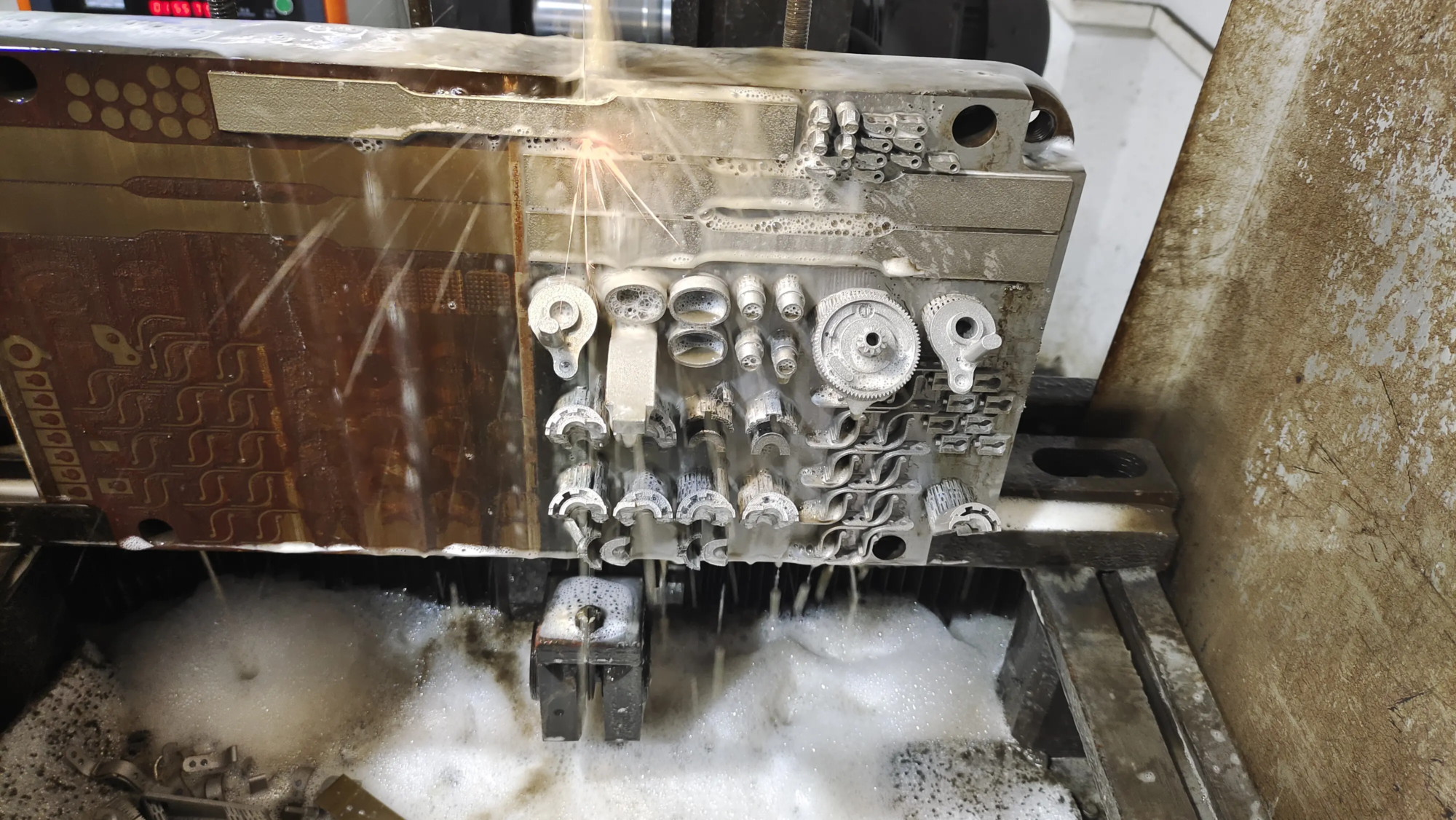
- Unparalleled precision: SLM (Selective Laser Melting) Or high resolution FDM/FFF Printing builds layer by layer complex geometric shapes with microscopic level accuracy, essential for thoughtful markings and tiny hinges.
- Material versatility:
- Lightweight durable: Food-safe, stable color plastic PLA+difficult Abdominal musclesor flexible TPU (For Gripgay) is a daily choice.
- Advanced Metals: Greglight’s SLM technology Unlock options for enthusiastic crafters who value weight and longevity. Imagination guide Polished surgical stainless steel, lightweight aluminum alloy or elegant titanium – Almost unbreakable and luxurious touch.
- Rapid prototype and iteration: Design defects? Need a larger compartment? Digital modifications can be made in hours/day and new prototypes are printed out in hours/day, ensuring that the final product is exactly matched with user needs – crucial for specialized ergonomics.
- Production on demand: No minimum quality production. A custom guide or small batch is equally feasible and cost-effective. This agility minimizes waste.
- Complexity of no cost penalty: Integrated springs, flexible hinges, interlocking parts? 3D printing processes complex components into single prints or carefully designed components with little cost.
Great Advantage: Transform design into advanced reality
Utilizing the full potential of 3D printing requires expertise. This is where Greatlight is good at:
- Advanced Manufacturing Arsenal: We utilize cutting-edge industries SLM printer For perfect metal parts and high precision polymer systems for a wide range of plastics.
- Designed for performance: Our design priorities Structural integrity. The polymer guide analyzes the adhesion and stress points of the layer. Metal Guidelines are optimized for weight and balance. Functional design.
- Seamless post-processing: The original version is just the beginning. Provided by Greghime One-stop completion:
- polishing: Glossy, matte or satin finish removes layered lines.
- Smoothing/sanding: Achieve touch-friendly perfection.
- dyeing: Dying, painting or anodizing (for metals) provides unlimited aesthetics.
- Assembly and integration: Accurate connections for multi-component designs.
- Collaborative customization: We not only print files; we work together. Sketch your thoughts? We can perfect and design it. Need material advice? We provide expert guidance based on the intended use and the feeling required. Custom logo? Thread configuration file adjustment? We achieved it.
- Speed and accuracy: As an expert Rapid prototyping and custom precision machiningwe quickly provide high-quality functional parts to cater to the launch of amateurs and tool designers.
Conclusion: Use engineering solutions to improve crafts
The 3D printed guide to stitch marking is not just for organizers. This is a powerful example of how advanced manufacturing can fit into passionate craftsmanship. By leveraging precise technologies such as industrial SLM and SLS printing, coupled with thoughtful post-processing – we solve the real problem in the fiber art world: keeping the project organized, efficient and frustrated. This digital design of marriage strictness and additive manufacturing allows craftsmen to have tools as unique and functional as their creations. From durable plastic to exquisite metal masterpieces, the potential is limited only by imagination. It emphasizes that even the smallest tools can be designed with care and can significantly enhance the fun of making.
FAQ: Your 3D Printed Stitch Marking Guide Questions Answered
Q1: Which material is best for stitch marking guide?
- For plastics: PLA+ (Affordable, durable, colorful), Abdominal muscles (higher heat/impact force), Petg (Excellent chemical/toughness balance), TPU (For flexible/rubber section).
- For metals: Stainless steel 316L (Strong, anti-corrosion), aluminum (light, stylish), titanium (Lightweight, super strong, advanced). Greatlight excels in handling these metals using SLM.
Q2: How durable is the 3D Printed Plastic Guide? How do they handle the drops?
- Engineering plastics is very difficult. Design experiences FEA to strengthen weaknesses. For example:
- PLA+: Durable everyday use, light elasticity. Perfect for bedside/family projects.
- ABS/PETG/TPU: Dealing with more important impacts, knocking on the door every day is better.
- Metal: Under normal conditions of formulation, it is essentially indestructible.
Q3: Can I get a perfect smooth finish?
- Absolutely. Greglight provides professional smoothing processes:
- polymer: Sand blasting, chemical smoothing (vapor polishing), manual emanation start.
- Metal: Vibration polishing, tumbling, electrochemical polishing (SLM parts), hand-fueled.
- The result is a smooth, professional feel that is indistinguishable from the molding manufacturing industry.
Question 4: How complex is it to order custom designs?
- It simplifies:
- Share ideas/requests: Describe what you need with design documents, sketches, or descriptions.
- consult: We discuss materials, finishes, quantity, feasibility, timelines, and offer quotes.
- Prototype (optional): Test physical samples.
- Production and finishing: Receive your customized, finished guide.
Q5: Can Greatlight design guides based on my description?
- Yes. Our engineering team can transform sketches, descriptions, or basic concepts into refined functional CAD models for 3D printing. We address technical challenges.
Q6: What are the benefits of metal stitch marking guides and plastics?
- Unrivaled durability: Resistant to scratch/impact; survival drops may not.
- Advanced Feeling/Temperature: Attractive weight; cool touch.
- Luxury aesthetics and finishes: Subtle metallic tones; high-quality anodized oxygen color.
- Unique lifespan: Essentially a lifelong heirloom tool. Greglight’s SLM ensures complex metal designs within hours/day.
Q7: Is my custom shape/complex design possible?
- 3D printing performs excellently in complexity. Complex hinges, interlocking lids, integrated spring mechanisms – if it is well designed, it can be made precisely.
Question 8: How long does it take to receive a custom guide?
- and Greglight’s Rapid Prototyping Focusin Day, not a few weeks.
- Simple design: Internal prototype 24-48 hoursit will be completed in a few days.
- Complex/metal design: Prototype IN 2-5 daysthe production batch is completed shortly after.
Q9: Can I order one?
- Yes. Print on demand eliminates quantity. One or one hundred units are equally feasible.
Q10: What completions can I choose for the guide?
- plastic: Sand/smooth, primer/paint, stained colors, matte matte/textured, smooth polish.
- Metal: Sure texture, polished mirror/satin/matte, anodized color (aluminum/titanium), plating finish.
Are you ready to leave the days of overflowing stitch markings behind? Explore the precise engineering and tailor-made solutions that Greatlime can achieve. Whether envisioning simple plastic ring racks or heirloom metal masterpieces, our technology translates your specific needs into tangible tissue perfection.