Why Your Wardrobe Needs a 3D Printed Tie Tomorrow: Exploring the Frontier of Bespoke Fashion
For generations, the humble tie has been a canvas for self-expression for men (and increasingly women). Silk, linen, wool – these materials define tradition. But there’s a revolution on the horizon that blends cutting-edge manufacturing with boundless creativity: 3D printed ties. Forget simple fabrics; imagine intricate lattices that cannot be woven, complex geometries that echo futuristic architecture, or organic forms that are captured and solidified into wearable art. This is not futurism; It’s tangible, usable, and is reshaping what wearable design means. Welcome to the cutting edge of fashion, where the line of innovation meets the line of zero.
Beyond fabric limitations: reimagining form and structure
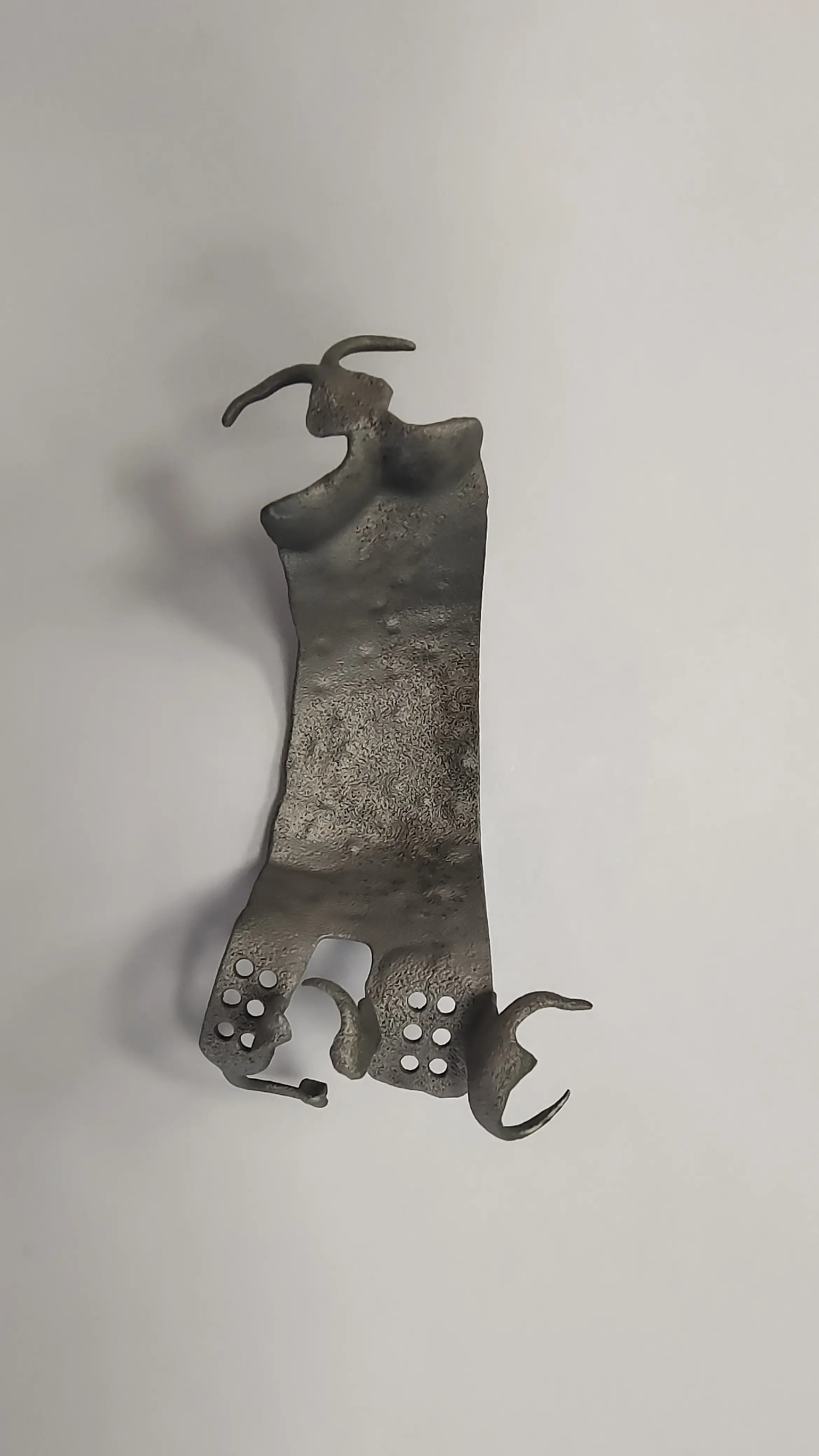
Traditional manufacturing imposes limitations. The loom determines the pattern. Cutting fabric creates inevitable waste. Folds create a predictable drape. 3D printing breaks these limitations. Using additive manufacturing – primarily technologies such as Selective Laser Sintering (SLS) of plastics/composites Selective Laser Melting (SLM), expertly handled by companies like GreatLight, for metals – Designers can create previously unimaginable structures.
- Geometric complexity: Impossible shapes? no problem. Complex honeycombs, fractal patterns, hollow structures of lightweight strength – all can be achieved layer by layer. Imagine a tie with sections that resemble delicate lace frozen in metal permanence, or intricate architectural patterns running its length.
- Freeze Fluid Dynamics: Capture the elegance of flowing fabric in swirls or the turbulent dynamics of liquid energy. 3D modeling software allows designers to simulate these abstract concepts and translate them directly into physical objects.
- Integrated features: Why stop at aesthetics? Embedded LED (powered by separate battery)? Smart materials change color with temperature? Lightweight metal frame enhances drape? The precision of additive manufacturing facilitates the seamless integration of technology and accessories.
Superior personalization: Unicorn ties really exist
The days of mass-produced, one-size-fits-all neckwear are disappearing. 3D printing thrives on uniqueness. It democratizes high fashion:
- Customized biometrics: Scan your physique. Ties are not only printed in your preferred length and width; Its curvature and knot angles can be cleverly customized perfect Draped over your unique torso and collar. No more awkward bulges or awkward dangling.
- Signature silhouette: Go beyond standard widths and point/blade shapes. Design a blade inspired by a gothic arch, the leaves of your favorite plant, or the waveform that represents your voice. Your tie will become your signature visual element, crafted from precise prototypes.
- The evolution of monogram mania: Forget about embroidering initials. Elevate your monogram into a complex 3D architecture integrated into the tie structure itself. Embed meaningful codes, symbols or miniature sculptures that are only visible on closer inspection.
Sustainability meets craftsmanship: a responsible revolution?
Contrary to misconceptions about plastics, 3D printing offers compelling sustainable advantages, especially compared to fast fashion textiles:
- Radical waste reduction: Traditional tie cutting discards as much as 15-20% of the fabric. 3D printing adds material only where needed, creating negligible waste. The process is like SLM can give metal powder new life Through careful recycling planning.
- Durable: High-quality printed polymers and metals won’t wear, fade, or suffer seam failure like cheaper silks. A well-designed 3D printed tie can become a family heirloom, significantly reducing the loss of fast fashion. A company that specializes in precision rapid prototyping ensures sturdy construction and long service life.
- Localized production: Digital designs can be printed anywhere in the world, significantly reducing the transportation emissions associated with shipping garments. Imagine ordering a custom tie online and having it printed at a microfactory in your city.
Addressing the Challenge: Comfort and Adoption
As with any pioneering technology, 3D printed ties face obstacles:
- Comfort Challenge: The metal grating will feel cool or stiff initially. Advances focus on hybrid flexible polymers, integrated soft liners ("skin"), designed with a lattice structure optimized for the subtle curvature of the neck, and made from lightweight, hypoallergenic metals like titanium for a skin-friendly smoothness. Professional post-processing for superior surface finishServices professionally provided by companies like GreatLight are crucial here.
- Concept change: Moving from soft textiles to solid/semi-solid structures requires a change in mindset. Early adopters paved the way for these pieces to be displayed on lapels as avant-garde art installations.
- Cost factors: Currently, the complex printing process and customized nature have high advantages compared to the mass market. However, as technology advances and adoption increases, prices are steadily declining.
Visionary designers leading trends:
Talented innovators are proving the feasibility and desirability of this concept:
- Jenny Kittanen: A pioneer who created intricate plaid ties that became collectibles.
- Danit Peleg: Offers downloadable designs that can be printed at home on flexible materials.
- Julia Koerner: Fusing architecture and fashion with sophisticated bionic design.
- Emerging Studios: Numerous niche designers around the world are exploring unique 3D printed accessories, pushing boundaries every day.
GreatLight: Your partner for wearable metal innovation
Transforming a visionary vision into a flawless wearable reality requires unparalleled expertise in metal additive manufacturing. where is this huge light Excellent performance. As a leading professional rapid prototyping manufacturer with advanced SLM 3D printing equipment and deep mastery of production technology, we focus on precisely solving complex manufacturing challenges.
For designers venturing into 3D printed fashion accessories, especially metal ties that require complex geometries, strength and premium finishes, GreatLight offers:
- Expert SLM Solutions: Proven ability to print complex, strong titanium or stainless steel structures, ideal for structural tie elements and buckles.
- One-stop post-production improvement: The surface roughness will not stick to the skin. Our comprehensive Post-processing services (precision polishing, sandblasting, plating, intricate support removal) ensuring the final piece looks and moves properly and feels incredible.
- Custom materials and speed: We deal in various metal materials. Need something special? We discuss feasibility. Quick turnaround Stay innovative and agile.
- Prototype accuracy: From functional prototypes to low-volume production, we ensure every detail meets your design intent. we are recognized as One of the best rapid prototyping companies in Chinaaccuracy and reliability are trustworthy.
Whether you’re testing a concept or preparing to launch luxury fashion, GreatLight transforms complex digital designs into sophisticated, manufacturable realities. Your vision deserves the precision that only true mastery of prototyping can provide.
Conclusion: closely related to the future
3D printed ties are more than just novelty items. They represent a fundamental shift: fashion evolves from passive consumption to active creation, supported by technology. They champion uncompromising personalization, groundbreaking aesthetics and the path to more sustainable production. Comfort and cost challenges are catalysts for ingenious solutions that push materials science and design forward.
As additive manufacturing matures further, it is expected to be integrated with smart textiles and biomaterials, blurring the lines between accessories, sensors and artwork. A 3D printed tie is more than just a piece of clothing; This is a statement. This statement shows that fashion embraces innovation, individuality triumphs over uniformity, and haute couture can be accessible, sustainable and truly unique. Get your lapels ready—the silhouettes of the future are taking shape.
FAQ: Uncovering the Secrets of 3D Printed Ties
-
Q: Is a 3D printed tie really comfortable to wear?
A: Early iterations emphasized structure over comfort. Modern versions have significantly improved wear resistance. Major improvements include the use of flexible materials such as specialized polymers, integrated soft fabric backings or linings ("hybrid" Design), designed with a complex mesh structure that flexes around the neck and uses lightweight metals like titanium for a silky-smooth finish. Comfort is now a primary concern for designers.
-
Q: How durable are they? Compared to silk?
Answer: High-quality 3D printing materials (engineering polymers, titanium/stainless steel and other metals) can extremely Durable. They won’t tear, fray or degrade in the sun like silk. They resist stains better and won’t wrinkle. Depending on the material/finish (like any metal object), scratches may be a consideration, but overall lifespan is usually significantly greater than traditional ties. Robust prototyping ensures longevity.
-
Q: Can I really customize it? anything?
A: Essentially yes! This is the core strength of 3D printing. You can customize the dimensions, overall shape, pattern (open lattice, closed geometry), surface texture, incorporate personalized symbols or names into the structure, and even request a specific material mix. Hypoallergenic coatings are also possible. These limitations are primarily determined by the skills of the designer/modeller and the capabilities of the chosen production technology.
-
Q: What are the commonly used materials?
one: polymer: Nylon (PA11/PA12 – SLS), flexible TPU, resin (SLA/DLP). Offers flexibility and intricate details. Metal: Titanium (lightweight, strong, hypoallergenic – SLM), stainless steel and sometimes aluminum (SLM/SLM). Offers rigidity, metallic finish and premium feel. Composite materials: Polymers infused with carbon fiber, wood or metal powder for unique aesthetics and performance.
-
Q: How does pricing compare to high-end designer silk ties?
A: Currently, custom 3D printed ties are generally more expensive due to the technology, customization, and craftsmanship involved. Expect prices to match or exceed luxury designer silk ties (for example, £150 to £500+). As technology scales up and becomes more efficient, prices will gradually come down, just like other tech products.
-
Q: How to care for 3D printed ties?
A: Care is very easy compared to silk! Generally speaking:
- Use a soft, slightly damp cloth and mild soap to spot clean metal or polymer parts.
- Avoid harsh chemicals or abrasives.
- Store in a dry place away from prolonged direct sunlight (for polymers).
- Metal parts are usually easy to wipe clean.
- Your tie should come with specific care instructions – always follow the designer/manufacturer’s guidance. Forget dry cleaning!
- Q: Are they really sustainable?
A: They offer significant sustainable advantages Compared with traditional fast fashion ties: Significant reduction in material waste, potential for recycled/recyclable materials, enhanced durability to extend replacement cycles, and potential for localized manufacturing to reduce transportation emissions. While energy-intensive printing is a factor, Overall life cycle impactespecially responsible manufacturing (such as efficient SLM processes and powder recovery) often paints a greener long-term picture.
**Customize your precision rapid prototyping parts now