Squeeze out every last drop: DIY 3D printed toothpaste tube savior
We’ve all been there. Standing at the sink, wrestling with a floppy toothpaste tube, desperately trying to squeeze out the last stubborn bits of toothpaste stuck to the curled end. It’s frustrating, wasteful, and frankly, a little confusing when the mush unexpectedly spurts out. Squeezing tubes by hand is inefficient, folding techniques can only go so far, and commercial tube squeezers often feel flimsy, oddly sized, or unnecessarily complex. What if I told you there was a better way? One designed specifically for your favorite toothpaste brand and your grip strength? Enter the world of DIY 3D printing! Let’s build a custom toothpaste tube squeezer optimized for function and shape.
Why DIY? Why choose 3D printing?
Before you pick up your printer, let’s justify the effort. Purchasing a tube extruder may seem simple, but:
- Universally suitable for: Most store bought solutions are "One size does not fit all." Tube diameters and cap sizes vary widely.
- Materials and Durability: Plastic versions often crack, and metal versions can crush the tube awkwardly or rust.
- Cost and waste: Purchasing specialized tools for a single task feels inefficient; manufacturing and shipping add environmental overhead.
3D printing perfectly solves these problems:
- Perfectly customized: Design extrusion press exactly The diameter and length of your pipe. Measure your specific brand!
- Material selection: Choose durable, food-safe and safe materials such as PETG or PP tailored to bathroom humidity and required flexibility/stiffness.
- Cost effectiveness: Use minimal filament. Ideal for iterative design adjustments.
- DIY Pride: Solving everyday worries with your own creations brings tremendous satisfaction.
Designing your personalized extruder: points to think about
The core design is simple—two articulated rods clamping a tube—but clever details make all the difference:
-
Precise measurements: This is crucial!
- Pipe diameter (relaxed and extruded): Measure the widest part of the tube when relaxed and estimate the flattened size. Add 1-2mm tolerance for a snug fit without pinching.
- Tube length (from cap to crimp): Determine the path of travel of the roller. Also, measure the cap diameter/contour – critical for the notch on one end of the cap.
- Hat introduction: Design a notch on one end to firmly hold the bottle cap base and prevent sliding.
-
Ergonomic Lever: Forget the straight stick. Design levers:
- Curved shape: Contoured to fit comfortably in your hand during squeezing motion.
- Finger ridges: Textured pads or ridges provide slip resistance, especially for wet hands.
- Sufficient length: Generosity provides significant mechanical advantages and requires less extrusion force. Aim for 120%-150% of the tube length.
-
Hinge: The core of the mechanism. Common methods:
- Integrated living hinge: Design a thin, flexible section that connects the lever. Requires careful design (corner radii!) and flexible/correctly printed filament (e.g. PETG).
- Fixed hinge: Design holes in each lever and use printed pins or small bolts/nuts/filament segments.
- Snap hinge: Clever snap-on design (undercut) allows for assembly without pins. Tight tolerances and strong filament are required.
- Roller mechanism: Some designs incorporate a small printed roller where the lever meets the tube end to enhance sliding friction and prevent tearing of the crimped end.
Turn designs into reality: print your press
Once your CAD masterpiece is ready (using beginner-friendly options like Tinkercad or Fusion 360), it’s time to print:
-
Material recommendation:
- Polyethylene glycol: The best all-around product for bathroom use. Durable, moisture-proof, reasonable inter-layer adhesion, good flexibility/impact resistance, general food safety*. Easy enough for most hobbyists to print.
- ASA: Excellent durability, UV/stain resistance. Harder than PETG.
- People’s Liberation Army: Easy to use, but avoid humid conditions – it will absorb moisture and become brittle/warped. Not suitable for continuous bending/prolonged contact.
- Disclaimer: Research materials are safe! The PETG filament itself can be Food safety, the printing process poses risks (micropores trap bacteria, pigments/additives). used for external Many people believe that the risk of pinching a tube is low. For genuine food contact, please consult certified food safe filaments and post-processing (sealing).
- Recommended print settings (PETG Focus):
- Floor height: 0.15mm – 0.25mm strength and finish. Lower = stronger bond.
- filling: 20%-30% spiral or cubic patterns provide an excellent strength-to-material ratio.
- Perimeter/Walls: 3-4+ walls to ensure structural integrity. Critical for load-bearing areas such as hinge pin holes or lever arms.
- Printing direction: Orient the lever flat side down for optimal layer adhesion along the bend/stress axis. Avoid printing upright living hinges – perpendicular to curved layer lines = failure point!
- Brim/raft: Use edges (2-5mm) for stability, especially on tall/narrow lever parts.
- temperature: Optimize for your filament (typically PETG: 230-250°C for nozzle, 70-85°C for bed). slow down! PETG prefers lower speeds (40-60mm/s) for better layer bonding.
Assembly and operation:
- Cleanup: Remove supports and lightly sand edges/burrs.
- Hinge components: Insert the pin (if using), ensuring smooth movement.
- Load tube: Start by inserting the pipe cap into the notch in the ejector pin. Position the crimp end in the center of the bottom of the squeeze groove.
- squeeze! : Holding the ergonomic lever, gently squeeze the handles together from the cap end to the crimp end. Watch the paste migrate effortlessly. Repeat as needed for every last precious drop.
Conclusion: More than just toothpaste
This prototype exemplifies the transformative power of accessible additive manufacturing. We solve everyday hassles with personalized solutions – customized precisely to our needs, printed locally, bypassing mass-produced products. It’s a triumph of functional design and practical problem solving that can be achieved in your studio.
But what? big idea? What if your prototype involves high-strength metals, complex geometries that require precision, or professional-grade materials? Scaling from PLA prototypes to strong, functional metal parts requires expertise and industrial-grade machinery.
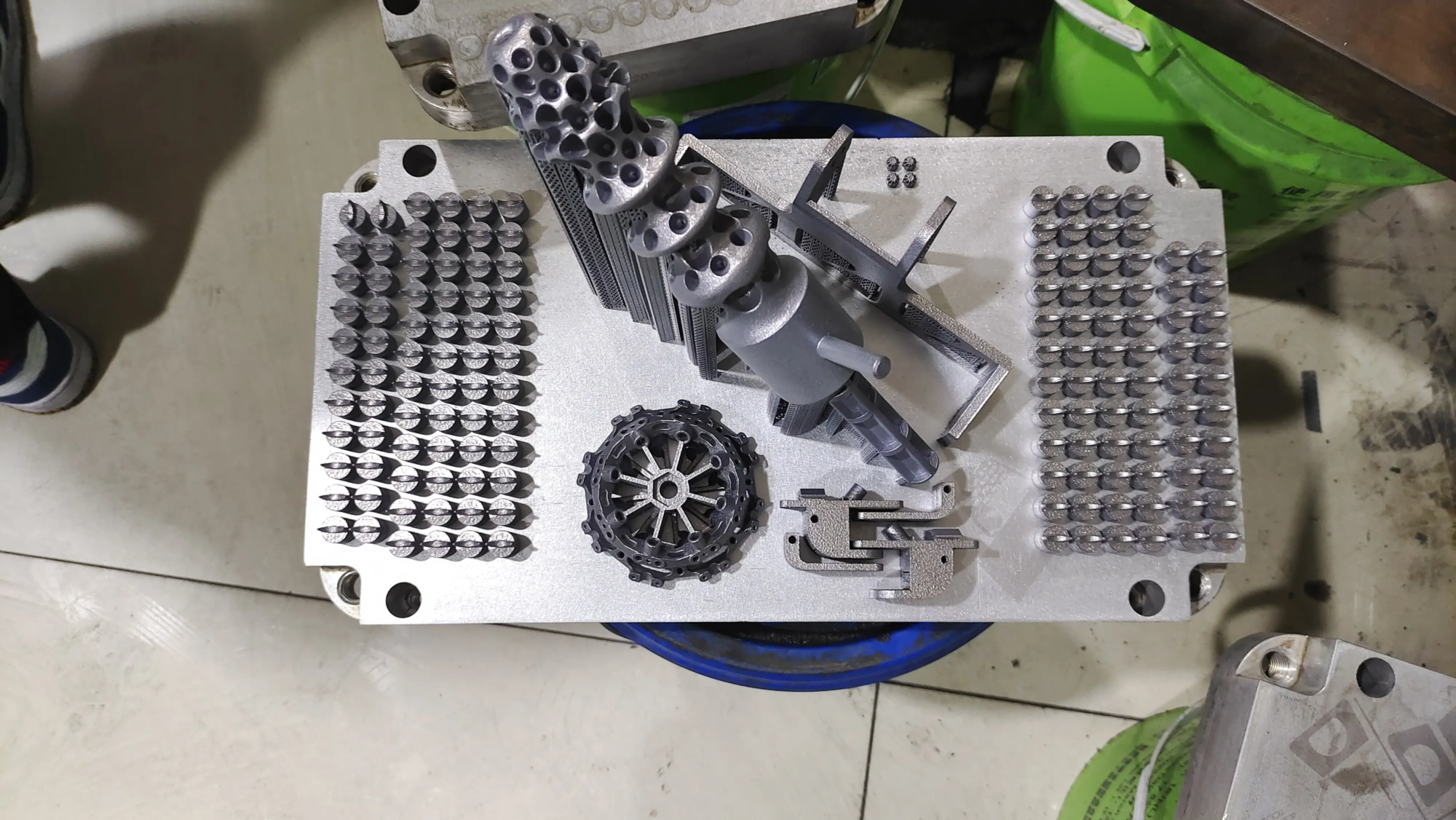
This is where professionals like GreatLight excel. As a leading rapid prototyping manufacturer specializing in metal partsGreatLight utilizes state-of-the-art technology SLM (Selective Laser Melting) 3D Printer and advanced CNC machining technology. They expertly tackle complex metal prototyping challenges—from complex aerospace components to durable industrial tools—delivering high-precision results quickly. Crucially, GreatLight offers comprehensive One-stop post-processing and finishing servicesensuring parts meet stringent surface finish, dimensional accuracy and performance requirements. With custom material processing and quick turnaround, they enable innovators to move seamlessly from concept to functional metal components.
Whether you’re perfecting a niche tool like a toothpaste squeezer or developing a cutting-edge industrial application, leveraging the right prototyping partner can bridge the gap between clever ideas and robust reality. Ready to turn complex concepts into precision metal prototypes? Explore GreatLight’s capabilities and get a quote for your next advanced rapid prototyping project today.
FAQ: Your questions about toothpaste tube squeezers answered
-
Is it really worth printing your own instead of buying one?
Absolutely. The customization alone is worth it – ensuring a perfect fit your tube. It’s cost-effective, sustainable (uses minimal plastic/filament) and incredibly satisfying. Plus, you can control the size and ergonomics.
-
What filament is truly safe to use near toothpaste?
PETG is widely considered safe for external tube extrusion (without direct contact with the toothbrush paste) specifically for this app. It is suitable due to its non-toxic properties and low risk of chemical leaching. However:
- Choose original, reputable filament brands.
- Avoid using filaments with unknown dyes/additives (shiny/metallic filaments, etc.).
- If extremely cautious, look for a certified "food safety" filament and seal the printed part in post-production. PLA absorbs moisture/degrades faster and is not recommended. When in doubt, consult the material data sheet and prioritize PETG.
-
My living hinge is broken! What went wrong?
FAQ:
- design: Inadequate radius/rounding at hinge bend points (sharp corners concentrate stress). The hinge section may be too thick/stiff or too thin/weak. Optimize thickness (~0.5-1mm is common, depending on material elasticity).
- Material: PLA/PET requires careful design. PETG works much better. TPU is the king of living hinges.
- Printing direction: Printing across bends (layer lines perpendicular) creates serious weaknesses. Must be flat printed! A softer layer bonding setting helps improve flexibility.
-
Can I design an extruder to accommodate multiple tube sizes?
Yes, but it’s a more complex design challenge. Options include:
- Adjustable arm: In combination with a slot or screw mechanism, allows adjustment of arm width.
- Interchangeable blades: Design slots in the extrusion arms into which inserts of different sizes can be clamped.
- Universal slot: Designing a wide slot to accommodate different tubes, possibly with softer padding/material inside to accommodate? A compromise needs to be made on leverage efficiency.
-
Is this a good deal? My printer uses electricity…
For disposable extruders, the cost is minimal (material cost < $1) considering electricity and filament. Compared to the $5-15 store-bought extruder that may not fit well or break, a DIY version is often better financially, especially if you print multiples or use it every day for years. Value comes from perfect customization and DIY satisfaction.
- Why do I need professional metal prototyping?
Good question! While DIY plastic printing is great for household items, prototypes, and non-structural parts, many functional applications require:
- High strength and durability: Metals such as titanium, aluminum, steel cannot withstand the load, heat and stress that plastics cannot.
- Precision and Tight Tolerances: For gears, bearings, engine components, and drones, dimensional accuracy is critical.
- Special material properties: Heat/corrosion resistance, electrical conductivity, biocompatibility.
- Production readiness: Prototypes that closely mimic the final production part for rigorous testing.
Companies like GreatLight specialize in bridging this gap, turning complex designs into high-performance metal realities.